
This is the start of a new series I’ll be sharing, exploring how we can reshape our relationship with clothing, drawing inspiration from past and present cultural wisdom around the world. This first post of the series focuses on finding inspiration in cultural practices of resourcefulness to reshape our relationship with waste in the fashion industry.

We live in a world where throwing things away is normal, second nature even. We deem something unusable, unvaluable, and there’s no hesitation to dispose of it. Straight to the dumpster where green fumes of stench curl up from around it. Out of sight as can be.
But if chucking something in the garbage is second nature, what is first nature? Maybe “first nature” is something more deeply rooted within us, tied to our basic ecological and biological roots. Something we’ve become detached from as our world has grown to be industrialized and extractive is the norm we now live in. Somewhere along the way, a chasm was created between our innate, “first nature” resourcefulness and modern manufacturing, especially within fashion. There are, though, cultural and historical practices of resourcefulness that can inspire modern approaches within fashion and reshape our relationship with waste.
Fashion’s modern-day waste problem
In the current linear fashion economy, there is a lot of waste generated, about 92 million tons per year = not really new news.
Yet, apart from just the sheer volume of waste, there are also hefty costs of generating that much waste. Each year, textile waste generates a $150 billion loss in raw material value. Reducing textile waste, therefore, not only conserves valuable resources BUT also conserves valuable money. A circular textile economy, according to a BCG report, can generate 180,000 new jobs and create new fibers with a raw material value of $50 billion.
Turning textile waste into value is part of the broader industry ambition towards circularity. Not all waste is inherently wasteful, and the industry is recognizing that. The industry is also recognizing that within those waste streams that we often dismiss as useless, there are opportunities. Now, we are starting to ask the questions - what if that waste could provide us with use, value, and even new economies?
Finding ways to utilize typically undervalued waste streams can spur new business models and creativity. That’s the gap right there, the largely untapped potential we are missing out on if we don’t collectively reframe our perception of waste. Waste can be value. Waste can be a resource. While circular efforts in fashion are the new buzz, the underlying concept of circularity — resourcefulness—is not new.
Resourcefulness as innovation or as an instinctual practice?
Resourcefulness has long been an act of survival. People were resourceful in prehistoric eras when turning stone into tools; people were (and are) resourceful in times of war and famine when conserving food and finding multipurpose use in ordinary items.
People were resourceful in agricultural practices, seeing functional use in every part of a crop. An example of such practices can be found all the way back in 2,000 BCE.
In Mesoamerica (modern-day Central America), cocoa cultivation originated. Olmec, Mayan, and Aztec civilizations began growing and harvesting cocoa trees as a significant crop. Not only significant as a food resource, but it was also highly revered for religious, spiritual, and ceremonial practices.
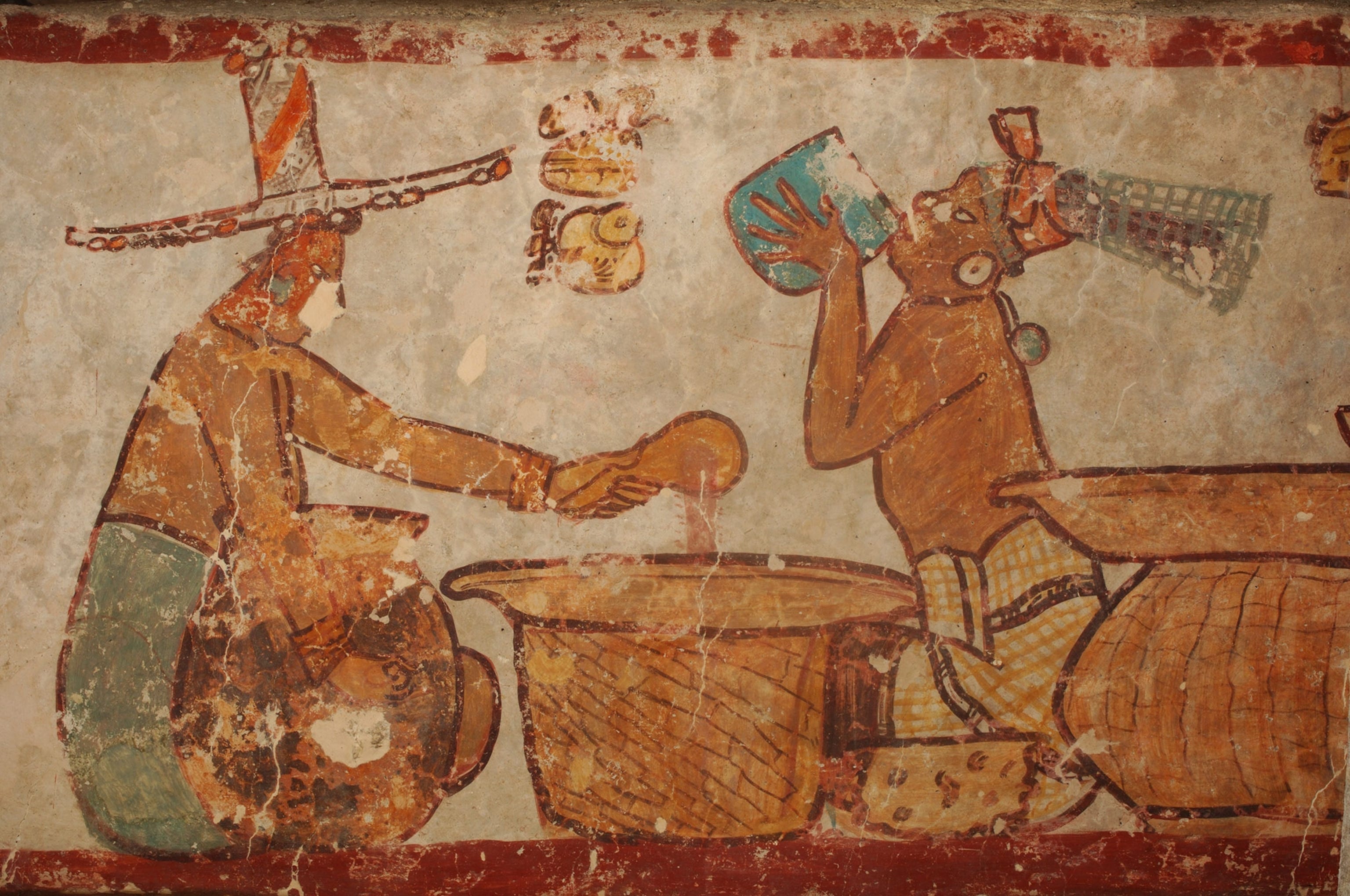
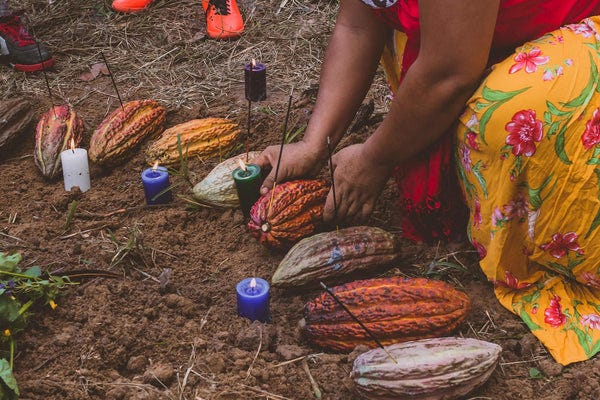
To these ancient civilizations, cocoa was sacred and extremely valuable. Every part of its agricultural byproduct was utilized — they wouldn’t dare leave any of their coveted cocoa to waste. Beans were used for currency, bark and pulp were used for medicine. They drank liquid cocoa as part of rituals and ceremonies from cups made out of cocoa pod husk. Cocoa use became a symbol of nobility. This is just one of the many examples of indigenous agricultural systems that used every part of a crop and were impressively resourceful.
Then, European colonial powers arrived and altered and intensified the Mesoamerican methods of cocoa growing. Traditional methods like intercropping and multicropping were replaced with monoculture. Which was such a shame, because the traditional methods of intercropping were also inherently more sustainable, resourceful, and productive long-term — deeper flavors, higher yields, and healthy soil preservation. Switching to monoculture techniques led to less natural nutrient supply for soil (hence, more modern day reliance on fertilizers), and more wasteful systems of agriculture over time.
From the Mayans, Aztecs, and Olmecs, we can find inspiration for modern circular design and mindset shifts. We see that practices of resourcefulness can often be economical and productive for industries, especially in the long-run. There is also something to be said about deeply respecting the crop or product. Relishing all parts for various uses that connected them to more than just the cocoa itself.
More global, modern ways other cultures view waste as a resource
Okay, so that was 4,000 years ago — what about now? While it may seem like our Western culture has strayed away from that biological instinct of resourcefulness, many other cultures of the world still live in strong accord with their resources
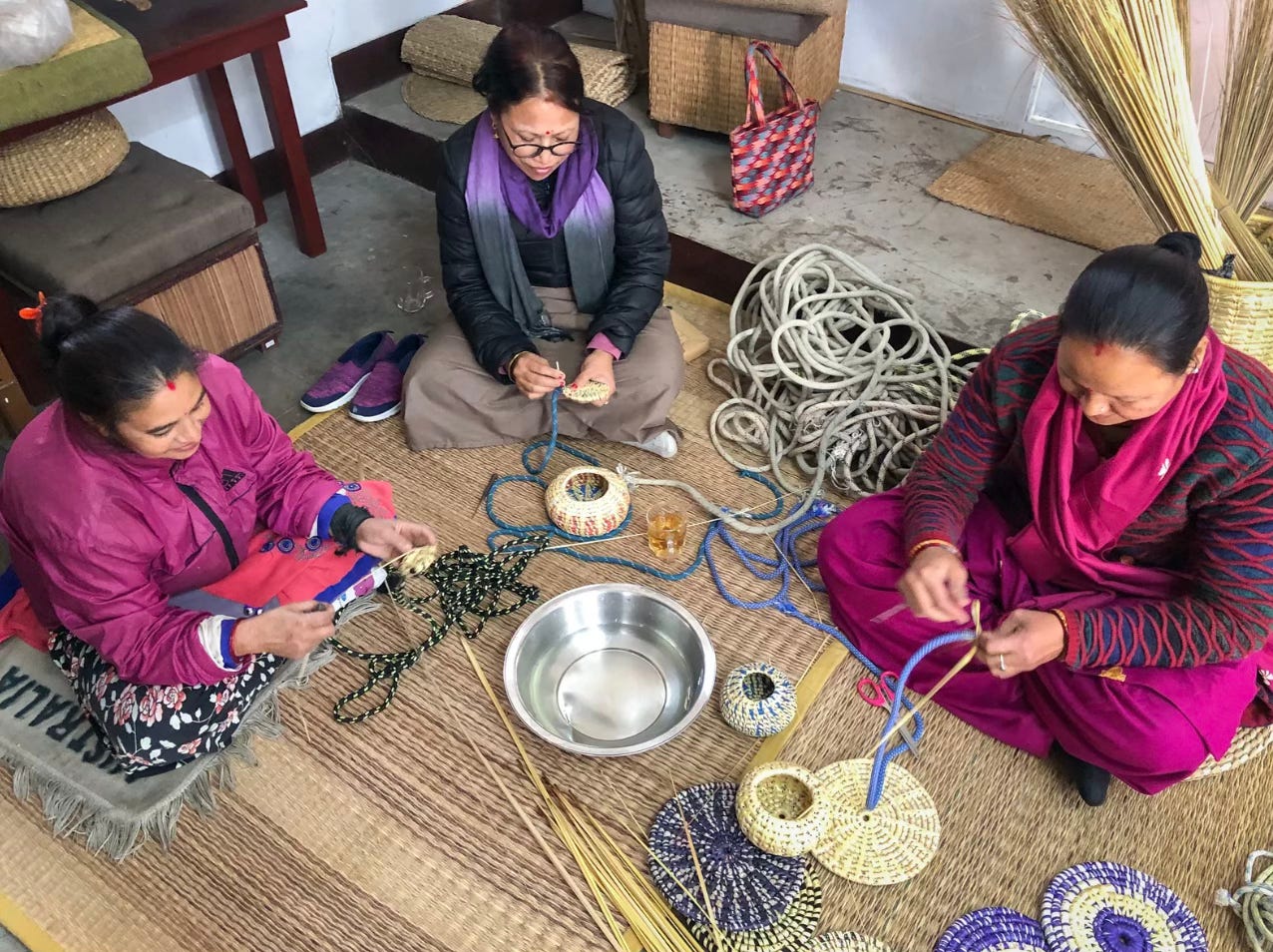
In Nepal, Nepali women are taking discarded climbing rope from Mount Everest and applying indigenous Tharu community practices of craft to repurpose and weave the rope into boxes, table mats, and other nifty items. Each year, 140,000 tons of waste are left on Mount Everest, and these women are finding a way to repurpose the typically nonrecyclable left-behind rope.
In Mexico, an engineer named Martha Jimenez Cardoso is drawing upon her small Indigenous village's practice of agricultural resourcefulness. They take waste produced from the agave tequila distillation process and repurpose it into adobe bricks. Which is resourceful and brilliant all in itself, BUT then she donates those bricks to be used in building homes for her surrounding community.
And now, more cocoa, but in our clothes!
There are also many examples of textile innovators who are challenging the industry’s wasteful norm by tapping into agricultural byproducts as a valuable source of material.
CocoaFiber is one such innovator, exemplifying the practical application of resourcefulness in contemporary fashion systems.

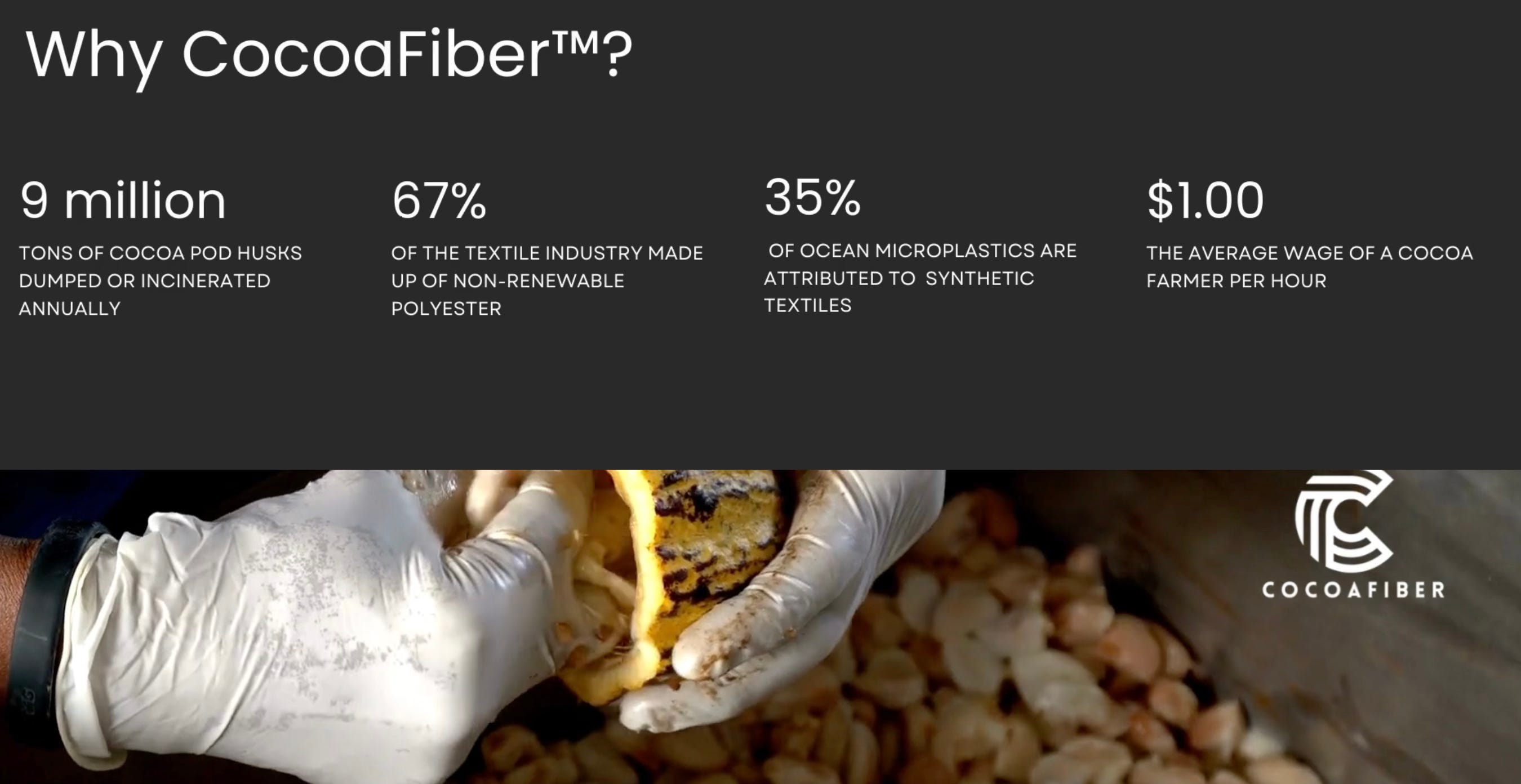
During chocolate production, 9 million tons of cocoa pod husks are dumped each year. A shocking 75% of the plant’s biomass is discarded during production, leaving only 25% as utilized material. Biologist and founder of CocoaFiber, Shannen Kaylia Henry, says she saw this large discard of waste firsthand when she inherited her grandfather’s cocoa farm in the Caribbean. Drawing on her years of textile research, Shannen saw an opportunity in the 75% usually discarded as “waste”.
Cocoa pod waste, using similar cultural principles of resourcefulness, could be turned into a valuable and innovative textile material. And the potential for cocoa as a textile fiber is triply handy: it acts as a high-performance fiber, a natural dye from the dark, chocolatey pigment, AND serves as a nutrient-rich fertilizer back into the land.
It also brings interdisciplinary benefits, providing value to the environment, farmers, and communities. For a natural material like cocoa to be incorporated into textiles means that at the end of life, it can biodegrade instead of lasting a lifetime on the earth, making it regenerative in practice.
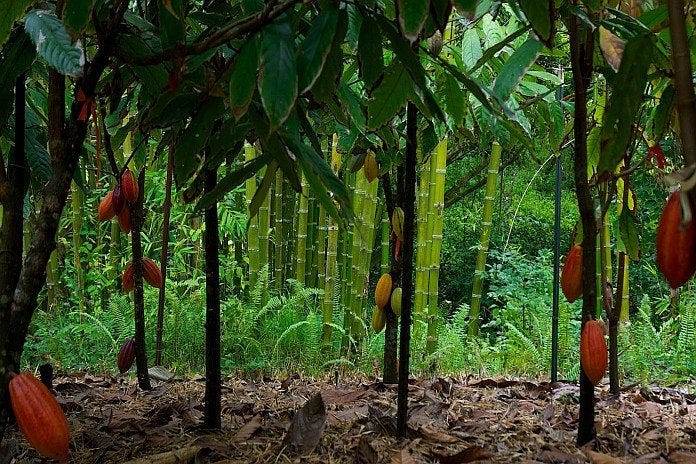
Cocoa farmers in the Caribbean are mostly small-scale and often struggle with low margins and inconsistent growing conditions. Cocoa needs a very specific, tropical climate and topography to grow, and climate change threatens that. Over the last century, there’s been a shortage of labor and a decrease in production, especially as cocoa agricultural labor has had to compete with the booming oil industry. So a collaboration between farmers and CocoaFiber can be of great value to farmers, offfering new revenue stream, resourcefulness, and an increase in farm productivity.
Turning cocoa waste into a feedstock for textiles also comes with scalable potential. According to Shannen, there’s enough cocoa byproduct to replace the polyester textile market by 2%. This recognition is CRUCIAL for textile circularity and for scaling regenerative materials. If a new material can effectively replace some synthetic, virgin material production instead of complementing it, then there’s real industry value.
Final thoughts on chocolate and resourcefulness
The case for rethinking waste: it’s plausible, instinctual, and crucial for reshaping our relationship to the clothing industry. But, it’s not that we need to start loving and finding every piece of waste in our trash bins suddenly attractive and sexy. Of course, some waste is truly fated to be… just waste. It’s more about refraining from immediately denoting something as “waste”. Because when we ascribe labels so quickly, the value is already diminished.
That’s the space that the Mesoamericans, the Nepali women, Martha and her village, Shannen at Cocoafiber were/are all sitting in — the small space of time before jumping to claim something as waste, where it can first be CONSIDERED as potentially functional. And that pause, that reframe, that second chance given, is the unlocking of potential avenues of ingenuity, productivity, and economic and environmental resilience for fashion.
Mixing of ancestral and Indigenous farming practices of resourcefulness with modern day tecnhiques for utilizing agricultural byproducts in creative ways promotes a circular economy and can reshape our relationship to clothing. Any of us can practice the act too. Rethinking how we use, care, and dispose of our products/clothes can transalte into deeper respect and attentiveness to all aspects of clothing production.
So, let’s embrace the waste! And go back to our resourcefulness.
Thanks for reading Rewear&Care! Subscribe for free stay up to date with this series!
LOVE YOU ALL THANKS FOR SUPPORTING & READING! <3 Check out some of my past articles exploring fashion and culture:
Comments
Nothing yet. Say the first thing.
Sign in to join the conversation.