
This is part TWO of the series in which I explore how we can reshape our relationship with clothing, drawing inspiration from cultural wisdom around the world. This post focuses on finding inspiration in a Japanese cultural concept to reshape our relationship with how we connect emotionally to our clothes.
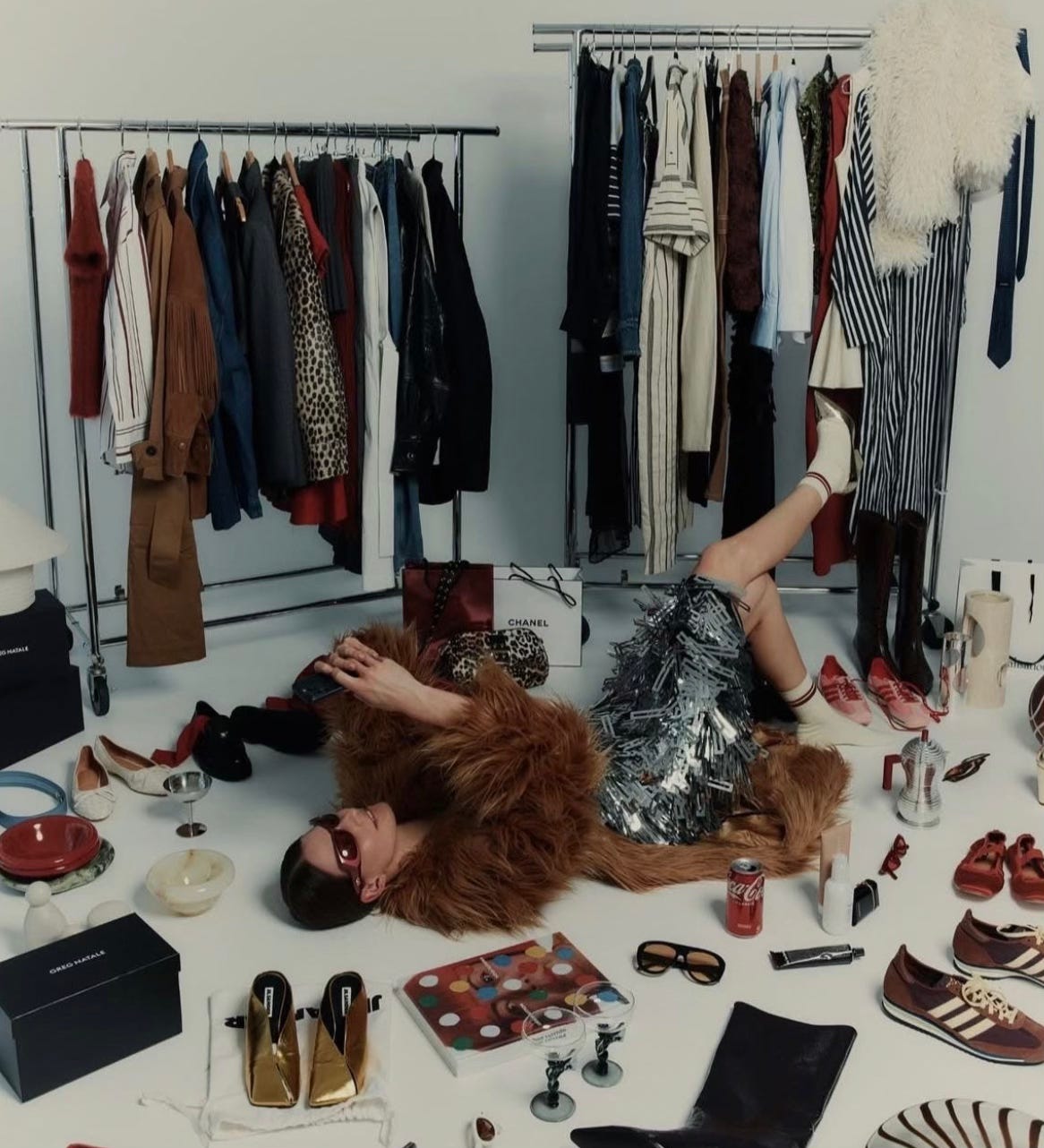
In the Japanese language, there is a word that describes emotional attachment to objects: “aichaku”. Aichaku translates to “attachment”, but is specifically used for a deep sense of attachment or affection that one feels towards an object. It’s a concept rooted in animism, centered around the belief that every object deserves affection not only for what it is, but for what it does. Acknowledging aichaku in Japanese enviornments evokes in people a greater desire to care for, feel, and own their objects for ideally, a lifetime.
Conversely, designing objects with aichaku in mind generates dedication and intention behind the process. Although Japan is an industrialized nation, the concept of aichaku highlights embedded cultural values of craftsmanship, traditional design, and a focus on product longevity and care.
The disconnection from our clothes
I’d argue that our Western (U.S.) culture currently lives on the opposite side of aichaku. There is a big disconnect between how we live and how we value our objects, particularly our clothes. Unlike Japan, industrialization in the West eroded the intent behind design and craftsmanship. It created a chasm between an object’s creation and its end consumer. Part of that stems from the fact that 97% of clothing sold in the U.S. is made abroad. The steps for that clothing to reach us are long, complex, and often hidden from consumers, due to a lack of transparency in manufacturing supply chains. So, it’s not really our fault that we don’t buy a shirt and immediately feel appreciation for all the people and processes behind it. Because… we usually have no idea who or what is behind it.
That has created the norm we live in now, where we don’t readily view clothes as inherently valuable beyond the “what it is” — a piece of clothing. But perhaps the Japanese aichaku can inspire ways to strengthen our connection to clothes. And perhaps a deeper emotional connection could serve as an antidote to overconsumption.
How Aichaku can lead to less consumption and a more confident personal style
Here’s where it gets interesting. Apart from affecting the percieved value we place on our clothes, an emotional disconnect from them can also impact our style and confidence.
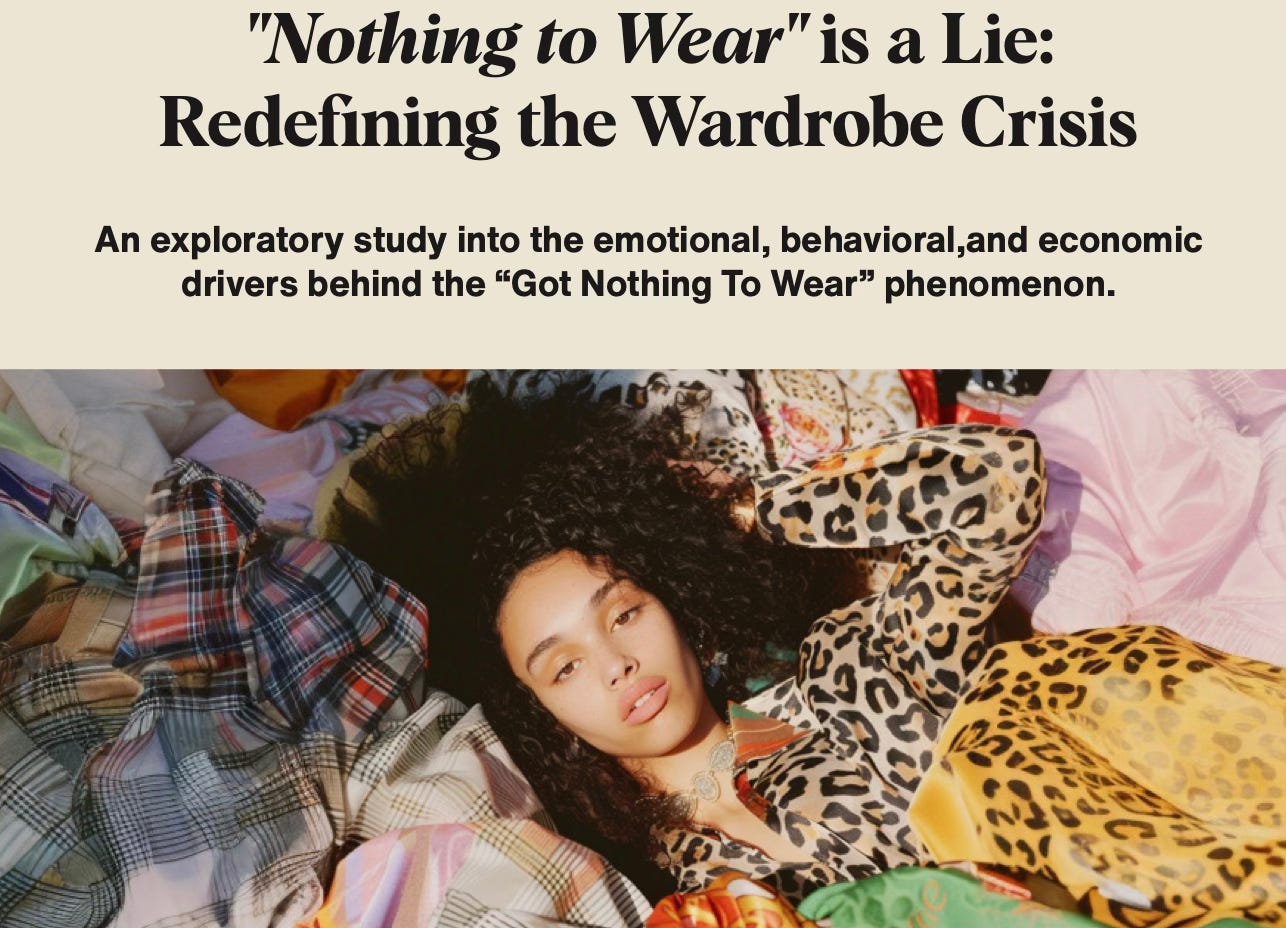
A recent campaign and report from the luxury resale company Vestiare showed that consumers who own 100 or 200 clothing items still report a feeling of “having nothing to wear”. The campaign claims that this feeling is a primary driver of fashion waste, fueling a “reactive consumption trap”. When you have hundreds of options but no confidence in any of them, this, as the campaign says, signals a wider consumer issue = emotional disconnection. Which, in turn, perpetuates a desire to buy more as a temporary fix to the “nothing to wear” attitude.
But buying more never addresses the root of the problem. And quite frankly, selling and purchasing new secondhand clothes on Vestiare also doesn’t remedy the problem (as the campaign eventually implies- it is marketing afterall!).
How does that relate to consumerism?
The root of the closet/style crisis problem is consumerism. Consumerism is fed by emotional consumption, not connection. Emotional connection, which allows us to care and love our clothes more, is the antithesis of emotional consumption, which leads us to buy more. This distinction is important.
What emotional connection is NOT
It is not impulsive buying or immediate gratification that is being entertained by purchasing. It is not becoming so compulsively attached to our items. It is not a materialistic obsession.
It’s also not emotional marketing and advertising. The main type of emotional trigger used in the modern fashion industry appears in marketing strategies that appeal to our sensitive emotions to encourage us to buy more. It’s an emotional exploitation, not a connection.
What emotional connection IS (according to Aichaku & psychology)
It is a symbiotic relationship that deepens over time. When we use or wear something we love. It is connecting to things with a history, a story, a patina, or something made with care. Something we love for everything it does for us, for its inherent value. It’s an appreciation so deep that we want to keep the thing forever.
With greater emotional attachment (aichaku), people are more likely to care, repair, and keep items longer.
Psychologically, an emotional connection requires emotional intelligence and empathy. When we are emotionally connected, we can empathize, fostering a sense of responsibility and interconnectedness with everything else - the planet, future generations, other communities. Likewise, when we are emotionally connected, we are emotionally intelligent and attuned to our emotions. We are mindful. Emotional intelligence and mindfulness can therefore help to manage emotional triggers that lead to unnecessary consuming by pausing, reflecting, and regulating an impulse before acting on it.
So, emotional connection in this sense is two-fold in relation to clothes: the mindfulness/emotional intelligence behind the purchasing of clothing AND the aichaku behind the care and admiration for our clothing once we own it.
We can hold space for this type of emotional connection to potentially reduce overconsumption and increase confidence in our style.
But the big question is: how can we emotionally connect to our clothes, now, realistically?
Practicing aichaku and mindfulness. Sets a good foundation. Then, there are easy every day habits we can do to set that foundation in motion.
Practical habits for emotional connection everyone can do easily
Buy from brands that share your values!
Doing this requires us to be tapped into our personal value system, which is crucial for making aligned choices, even outside of fashion. Once you know and live through your core values confidently and unwaveringly, making clothing decisions becomes much easier. Buying from brands with similar values can evoke pride and a warm sense of identity, motivating us to keep and value the item longer.
Shopping your values - a quick reference:
If you value women's empowerment = Eileen Fisher, Girlfriend Collective, ABLE
If you value plastic-free, nontoxic = Kotn, Mate The Label, ISTO, Coyuchi
If you value conservation/outdoors = Tentree, Patagonia, Cotopaxi
If you value innovation = Ecoalf, Pangaia
If you value giving back = NinetyPercent, Toad&Co, Cleobella
If you value oceans = TwoThirds, Faherty
IF you value transparency = Harvest & Mill, ARMEDANGELS, Kings of Indigo
If you value animals/vegan = KENT, Gentle Herd
If you value inclusivity = Warp + Weft, TomboyX
If you value safe working/fair labor = Colored Organics, Outerknown, Boden
If you value craftsmanship/artisan = Mata Traders, The Summer House, Someone Somewhere
Project Cece is a cool website that functions as something close to “shopping your values”. You can shop by label (fair trade, vegan, etc.) and shop by certifications (GOTS, Oeko-Tex).
Align clothes with a sentimental story
If your mom always talks about the black blazer she wore all the time in the 80s, find a black blazer that represents her. If there is a character on a show you loved growing up whose style and personality you always admired, look for outfits similar to theirs. If there’s something you wore a long time ago that you no longer own, but wish you still had, find a new variation of it to evoke nostalgia.
Clothes that represent a story or a nostalgic time to you will be much more meaningful. This idea is sentimental inflation: we care about items that carry emotional weight.
Find a cultural connection
Connecting with something culturally appeals to a shared identity. A strong sense of shared identity appeals to our ability to connect emotionally.
Choose clothing made using a cultural textile tradition or craft. Maybe it’s a unique technique of craftsmanship from your personal heritage, or from someone’s heritage you admire. Or maybe you visited another culture across the world and fell in love with it, so you find an emotional connection to a handwoven Moroccan jacket that reminds you of your special time spent in the Sahara Desert.
EMBRACE THE HUNT!!
Go on as deep a hunt as you can for a piece of clothing. Something you can picture in your head, but that doesn’t exist anywhere readily accessible online. The longer you hunt, the more anticipation builds (and, inadvertently, the longer you sit in a prolonged period of decreased impulse, and you may end up not wanting it anymore, which is a WIN for refraining from purchases we realize we didn’t even need.)
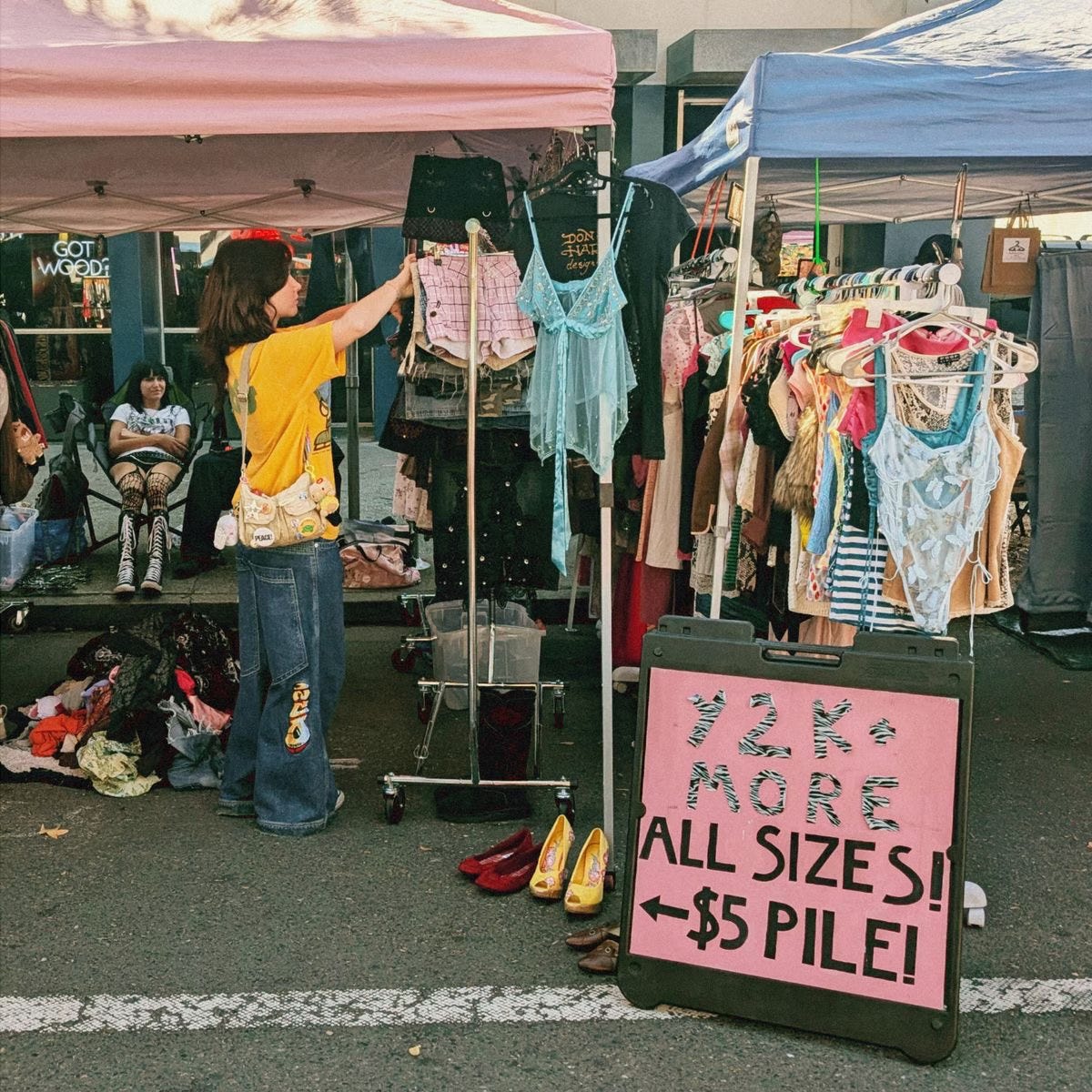
Let the hunt take you to weird places. To a vintage flea market in a new town, an estate sale, or an unacquainted neighbor’s garage sale. When there’s a mad but exhilarating hunt for a clothing item, I love it so much more because I’ve proven how dedicated I am to finding it and valuing it. DELAYED GRATIFICATION BABY.
Only buy clothes that truly make you feel like you could take over the world
You put on the outfit, and you glimmer immediately. You feel unstoppable. If there’s any hesitancy, don’t buy it! “Well, it might come in handy if this one occasion happens…” - but that’s an IF. And if not, it will sit in the dark depths of your closet, lonely and sad.
Now that you have the clothes in possession, this is where the true fostering of connection happens…
Know what you bought
Do (light) research into the fabric content of your clothing. Much of the disconnect stems from the knowledge gap between consumers and the clothing production process. The more I learn about supply chains, transparency, and materials, the more I appreciate clothing. Knowing how intricate an art it is to turn raw farmed cotton into a stylish shirt and understanding the steps necessary to get there, go a long way toward contextualizing our clothes.
Look at the tag, familiarize yourself with the material composition, the ‘made in’ country, and what the usual process is for turning wool into a sweater in Mongolia. Or organic cotton in Turkey. Or nylon in Taiwan. You might not be able to find all the information on the brand website, but you can get a general idea from the tag.
Appeal to the senses!
Sensory stimulation for emotional connection is huge.
Make your clothes smell good. Spray your favorite perfume or signature scent on them, and you will want to melt into your clothes all day long. Don’t underestimate the power of a good smell.
Buy clothes that physically feel nice to touch. In-person shopping is more of a catalyst for clothing connection in this way. Touch the fabrics, the wool, the cashmere, the cotton. Pay attention to the small textural details, designs, and stitches. More points if you make the clothes yourself, that’s the ultimate connection.
This is kind of a random one, but I think there is something to it: music and clothes. Music is such an important component of people’s identity; it’s deeply emotional, personal, and transcendent. If there’s a way you can associate a favorite song, artist, or playlist with your style, that could be a great avenue for a more visceral connection. Personally, I like to get dressed while I listen to music, some good hype-up songs for the morning. And I find that it gets me more excited to dress in something I love and gives me a stronger sense of confidence wearing it. Dancing in the mirror to a good song in a good outfit = immediate confidence boost.
Taste…? Don’t eat your clothes, but maybe there’s something to associating a food experience with them. I’m not sure, I’ll let you get creative with that one.
And seeing! The clothes, obviously, need to be visually appealing, which is usually the first sense we are tuned into when shopping.
Sharing clothes
Sharing clothes breeds a sense of intimacy with the other person and the clothes - a double win for connection.
Personalize where you can!
Add your own flair to an existing clothing item to make it your own. If you are bored with your clothes, add a custom graphic or embroidery. Crop, trim, or dye something. Add buttons or lace or pins. If there’s a hole or stain you can’t mend yourself, consider adding a NoSo patch.
There’s also studies on how personalizing our objects can deepen our emotional connection to them. More self expression, more effort, more emotional bonding.
Most importantly: Care, repair, and intend for a lifetime. Think AICHAKU
With clothes, we have the chance to imprint our uniqueness onto a garment and leave a legacy of our own. Feeling gratitude for our own imprint, and the imprint that others put on it before us. Seeing how it can stay in our life for as long as possible - all part of aichaku! If we connect more emotionally with clothes, we not only consume less and better, but we also increase our mindfulness, intelligence, and confidence in our style.
It’s not our fault that we are disconnected. Modern apparel systems aren’t made to connect us to our clothes. But the good news is, we can still do something about it. I’m confident when I claim that most people are craving more connection - to other people, but also to life in general. There’s a collective spirit of fatigue amongst the masses. It’s exhausting living in a vacuum of ads and algorithms that dictate our personal taste and style, and that actually lead us farther from it. So, consider this a step towards the vision of not only more emotionally connected clothing shoppers, but a more emotionally connected world.
How nice does that sound? :)
Xoxo
Thank you SO much for reading!!! Check out the first part of this series if you missed it:
Comments
Nothing yet. Say the first thing.
Sign in to join the conversation.