
The Connecting Point (TCP) essay | 1,239 words | Reading time: ~5 min.
A data point from HR Brew and Russell Reynolds, published this June1, has been sitting with me: 56% of global CHRO appointments in the first quarter of 2026 went to external hires — up from 46% the year before. In the S&P 500, the shift was even sharper: 67% external, up from just 30%.
A decade ago, external CHRO hires were the exception, not the rule—a sign of crisis or a last resort. In 2026, they’re the default. Record CEO turnover is running alongside it. And it’s not just the corporate giants: According to JRG Partners, 75% of U.S. organizations now seek external hires for AI leadership roles, a trend that’s hit startups and mid-tier companies hardest.
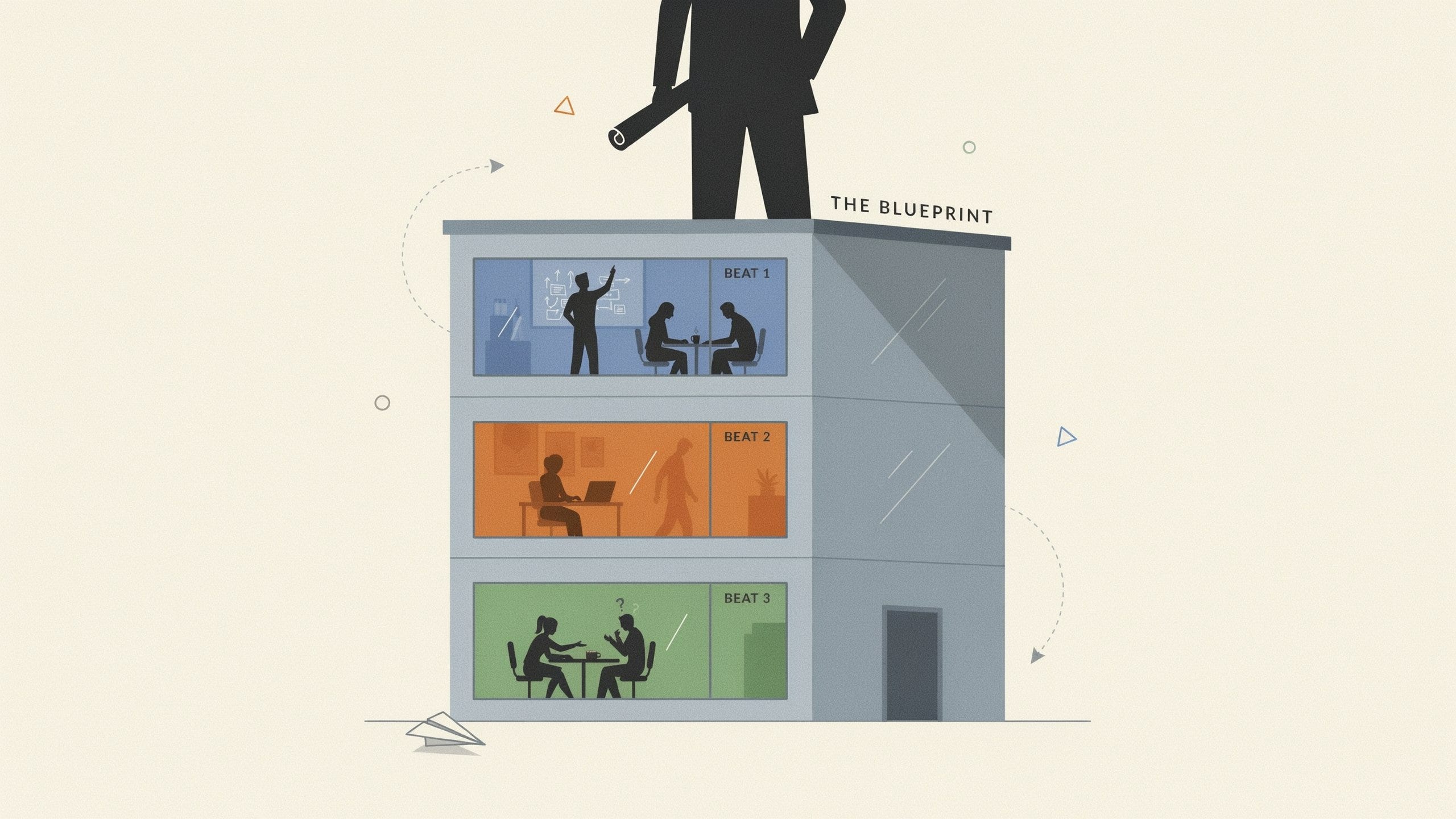
The reported logic comes down to something close to an admission: Boards don’t believe the blueprint for leadership in the AI era can be built in-house. They’re betting an outside hire who’s already built one somewhere else is safer than developing one internally.
Those are the numbers. Here’s what it looks like from three different floors of the same building.
The new CHRO started eight weeks ago. Nobody’s said anything to you directly, yet you’ve started noticing the tells—the rescheduled meetings, the extra note-taker, the way your explanations suddenly feel like auditions.
Your standing 1:1 keeps getting rescheduled to include someone else, someone who always arrives five minutes late, flipping through their phone as if they’ve already decided how this conversation will go. Last week you were asked to “walk through” the leave-of-absence process you’ve run for six years. You caught yourself over-explaining, as if your thoroughness could shield you from whatever verdict was already forming.
Nobody used the word “review.” But you know what a review feels like from the inside, and this is starting to feel like one.
Here’s what’s disorienting about it: you didn’t do anything wrong. Your numbers are fine. Your last two check-ins were positive. The thing being measured isn’t your performance against your job; it’s whether your job, as you’ve always done it, is still the job the organization needs. And that’s not a question you can answer by working harder or more carefully. It’s a question someone else is answering, about you, in meetings you’re not in.
That’s the specific, disorienting shape of this moment: competence stops being the variable that protects you.
Six months earlier, a few floors up, a different version of the same story played out — the one that set this in motion.
The internal HR director had been acting in the role for four months, doing it well, and had every reason to expect the “acting” would come off the title. Instead, the board went outside. Someone “who’s done this before, for the AI transition” — that was the language used in the announcement, or close to it. Nobody said institutional knowledge didn’t matter, but the decision made it clear.
This is the moment the number from the top of this piece describes from the outside — the 56%, the 67%, the board’s bet that someone who’s already built the blueprint elsewhere is safer than developing one internally.
It’s a defensible bet, on paper. It’s also a bet made about a specific person, on a specific afternoon, in a room they weren’t in — the same structural pattern as the vendor amendment nobody flagged for operational review, or the platform update that changed what an existing tool could do without anyone renegotiating the contract.
The decision gets made where the accountability sits loosest—the same structural blind spot I wrote about last month, where AI agents and vendor contracts get signed, sealed, and deployed before the teams using them even know they’re coming.
The internal candidate didn’t slam a door or send a scathing email. They just stared at the announcement, rereading the line about ‘someone who’s done this before’ as if it were a typo.
The board wasn’t just hiring a CHRO. They were hiring for a role that didn’t exist a year ago and nobody had bothered to name it yet. 2026 may be the year boards stopped pretending they had time to figure this out.
Three floors away, in Finance, someone who has never once thought of themselves as “an HR problem” starts noticing their own 1:1s have changed.
Their manager is asking different questions lately — not about the numbers, which are fine, but about “how the team’s structured” and “what everyone’s really good at.” Nobody’s mentioned the new CHRO to them directly. Why would they? They don’t report anywhere near HR.
A new CHRO doesn’t just reassess HR, they reassess how HR intersects with every other function. So when your manager starts asking about team structures, it’s not a coincidence. New executives, brought in to “do the AI version” of a function, tend to reassess their own direct reports within the first one or two quarters and those direct reports reassess theirs. The tremor doesn’t announce itself as it travels. If you’ve ever left a 1:1 wondering why the questions felt oddly strategic, this might be why.
The HR Brew data only measured CHRO appointments. But there’s no reason to think this is an HR-specific phenomenon. The same board-level logic — no blueprint, bet on someone who’s already built one elsewhere — is just as available for a CFO seat, a CISO seat, a newly invented “Chief AI Officer” title. If it’s happening this visibly in HR, it’s a reasonable bet that it’s happening quietly, right now, in other C-suite seats that haven’t made it into a dataset yet.
The replacement wave isn’t a story about one function’s leadership. It’s a story about how quickly uncertainty at the top finds its way to people who never thought the door applied to them — in HR, and very possibly well beyond it.
Three people. Three floors. None of them in the same meeting, none of them talking to each other about it, all of them living the same mechanism from a different distance.
The walk-through, the afternoon, and the tremor. That’s what a compressed clock looks like from the inside—not a single dramatic event, but a series of small, disconnected moments that only reveal their pattern in hindsight.
Next week in The AI Inflection Point (TAIIP): Why the missing blueprint isn’t just a CHRO problem—it’s a symptom of a leadership vacuum that AI is exposing across the C-suite.

Kiernan, Emma. "Many companies are hiring new CHROs to lead them through AI transformation." HR Brew, June 3, 2026. https://www.hr-brew.com/stories/many-companies-are-hiring-new-chros-to-lead-them-through-ai-transformation (Reporting on Russell Reynolds Associates' Global CHRO Turnover Index, Q1 2026: 56% of global CHRO appointments were external hires, up from 46% in Q1 2025; 67% of S&P 500 CHRO appointments were external, up from 30% YoY; 77 global CEO appointments in Q1 2026, the highest since RRA began tracking in 2018; RRA managing director Ted Moore on the "no blueprint" rationale for external AI-era hiring.)
No posts
Comments
Nothing yet. Say the first thing.
Sign in to join the conversation.