
If you’ve been paying attention to the market over the last few years, you know the game has fundamentally changed. The zero-interest-rate era of “growth at all costs” and massive, siloed engineering teams is over. We’ve entered an era obsessed with lean efficiency, profitability, and, above all, AI-driven productivity.
Today, engineering managers aren’t looking for “code monkeys” to mechanically translate Jira tickets into syntax. We are looking for Product Engineers. We want holistic developers who understand business value, user experience, and how to leverage AI to multiply their output.
Before I write a single line of code today, I have to ask: “How does this feature impact our MRR? Is the cloud compute cost of this microservice justified by user engagement?”
If you want to be highly competitive in the current market, you don’t need to memorize every syntax quirk of every new framework. Instead, you must deeply understand the underlying concepts, the architectural trade-offs, and what happens when your code actually hits production at scale. You need a “T-shaped” skill set: deep expertise in one specific area, supported by a broad, working knowledge across the rest of the stack.
Here is my pragmatic, battle-tested roadmap for the 2026 software engineer, complete with how the big players are actually using this stuff in the real world.

Let’s be real: writing every single line of boilerplate code from scratch isn’t a badge of honor anymore — it’s an inefficient use of company time. You must know how to build with AI (to speed up your workflow 5x) and build features using AI (to deliver smarter products).
Retrieval-Augmented Generation (RAG): Foundational LLMs are useless for proprietary company knowledge. RAG is how we fetch relevant private data from our databases and inject it into the LLM’s prompt before it generates an answer. It’s vastly cheaper than fine-tuning and kills hallucinations.
Agentic Workflows: We’ve moved beyond chatbots. Agents are autonomous systems given a goal and tools (like a Python interpreter or database access)
Real-World Example: Look at Meta. They utilize multi-agent systems internally where “Planner Agents” delegate tasks to “Coder Agents” to automatically review PRs, find security vulnerabilities, and suggest architectural fixes before a human even looks at the code.
Vector Embeddings: Transforming unstructured data (text, images) into mathematical vectors to search by meaning.
Real-World Example: Netflix relies heavily on high-dimensional vector embeddings for its personalization engines. When you watch a movie, you aren’t just matching tags; your profile is mathematically clustered near similar content in a latent space, allowing their systems to surface exactly what you want to watch next.
Token Economics: AI API usage is billed by the “token”. A senior engineer knows when to use a fast, cheap model (like Claude Haiku) for basic routing, and when to bring out the heavyweight models for reasoning.
AI IDEs: Cursor is currently dominating our workflows. GitHub Copilot remains the enterprise standard.
Orchestration: LangChain or LlamaIndex to build robust RAG pipelines.

The backend isn’t just about simple CRUD endpoints anymore. It’s about high-performance microservices and event-driven systems capable of handling asynchronous, unpredictable AI workloads.
API Architectures (REST vs GraphQL vs gRPC):
Real-World Example: Netflix is the poster child for microservices and gRPC. When you hit “play,” that request doesn’t go to a monolith; it fans out via gRPC (which uses ultra-fast, tightly compressed Protocol Buffers) to dozens of internal microservices to verify billing, fetch DRM licenses, and locate the nearest CDN node in milliseconds.
Event-Driven Architecture & Eventual Consistency: Moving away from synchronous requests where Service A waits idly for Service B.
Real-World Example: LinkedIn literally invented Apache Kafka because their traditional databases couldn’t handle the sheer volume of profile views, messages, and feed updates. By moving to a Publisher/Subscriber (Pub/Sub) model, systems communicate asynchronously. It guarantees eventual consistency — your connection count might take a few seconds to update across the globe, but the system never goes down.
Idempotency: An operation that produces the same result no matter how many times it’s executed. If a user’s network drops and they mash “Submit Payment” five times, your backend must recognize the duplicate request ID and charge them only once.
Languages: Python (mandatory for AI/Data), Go (for high-performance concurrent cloud services), Node.js/TypeScript, and increasingly, Rust.
Brokers & Caching: Kafka, RabbitMQ, and Redis.
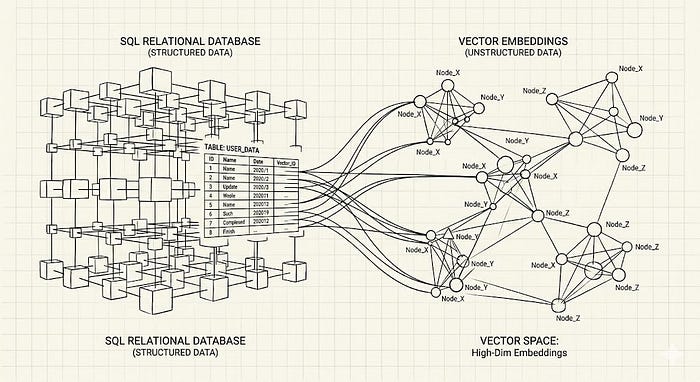
Data is the foundation. The volume of unstructured data generated by AI has changed how we store information, but relational integrity is as crucial as ever.
CAP Theorem vs. ACID Compliance: You can only guarantee two out of three: Consistency, Availability, and Partition tolerance
Real-World Example: Think about Amazon on Prime Day. They use DynamoDB (NoSQL) for the shopping cart. Why? Because Availability is everything. If the database partition fails, Amazon would rather risk a momentary inconsistency (a slight delay in updating inventory numbers) than tell a user “Error: Cannot add to cart.” They chose Availability over strict Consistency to save millions in revenue per minute.
Database Denormalization: While we learn 3rd Normal Form in school, at scale, we often deliberately denormalize (store duplicate data together) to avoid massive, database-locking
JOINoperations.Real-World Example: Meta built TAO, a distributed data store, specifically to cache and serve their massively denormalized social graph because traditional SQL joins simply couldn’t scale to billions of daily active users fetching complex feeds.
Relational: PostgreSQL is the absolute “Swiss Army Knife” of the industry right now.
Vector DBs: pgvector, Pinecone, or Milvus for housing billions of AI embeddings.
ORMs: Prisma or Drizzle for end-to-end type safety in TypeScript environments.

The exhaustive “framework wars” of the 2010s have largely settled. Today, frontend engineering is obsessed with perceived performance, extreme accessibility, and shipping zero unnecessary JavaScript.
Rendering Strategies (CSR, SSR, SSG, RSC): > Real-World Example: Netflix famously removed client-side React from their landing pages. By shifting to Server-Side Rendering (SSR) and vanilla JS for their marketing pages, they drastically cut the Time-to-Interactive (TTI) for users on slow mobile connections.
State Management Paradigm Shift: We’ve moved away from massive global stores (like legacy Redux) toward simpler local state, treating server data purely as a “cache.”
Real-World Example: Look at how Meta rebuilt the modern Facebook.com web app. They relied heavily on Relay (GraphQL) to fetch exactly the data a component needs — nothing more, nothing less — drastically reducing the payload size sent to the user’s browser.
Accessibility (a11y): Ensuring your application is natively usable by people with visual, auditory, or motor disabilities. This is no longer an afterthought; it is a strict legal requirement.
The Non-Negotiable: TypeScript. Writing vanilla JS in enterprise apps is basically professional negligence today.
Frameworks: React and Next.js (App Router) dominate. Vue/Nuxt is the strongest alternative.
Styling & Build: Tailwind CSS and Vite.
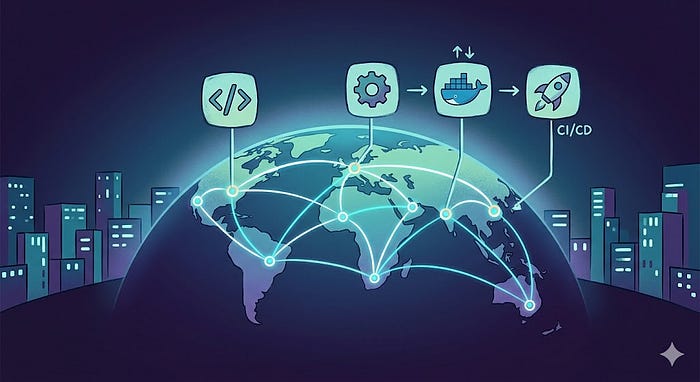
The historical wall between “developer” and “operations” is gone. The modern paradigm is “you build it, you run it.”
Deployment Strategies: Pushing updates without taking the system down
Real-World Example: Amazon executes thousands of deployments a day without anyone noticing, using Canary Rollouts. They deploy a new feature to just 1% of users, monitor their observability dashboards for error spikes, and slowly ramp it up to 100% if metrics stay green.
Observability (Logs, Metrics, Traces): Knowing exactly why your app is failing on the inside.
Chaos Engineering: > Real-World Example: Netflix pioneered “Chaos Monkey.” They literally run scripts that randomly kill production servers during business hours. Why? To force their engineers to build systems so resilient and decoupled that the destruction of a random node doesn’t impact the end user’s streaming experience.
Infrastructure as Code (IaC): Writing declarative code (Terraform) to provision servers instead of clicking through a console.
Containers: Docker and Kubernetes (K8s).
Cloud & CI/CD: AWS/GCP/Azure, provisioned via Terraform, automated through GitHub Actions.
Observability: Datadog or Prometheus/Grafana.
Don’t try to learn all of this in a weekend. The best engineers learn pragmatically. Build a real application, run into a scaling bottleneck, and then learn the tool that solves it.
The tech stack will change again by 2030, but an engineer who understands system trade-offs, business value, and how to adapt will always be in demand. Keep building.
Comments
Nothing yet. Say the first thing.
Sign in to join the conversation.