
I saw this on my Instagram the other day. This sentence felt so real.
It truly makes sense, right?
Everything we deserve needs to be earned.
Not just at 23, but since I was a kid.
If you scored out of marks, we will get you a cycle.
If you behaved well, you’d get an ice cream.
If you do this, you’ll get this.
The endless loop.
Isn’t love supposed to be selfless?
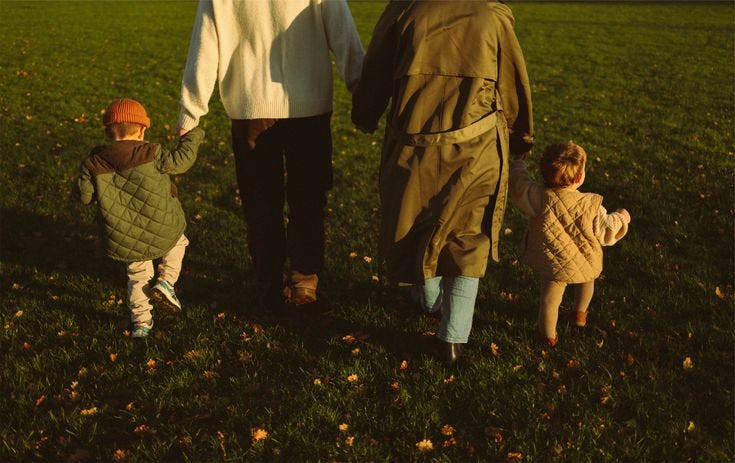
I agree its our parents’ first time on the earth too.
They tend to repeat the same things that their parents did.
We surely are grateful to be here, with them, but sometimes parenting becomes all about conditions.
Why does everything have to be conditional?
Love? Care? Affection?
This conditional love shapes the child’s mind, not just until he/she is a teenager but for their entire life.
Children deserve appreciation, love, and affection more than any materialistic stuff.
Most of the parents measure the success of their child in terms of score and the amount of money they earn, because they want their child to have a secure future in this world of uncertainty.
But don’t you think life’s goal should be living fully and measuring success on the terms of how kind, compassionate, and honest your kid is?
A kind child who treats others with respect provides more to society than a high achiever who lacks empathy. Yet kindness is often celebrated less than accomplishment.
Many parents unintentionally compare their child with others; sometimes, there is a comparison between their two children. But this comparison teaches children that they should be expectational in every possible way.
Parents usually talk about the behavior, and children hear it as “I’m being compared.”
Comparison can hurt both. We usually talk about the child who is being criticized. But the ‘successful’ one often suffers. The child being praised is afraid to lose that praise. In the end, comparison teaches both children the same lesson: that their worth depends on how they measure up against someone else.
“Even if you do your best, it would never be enough for them.” This becomes the mindset of every child who has been in constant comparison and a lack of appreciation from their parents.
When praise only comes after achievements. They start believing that their value depends on grades.
Every child deserves encouragement, respect, and opportunities without needing to outperform.
When a kid becomes an adult, he seeks validation everywhere: bosses, friends, partners, and social media.
He spends his entire life asking: “Am I enough?”
Yet, it would be unfair to stop the conversation here and place all the blame on parents. Most of them are not trying to hurt their children. They are often carrying fears, insecurities, and dreams of their own. Perhaps to understand the impact on children, we must first understand where the pressure comes from.
Parents do project their dreams on their kids, but it’s everyone’s first time here.
It may start as, “I don’t want you to struggle as I did,” and end like, “ You must become what I could not.”
I agree, every parent worries about their child’s future. And they don’t truly enjoy behaving like this. They carry responsibilities that children often do not see.
And perhaps they often feel judged by their kid’s achievements.
It’s a competitive world from their perspective.
Fear disguises itself as pressure.
Worry disguises itself as criticism.
Love disguises itself as control.
Ironically, most of the damaging pressure comes from good intentions.
“I’m pushing you because I love you.”
The tragedy is that children do not always hear the intention. They experience the impact. While parents are trying to prepare them for the future, children may quietly come to believe that they are loved most when they succeed.
And then other parents disagree with everything I have said so far. Maybe they did everything; they trusted, appreciated, and loved their kid unconditionally.
But growing up changes the relationship. A child who once followed the rules starts asking questions. They develop opinions, challenge beliefs, and make choices their parents may not agree with.
For some parents, this might be uncomfortable. Not because they love their child any less, but because they are learning to let go of control and accept their child is becoming their own person.
I think this is the hardest part of parenting. To guide without controlling. To advise without deciding. To accept that the person you raised may not always see the world as you do.
A child lives on the words of affirmation and small moments of appreciation. They do not always need constant praise or an expensive gift. Sometimes a simple “I’m proud of you”, “I trust you,” or “I believe in you” stays with them longer than any reward.
People often forget that children carry these words into adulthood. The way they are spoken to at home slowly becomes the voice they use to speak to themselves.
Another thing we rarely talk about is guilt. Sometimes children are made to feel guilty for the life they have. They are reminded of everything that was provided for them, how much money was spent, or how much their parents sacrificed.
Of course, children should learn gratitude. They should understand that many privileges, opportunities, and comforts do not come for free.
But gratitude loses its meaning when it is demanded. A child should not have to carry guilt for the very life their parents chose to provide.
And gratitude should flow both ways. Parents are grateful for their children, and children are grateful for their parents. One does not cancel the other.

It may be that most parents do not intend to make love feel conditional. They are trying to motivate, protect, and guide. Yet a child’s heart experiences words differently from the way they were intended.
That is what both parents and children are trying to learn.
Parents want to know their children will be okay in a world that often measures people by their accomplishments.
Children want to be accepted for who they are, not only for what they achieve.
Maybe the answer is not to stop encouraging children to dream big.
Maybe it is to remind them that their worth was never tied to those dreams in the first place.
Maybe it is the certainty that they are loved in all ways and always.
Maybe your kids are outperforming, but just don’t do it the way you want.
Because children do not have to be extraordinary to deserve ordinary things.
Until next time,
Love,
Aayushi.
No posts
Comments
Nothing yet. Say the first thing.
Sign in to join the conversation.