
Platforms provide the tools and services that influencers rely on to make a living. Understanding exactly what rules apply, though, is difficult, as TikTok’s rules for monetisation are dispersed across at least 85 documents. Scholars from Utrecht and Leeds universities (Annabell et al 2025) scrutinize the role of the platform in monetisation practices, using TikTok as a case study. This research is important because,
”for influencers as one of the user-groups of TikTok, the private governance established through platform documentation regulates who and how monetisation can take place.”
The scholars found 49 of the documents addressing influencers’ monetisation, yet undermining their professional status: TikTok deliberately blurs the line between everyday users and professional influencers by labeling them all as “creators.” Both groups are directed to use “Personal” accounts rather than “Business” ones. The researchers find that such framing diminishes the professional identity of influencers, casting their work as a hobby rather than a career, reframing their skilled labor as merely “personal” activity.
The analysis covers the following TikTok-supported monetisation practices: influencer marketing, ad-share, creator funds, and subscriptions and tokens.
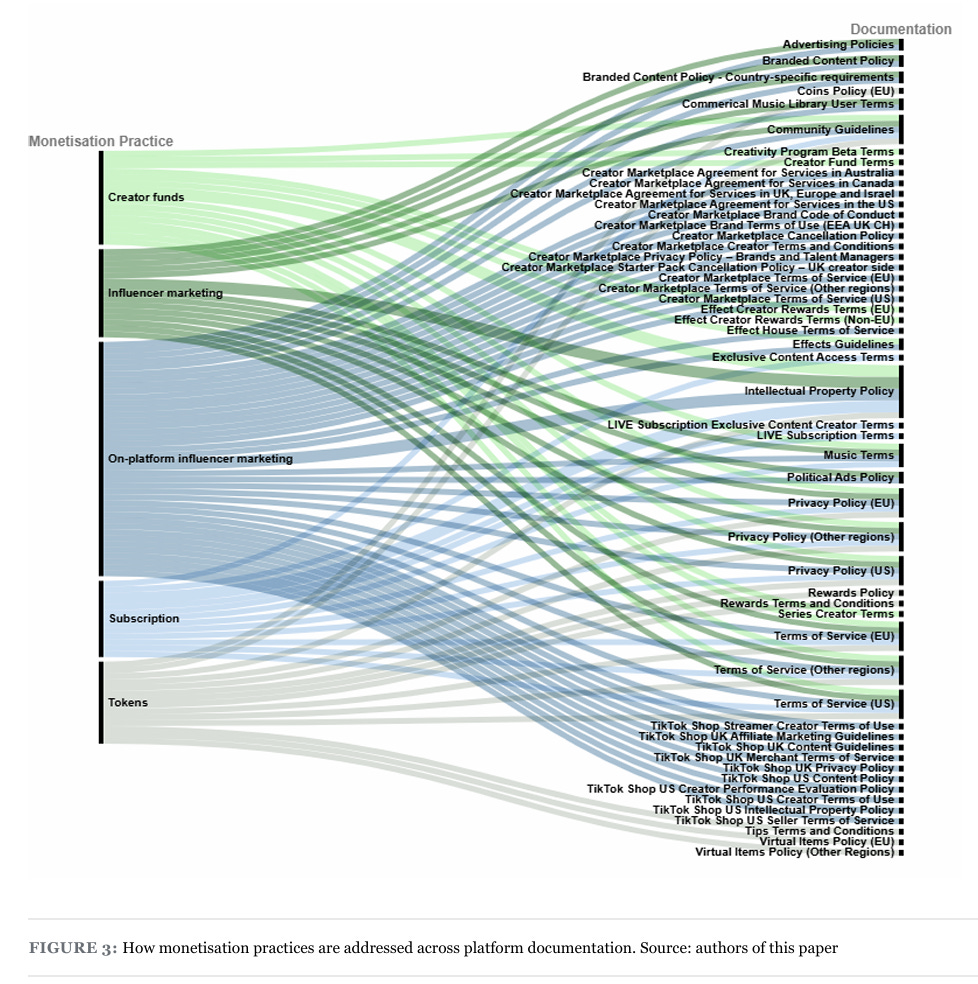
How monetisation practices are addressed across platform documentation. Figure reproduced under CCBY Annabell, T., Bishop, S., & Goanta, C. (2025).
By addressing everyone as creators, TikTok promotes the idea that monetization is within reach for anyone, suggesting that anyone can make it as an influencer.
The paper points out a blind spot in that creators as sellers of products and goods are not recognized in the platform documentation.
The reaserchers point out a grey area in light of the European consumer protection legislation: many influencers also use TikTok to market and sell1 their own products or services. When influencers are acting as entrepreneurs, promoting their own goods, shouldn’t they be held to the same standards as brands? TikTok rules for brand monetization probably apply, but the platform does not provide clear guidance.
TikTok’s failure to align its governance with the entrepreneurial realities of influencer work appears less a regulatory gap than a deliberate design—one that maximises platform control while systematically externalising risk and responsibility onto creators.
Annabell, T., Bishop, S., & Goanta, C. (2025). "You and TikTok are, and will remain at all times, independent contractors". Internet Policy Review, 14(3). https://doi.org/10.14763/2025.3.2014
Comments
Nothing yet. Say the first thing.
Sign in to join the conversation.