
Data from the Digital News Report 2026 shows that influencers, especially so called News Creators, have become a major force shaping the media landscape around the world. They reach younger audiences and provide them with more accessible and engaging formats than traditional media (Nic Newman 16th June 2026 How news creators are impacting politics and media around the world).
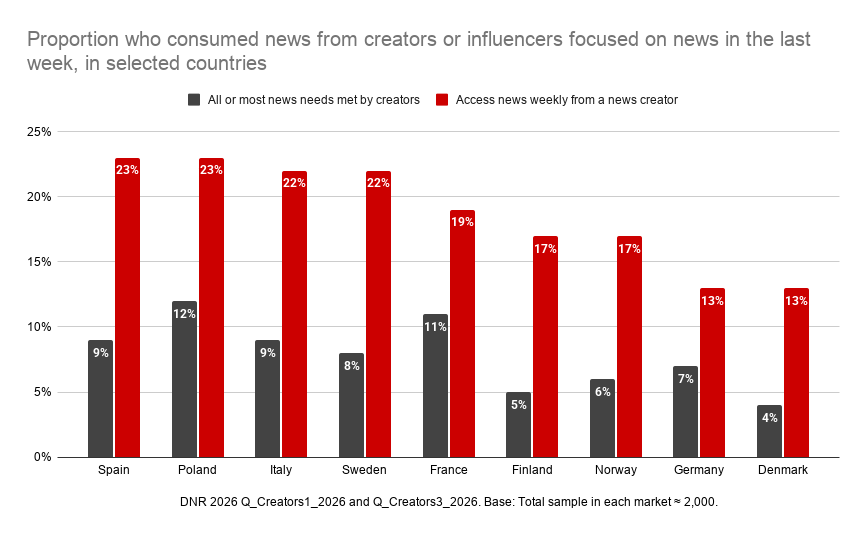
As creators’ influence grows, so does pressure to hold them accountable. Two recent European proposals illustrate this shift:
Denmark’s government plans to establish a media ombudsman to oversee influencers, bloggers, and podcasters outside the Press Council system, with powers to handle complaints about libel and slander (Digital News Report 2026, Denmark)
Spain is attempting to extend its classic media-law instrument — the right of reply and rectification — to large social media accounts. The government announed in January 2026 a bill that extends media rectification requests to influencers, “users of special relevance” with as low as 100,000 follower thresholds. The bill would allow citizens to request corrections also from high-reach influencers and online commentators. Under the proposal, qualifying influencers would have to provide a visible channel through which people can request a correction when factual claims about them are false or inaccurate and potentially harmful.
These examples show how national governments strive to gain some control of the rapidly changing information environment.
The ongoing EU regulatory revisions such as the revision of the Audiovisual Media Services Directive and updating consumer protections under the Digital Fairness act initiative will likely affect influencer content on video sharing platforms.
Comments
Nothing yet. Say the first thing.
Sign in to join the conversation.