
Russia Daily Business Brief is a collection of the most important daily events reported by select open-source media platforms and governments in Eurasia.
If you are not a subscriber, subscribe below:
Takeaways for the day
Drone Wars – Ukrainian drones struck the Baltic oil export hub Ust-Luga on 14 August 2026, sparking a fire at the oil terminal.
India – Russian oil hit a record ~55% of imports in July 2026 — it should be noted that some of that oil is being refined and shipped back to Russia.
Escalation – Foreign Minister Sergei Lavrov signaled Moscow will ‘harden’ methods against Ukraine and its Western backers, rejecting Zelensky’s proposed Black Sea de-escalation.
Political Repression – Prosecutors sought 12 years sentence for opposition politician Lev Shlosberg.
Crypto – Security services raided Moscow’s Gorbushka market hunting illegal crypto exchanges.
Foreign Exchange – Reference rates stand at USD/RUB 83.81, EUR/RUB 96.75, CNY/RUB 12.42.
ENERGY & COMMODITIES
Ukrainian Drones Ignite Fire at Ust-Luga Baltic Oil Export Terminal [High]
A fire broke out on 14 August 2026 at Russia’s Baltic Sea port of Ust-Luga, a major oil export hub, following an overnight Ukrainian drone attack.
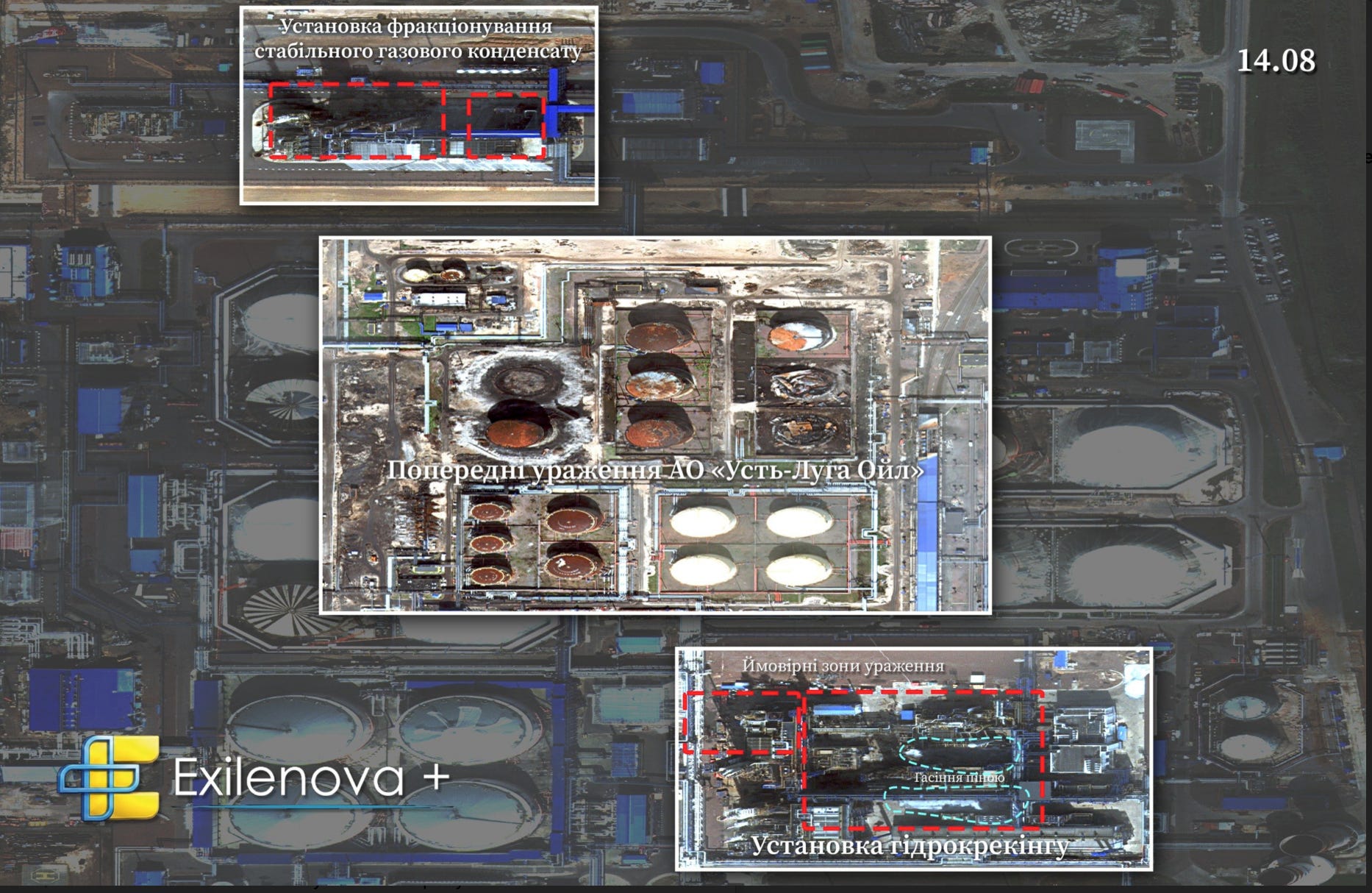
Regional Governor Alexander Drozdenko said firefighters extinguished the blaze with no casualties, and that air defenses downed more than 50 drones across the Leningrad region. The port has been struck repeatedly in recent months as part of Kyiv’s campaign against Russian energy infrastructure.
Significance: Renewed strikes on Ust-Luga (typically ~700,000 bpd throughput) reinforce persistent disruption to Russian seaborne crude flows, tightening physical availability, pressuring Urals loadings and adding a war-risk premium to shadow-fleet freight and insurance for counterparties exposed to Baltic export volumes.
Sources: Moscow Times
Russian Crude Exports Slide to Lowest Since May Amid Refinery Strikes [High]
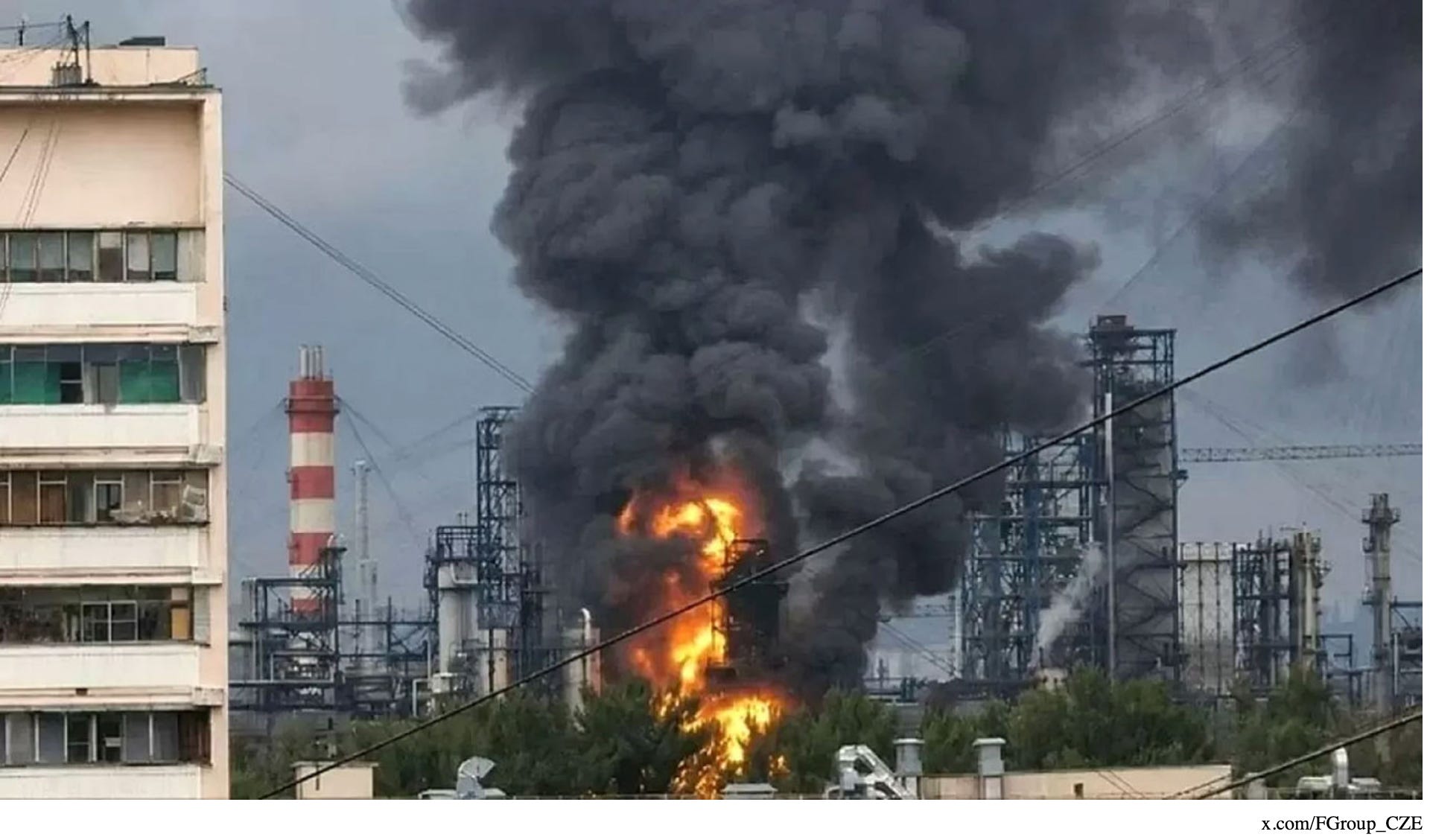
Bloomberg tanker-tracking data (latest available data, four weeks to 9 August 2026) showed Russia shipped 3.71 million barrels a day of crude, the smallest volume since May 2026, with Baltic and Black Sea ports operating well below capacity. Separately, Bloomberg reported (early August 2026) that Russian oil refining fell to a 24-year low as Ukrainian drone strikes forced halts or reduced runs at plants representing nearly a quarter of total capacity.
Significance: Frequent and sustained Ukrainian drone attacks are having an economic and political impact in Russia. The first shipment of refined petroleum arrived from India this week, and long lines at petrol stations have reappeared across the country.
Sources: Bloomberg · Moscow Times
Russian Share of India’s Crude Imports Tops 50% for First Time [High]
Reuters trade data cited on 14 August 2026 showed Russian crude reached a record 50.83% of India’s oil imports in July 2026, roughly 2.47 million bpd, a 62.4% year-on-year jump (latest available data, July 2026). Discounts on Urals have narrowed to only $2–3 below Brent, yet Indian refiners continue prioritizing Russian barrels amid Middle East shipping risks.
Significance: Record Indian offtake confirms Moscow’s durable Asian sales channel that partly offsets sanctions and Western market loss, sustaining Russian export revenue and complicating enforcement — a key counterparty and secondary-sanctions consideration for refiners, traders and financiers involved in the India-Russia crude corridor.
POLITICS & SECURITY
Lavrov Signals Harder Line; Defense Ministry Threatens Winter Escalation [Medium]
Foreign Minister Sergei Lavrov said on 14 August 2026 that Moscow will ‘harden’ its methods to destroy what the West uses to fuel military support for Kyiv, and that fighting should stop only with a durable settlement. The Defense Ministry posted a message threatening Ukraine with a winter ‘freeze’ alongside an image of a Geran drone, after Reuters reported Zelensky had proposed halting mutual strikes on civilian targets in the Black Sea.
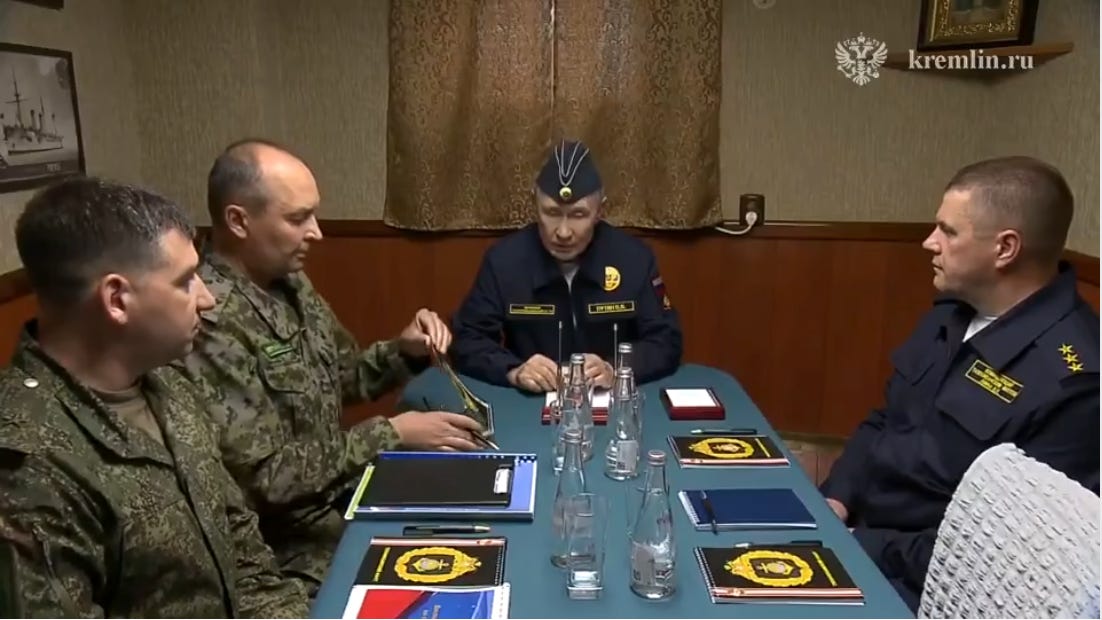
In the meantime, President Putin is making the rounds at military bases in the Far East and visiting the disputed Kuril Islands.
Significance: Kremlin rejection of near-term de-escalation extends the war-risk premium across Russia-exposed assets, energy freight and insurance, and dampens any ceasefire-driven repricing that had been supporting speculative sanctions-relief and reconstruction trades.
Sources: Novaya Gazeta
Prosecutors Seek 12-Year Sentence for Opposition Politician Shlosberg [High]
State prosecutors on 14 August 2026 requested a 12-year and one-month sentence in a general-regime colony for Yabloko deputy chairman Lev Shlosberg over charges of ‘discrediting’ the army and spreading military ‘fakes,’ tied to a reposted Putin caricature and calls for a ceasefire. Novaya Gazeta reported the judge denied the defense time to prepare and did not question Shlosberg directly.

Significance: The severe sentencing demand signals continued escalation of domestic political repression as the Duma elections approach. Yabloko, the last genuine opposition party in Russia, was recently banned from the ballot box. It is the only party that has advocated peace and opposition to the war. With Putin’s deteriorating popularity rating driven by the Kremlin’s war on Ukraine, the technocrats managing the elections are taking no chances on any expression of electorate dissent.
Sources: Moscow Times · Novaya Gazeta
Security Raids at Moscow’s Gorbushka Market Target Crypto Exchanges [Medium]
Security forces conducted searches on 14 August 2026 at the ‘New Gorbushka’ complex in the former Rubin plant building, hunting illegal crypto exchange operations, Meduza reported citing RBC. The raids target informal cash-to-crypto conversion points.
Significance: Enforcement against unofficial crypto channels signals tightening state control over informal FX/value-transfer routes used to bypass capital controls and sanctions — raising counterparty and settlement risk for anyone reliant on gray-market crypto rails to move value in and out of Russia.
Sources: Meduza
MILITARY
Russia Strikes Izmail Port Rail Station and Tugboats on the Danube [Low]
Russia’s Defense Ministry said on 14 August 2026 its forces struck two tugboats and a rail station at Ukraine’s Danube port of Izmail, claiming the facility was used to load, store and transport military cargo and fuel. Separately, the ministry’s Battlegroup West reported downing 110 Ukrainian heavy hexacopters over the prior day.
Significance: Continued targeting of Danube/Black Sea grain and logistics infrastructure sustains disruption to Ukrainian export corridors and regional shipping, keeping a risk premium on Black Sea freight and agricultural commodity flows; state-source claims warrant independent corroboration.
Drone Debris Damages Wildberries Warehouse Near Tver [Medium]
Drone debris damaged the outer wall of a warehouse belonging to online retailer Wildberries in the Tver region during overnight attacks reported 14 August 2026, according to the regional governor. No employees were injured.
Significance: Continuation of attacks on Wildberries and Russian logistics.
Sources: TASS
ECONOMY & TRADE
Russia-Belarus Commodity Exchange Turnover Rises 21% in H1 [Medium]
Trades between Russian and Belarusian participants on the Belarusian Universal Commodity Exchange (BUCE) totaled $619 million equivalent in the first half of 2026, up 21% year-on-year (latest available data, H1 2026), an exchange official told a Belarusian state outlet. Belarusian exports dominate the structure of the two countries’ exchange turnover.
Significance: Growing intra-union trade illustrates deepening Russia-Belarus commercial integration as a sanctions-workaround channel, relevant for compliance teams assessing rerouted flows and counterparty exposure through Minsk-based intermediaries.
Sources: Interfax
OFAC Sanctions Monitor
No new additions to the US sanctions list.
Confidence Levels (based on open-source corroboration)
High — confirmed by multiple independent open sources, or by an authoritative primary source (official government release, OFAC designation, central-bank data).
Medium — reported by a single credible source, or multiple outlets tracing to one origin; plausible but not independently corroborated.
Low / single-source — a single source, unverified, or a state-media claim without independent confirmation; treat with caution.
Confidence reflects the degree of open-source (OSINT) corroboration at the time of writing and does not reflect human-source (HUMINT) verification. This brief is for information only and is not investment advice.
You may also enjoy reading Barbershop Whispers…Las Améяicas and this week’s
Cuba’s Humanitarian Crisis: Another Mariel?
Barbershop Whispers....Russia is a reader-supported publication. To receive new posts and support my work, consider becoming a free or paid subscriber.
BWR Daily - 14 August 2026, Week 33
Comments
Nothing yet. Say the first thing.
Sign in to join the conversation.