
Russia Daily Business Brief is a collection of the most important daily events reported by select open-source media platforms and governments in Eurasia.
If you are not a subscriber, subscribe below:
Drone Wars – Russia launched a major overnight ballistic-missile and drone barrage on Kyiv through 20 August 2026, killing at least 5-15 people.
Warehouses - President Putin has ordered the state to rebuild warehouses destroyed by the War.
Oil – Urals crude sits near $63/bbl per daily tanker data (keeping the Urals-Brent discount compressed and Russian export economics volatile.
RU Citizenship - Moscow moved to slash citizenship fees for residents of Abkhazia, South Ossetia and Transnistria.
Judicial - President Putin reportedly intervened to reinstate the prosecutor who has led the wartime asset seizures.
Foreign Exchange – Reference rates stand at 85.13/USD, 98.55/EUR and 12.63/CNY.
Russian drones and missiles swarmed Kyiv overnight i, killing civilians and injuring more than two dozen. Reported death tolls ranged from at least 5 (Reuters/Moscow Times early counts) to 15 per Ukrainian authorities, with warehouses, a school, residential buildings and a children’s hospital damaged and parts of the capital left without power.
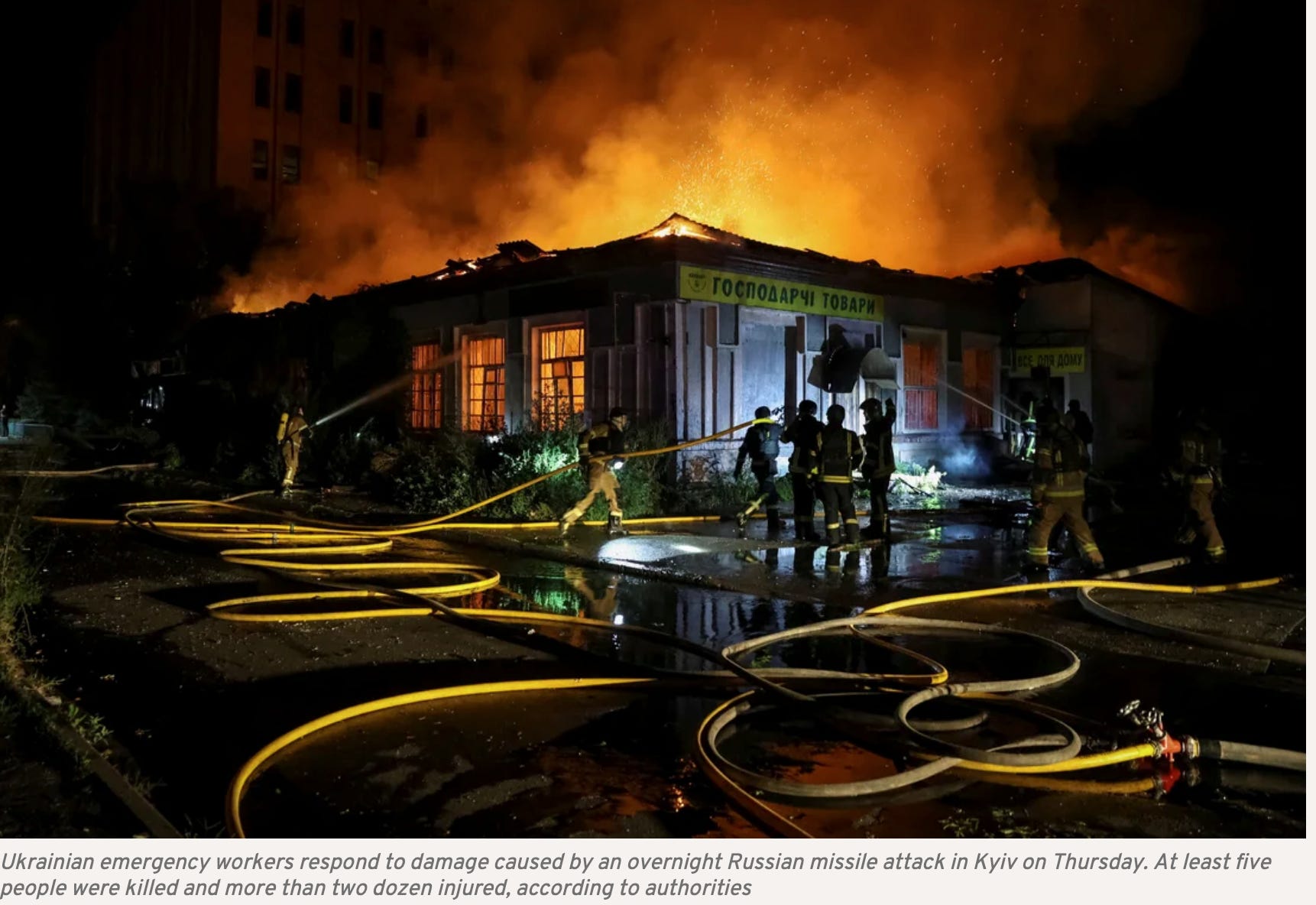
Russia’s Defense Ministry claimed it struck missile and drone production plants and military depots; Kyiv declared 21 August a day of mourning.
Sources: Moscow Times · Meduza · Cyprus Mail
Russian authorities said an Indian student was injured in a Ukrainian drone attack on Ufa, deep in Bashkortostan far from the front. Separately, a woman was killed on 19 August 2026 when a drone struck her vehicle in the Belgorod region bordering Ukraine’s Sumy and Kharkiv areas.
Significance: Ukrainian drones’ deep strikes continue to reach into industrial Bashkortostan, disrupting consumer and industrial supply chains and exports.
Sources: RIA Novosti · Moscow Times
On 19 August 2026, Putin directed the government to help rebuild warehouses and commercial sites destroyed in Ukrainian strikes, while claiming the cumulative damage to industrial and commercial facilities has not been critical.
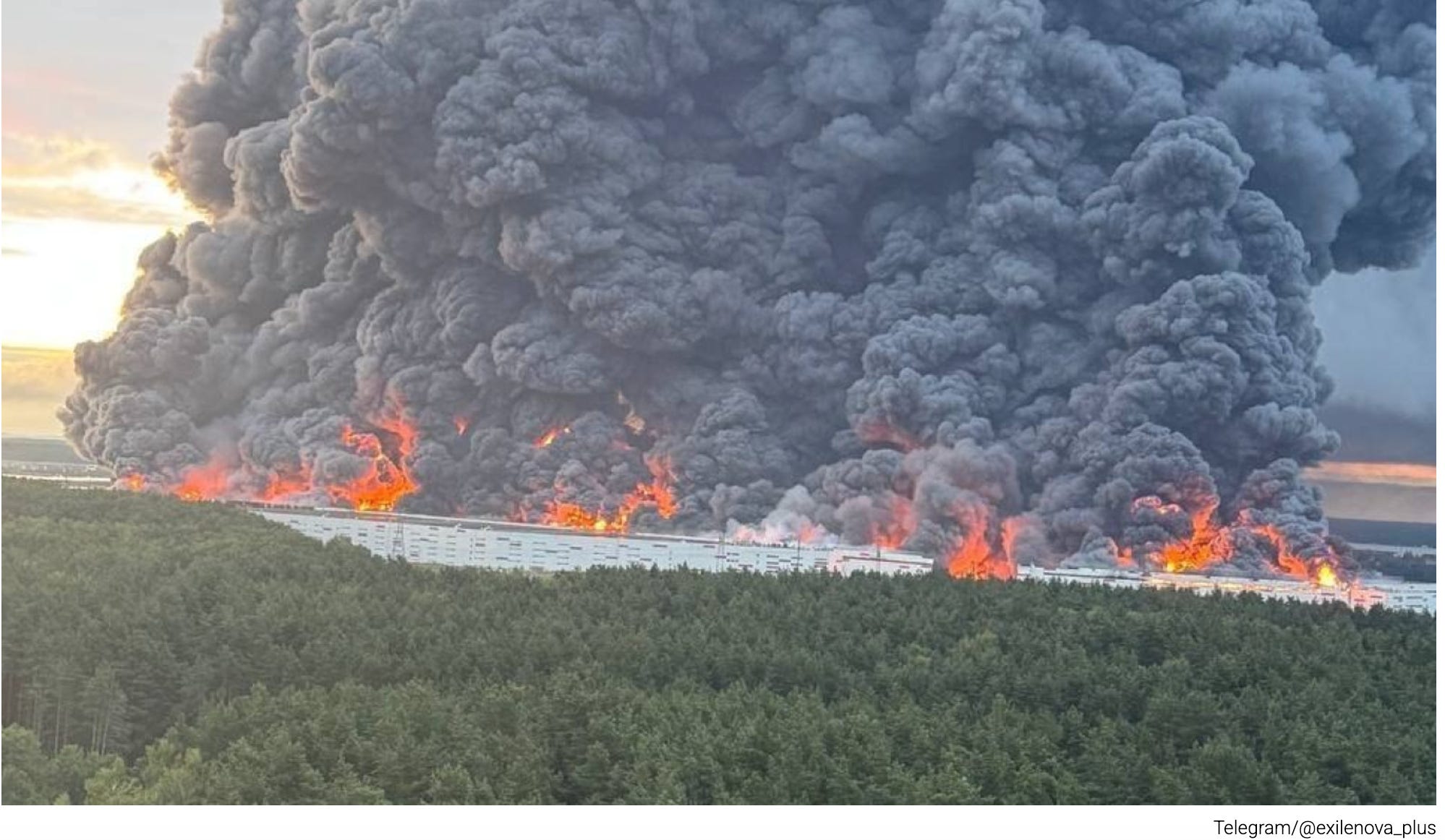
The order follows a sustained campaign of drone strikes on Russian logistics and retail infrastructure, including repeated hits on Wildberries facilities.
Significance: State-funded reconstruction of commercial logistics signals both mounting physical damage to Russian supply chains and a fiscal drain on the budget already strained by defense spending.
Sources: Moscow Times
The Senate passed the Lindsey O. Graham Sanctioning Russia and Iran Act of 2026 on 7 August 2026 by 86-11, authorizing tariffs of up to 100% on the top five purchasers of Russian oil and gas — including China and India — plus sanctions on Putin, officials, oligarchs and financial institutions.
The House, which introduced an identical companion bill, is expected to take it up after returning from recess on 31 August, though some members remain wary of the expansive tariff authority.
Significance: This is the largest forward secondary-sanctions and tariff risk for anyone with China/India-Russia energy exposure; passage would sharply raise trade-finance, shipping, and counterparty burdens for buyers of Russian crude and expose importers to punitive US tariffs.
Sources: CNBC · The Hill · CBS News
Nearly 3,000 metric tons of Russian wheat were exported to Armenia transiting Azerbaijani territory, per agency reporting on 20 August 2026. Azerbaijan lifted its ban on transit of Armenia-bound goods through its territory in October 2025.
Significance: Reopening of the trans-Caucasus grain corridor incrementally normalizes South Caucasus trade flows and offers Russian grain exporters a lower-cost route into Armenia, marginally easing logistics risk in a region long constrained by the Armenia-Azerbaijan conflict.
Sources: TASS
A draft government resolution prepared by the Foreign Ministry would restore a preferential citizenship application fee of roughly $65 (versus $600) for residents of partially recognized Abkhazia and South Ossetia and unrecognized Transnistria.
Significance: The fee cut deepens Moscow’s integration of breakaway territories, a signal of continued political-economic absorption that carries incremental sanctions-designation risk for entities operating in those jurisdictions.
Sources: Meduza
Daily tanker-tracking data put Urals at about $63.41/bbl for 20 August 2026, well off an early-August surge above $85 that reflected Ukrainian strikes on Russian refineries and Black Sea shipping disrupting the domestic-processing/export balance.
Urals averaged $65.48/bbl in July 2026 (range $51.25-$87.05), with the discount to Brent compressed from the $20-35 norm to just a few dollars amid strong Asian demand and tight tanker capacity (latest available data, July-August 2026).
Significance: Elevated and volatile Urals pricing, combined with a narrow Brent discount, sustains Russian export revenue and federal-budget resilience despite price caps — a key input for FX, sovereign-risk and commodity-exposure models, and a variable that could shift sharply if the Graham tariff regime advances.
Sources: TankerMap · Oil & Gas Storage News · Cbonds
President Putin intervened directly to restore Sergei Bochkarev to his post at Russia’s Prosecutor General’s Office after his dismissal. Bochkarev led the wartime campaign of asset seizures and nationalizations.
Significance: Reinstatement signals continuity in Russia’s asset-seizure drive, representing the largest asset redistribution since the 1990s, minting new oligarchs loyal to the Kremlin.
Sources: Moscow Times
CSTO reported a joint command-staff exercise aimed at improving coordination between border guards and other agencies of CIS member states in crisis scenarios, per TASS on 20 August 2026.
Significance: Deepening CSTO/CIS security integration underscores Moscow’s consolidation of its post-Soviet security bloc, a backdrop factor for regional political risk and for entities exposed to Central Asian and Caucasus counterparties.
Sources: TASS

The Russian Orthodox Church signaled intent to send the relics of Prince Dmitry Donskoy — reportedly discovered in July during restoration of the Kremlin’s Archangel Cathedral — to the war zone in Ukraine, and Putin took part in a prayer service at the cathedral on 20 August 2026.
The rollout comes roughly a month before State Duma elections, with another Orthodox relic scheduled to tour 13 Russian cities during the voting period.
Significance: The church’s mobilization of the flock ahead of Duma elections reinforces focus on pensioners, the electorate most likely to go to the polls and vote.
Sources: Novaya Gazeta
No new additions to the US sanctions list.
High — confirmed by multiple independent open sources, or by an authoritative primary source (official government release, OFAC designation, central-bank data).
Medium — reported by a single credible source, or multiple outlets tracing to one origin; plausible but not independently corroborated.
Low / single-source — a single source, unverified, or a state-media claim without independent confirmation; treat with caution.
Confidence reflects the degree of open-source (OSINT) corroboration at the time of writing and does not reflect human-source (HUMINT) verification. This brief is for information only and is not investment advice.
You may also enjoy reading Barbershop Whispers…Las Améяicas and this week’s
BWR Daily - 20 August 2026, Week 34
Comments
Nothing yet. Say the first thing.
Sign in to join the conversation.