

As I write this, there is a noticeable heaviness in the (Gulf) region. News alerts feel closer to home. Whether we are directly or indirectly affected, uncertainty changes the emotional temperature of a place.
In moments like this, empathy stops being an abstract virtue and becomes something more structural. More necessary.
We often treat empathy as a moral accessory (admirable, but optional). A personal trait rather than a systemic force. Something that belongs to private life, not competitive institutions.
Yet when environments become tense (geopolitically, technologically or economically), one thing becomes clear: systems are only as resilient as the people inside them.
And resilience has an economic dimension.
Productivity, narrowly defined
For decades, productivity has been defined in increasingly mechanical terms.
More output.
Shorter timelines.
Greater pressure.
Higher expectations.
This logic has shaped corporations, research labs and universities alike.
Publish more.
Teach more.
Supervise more.
Compete more.
Performance metrics have multiplied. Dashboards have become more sophisticated. Evaluation cycles have shortened.
But something else has quietly eroded alongside this relentless optimisation:
Trust.
Psychological safety.
Intellectual risk-taking.
Long-term sustainability.
Burnout became normalised.
Disengagement became invisible.
Excellence became extractive.
We began to treat human capacity as if it were infinite, as if increasing demand would automatically increase performance.
Behavioural economics tells a different story.
Human beings do not simply accelerate because pressure increases. Often, the opposite occurs.
When people feel unsafe (intellectually, emotionally or socially), they conserve energy.
They avoid risk, minimise exposure, stop experimenting and stop questioning.
Fight or flight perhaps?
In environments like academia, where progress depends on curiosity and intellectual courage, this is not a small problem. It can be catastrophic.
Empathy as incentive design
At its core, economics is the study of incentives and behaviour.
Empathy changes the incentive structure of a system.
When individuals feel understood rather than monitored, they engage more deeply.
When mistakes are met with curiosity rather than punishment, learning accelerates.
When people are treated as humans rather than outputs, they invest more of themselves into the work.
This… is incentive design.

Empathy reduces friction in communication, increases trust between collaborators, shortens feedback loops and improves retention of talent.
It lowers the hidden costs of stress, conflict and attrition.
These effects compound…
Cruelty extracts value quickly. Empathy compounds value slowly.
But compounding always wins in the long run.
The Academic Example
Academia offers a particularly stark illustration of this tension.
Universities measure success obsessively: citations, grants, rankings, throughput.
But they rarely measure the conditions under which those outputs are produced.
They seldom ask:
Are early-career scholars psychologically safe enough to challenge senior ideas?
Are students encouraged to ask naïve questions without humiliation?
Are failures treated as part of scholarship or as personal shortcomings?
The result is a system capable of producing knowledge; but often at the cost of exhausting the people producing it.
When experienced academics disengage or leave, institutions lose decades of tacit knowledge. Institutional memory erodes. Mentorship pipelines weaken.
Burnout is not merely a personal issue. It is an economic one.
Lost productivity.
Healthcare expenditure.
Recruitment and turnover costs.
Diminished innovation.
Empathy acts as a preventative intervention; not because it feels good, but because it preserves capacity.
What elite sport understands
Elite sport, interestingly, often understands this trade-off more clearly.
Coaches know that fear inhibits performance.
An athlete anxious about punishment does not experiment.
They play safe and avoid responsibility.
Yet high performance requires risk. Creativity. Adaptation. Confidence under uncertainty.
Empathy, applied properly, creates the conditions where these qualities emerge.
It does not mean lowering standards.
Empathy is not indulgence.
It is clarity without cruelty.
The best leaders in sport (and in scholarship) hold people to high expectations while recognising their humanity.
They understand that pressure without support breaks systems.
Support without challenge stagnates them.
Empathy allows the balance.
Altruism as long-term strategy
There is also a deeper economic argument that rarely enters mainstream discussions.
Altruism is not charity.
In institutional terms, altruism is long-term thinking.
It recognises that:
systems designed purely for extraction eventually collapse.
systems designed for mutual benefit endure.
Short-term optimisation can generate impressive quarterly metrics. But over time, it depletes the very human capital that drives innovation.
Empathy stabilises the system.
In volatile times (whether geopolitical, technological or organisational), stability becomes a competitive advantage.
Technology and Acceleration
Technology complicates this further.
Artificial Intelligence (AI) can optimise workloads, automate processes and accelerate output.
Used wisely, it can remove friction and enhance human creativity.
Used carelessly, it can amplify pressure.
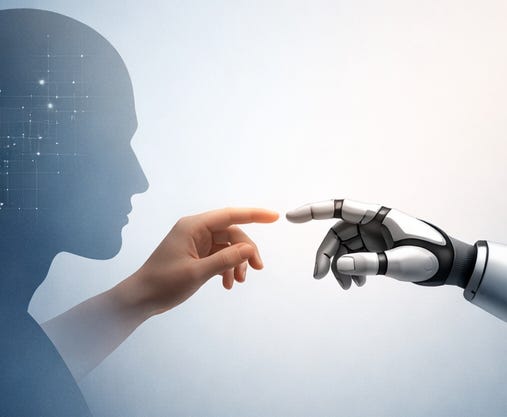
Efficiency without care becomes acceleration toward exhaustion.
The question is not whether systems can do more.
It is whether people can remain whole while doing it.
In high-performance cultures, the temptation is always to chase acceleration. But acceleration without resilience creates fragility.
And fragility is expensive.
Measuring what Matters
The economics of empathy forces us to reconsider what we value.
Not just what we measure, but why we measure it.
If institutions want sustainable excellence, they must stop treating kindness as an optional extra and start recognising it as structural infrastructure.
Psychological safety is not softness. It is fuel for innovation.
Trust is not weakness. It is the lubricant of collaboration.
Respect is not indulgence. It is a retention strategy.
Empathy shapes behaviour → Behaviour shapes performance → Performance shapes outcomes.
This chain is unavoidable.
In times of uncertainty
When external tensions rise (whether regional or global), people carry that emotional weight into classrooms, offices, laboratories and training grounds.
Uncertainty changes how we think. How we focus. How we interact.
In such moments, doubling down on pressure rarely produces excellence. Stability does… And stability begins with how we treat one another.
Empathy does not make systems soft. It makes them resilient.
In an age of rapid technological change, global uncertainty and institutional competition, resilience may be the most valuable currency of all.
Not because it slows us down.
But because it allows us to endur; and endure well.
And endurance, over time, is what wins.
ALSO WATCH:

Subscribe/Follow:
🎬 YouTube Channel
👉 https://www.youtube.com/@A4Digest
🌐 Website
👉 https://www.habibnoorbhai.com/
👉 https://www.linkedin.com/in/habib-noorbhai-phd/
🐦 X (Twitter)
Comments
Nothing yet. Say the first thing.
Sign in to join the conversation.