
6G news and analysis for the week ending Friday, 17th July, 2026.
This week, AI-native RAN took its long-awaited first step from roadmap to product. Nokia launched what it calls the industry’s first commercial AI-RAN platform, built on its anyRAN software and NVIDIA’s Aerial platform. It offers three hardware paths, a subscription model and a spectral-efficiency roadmap that promises to double capacity from existing spectrum by 2028. Pilots begin at the end of this year, with commercial availability in 2027. This is the commercial evidence of the NVIDIA-Nokia partnership we first covered last October.
Governments are now starting to get behind AI-RAN. The US NTIA opened a $53 million funding round dedicated to AI-native RAN, the concrete follow-through on its March pivot away from just Open RAN. Applicants must meet 3GPP and O-RAN specifications and prove a commercial business case, not simply technical performance. On the same theme, Japan’s MIC signed a letter of intent with NVIDIA on 6G and AI-RAN, extending the vendor’s widening web of government tie-ups.
Meanwhile, the US-based Next G Alliance, Japan’s XGMF and Korea’s 6G Forum held their first trilateral workshop, agreeing a joint AI-native 6G white paper and three regional sensing use cases. Their shared message echoed the 2025 3GPP workshop: lower the total cost of ownership and evolve today’s 5G rather than wait for 6G Day One.
Elsewhere, AT&T and Ericsson demonstrated drone detection over a live 5G network, VIAVI joined the SHIELD-6G security consortium, and this week’s pick of four research papers span intent management, digital-twin ray tracing, generative uplink and satellite channel estimation.
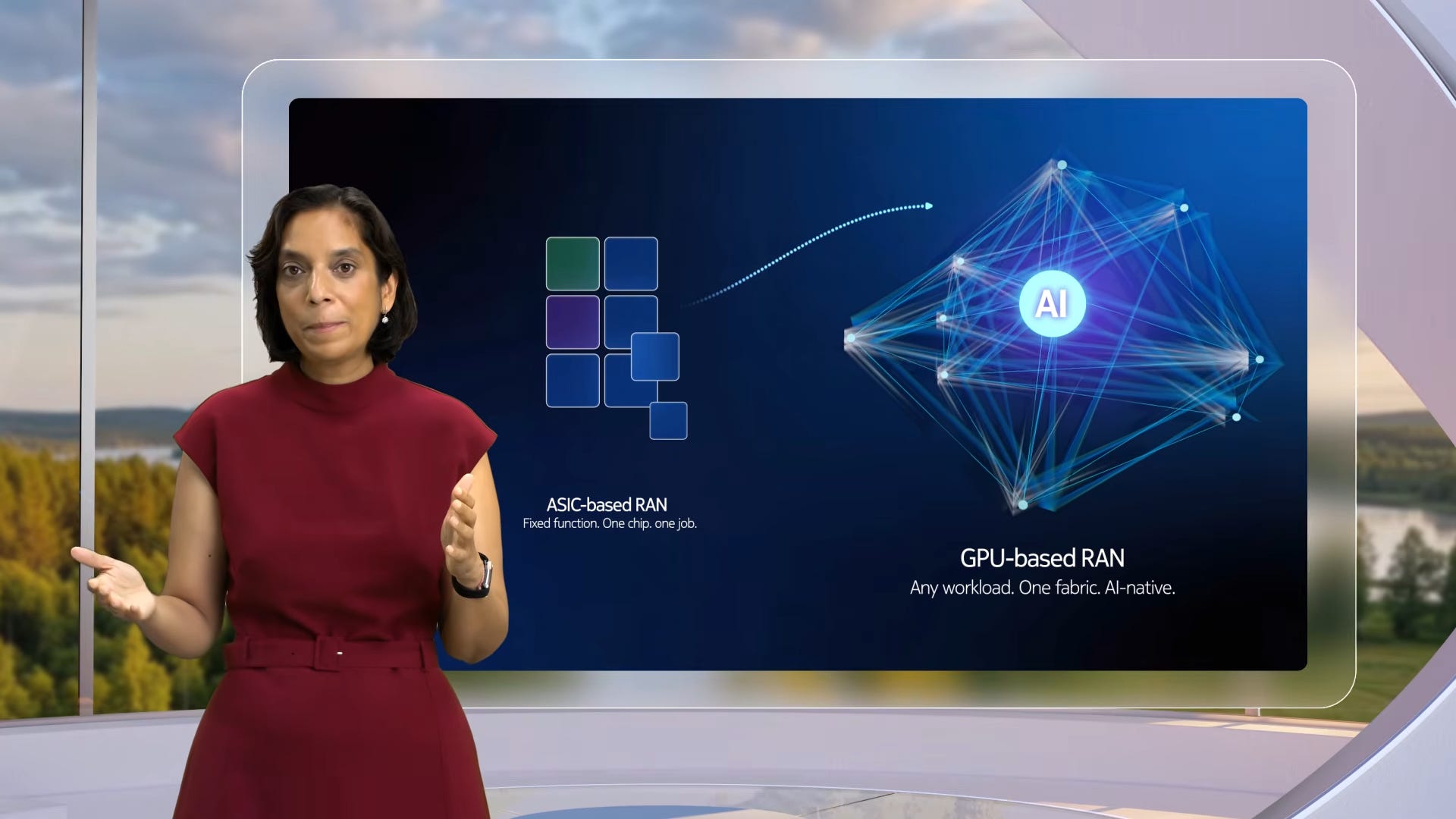
Nokia announced what it describes as the industry’s first commercial AI-RAN platform, built on its AI-native anyRAN software and NVIDIA’s Aerial AI-RAN platform. The company says the platform has already shown more than 20% spectral efficiency gains and targets 50% by 2027. It coes further and makes even bolder claims of more than 100% spectral efficiency gains by 2028, effectively doubling capacity from existing spectrum. That’s huge. Nokia’s anyRAN software will support three new accelerated computing baseband platforms, while its existing portfolio remains fully O-RAN compliant.
Justin Hotard, President and CEO at Nokia, said:
“AI-RAN is the biggest innovation in radio in decades... allows telcos to get more from their existing infrastructure, including a software upgrade path to 6G.”
What’s new: Nokia offers three adoption paths on a common software-defined architecture. These are a GPU-powered AirScale capacity plug-in card for its installed base, a standalone GPU AI-RAN node supporting 4G, 5G and future 6G, and GPU-powered commercial off-the-shelf servers for cloud-native deployments. A new subscription commercial model lets operators activate features through software rather than hardware refresh cycles.
Why this matters: This is the productisation of the NVIDIA-Nokia partnership, moving from the $1 billion investment we covered last October and the operator trials shown at MWC in March. The framing addresses the core operator concern of network economics, promising more capacity from owned spectrum without new radios. The plug-in card path, also supported by Marvell merchant silicon, gives Nokia’s large AirScale base an incremental route rather than a rip-and-replace. Pilots begin at the end of 2026, with commercial availability in 2027. The “industry’s first” claim is Nokia’s own, and rivals including ODC have made adjacent market-ready claims, so it should be read as a positioning statement.
Implications for 6G standards: AI-RAN remains an implementation choice rather than a standards requirement, but the growing operator commitment creates de facto architectural direction. How GPU-accelerated processing interacts with the standardised interfaces that 3GPP will define in Release 21 remains the open question.
View source material to read more
The US National Telecommunications and Information Administration (NTIA) is making up to $53 million available to accelerate development, testing and commercialisation of secure, American-led AI-enabled RAN architecture. This is the fourth Notice of Funding Opportunity under the Public Wireless Supply Chain Innovation Fund, titled “Solutions for AI-Native RAN”. Applicants must propose solutions that meet 3GPP and O-RAN specifications, and must conduct real-world demonstrations that confirm their business case projections. Applications opened on 14 July and close on 9 September, with awards on a rolling basis from the autumn.
Arielle Roth, NTIA Administrator, said:
“As AI becomes increasingly integrated into wireless networks, AI-native RAN is an area that plays directly to America’s strengths in software and artificial intelligence.”
What’s new: The fund now demands commercial evidence, not just technical performance. Projects must show how their architectures reduce operational costs, unlock new revenue streams and enable third-party services. Cybersecurity must be integrated into every layer of design and operation.
Why this matters: This is the concrete follow-through on the Innovation Fund pivot from Open RAN to AI-RAN that we covered on 20 March. It ties the money to the Trump Administration’s AI Action Plan and its push to export an American AI technology stack. The insistence on business-case validation is notable, reflecting the wider industry shift from capability demonstrations toward proven economics. It also reinforces the US preference for a software-defined model of continuous innovation over hardware upgrade cycles. The framing is heavily national, positioning AI-native RAN as strategic infrastructure.
Implications for 6G standards: The requirement that applicants meet 3GPP and O-RAN specifications keeps federally funded work inside the multilateral process rather than outside it. However, the geopolitical framing carries a risk of being perceived as an attempt to shape 6G outcomes in favour of specific national players.
View source material to read more
Japan’s Ministry of Internal Affairs and Communications (MIC) signed a letter of intent with NVIDIA on 16 July, covering collaboration on 6G and AI-RAN technologies as the basis for what both parties call “physical AI connectivity”. The agreement was signed by Takuo Imagawa, MIC Vice-Minister for International Affairs, and Ronnie Vasishta, NVIDIA’s Senior Vice President for its Telecom Business Unit. Both sides aim to develop next-generation digital infrastructure described as secure, resilient, trusted, open and interoperable. The MIC frames the work as securing Japan’s technological leadership and international competitiveness in 6G and AI-RAN.
What’s new: The LOI creates a structured cooperation framework rather than a specific programme of work, defining shared strategic objectives and areas of intended collaboration. It follows the MIC’s decision to join the AI-RAN Alliance in February 2026.
Why this matters: This extends NVIDIA’s widening portfolio of government engagements, which already spans Korea, where its investment sits behind the Yonsei AI-RAN centre, and earlier commitments across the UK and Europe. For Japan, the LOI aligns national industrial policy with the vendor now anchoring much of the AI-RAN ecosystem. The physical AI framing, connecting networks to autonomous machines and robots, mirrors language used by T-Mobile, Deutsche Telekom and others this year. As with most letters of intent, the practical value depends on the programmes that follow. It is a positioning signal more than a deliverable.
Implications for 6G standards: Japanese standards bodies ARIB and TTC are 3GPP Organisational Partners, so aligned national positions can feed the process. It remains to be seen whether this cooperation produces concrete technical contributions or remains a statement of intent.
View source material to read more
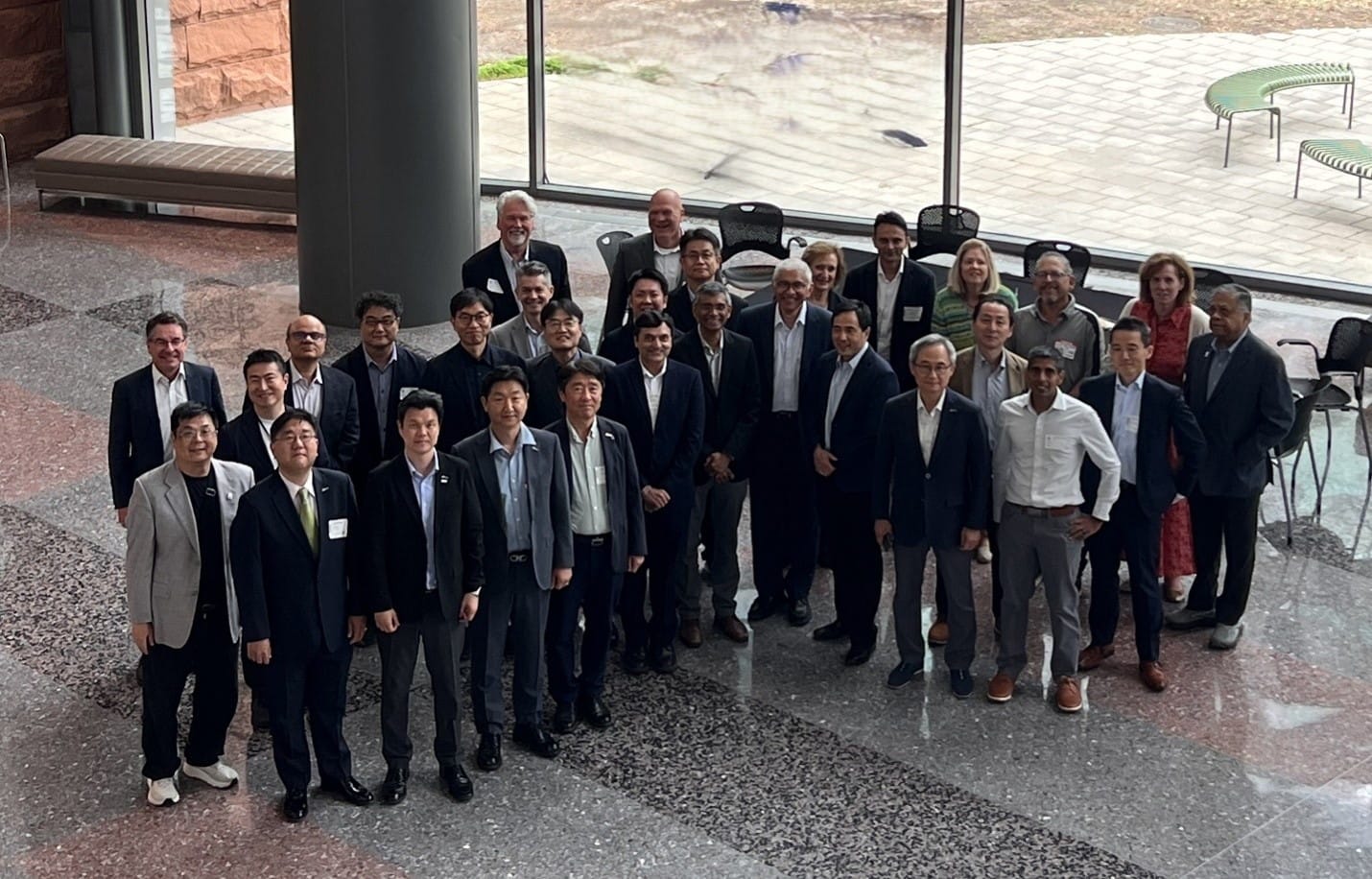
The Next G Alliance (North America) hosted its first trilateral workshop in Dallas with Japan’s XG Mobile Forum (XGMF) and Korea’s 6G Forum, under the theme “6G Day-1 and Beyond”. The discussion spanned integrated sensing and communication (ISAC), non-terrestrial networks (NTN), AI and digital twins. The three bodies agreed to jointly develop an AI-native 6G white paper over the coming year, and to explore common evaluation frameworks for sensing. The overarching message, reported by the Next G Alliance, was to lower the total cost of ownership of 6G and evolve existing 5G rather than wait for 6G Day-1.
What’s new: The workshop identified three regionally focused ISAC use cases for further study. These are aviation bird-strike prevention from the 6G Forum, industrial automation from XGMF, and automotive sensing from the Next G Alliance. Participants also flagged that the O-RAN OCUDU programme could add sensing capabilities to the architecture, and that the pace of terrestrial and satellite integration will depend on how LEO operators respond to direct-to-consumer demand.
Why this matters: The message reinforces the operator community’s concerns from the 2025 3GPP 6G workshop, where total cost of ownership and pragmatic evolution dominated. It signals that the three regional alliances are converging on economics rather than raw performance as the organising principle for 6G. Grounding that vision in concrete cross-industry use cases is more useful than another statement of principles. The emphasis on spectrum alignment and sharing also connects directly to the contested band debates ahead of WRC-27. As ever, workshop conclusions are direction-setting rather than binding.
Implications for 6G standards: Aligned positions across North America, Japan and Korea simplify coalition-building inside 3GPP and at the ITU. The ISAC evaluation frameworks, if they mature, could feed the sensing study work already active in Release 20 and the IMT-2030 process.
View source material to read more

AT&T and Ericsson demonstrated drone detection using network sensing over a live 5G network, in authorised airspace outside AT&T Stadium in Arlington, Texas, during “one of the largest global sporting events in the world” (yes, it’s the World Cup, but as I guess neither are official event sponsors, they don’t want to risk the attention of FIFA’s legal representatives. Sigh). Using existing cellular towers, Ericsson deployed Massive MIMO radios across multiple sites to create a multi-static sensing configuration. The system combined sensing-enabled radio transmissions with AI-enabled algorithms to detect, locate and track multiple drones flying at 300 to 400 feet in real time. It generated live target metrics including location, velocity and elevation.
Yigal Elbaz, SVP and Network CTO at AT&T, said:
“Integrated sensing is an important part of the road to 6G, and this work helps show how we can start bringing that future to life right now.”
What’s new: The demonstration turns existing network infrastructure into a distributed sensing platform, without additional standalone sensing hardware. By combining synchronised nodes, it aims to improve detection reliability and positioning accuracy for low-altitude airspace monitoring around venues and public spaces.
Why this matters: ISAC is one of the defining new capabilities under study for 6G, and drone detection is among its most-cited early use cases. This adds a US operator field demonstration to a crowded evidence base that already includes e& UAE, InterDigital with Türk Telekom, and ITRI. The practical appeal is cost, reusing communications spectrum and radios for sensing rather than deploying dedicated systems. Both firms are careful to frame the work as 5G building blocks toward 6G rather than a 6G capability. The next stated milestone is “the major sporting event in Los Angeles in 2028” (that’s the Olympic Games, in case you were wondering, which also has mighty strict branding rules, apparently).
Implications for 6G standards: The work feeds the ISAC study items active in 3GPP, where the central design question is how to share radio resources between sensing and communication without cannibalising capacity. Operator field data of this kind informs how sensing performance requirements are eventually specified.
View source material to read more
VIAVI Solutions has been awarded $1.1 million from the European Smart Networks and Services Joint Undertaking and Horizon Europe to join the SHIELD-6G project. VIAVI will contribute digital twins built on its TeraVM AI RAN Scenario Generator, generating realistic datasets to develop and validate AI-driven security models before commercial 6G launches. Ian Langley, SVP at VIAVI, said the aim is “the ability to simulate, test and detect threats before a single commercial 6G signal goes live.”
Why this matters: The digital-twin contribution is the genuinely new element, extending simulation from propagation and energy modelling into the security domain. It reinforces the European shift toward treating 6G resilience and security as design principles rather than add-ons.
The SHIELD-6G project was first covered in our 12 June edition, when University College Dublin was named as lead of the €8 million project with partners including Thales.
View source material to read more
This paper proposes an architecture for fulfilling and verifying network intents without inspecting user traffic, addressing GDPR and multi-vendor opacity constraints. A coordinator provisions resources from declared intent categories and checks fulfilment using only aggregate standardised performance counters at the O-RAN O1 interface, mapped to the 3GPP intent framework (TS 28.312) and the Non-RT RIC. It was tested on performance-counter data from four operator networks.
Why this matters: Intent-based management is central to 6G service automation, but existing verification methods often require intrusive traffic inspection. A privacy-preserving approach that still detects failures could ease a real regulatory and commercial tension. The author is employed at Ericsson, so the work reflects vendor thinking on how intent assurance can be standardised.
View source material to read more
The DeepRT Engine is a GPU-parallel ray-tracing framework for building real-time digital twin channels, the site-specific replicas of radio propagation that AI-native networks depend on. Its three-stage pipeline reduces computation runtime by 96.3% while achieving a converged error of just 0.001 dB, outperforming the established Wireless InSite and Sionna tools.
Why this matters: Digital twins ranked among the top requests at the 3GPP 6G workshop, because AI models need training data that networks which do not yet exist cannot provide. Faster, accurate ray tracing makes real-time propagation modelling more practical, a gap that vendors including Nokia are also racing to fill.
View source material to read more
LiTCom pairs a deliberately simple transmitter with a receiver that uses large generative AI models to reconstruct high-fidelity content from badly degraded signals. By shifting complexity to the network side, it exploits the resource gap between edge devices and infrastructure. Against a 5G NR-like baseline it reports SNR gains up to 8 dB while cutting more than 95% of transmitter-side computation.
Why this matters: Uplink performance and device power budgets are persistent constraints, especially for low-cost sensors. Moving the processing burden into the network aligns with the asymmetric, AI-native design thinking shaping 6G. The author list includes Rahim Tafazolli of Surrey’s 6G Innovation Centre, a notable name in the field.
View source material to read more
This paper presents a compact, convolution-based channel estimator designed for real-time inference aboard power-constrained low-Earth-orbit satellites. Exploiting the predictable, high-Doppler nature of satellite channels, it requires around 29 times fewer operations than conventional methods and improves parameter efficiency by 27% over state-of-the-art AI models, while achieving better accuracy.
Why this matters: 6G is expected to integrate non-terrestrial networks from day one, but the heavy compute that AI channel estimation usually assumes is not available on satellites. Efficient onboard AI that respects tight power budgets is a practical enabler for the satellite-terrestrial convergence that 3GPP is standardising.
Comments
Nothing yet. Say the first thing.
Sign in to join the conversation.