
6G news and analysis for the week ending Friday, 1st May, 2026.
It’s a relatively quiet news week (well, it had to happen eventually), but there have been several developments that reinforce themes we have been tracking these past nine months. The most strategically significant is Nokia’s decision to divest its Fixed Wireless Access (FWA) CPE business to US-based Inseego. This is a transaction that simultaneously frames FWA as non-core for Nokia (which we knew about since last November, leaving Nokia to consolidate around AI infrastructure and the AI supercycle) and as a 6G growth opportunity for Inseego. The deal includes joint go-to-market plans for 6G and the wireless edge, with Inseego CEO Juho Sarvikas openly anticipating a “6G supercycle” at the end of the decade. Two supercycles in one decade?
In Europe, EU Executive Vice-President Henna Virkkunen visited the University of Oulu’s 6G Flagship programme to discuss standardisation, spectrum policy, defence applications and chip design. The visit produced a rather candid exchange, with Oulu researchers warning that industry funding is beginning to dictate research directions in EU projects. This is a concern that Virkkunen acknowledged directly. The Commission is also stepping up cooperation through formal partnerships, with 6G-IA signing a cooperation agreement with ERTICO – ITS Europe to bring the connected mobility sector closer to 6G standards work.
Two Horizon Europe-funded projects also produced updates this week. IoT-ZERO (near-zero energy IoT) and the OPTI-6G project (optical wireless 6G), which is approaching its final event. And in the Philippines, Globe president and CEO Carl Cruz used the GSMA Digital Nation Summit in Tokyo to position the operator for an early 6G role grounded in resilience rather than peak speed. Four research papers round out the week, covering agentic intent frameworks, energy-saving transport slicing, LLM-based spectrum auctions and slice isolation in shared O-RUs. What’s not to love?
Nokia has agreed to divest its Fixed Wireless Access (FWA) CPE business to US wireless broadband vendor Inseego, in a deal that will roughly double Inseego’s revenue and give it global scale. Nokia will receive an approximate 7 per cent equity stake in Inseego (worth around $20 million in common stock and warrants), plus an additional $10 million investment, bringing its total ownership to approximately 11 per cent. The deal is expected to close in Q4 2026. Inseego CEO Juho Sarvikas told SDxCentral:
“With 6G you will see tenfold performance, latency improvements, and more efficiency in terms of how many FWA-like connections you can deploy out there in the marketplace. We will be in a great position to capture the 6G supercycle at the end of the decade.”
What’s new: The agreement explicitly includes joint go-to-market initiatives between Nokia and Inseego in 6G and wireless edge, alongside carrier 5G monetisation and consumer/enterprise opportunities. Nokia’s FWA business was integrated last year into a Portfolio Businesses unit alongside Enterprise Campus Edge and Microwave Radio, as part of the company’s split into Network Infrastructure and Mobile Infrastructure segments. Most recent financials showed FWA product sales declining and Portfolio Businesses net sales down 2 per cent.
Why this matters: The signalling is a little awkward. Nokia frames the divestment as a strategic refocus on “the infrastructure that powers the AI supercycle and AI-driven transformation of networks”, while Inseego is publicly betting that 6G will dramatically expand the FWA addressable market. Both positions can be true: Nokia keeps its mobile RAN, optical transport, IP and Bell Labs research footprint intact, while offloading a CPE business with declining margins, and Inseego gains scale and a 6G-aligned roadmap. But the timing is notable: this is happening just as WiSig Networks, Reliance Jio and others are positioning FWA as a foundational 6G use case, and as 3GPP RAN #109 confirmed FWA as a deployment scenario explicitly captured in TR 38.914. There is also a question for Nokia’s existing operator FWA customers about service continuity and product roadmap consistency through the transition.
Implications for 6G standards: FWA is one of the deployment scenarios formally being studied in 3GPP TR 38.914 (alongside several others). Nokia remains a heavyweight contributor to RAN-side 6G standardisation regardless of the CPE divestment, but the 6G evolution of FWA-specific requirements (performance, spectrum efficiency and integration with fibre alternatives) may now sit more clearly within Inseego’s commercial interest than Nokia’s.
View source material to read more — Inseego/Nokia press release
Read TelecomTV’s excellent coverage here and a follow up here
View source material to read more — SDxCentral
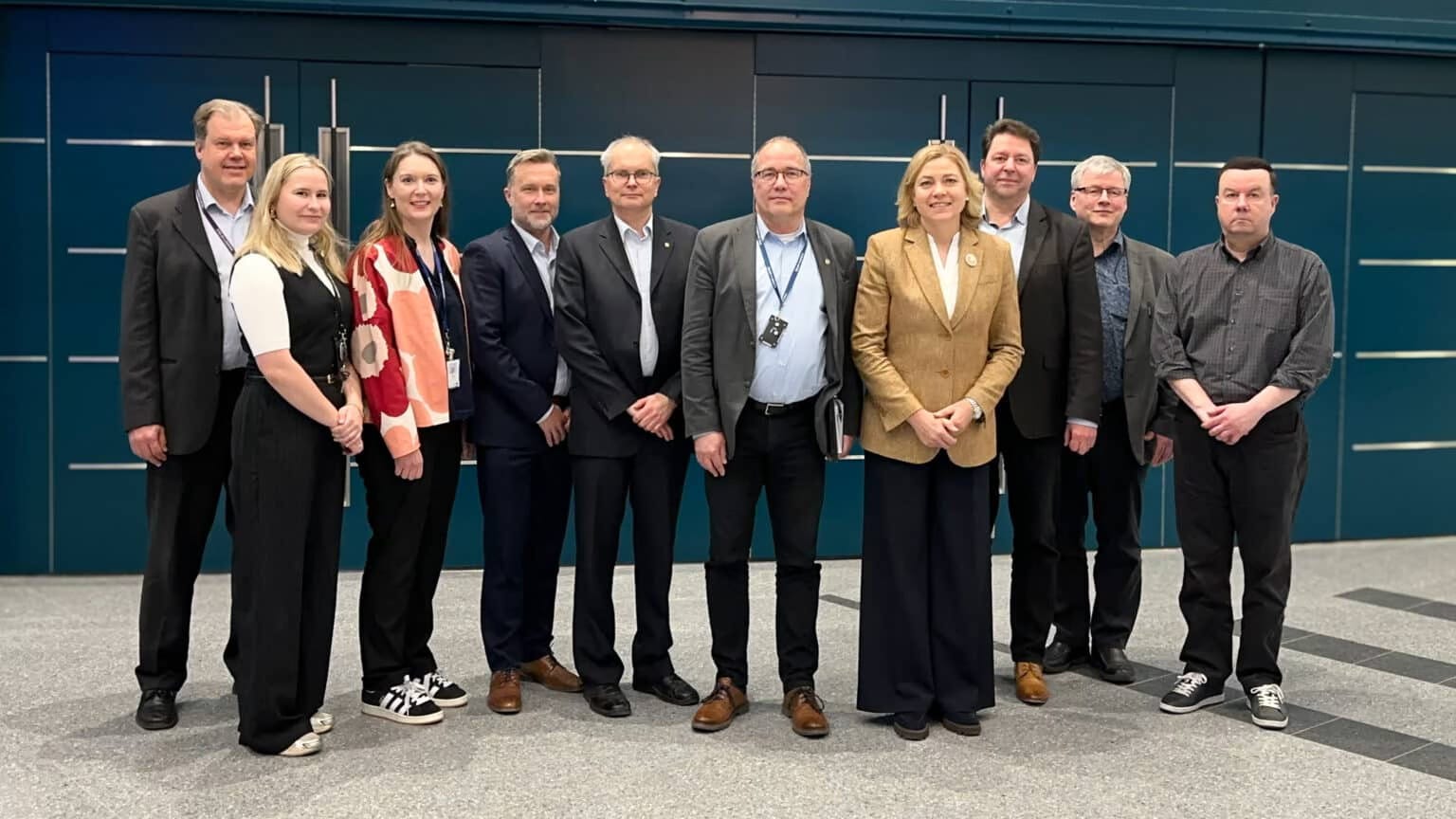
EU Executive Vice-President for Tech Sovereignty, Security and Democracy, Henna Virkkunen, visited the University of Oulu on 23 April to meet researchers from Finland’s 6G Flagship programme. The agenda spanned standardisation, spectrum policy, defence applications, chip design and the long-running question of how to monetise European research for the EU economy. Professor Matti Latva-aho, Vice Rector for Research and former Director of 6G Flagship, summarised eight years of work that now involves around 600 researchers, more than 60 EU projects and fifteen position papers shaping global research agendas.
This could easily be dismissed as just another academic meeting, but there were some great insights to be found in the reporting. The sharpest exchange came on the question of industry capture of EU research. Dr Marja Matinmikko-Blue, Director of Sustainability and Regulation at 6G Flagship, observed that in large EU projects with significant industry involvement, companies are beginning to dictate research directions. Virkkunen replied:
“If business interests start restricting research freedom, it is damaging for our research in the long run.”
What’s new: Several interesting points emerged from the visit. Professor Markku Juntti described how 6G networks could function as sensing platforms for drone detection and similar public security applications, which Virkkunen confirmed aligns with the Commission’s drone and anti-drone action plan. The 6G Test Centre, which opened to external users in 2025, now serves NATO DIANA innovators and is preparing a NATO Innovation Range demonstration in Oulu in October 2026, supported by a five-million-euro Northern Programme investment. On chip design, Professor Marko Leinonen noted that the number of European circuit designers needs to at least triple to meet the EU’s 20 per cent global market share target.
Why this matters: The visit is significant in itself: Virkkunen is one of the most senior Commission figures explicitly responsible for tech sovereignty, and her engagement with Oulu underscores Finland’s central position in European 6G research. More importantly, the candid acknowledgement of industry capture is a useful counterweight to the dominant narrative that public-private partnership is unambiguously good. Several EU 6G projects covered in previous editions of 6G Futures (including ORIGAMI, SUSTAIN-6G and others) depend heavily on industrial partners whose commercial interests inevitably shape research priorities. The shortage of chip designers also reinforces concerns raised at the 3GPP 6G Workshop about Europe’s component-level dependencies.
Implications for 6G standards: Oulu has fed directly into ITU IMT-2030 work on sustainability, resilience and security, and into the European Commission’s December 2025 harmonisation decision on the 3.8–4.2 GHz band and parts of the draft Digital Networks Act. Maintaining academic neutrality in the standards-feeding research process is not a marginal concern: if industry agendas dominate, the technical positions Europe brings to 3GPP and ITU will reflect commercial priorities rather than broader public interest considerations such as energy efficiency, accessibility and security.
View source material to read more
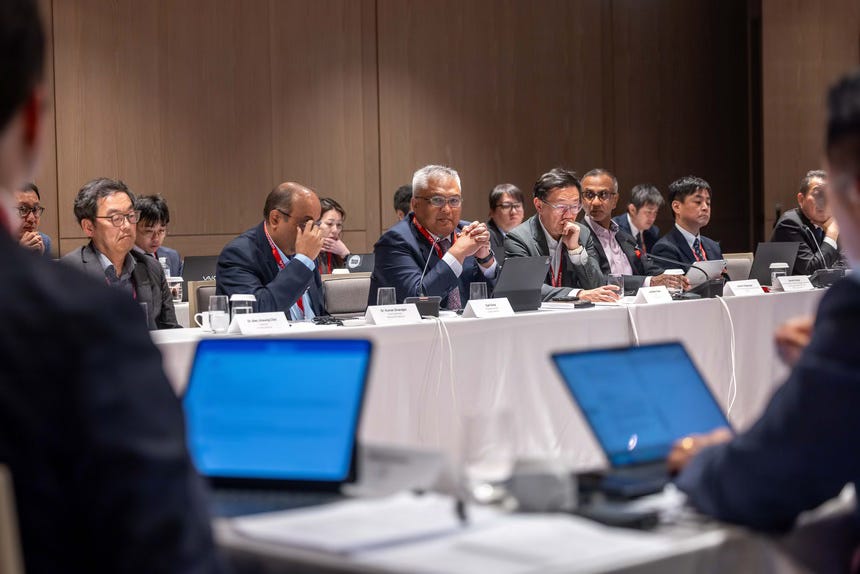
Philippine operator Globe Telecom used the GSMA Digital Nation Summit in Tokyo to position itself for early 6G engagement, with president and CEO Carl Cruz emphasising resilience over speed for the country’s geography of more than 7,000 islands. The story was reported by The Philippine Star and confirmed in a Globe corporate release. Globe is one of the operators that signed the Tokyo Accord (covered in our 17 April newsletter) alongside NTT DOCOMO, KDDI, SoftBank, Rakuten Mobile, LG Uplus, the XG Mobile Promotion Forum, the 6G Forum, the Bharat 6G Alliance and the GSMA. Cruz said:
“As we look toward 6G, the priority is clear. We have to build networks that are resilient, secure, and dependable in everyday life, especially when conditions are most challenging.”
What’s new: Globe’s positioning is explicitly hybrid and grounded in the Philippines’ geographic constraints. The operator is combining terrestrial assets with satellite constellations to serve more than 7,000 islands. Cruz also flagged that in 2025 Globe blocked over 967 million scam and spam messages and at least 17,000 malicious domains. Local fraud rates in the Philippines are reported at 13 per cent, more than double the global average of 5 per cent, and Cruz argues that security must be built into networks from the start.
Why this matters: Globe’s perspective is a useful corrective to the peak-performance narrative dominating 6G marketing elsewhere. The argument that “a stable connection that holds under pressure is far more valuable than speed that cannot be sustained” reflects a legitimate operational reality for operators serving geographically challenging markets, and aligns with the resilience and inclusivity principles increasingly emphasised in the ITU IMT-2030 framework and the New Delhi Declaration. However, this is largely operator positioning rather than technical contribution: Globe is not (yet) producing 3GPP submissions or research outputs of the scale that come from its Asia-Pacific Tokyo Accord co-signatories.
Implications for 6G standards: Globe’s emphasis on resilience and hybrid terrestrial-satellite connectivity aligns with the NTN integration priorities expressed by virtually every major operator at the 3GPP 6G Workshop. Whether Globe’s voice influences specifications will depend on its level of engagement with the GSMA, the Asia-Pacific Telecommunity and 3GPP working groups. The Tokyo Accord provides one channel; sustained technical contribution would be another.
View source material to read more — The Philippine Star
View source material to read more — Globe
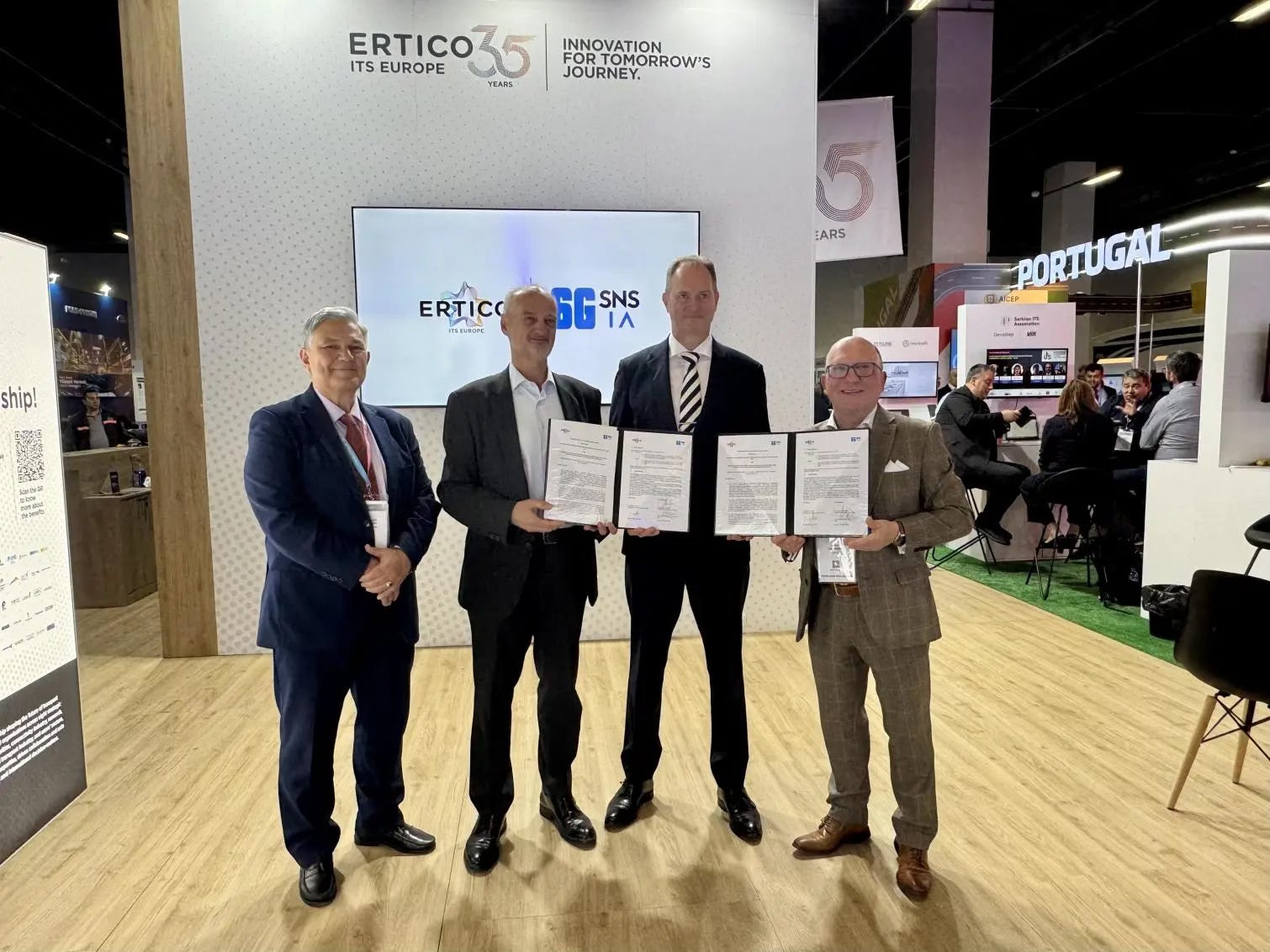
ERTICO – ITS Europe and the 6G Smart Networks and Services Industry Association (6G-IA) signed a cooperation agreement at the 17th ITS European Congress in Istanbul on 28 April. The partnership is intended to accelerate alignment between the intelligent transport sector and the telecoms industry on connected, cooperative and automated mobility (CCAM) requirements for future 6G networks. ERTICO is a public-private partnership with more than 120 members across eight sectors, while 6G-IA is the European industry voice in the Smart Networks and Services Joint Undertaking (SNS JU) and a 3GPP Market Representation Partner. Dr Colin Willcock, Chairman of the 6G-IA Governing Board, said:
“By working closely with the transport community, we can ensure that future 6G innovations effectively address the needs of mobility systems and deliver tangible benefits for society.”
What’s new: The agreement covers joint communication activities, cross-border initiatives, advisory roles in EU innovation projects, and the integration of 5G and 6G capabilities into transport applications. ERTICO is now also represented on the 6G-IA Board through Dr Nikolaos Tsampieris. The partnership formalises what has historically been ad-hoc collaboration between the two sectors via individual EU projects.
Why this matters: Connected mobility is one of the verticals that consistently appears in 3GPP 6G Workshop submissions, with manufacturers including Bosch, BMW, Volkswagen, Toyota and Continental all flagging vehicular deployment scenarios for inclusion in TR 38.914. However, vertical industries have historically struggled to translate their requirements into 3GPP-acceptable technical contributions, in part because the mobile and automotive standards processes operate on different timelines and assumptions. A formal channel between ERTICO and 6G-IA could improve that translation, particularly for cross-border interoperability requirements that need both regulatory and technical alignment. The 5G Automotive Association (5GAA) already plays a similar role within 3GPP as a Market Representation Partner.
Implications for 6G standards: 6G-IA’s status as a 3GPP MRP gives ERTICO indirect access to the standards process. For the mobility sector, the most useful outcomes would be aligned technical positions on V2X latency requirements, cross-border roaming for autonomous vehicles, and integrated sensing and communication (ISAC) capabilities for road safety applications.
View source material to read more
Two EU Horizon Europe-funded projects produced updates this week, illustrating the breadth of the SNS JU research portfolio. The IoT-ZERO project, coordinated by Professor Andrea Ortiz of TU Wien, has received funding to develop near-zero energy IoT systems for future 6G networks. TU Delft’s Faculty of Electrical Engineering, Mathematics and Computer Science is one of ten consortium partners across eight European countries, with industrial participants including Thales (France), Qascom (Italy), Lasting Software (Romania), Sensoneo (Slovakia) and Latvijas Mobilais Telefons (Latvia).
Separately, the OPTI-6G project, which has been developing optical wireless 6G systems based on near-infrared (1550 nm) VCSEL arrays, announced its final event will take place at Brunel University London under technical manager Professor John Cosmas. OPTI-6G has run since January 2024 and concludes in December 2026.
What’s new: IoT-ZERO is structured around three deliverables: an energy-conscious 6G architecture, secure communication methods for battery-less devices that harvest environmental energy, and event-driven sensors that activate only when needed. The OPTI-6G final event will showcase a fully operational optical wireless 6G system, beam-steering and localisation breakthroughs, and live lab demonstrations covering Received Signal Strength (RSS), TDoA and beam-steered localisation. The agenda confirms working sessions led by Oledcomm, RunEL, Brunel and UVSQ.
Why this matters: Both projects address dimensions of 6G that sit largely outside the 3GPP RAN agenda but are essential to the broader vision. IoT-ZERO’s near-zero energy framing connects directly to ambient IoT and energy harvesting work that has been raised at the 3GPP 6G Workshop, including in submissions from IIT Madras and others, and to the SUSTAIN-6G Lighthouse project’s sustainability-by-design objectives. OPTI-6G’s optical wireless approach is one of the few credible non-RF alternatives for indoor 6G coverage, with potential applications in smart buildings, industrial automation and XR. Optical wireless does not currently sit within 3GPP scope, but the integration question is increasingly relevant.
Implications for 6G standards: Neither project is producing standards-track outputs directly. Their value is in providing pre-standards evidence that informs both EU Commission positioning at WRC-27 and the technical assumptions that European participants bring to 3GPP. The energy efficiency findings from IoT-ZERO, in particular, could feed into the sustainability KVIs that vendors including Nokia are pushing for inclusion in Release 21.
View source material to read more — IoT-ZERO (TU Delft)
View source material to read more — OPTI-6G project overview
View source material to read more — OPTI-6G workshop (Brunel)
The paper introduces an agent-based, intent-driven end-to-end orchestration framework for Network-as-a-Service (NaaS) delivery in 6G, evaluated across several open-source LLMs. The system uses Domain Expert Agents and a TM Forum-aligned Body-of-Knowledge to refine ambiguous human intents into machine-readable actions, with a deliberate decoupling of cognition and actuation to ensure operational trust.
Why this matters: Intent-based networking is a recurring theme in 6G architecture proposals, but most discussions remain abstract. This paper provides empirical evidence that current open-source LLMs achieve high instruction compliance but struggle to translate high-resolution intents into valid catalog-backed orders without hallucinations. This is a finding with direct implications for how trustworthy intent-driven NaaS can realistically be in early 6G deployments. The use of the Model Context Protocol (MCP) and ETSI OpenSlice gives the prototype credibility as a reference implementation.
View source material to read more
The paper proposes an IP-based network slicing strategy that splits transport traffic into a high-performance “Day Slice” and an energy-saving “Night Slice”, deactivating excess line-cards in card-based routers during low-traffic periods. Pareto-based evolutionary algorithms (NSGA-II, CTAEA, and AGE-MOEA) are used to jointly optimise energy consumption and latency on the SNDlib india35 topology.
Why this matters: Transport energy efficiency is one of the less glamorous but most operationally important dimensions of 6G design. The reported deactivation of more than 40 per cent of line cards during low-traffic periods, while maintaining sub-7 ms latency for premium traffic, suggests significant operational expenditure savings are achievable with relatively modest scheduling complexity. The work feeds into the broader 3GPP and SNS JU emphasis on sustainability KVIs in 6G specifications.
View source material to read more
The paper evaluates Large Language Models (LLMs) as bidding agents in repeated 6G spectrum auctions with budget constraints, using vehicular networks as the test scenario. The Vickrey-Clarke-Groves (VCG) mechanism serves as the benchmark for incentive-compatible truthfulness, with LLM bidders compared against truthful and heuristic strategies.
Why this matters: As spectrum becomes more dynamic and contested in 6G, particularly with the upper mid-band (7–8 GHz) decisions still pending at WRC-27, automated bidding mechanisms could become operationally relevant for vehicular and industrial 6G use cases. The paper finds that when theoretical assumptions for VCG truthfulness break (such as under static budget constraints), LLM bidders sustain longer participation and achieve higher utilities, which has implications for how regulators design future spectrum allocation mechanisms.
View source material to read more
The paper proposes a slicing agent embedded in the Open Radio Unit (O-RU) that identifies slices and segregates uplink data into slice-specific eCPRI packets. The design uses a pipeline architecture with dedicated paths for time-sensitive and flexible slicing, implemented on FPGA, and supports up to 3,822 slices per slot at two clock cycles per packet.
Why this matters: Network Slice as a Service (NSaaS) is a core enabler of beyond-5G and 6G applications including XR and the tactile internet. The fundamental challenge addressed here is uplink slice identification in shared O-RUs where the O-DU handles scheduling. This is a real architectural gap in current Open RAN deployments. The work provides a concrete, FPGA-validated solution that could feed into O-RAN Alliance specifications and inform 3GPP’s evolving slicing architecture for 6G.
View source material to read more
Thanks for reading 6G Futures! This post is public so feel free to share it.
Comments
Nothing yet. Say the first thing.
Sign in to join the conversation.