
6G news and analysis for the week ending Friday, 29th May, 2026.
Hello everyone, I’m back from TelecomTV’s DSP Leaders World Forum, which featured a panel of experts from Deutsche Telekom, Vodafone, China Telecom, InterDigital and Intel who agreed that AI-native still has no settled definition, that today’s networks are being retrofitted rather than redesigned, and that the route to 6G will be evolutionary. The recurring worry was speed: AI is moving faster than any standards or network cycle, and the foundational elements arriving in Release 21 may look dated by the time intent-based operation matures in the 2030s.
That standards picture came into sharper focus this week. The GSMA published its May 6G Progress Report, which tracks the first normative 6G Work Item, approved at SA #111, and the 24 Key Issues now shaping the SA2 architecture study. It’s a good complement to the updates we have been putting out after the 3GPP Plenaries (speaking of which, the next one starts in just over a week’s time - good luck to all the standards people gathering in Singapore).
Reinforcing the pragmatic mood, Dell’Oro Group’s Stefan Pongratz set out the “knowns and unknowns” of 6G RAN, arguing that AI-native RAN is becoming foundational while the business case rests firmly on efficiency and cost per bit rather than speculative new revenue.
Elsewhere, the ChosunBiz news site reported that Korea’s operators are stalling on 5G Standalone and 6G preparation as profitability concerns bite. Also, we have news that Samsung and LG Uplus signed an ISAC research pact, and Finland’s 6G Visible project showed how 6G, AI and weather data can support autonomous traffic. Four research papers round out the edition, including an agentic AI framework for automating 6G RAN development.
I should note that there’s a forecast paper out this week from Juniper Research on projected 6G subscribers and traffic in 2029. If you like predicting future numbers, then go ahead and read the summary here. You’ll have to buy the report to glean any useful info though. Our disclaimer: a lot can happen in the next three years... For example, the report suggests the US and Korea will lead out commercial 6G, yet this week’s news from Korea’s mainstream press suggests otherwise.
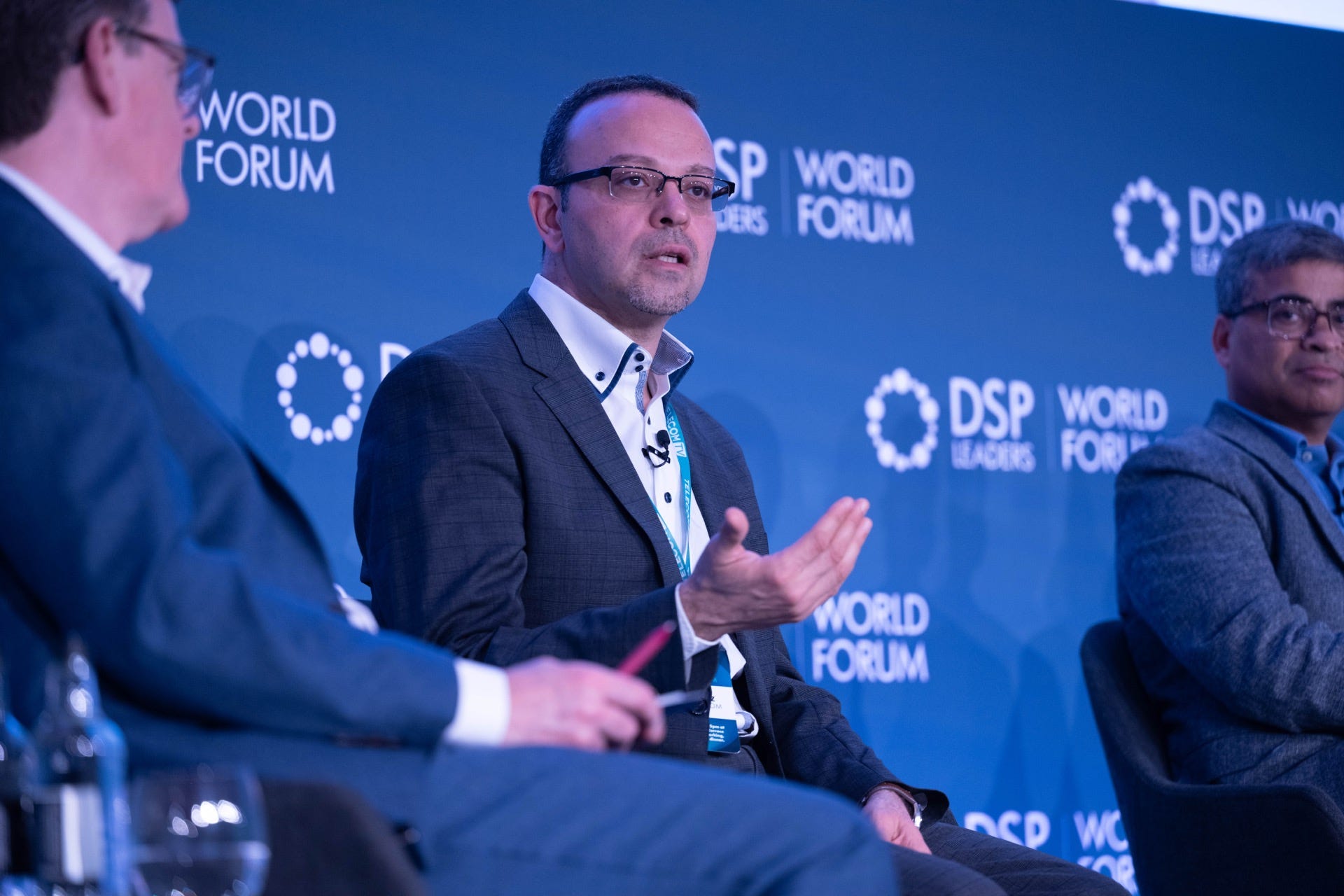
TelecomTV’s panel at the DSP Leaders World Forum debated the AI-native route to 6G with senior representatives of Deutsche Telekom, Vodafone, China Telecom, InterDigital and Intel, moderated by yours truly. The session opened with a frank admission that AI-native networking still has no agreed definition. Deutsche Telekom’s Ahmed Hafez framed the challenge around five gaps that operators are currently retrofitting: data readiness, control over embedded AI, API access, real-time capability and automated lifecycle management. InterDigital’s Philippe Sartori reinforced the point, noting that 6G is being built on the existing 5G core and must have AI-native capabilities added to it.
Vodafone’s Andy Dunkin captured the engineering scepticism, observing that AI is arriving in networks today rather than waiting for 6G. He urged the industry to demonstrate results before scaling, saying: “I’m an engineer; I’ll believe it when I see it.”
What’s new: The notable element was the consistency of the “retrofit” framing across operators and vendors alike. China Telecom’s Yue Wang argued that operators are shifting from a traffic-driven to a capability-driven model, with an opportunity to become platform providers that combine connectivity and compute for emerging AI services.
Why this matters: AI-native ranked as the third priority among operator submissions to the 2025 3GPP 6G Workshop, so this is not a fringe theme. The panel exposed the central tension that AI evolves far faster than network and standards cycles, complicating decade-long architectural decisions. The funding debate was equally pointed. Hafez contended that suppliers and standardisation must share the burden, while Intel’s Prashant Agarwal warned that AI could reintroduce vendor lock-in through the silicon and software layers, and pressed for monetisation from day one. An audience question from Appledore Research’s Robert Curran crystallised the dilemma of investing in fast-moving AI versus foundational, slower-moving 6G.
Implications for 6G standards: Release 21 is expected to deliver foundational AI elements, but the panel’s view is that more advanced intent-based capabilities will not mature until well into the 2030s. The clear ask was for standardised APIs and AI/ML frameworks within 3GPP and O-RAN to reduce the fragmentation already visible in the wider AI ecosystem.
Watch the on-demand video of the session
The GSMA published its 6G Community Progress Report for May 2026, a strategic overview of 6G standardisation across 3GPP TSG SA, RAN and CT. It covers the period from SA2#173 in Goa in February to SA2#174 in Malta in April, capturing the transition from vision-setting into formal specification work. A central milestone was the approval of the first official 3GPP 6G Work Item at SA #111 in Fukuoka, formally initiating normative 6G standardisation under Release 21.
The report’s most substantial new content is its analysis of the SA2 6G Architecture Study, which now comprises 24 Key Issues. Rel-21 Stage 2 work is targeted for completion in March 2028, with ASN.1 and OpenAPI freezes planned for March 2029, enabling early commercial 6G deployments from 2030.
What’s new: The report details how the architecture study is structured. The AI-related Key Issues are among the most active, with KI#18 (AI for 6G) defining 22 solution variants covering intent handling, model inference and training, and operator control over AI autonomy, while KI#19 addresses 6G for AI. KI#22 (Computing) has produced 15 variants, KI#20 (Integrated Sensing and Communication) has agreed five top-level architecture variants, and KI#23 (NTN) documents three variants building on 5G NTN as the baseline.
Why this matters: This is one of the clearest public synthesis to date of where the 6G system architecture is heading, and it carries weight as a near-institutional source. For operators, vendors and policymakers, the variant-level detail signals which design questions are still genuinely open and which are converging. The emphasis on AI integration across multiple Key Issues confirms that the AI-native ambitions discussed elsewhere this week are being translated into concrete architectural workstreams. The report also flags that two further white papers, on 6G system architecture and 6G terminals, are planned for launch at MWC Shanghai 2026.
Implications for 6G standards: The SA2 study is well positioned for its planned completion in March 2027, after which detailed normative work intensifies. The four solution variant categories agreed for NAS evolution under KI#1, ranging from reuse of 5G NAS to AI-enabled control plane agents, will shape how radically or not the 6G core departs from its 5G predecessor.
View source material to read more
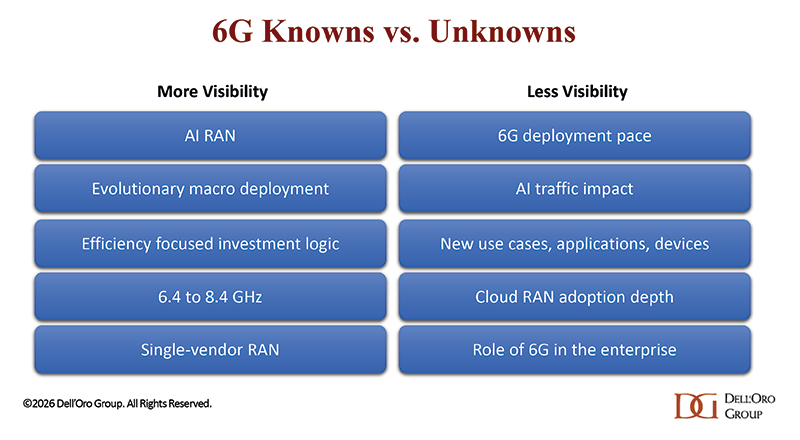
Dell’Oro Group has published an analysis by Stefan Pongratz setting out what is increasingly likely about 6G RAN and what remains uncertain. The central argument is that the 6G conversation has become more pragmatic than the early 5G era, with greater emphasis on deployment realities, efficiency and economics. On the “knowns” side, the baseline deployment model looks evolutionary: wide-area coverage will continue to rely on Massive MIMO macro infrastructure using large contiguous spectrum blocks below 8.4 GHz.
The piece also argues that AI-native RAN is becoming foundational, citing Ericsson’s launch of ten AI-ready radios with in-house silicon and neural network accelerators. Pongratz describes AI RAN as moving from an optional enhancement to “a foundational element of the 6G architecture.”
What’s new: The analysis quantifies the economic constraint. AI is expected to deliver efficiency gains in the 10 to 50 per cent range, but because RAN accounts for less than 15 per cent of wireless capex and recurring site opex, the economics break down if 6G requires many new sites. The piece also forecasts that multi-vendor RAN will account for less than 5 per cent of total RAN by 2030, and that an enhanced OFDM waveform remains the most likely outcome over alternatives such as OTFS.
Why this matters: This continues a consistent Dell’Oro message that we have tracked through the January RAN forecast and the October 6G research report, but it sharpens the framing around investment logic. The 1 per cent revenue CAGR over 15 years underpins the view that operators will justify 6G on lower cost per bit and platform modernisation rather than uncertain new revenue. The “unknowns” are equally instructive: demand-side traffic patterns, ISAC monetisation, the pace of adoption, and the depth of Cloud RAN uptake all remain unclear. Notably, Cloud RAN is assessed as less likely than 6G and AI RAN to reach mass adoption by 2030.
Implications for 6G standards: An evolutionary, OFDM-based, sub-8.4 GHz baseline reduces pressure for radical specification change and favours reuse of existing silicon and macro grids. The judgement that AI-native RAN is foundational, rather than bolted on, aligns with the architectural direction visible in the GSMA report and the 3GPP study items.
View source material to read more
ChosunBiz reported that South Korea’s mobile operators are hesitating over next-generation network investment, with implications for the country’s 6G readiness. The article, by Ahn Shang-hee, argues that carriers see little return in building out 5G Standalone (SA), widely regarded as a precursor to 6G, and that their pivot towards becoming AI companies risks neglecting core network investment.
Average revenue per user is the underlying pressure: combined ARPU for SK Telecom, KT and LG Uplus stood at 29,061 won last year, down 0.8 per cent on 2024 and on a steady decline since 2022. Only KT currently provides 5G SA, and the government has made SA deployment by the other two a condition for reallocating 3G and LTE spectrum. Choi Su-han, a professor at Dankook University, said “the expected ultra-low latency services of 5G are not being realized at all.”
What’s new: The article cites a Korea Information Society Development Institute (KISDI) survey of 51 experts, which ranked Korea fourth for expected 6G standardisation leadership, behind the United States, China and Europe. Many respondents expect China to commercialise 6G first, despite Korea’s status as the first country to launch 5G in 2019.
Why this matters: We covered the same underlying concern in September 2025, when Ericsson’s Mischa Dohler urged Korea to accelerate its 5G SA transition. This piece adds fresh detail and a sharper, more sceptical tone from domestic experts. The framing matters because Korea has consistently presented itself as a mobile technology leader, yet its operators are openly reluctant to invest without a clear revenue model. The report also recalls the 2018 allocation of 28 GHz spectrum, which the carriers later returned on profitability grounds, as a cautionary precedent. Several commentators called for the government to seed killer applications and business models rather than simply mandate investment.
Implications for 6G standards: Korea’s TTA is a 3GPP Organisational Partner and Korean operators and vendors are active contributors. If the domestic 5G SA transition stalls, it could weaken the country’s ability to validate 6G technologies at scale, even as Samsung, LG and ETRI remain prominent in the standards process.
View source material to read more
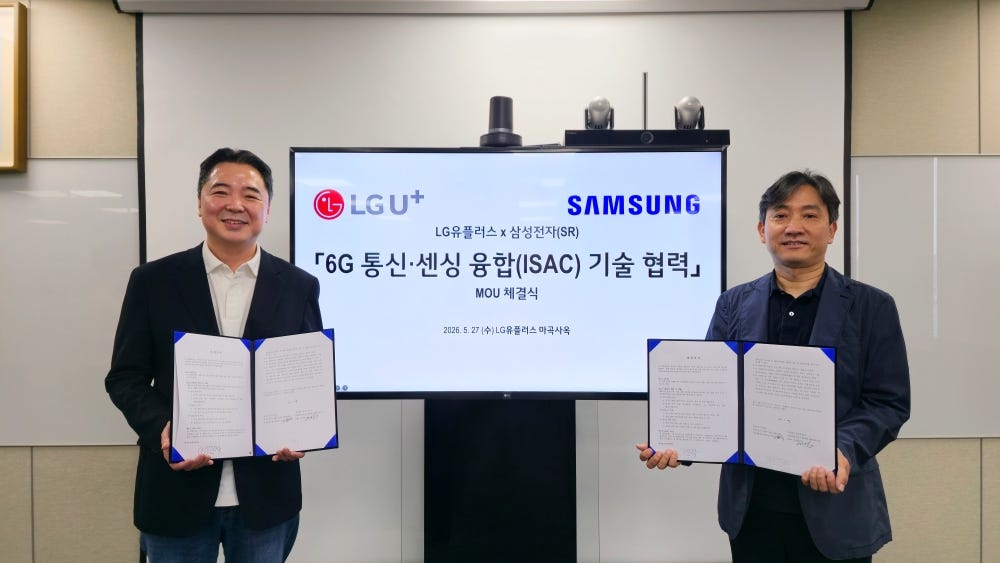
Samsung Electronics and LG Uplus signed a memorandum of understanding to jointly research Integrated Sensing and Communication (ISAC), one of the defining new capabilities expected for 6G. The agreement was signed at LG Science Park in Magok, Seoul, on 27 May, with Samsung Research leading development of core 6G technologies and LG Uplus leading validation and field-testing. ISAC uses existing communications infrastructure to sense the surrounding environment, analysing how signals from base stations reflect off objects to detect speed, distance and direction, without dedicated equipment such as LiDAR or radar.
The partners plan to validate the technology on existing 5G networks and in the 7 GHz band, a candidate frequency for 6G. JinGuk Jeong of Samsung Research described ISAC as “a core technology that transforms communications networks into sensing platforms.”
What’s new: The collaboration will initially focus on human detection for everyday safety and on improving network operational efficiency. Over time the partners plan to combine ISAC-generated data such as location, speed and density with camera imagery, and to develop multimodal AI that integrates images, audio and video.
Why this matters: ISAC has been designated by the ITU-R as one of three key usage scenarios for 6G. This adds a major Korean operator-and-vendor pairing to a growing body of ISAC work we have tracked, including the Keysight and MediaTek demonstration at the Brooklyn 6G Summit, InterDigital’s cellular and Wi-Fi sensing trial with Türk Telekom, and ETRI’s ultra-low-power CUPPS positioning system. The decision to test in the 7 GHz band is significant, since upper mid-band spectrum is widely expected to anchor early 6G deployments. The emphasis on validating performance on live commercial networks reflects a broader shift from concept to deployment realism.
Implications for 6G standards: ISAC is an active study area expected to feature in Release 21, and KI#20 in the SA2 architecture study has already agreed five top-level ISAC variants. Real-world validation of sensing on existing infrastructure and candidate 6G spectrum provides the kind of practical evidence that informs how sensing is specified. But note there are many in the standards process who are sceptical of early ISAC introduction, due to lack of commercial support.
View source material to read more
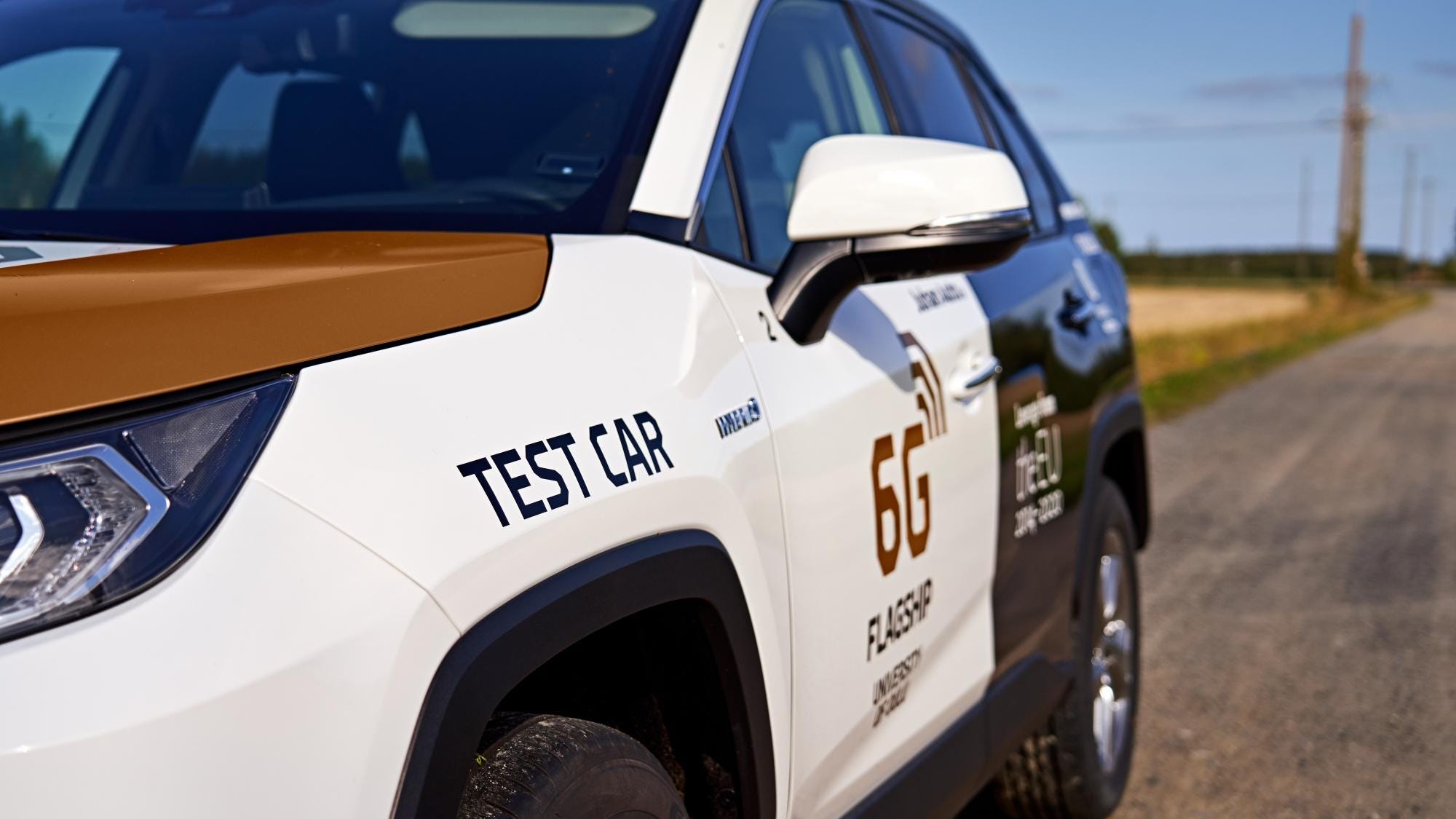
The University of Oulu and the Finnish Meteorological Institute completed the 6G Visible research project, which combined 6G technology, artificial intelligence and distributed computing into services for autonomous traffic. Funded by Business Finland’s 6G Bridge programme, the project integrated vehicle sensor data with external weather, traffic and environmental data to improve situational awareness for autonomous and remote-controlled driving. A core idea was to let vehicles use network-based information to anticipate hazards beyond the reach of their own sensors, in effect “seeing around corners.”
Professor Tero Päivärinta of the University of Oulu said the work created “a unified and evolving system that improves situational awareness in autonomous mobility.”
What’s new: The project built a hybrid intelligent autonomous driving system that combines machine analysis with human judgement, using an evolving knowledge graph and nowcasting-based short-term weather forecasts. It was tested both in simulation and on a smart mobility track in Sodankylä, in challenging northern weather conditions.
Why this matters: This is an applied, vertical-sector demonstration rather than a standards contribution, but it illustrates a credible 6G use case grounded in real conditions. Autonomous mobility is one of the converged services frequently cited as a 6G driver, and the project shows how low-latency networks and distributed edge computing can fuse heterogeneous data in real time. It also reflects the University of Oulu’s continued role as a hub for applied 6G research, complementing the institutional and policy-level activity we have reported from Oulu in recent weeks.
Implications for 6G standards: The work touches the data framework and computing themes under study in 3GPP, where KI#21 and KI#22 address data handling and distributed computing. Use-case evidence of this kind helps ground the service requirements that feed into the standards process.
View source material to read more
Thanks for reading 6G Futures! This post is public so feel free to share it.
Researchers propose a Deep Q-Network framework for resource allocation and edge caching across multiple network slices in O-RAN-compliant 6G networks. The system targets the demanding low-latency, high-bandwidth needs of virtual reality, supporting eMBB, URLLC and the emerging MBRLLC slice. Simulations show consistent reductions in latency and improvements in throughput over traditional methods.
Why this Matters: This is a practical example of the AI-native RAN concept that dominated this week’s news, embedding learning agents directly into the network control plane. Proactive, slice-aware resource management is central to delivering immersive services economically, and the focus on the MBRLLC slice reflects how 6G is being shaped around new traffic classes.
View source material to read more
This paper studies Fluid Reconfigurable Intelligent Surfaces (FRIS), which extend conventional RIS by adding spatial reconfigurability through switchable apertures and movable elements. It examines how FRIS can support index modulation, where information bits select a surface configuration, and proposes a response-aware design that selects codebooks by how distinguishable they are at the receiver.
Why this Matters: RIS is a leading candidate for the programmable wireless environments envisaged for 6G, and FRIS adds a further degree of design freedom. The practical contribution is guidance on building compact, trainable spatial-index codebooks, addressing the gap between theoretical layout diversity and reliable real-world performance.
View source material to read more
This work proposes a framework using Stacked Intelligent Metasurfaces (SIM) for near-field channel estimation and localisation with extremely large antenna arrays, grounded in Multiport Network Theory. By performing analog spatial filtering in the wave domain, the approach preserves the wavefront curvature needed for accurate localisation while sharply reducing the number of radio-frequency chains.
Why this Matters: Near-field sensing and high-accuracy localisation are expected 6G capabilities, but the large arrays they require raise cost and complexity. Achieving performance comparable to fully digital systems with far fewer RF chains is exactly the kind of hardware efficiency that makes such capabilities commercially viable.
View source material to read more
GENESIS is an agentic AI framework that converts intents, such as a specification clause or a telemetry anomaly, into solutions validated through over-the-air experiments and fed back into a persistent knowledge base. It is designed to address the known weaknesses of large language models in RAN work, including hallucinated APIs and misread specifications, and the tendency for simulation-based designs to fail on real hardware.
Why this Matters: This research speaks directly to the week’s lead theme. It tackles the structural bottlenecks that slow cellular R&D, from synthesising standards into code to conformance testing and security hardening. An agentic system validated against real hardware, rather than simulation alone, echoes the panel’s call to get into the labs and prove benefits with real numbers.
Comments
Nothing yet. Say the first thing.
Sign in to join the conversation.