
When I got into fitness almost 15 years ago, it didn’t just push me physically.
It pushed the limits of my emotions, my psychology, and my ego.
I had to undo 20+ years of unhealthy habits, change who I was as a person, and start living basically a whole new life.
Up until 2 years ago, that was the hardest I had ever been challenged in my life.
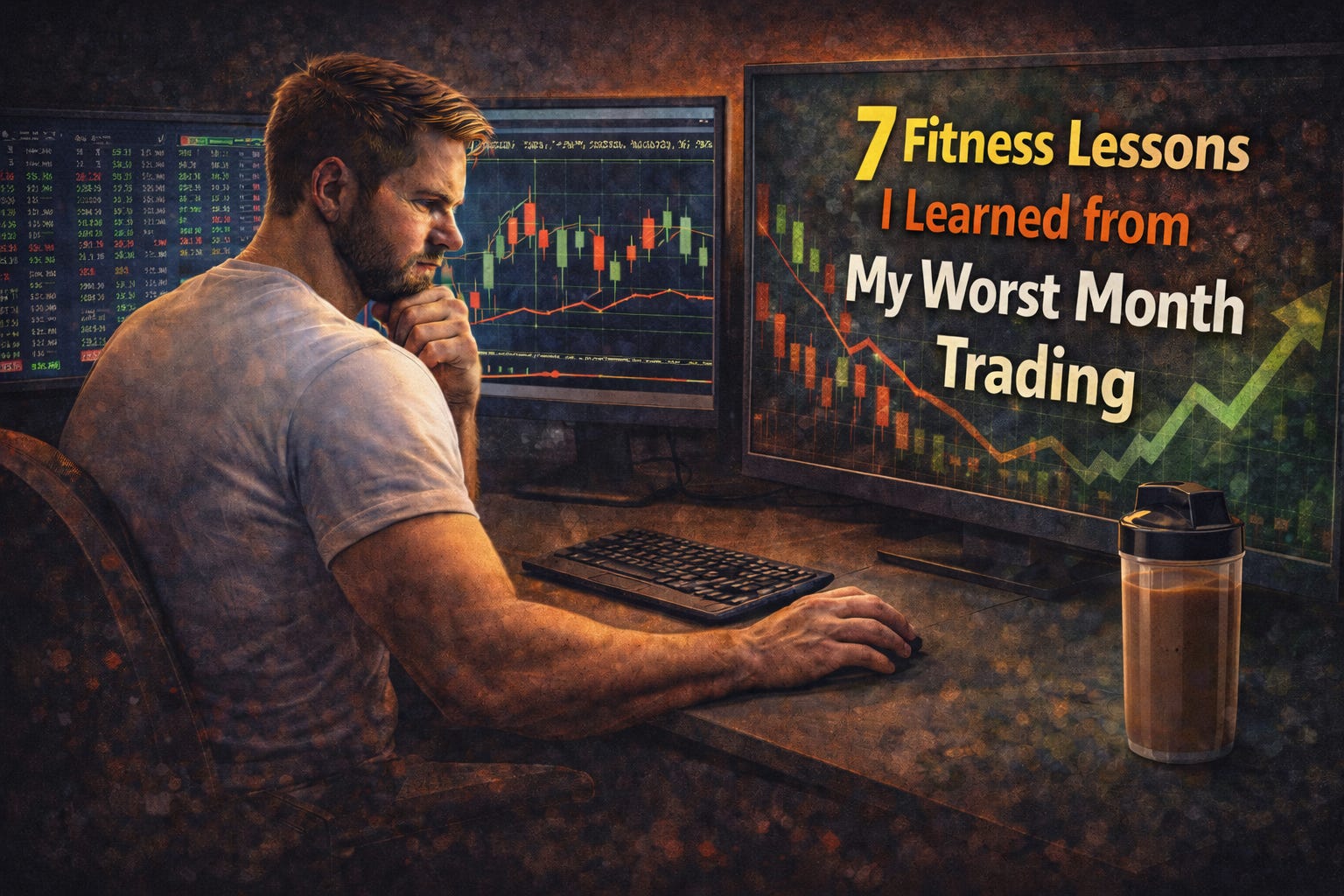
Then I started day trading…
I’ve lost over 100 pounds… started businesses… been through turbulent relationships.
And I mean it when I say, nothing has challenged my emotions, pushed me mentally, and exposed my shortcomings like day trading has.
I’ve long said that health and fitness are analogs for most things in life. The lessons you learn can be translated to many other areas of our lives.
Day trading is no different. The similarities are endless.
Most people approach day trading like they approach getting in shape: they want the results as fast as possible and will use whatever flashy, shortcut-looking methods they see on social media to try and get them…
Only to crash, burn, and often end up in a worse place than when they started.
To succeed requires 3 things I’ve been teaching as a health coach for over a decade:
A sustainable strategy,
Ruthless execution of the basics, and
Patience.
Like weight loss, the trajectory of a day-trading journey is not linear. There will be peaks and valleys.
And sometimes you can be stuck in those valleys for a while.
See, in my experience, it’s rarely the bad day of eating, the missed workout, or the losing trade that dooms your progress…
It’s what that one singular event leads to.
I’ve seen it over and over again in my 10+ years of coaching…
A client is consistent with their diet, losing weight steadily, then something happens.
A meal out they didn’t plan on…
Someone bringing sweets into the office…
A few too many drinks at happy hour…
And before they know it, this one event leads them into a multi-day spiral of giving zero fucks , followed by shame and frustration - which then leads to further spiraling.
And before they know it, weeks have gone by, they’ve put back on a bunch of weight, and now feel like a failure.
That was what March and into April were for me trading.
February was my best-performing month ever.
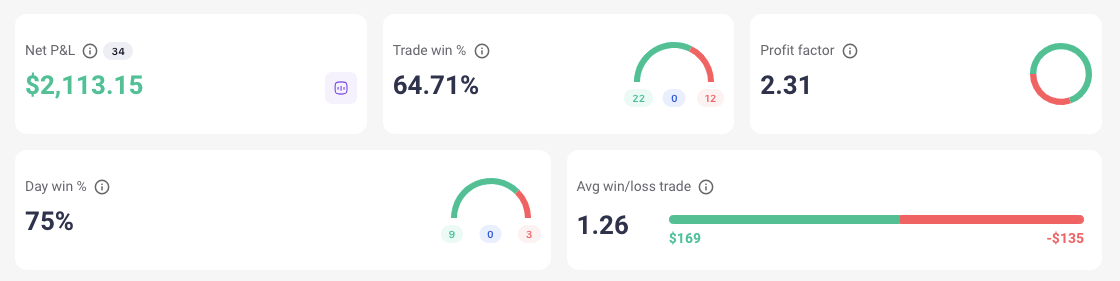
This was followed up by probably my worst month ever in March and early April.
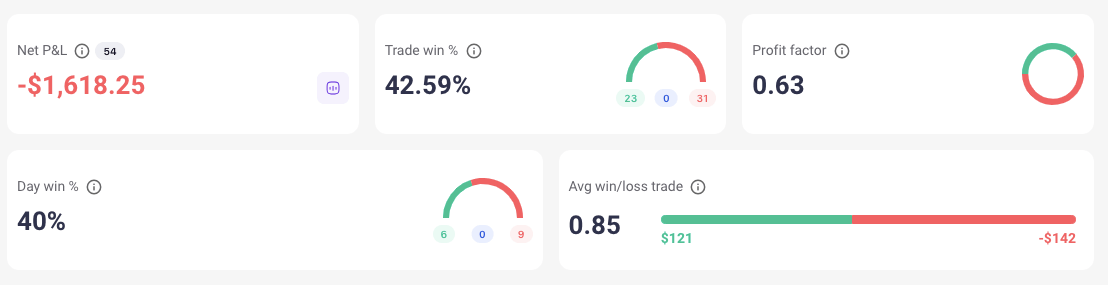
Not my worst month in terms of a single catastrophic loss. No blown accounts. No one terrible decision that wiped me out.
It was worse than that.
It was a slow bleed. The kind where you don’t even realize how bad it’s gotten until someone holds up the mirror and shows you.
And when I took a deep look at the reason why I was struggling, I realized every single one tied directly to what I’ve been coaching clients on in health, fitness, and self-improvement for over a decade.
Here are the 7 lessons my worst month trading taught me - and can teach you - about getting (and staying) in shape, performing at a high level, and being honest with yourself when things start slipping.
I didn’t blow up on one trade. There was no dramatic moment. What happened was a slow drift away from my system.
Position size crept up.
I started skipping my confirmation rules on entries — just once, then twice, then regularly.
I’d take an extra trade after I’d already hit my loss limit for the day.
Each one of these felt small in the moment. But small slips don’t stay small. They compound. And by the time you add them all up, the damage is already done.
This is exactly how most people gain weight. Nobody puts on 20 pounds from one bad meal. They put it on from six months of “just a little” — an extra snack here, a skipped workout there, staying up too late, loosening up on weekends…
No single day feels like a problem. But the trend is a problem. And by the time you notice, you’re 20 pounds heavier and wondering how you got there.
Most people try so hard to avoid the big blowup that they never end up noticing the small, steady drift happening until it’s too late.
What made my worst month of trading ever so much more frustrating was that it came on the heels of my best month ever in February.
I was sized small, patient, following my rules mechanically, taking clean trades, and not trying to be a hero. It worked. I was profitable and trading stress-free.
Which is exactly what screwed me.
Because when things are going well, the natural impulse is to push. Size up a little. Be less strict on the rules. Hold for bigger targets. I earned it, right? I’m in a groove.
I’ve seen this exact pattern play out with hundreds of coaching clients over the past decade.
Someone loses some weight and gets into better shape than they’ve been in a while. They’re feeling themselves. They give them permission to loosen up. They feel like they earned it. So what happens?
The weekends get sloppy. The diet gets flexible in all the wrong places. The training intensity drops because “I’m already in shape.”
The most dangerous moment isn’t when things are going badly. It’s right after things start going well. That’s when you and your progress are at their most vulnerable.
This one stings because it’s so obvious yet I still fall for it.
There were trades where I identified every reason not to enter. The price action wasn’t good, the broader market trend was against me, it was a ‘B’ setup at best…
And yet, I entered anyway.
I saw the data. I understood the data. And I ignored the data.
Sound familiar?
You, reading this, knows what you should eat. You know that the late-night drive-through run isn’t the move. You know skipping the gym three days in a row is going to snowball. You already know what to do. Knowing is never the problem.
And here’s the uncomfortable truth: you can’t close that gap alone. Not consistently. Not when the pressure is on and your emotions are running the show.
This is exactly why coaching and mentorship exist. Not to tell you things you don’t know, but to hold you accountable to DO the things you already know, yet aren’t doing.
A good coach closes the gap between what you know and what you actually do — especially when your emotions are making the decisions for you.
If you’ve ever said “I know what to do, I just need to do it” — sit with that for a second.
Then ask yourself, “What’s the real reason I’m not doing it?”
I had a rule: two losses max per day. It was in my trading journal every single week. I wrote it down like it was gospel.
And surprise, surprise - my worst days were almost never from just 1 or 2 losses.
Every single bad day I had last month happened the same way. Take two losses. Get frustrated. Tell myself “Just one more, I see a setup.” Take a third trade from an emotional state. Lose again. Now I’m down three and carrying frustration into the next session.
The rule existed on paper. It did not exist in practice.
How many of you reading this have a meal plan you don’t follow?
A workout schedule you negotiate with every morning?
A “no eating after 8pm” rule that dies every night at 8:15?
Stop creating rules you won’t follow. Either make it real and actually enforce it with zero exceptions. Or stop pretending it exists.
A rule you negotiate with is just a promise waiting to be broken.
The fix for my worst month wasn’t a new strategy. It wasn’t a new indicator or a better system. The fix was going back to what worked before I started drifting.
Smaller size.
Fewer trades.
Stricter rules.
More patience.
Boring, basic, disciplined execution.
And honestly? It felt like admitting defeat. Sizing back down after you’ve been trading bigger feels like going backwards. Your ego hates it.
But it’s the only move.
I went through the same thing with my own health. There was a point where I was in good shape but couldn’t crack into great shape. And when I was honest about why, the answer was obvious:
My program was fine. I was just undoing it every weekend, going out, getting drunk, slamming McDonald’s at 1am, then wondering why the scale wasn’t moving.
Going back to the basics — simple meals, no drinking, consistent sleep — felt like I was starting over. But I wasn’t starting over. I was reinforcing the foundation so I could actually build something bigger on top of it.
The people who recover from setbacks are the ones who swallow their pride, set their ego aside, and focus on the basics. The people who blow up again are the ones chasing a fast fix to erase the pain.
Sometimes we need others to call us on our shit.
I didn’t have some dramatic wake-up call or hit rock bottom blowing up a bunch of accounts. What happened was simpler and honestly more humbling than that.
One of my mentors called me out. Bluntly.
And my reaction? Defensive. Embarrassed. Frustrated. Not because he was wrong. But because somewhere inside I already knew. I knew things had been slipping. I just hadn’t confronted it.
That’s the thing about drift. It’s often invisible from the inside. You tell yourself it’s the market, the conditions, or bad luck. You tell yourself “I’ll tighten up next week.” But next week never comes because you don’t actually see how far you’ve moved from where you started.
It’s the same in fitness.
You look in the mirror every day, so you don’t see the gradual change.
The scale creeps up 2 pounds a month and you brush it off.
Your clothes fit a little tighter and you blame the dryer.
And what it often takes to pull you out of that is someone else — a coach, a mentor, a friend who cares enough to be honest — to say “Hey, knock it off.”
This is why I believe so deeply in coaching and mentorship. Not because needing it means we’re weak. Because we often cannot see our own blind spots. Period.
The most successful people I know — in trading, in fitness, in business — all have someone in their life whose job it is to be honest with them, even when it’s uncomfortable.
Surround yourself with people who are doing what you want to do, or who can help you get where you want to go. And most importantly, give them permission to call you out when you drift.
Because you will drift. Everyone does. The question is whether you have someone there to catch it before you drift so far away that you can’t find your way back.
February proved my edge was real. March proved the edge only works inside a disciplined process.
My skill didn’t degrade. My reads were right. My analysis was sharp. But none of that mattered because the process — the boring, daily, mechanical discipline that turns good analysis into good execution — had eroded.
This is true for everything.
You might know more about nutrition than 99% of people. That knowledge is an edge. But the edge is worthless without the daily process that lets it work — the meal prep, the sleep habits, the training consistency, the accountability, etc.
All the skill in the world doesn’t matter if the daily structure around it has fallen apart.
The process is what lets your abilities actually show up.
What keeps hitting me over and over again through all this is how none of it was new. Every single lesson I had to relearn in trading is something I’ve been coaching clients on in health and fitness for over a decade.
The drift…the ego…the rules that only exist on paper…the inability to see your own blind spots…
These are the same things that keep people stuck at the same body weight year after year.
They’re the same things that turn a bad weekend into a bad month.
They’re the same things that have someone starting over every January when they never needed to start over ; just stop quitting.
Your health and fitness journey will expose every one of these patterns. It always does.
The question is: What are you doing to make sure they don’t become your downfall?
If any of this hit home — if you read this and recognized yourself in the drift, with rules you don’t enforce, weekends that undo your weeks, the slow bleed you keep telling yourself isn’t that bad — I can help.
I’ve coached over 700 clients through exactly this. Not with a cookie-cutter template. With real, 1-on-1 coaching that includes custom training, nutrition built around your actual life, weekly check-ins, and — most importantly — someone who will hold up the mirror and tell you the truth when you start drifting.
Because you will drift. The question is whether you have someone there to help you catch it.
Fill out this form to learn more about how to work 1-on-1 with me.
Comments
Nothing yet. Say the first thing.
Sign in to join the conversation.