
One of the byproducts of Apple’s 50th Anniversary is the resurfacing of its cultural journey. The way the company and its products stood for something more than making digital appliances. From the beginning, Apple raised the tech bar from “cool” to “inspiring” in a way that no other company has.
For those of us who embraced the mission early on, the mid-nineties were brutal. Steve Jobs was pushed out by the company he started, and a succession of CEO’s tried and failed to build on the momentum that Jobs ignited with the Macintosh computer. The resulting ‘platform wars’ was a daily skirmish between the PC juggernaut and Mac faithfuls who put up with comparatively poor performance, Mac clones, and the fear that Apple would get sold off and dismantled for parts. It was like standing on the deck of the Mary Ellen Carter going down.
In a last ditch effort to avoid bankruptcy, Apple brought back Jobs as an advisor in 1997, and the “Think Different” campaign became his mission statement for the resurrection of the company he started in 1976.
In 2000, Apple reinstated Steve Jobs as CEO and here we are, 26 years later. The company philosophy that once seemed so outrageous and doomed to fail, now a tech leader that has changed the world.
When I was browsing YouTube recently, I stumbled on a compilation of the “I’m a Mac, I’m a PC” ad campaign that ran from 2006 to 2009. In a series of 66 ads, Apple poked fun at the differences between the two platforms, solidified the Mac’s ease of use experience, and warmed the hearts of every survivor of the Platform Wars a decade before, like me. If you’ve never seen the full collection of the spots, or just need a little heart-warming, take a few minutes and enjoy this delightful reminder of what the Apple experience is all about.
If you were a camera-toting photographer in 2005, the announcement of Apple Aperture was a seismic event. Professional grade digital cameras were on the cusp of widespread acceptance and along with that was a preference for RAW file editing and a better file management system than a bunch of folders on your hard drive.
On top of that, Adobe Photoshop was created for the commercial printing industry and scanning services, complete with print world jargon like “high pass filter” and “blending modes” and features that favored high volume CMYK processing for ink on paper. RAW file conversions had to be processed through a separate Adobe RAW program. Edits and versioning required saving multiple files which quickly ate up costly storage space. Not a great fit for photographers, but about all that was available at the time.
In Aperture, pro and enthusiast photographers saw a post production application that solved all that by mimicking the analog tools they were used to in the darkroom with the user-friendliness of iPhoto.
It was an escape from the tedious folder organizing, it was non-destructive, and it was fun to use, letting photographers focus on the creative aspect of their art and not the tedium. Aperture immediately grew a loyal fan base among Mac using enthusiast and professional photographers.
But the iPhone launched 2 years later, in 2007, and it changed the whole trajectory of software development.
Apple had always been closely aligned with the creative community that sought user friendly professional tools, but the iPhone brought a much broader consumer base under Apple’s umbrella. Customers who never owned a Mac and were excited by the mobile phone/iPod/Internet device that fit in their pocket. The camera it housed was a minor player at first, but as it developed into a popular feature, and creating a whole synchronized ecosystem came into focus, the Photos App took more and more of the limelight and Aperture development stalled.
The launch of iCloud in 2015 was too much. To make the photo ecosystem work seamlessly across devices, the software that iPhoto and Aperture shared had to be rebuilt from the ground up and it was replaced with Photos. iCloud was a big deal that sought to take on Google Photos by maintaining an on-device security advantage via cloud-based synchronization.
Apple never officially commented on the decision to discontinue Aperture, but it seems like the combination of upgrading a niche photo enthusiast application while building out an iPhone-driven consumer ecosystem didn’t make sense.
In fact, the whole consumer focus of the times made many creative pro’s question Apple’s commitment to the professional community that had been core supporters of the platform during leaner days. Hardware and software offerings seemed less competitive and many creatives moved to Adobe or other pro-focussed apps.
But while other apps have come and gone, Aperture is still considered by many as the best photography production app of all time. While Adobe Lightroom drives a whole industry of courses, gurus, and masterclasses, Aperture was accessible in a day or two with few trips to the Starter Guide. And there are still photographers who keep their old Macs running just to keep using Aperture as their photo management app rather than “downgrade” to Adobe Lightroom or other software.
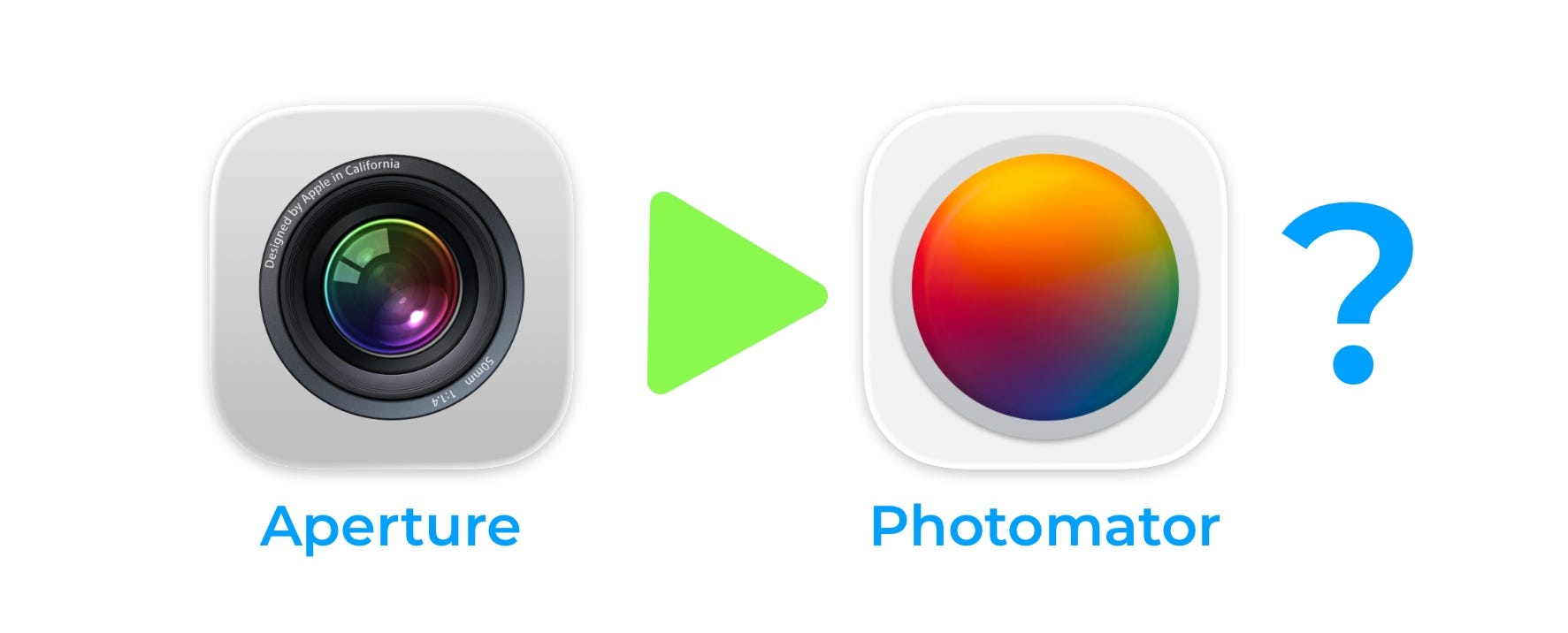
Which is why Apple’s recent announcement of the Apple Creator Studio has stirred up the rumor mills and the hopes among the Aperture holdouts. The Apple Creator Studio bundles all the Apple Pro creative apps at a very attractive price with some nice new features and some support content. Viewed alongside the recent acquisitions in the space, it points to a renewed interest in serving and supporting the enthusiast/pro creative community. And education pricing is practically free. $3 per month for a bundle that includes the $300 Final Cut Pro if bought separately.
The anomaly that stood out for many of us, though, was a hole in the bundle where Aperture would fit perfectly.
Last year Apple bought Pixelmator, a European company that developed Pixelmator Pro, Photomator, and Pixelmator for iOS, a suite of products that offer photo editing and composition tools compatible with Apple Photos.
Pixelmator Pro is an alternative for most of the features in Adobe Photoshop, so it’s a natural addition to the Creative Studio. But Photomator is conspicuously absent. And with some tweaks to expand the photo management features, could offer a legitimate alternative to Lightroom for the enthusiast crowd.
So with Apple’s Worldwide Developers Conference - WWDC2026 - less than a month away, a renewed commitment to the creative audience, and a hole that could be filled by a super-charged, AI-driven Aperture, one wonders if Apple is saving it to use as a “one more thing” signature keynote announcement.
It’s not far fetched.
Apple photographers have over a decade of experience using the Photos model, and the subset of enthusiasts that has pushed it to the limit are ready for a photo experience that has a bit more juice. Particularly with what everyone else is doing on the AI front. OS 26 introduced a reimagined user interface that was long overdue, but you can only push average users so far before they get overwhelmed.
At the same time, rumors abound of an even more sophisticated iPhone camera in the iPhone 18 Pro series, coming this Fall. With features that will only matter to enthusiasts and pros. Wouldn’t it be nice to have an Apple flavored post-production photo app that took advantage of all that.
In a bundle targeted to the mid-level creative space at a price that smokes the competition.
Announcing the return of Aperture at the WWDC2026 would be a crazy cool development and would create a lot of buzz among the crowd that still longs for the photo application they loved a decade ago.
I hope, I hope, I hope, I hope . . .
I was thrilled to be this month’s guest on Inside Photo Organizing, the industry podcast co-hosted by my good friends Allison Freedman and Susan Wolak. It seems like every year about this time they have so many questions about Apple Photos that we get together and kick around the latest Apple News and rumors. It’s a lot of fun and it gives me a chance to discuss aspects of the larger photo management landscape that don’t fit into 5 Minute Photos.
Key topics were:
How Apple Photos is changing from a scrolling/browsing experience to a custom search and app-created Collections experience.
For users who are thinking about upgrading their iPhone, what are some important features with the iPhone 17 Pro camera.
Apple’s annual Worldwide Developers Conference is happening mid-June. I share some of the hot rumors and my take on what new things might be coming.
You can also download my handout for the podcast which includes a way to make the new Liquid Glass theme more readable.
Inside Photo Organizing is a must follow podcast if you are seeking a larger view of managing your photos or have a toe in other software like Lightroom and Mylio Photos. Guests cover a wide range of topics such as how to use photos in genealogy, backing up your photos, and organizing strategies.
Check it out.
You can find Inside Photo Organizing at:
And you can see the Podcast on Youtube:
Thank you for supporting 5 Minute Photos. If you like these posts and know other people who might, please share it with them.


Available for iOS and Android
Comments
Nothing yet. Say the first thing.
Sign in to join the conversation.