
48 Hills is a summer experiment in large-scale creativity.
Every summer, more than one hundred high school students spend seven weeks working alongside Oscar nominees, Sundance and Emmy winners, and master builders to create a feature film from scratch.
This year, however, the students have set out to do something stranger. Before making a movie, they’re building a world.
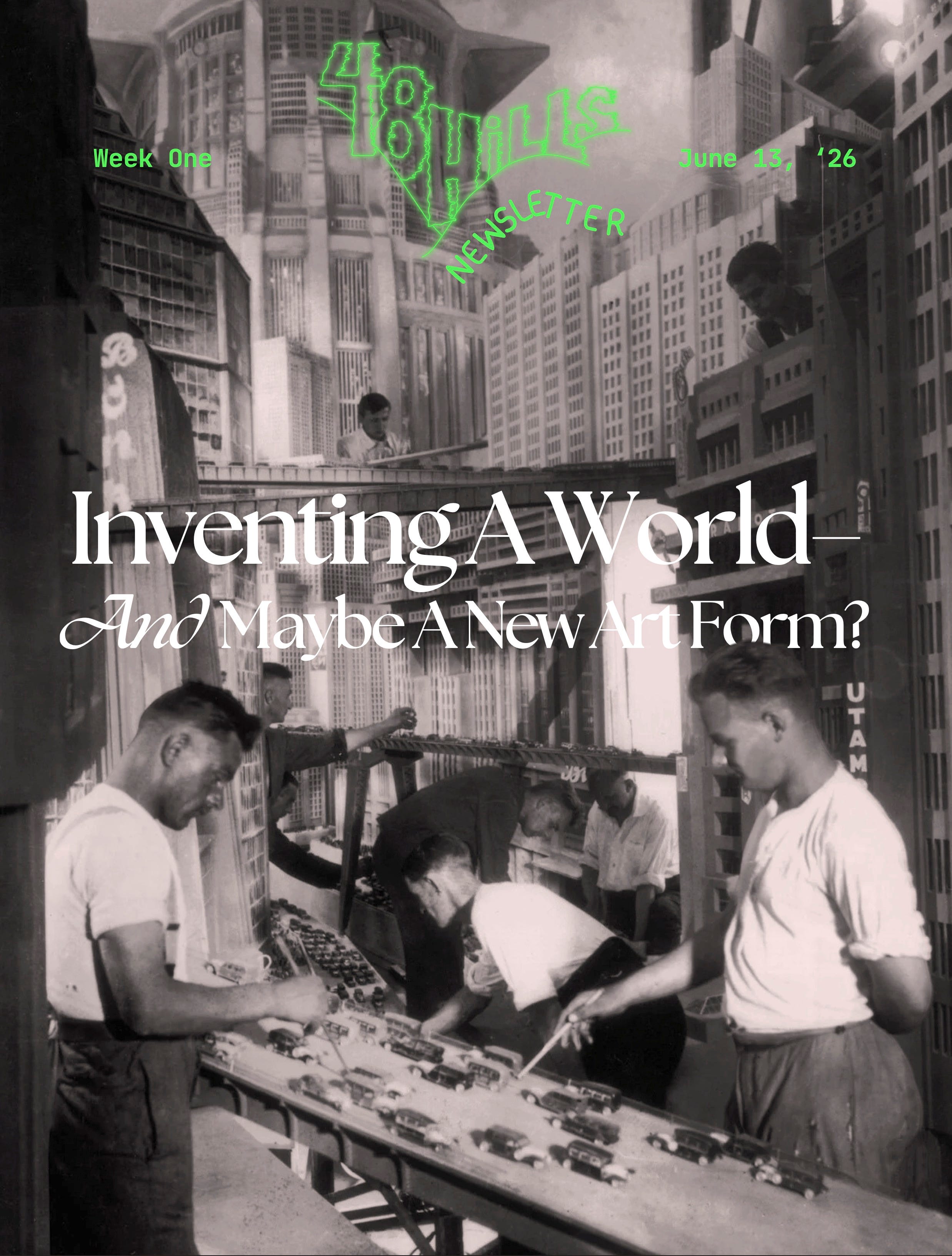
Inside a 50,000-square-foot warehouse this week, eighteen young writers met for the first time to begin dreaming up how to tell a story together.
One of the first challenges facing the writers was a practical one: how do eighteen people write the same movie?
Traditionally, a writers’ room searches for a plot everyone can rally around. Our students found another path. Rather than searching for a plot everyone could agree on, our writers started looking for the themes that kept surfacing across their ideas.
As pitches emerged, certain themes surfaced again and again. There was a shared melancholy to many of the ideas. Characters living in the shadow of better days. People searching for reinvention. Communities struggling to define themselves after the thing that once made them special had disappeared.
A place began to emerge.
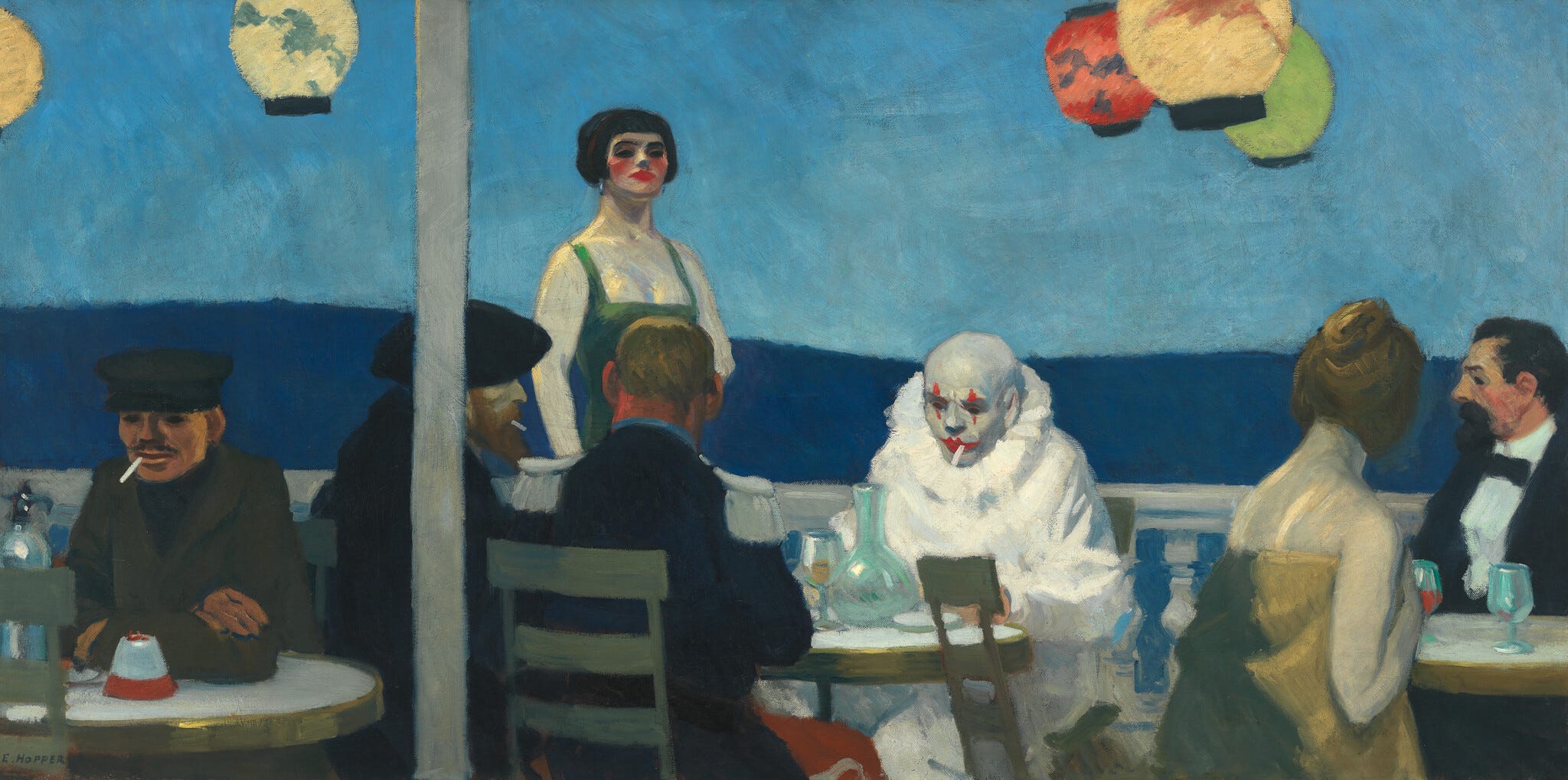
The writers imagined a fading mountain town somewhere between Nevada City and Twin Peaks—a former boomtown whose glory days are long gone. The kind of place where everyone knows everyone else’s business and where old dreams linger like ghosts. Its most famous resident is a streamer who never leaves his bedroom. An aging gay clown has become a recluse after years of being ostracized by the town. A teenage girl claims responsibility for the mysterious fires that flicker around the county’s edges.
Everywhere, people are longing for something: redemption, escape, connection, recognition, a second chance.
Our writers scrapped the screenplay and drafted a shared universe.
Instead of forcing eighteen writers to tell one story, the students discovered something more interesting: they could tell eighteen stories that all belonged to the same place.
Instead of writing big dramatic arcs that fill most movies, the students began imagining more intimate happenings of the day – this is where Edward Hopper’s work began to really inspire them. Each resident will have a history, a home, relationships, secrets, ambitions, and regrets.
But how we capture each resident requires a whole new way of writing.

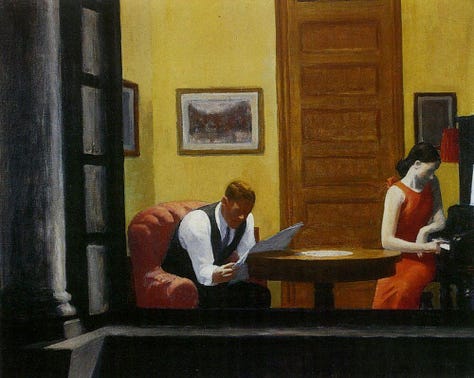

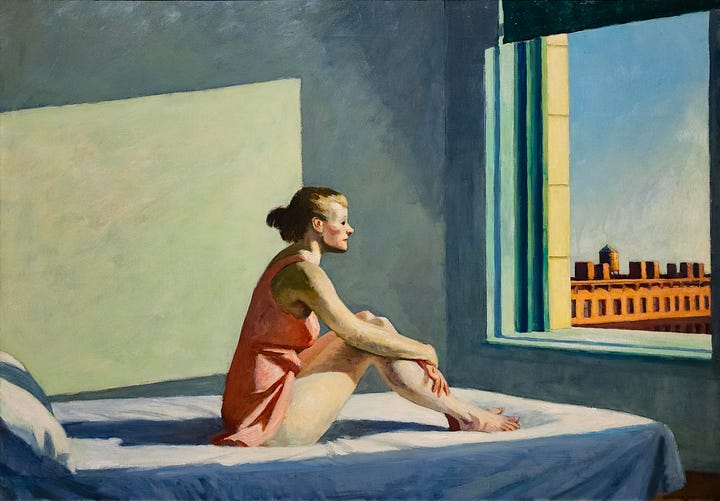

To tell the story of each resident, each of our young writers will be responsible for mapping the complete day of one character’s life — from the moment they wake until the moment they fall asleep — whether a camera is watching them or not.
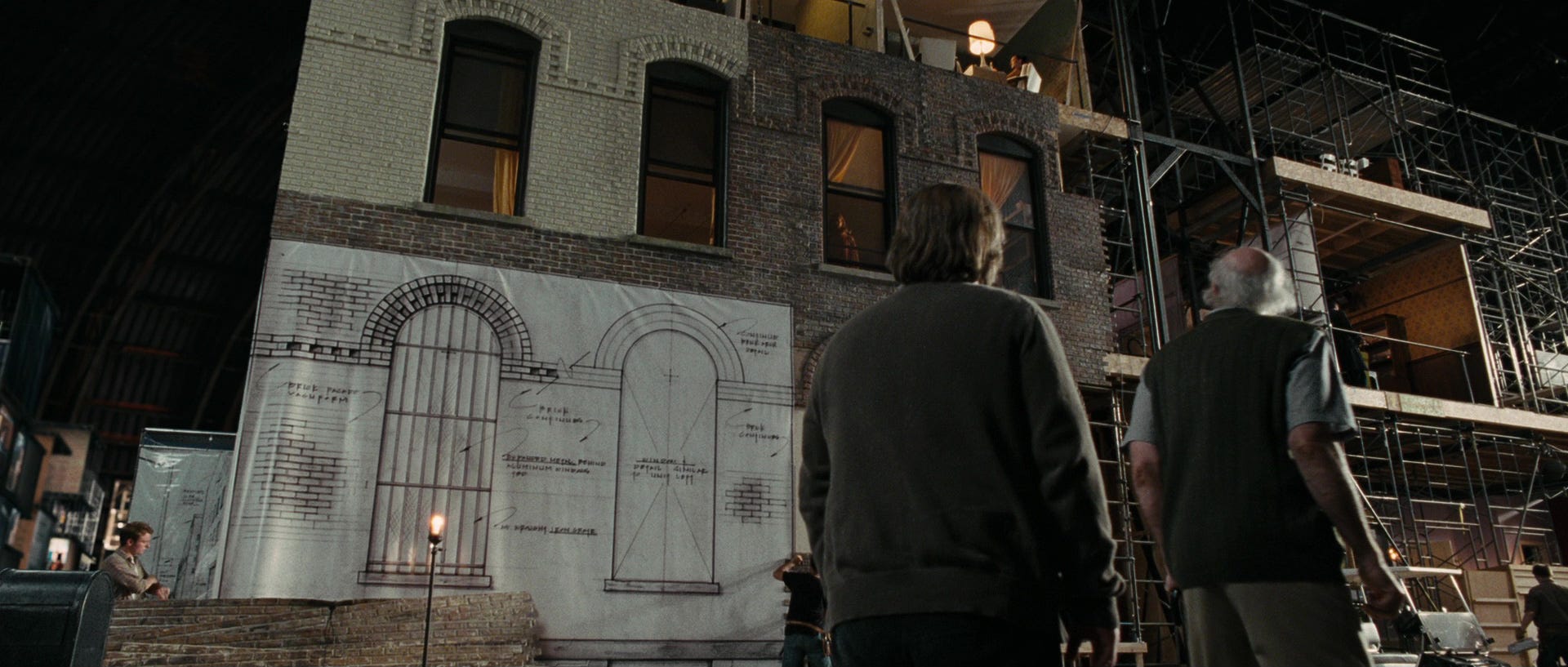
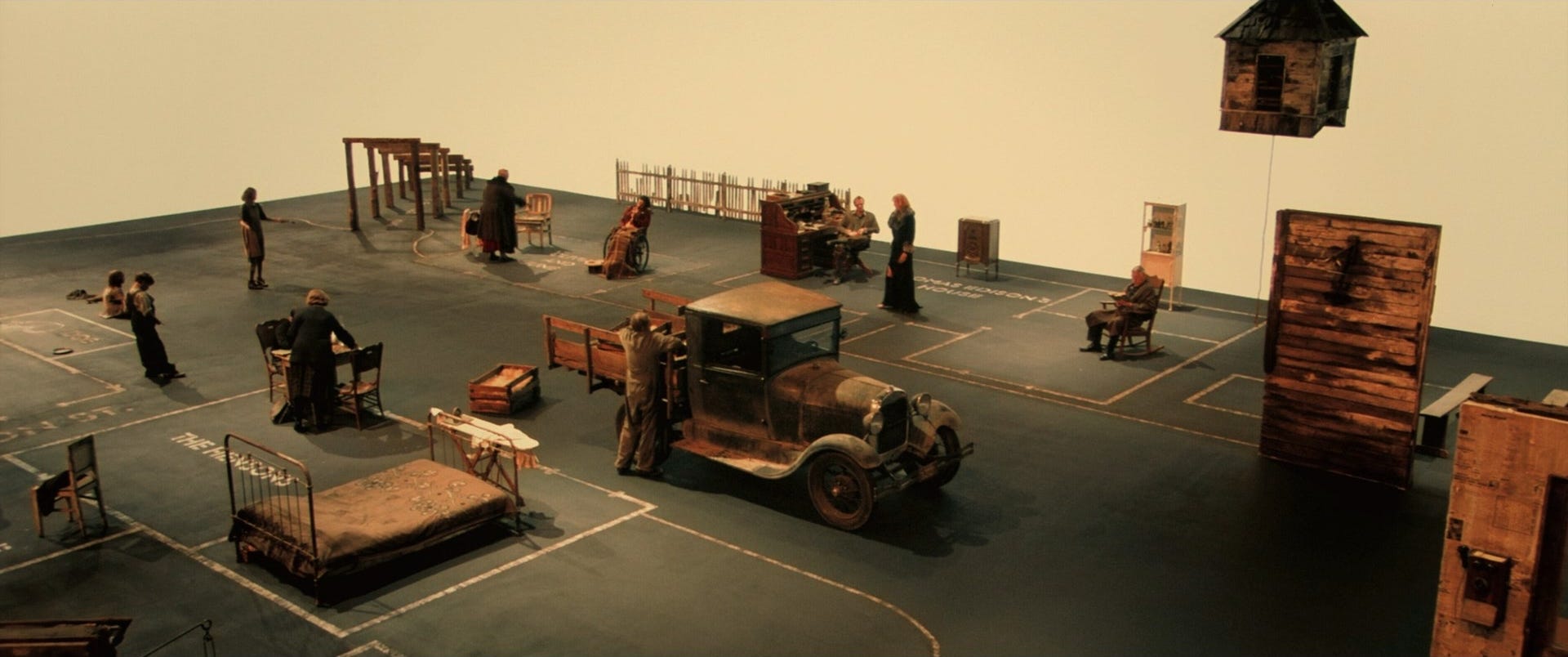
As we collectively began formalizing this different way of writing, we quickly realized we were no longer making a traditional film, we were crafting a living ecosystem. At any given moment, dozens of stories will be unfolding simultaneously across the town. A shopkeeper might be arguing with his wife while, across the street, the town historian receives devastating news, all while a child steals something that will alter the course of another family’s life. When the cameras arrive to begin filming, we imagined half-built sets that our eyes can see through, allowing for all stories to play out at once, whether in the foreground or background.


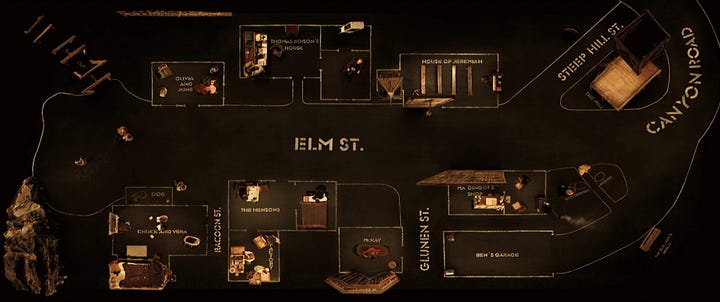

As the concept evolved, we found ourselves discussing everything from immersive theater to The Sims, Synecdoche, New York to Sun & Sea, an opera set on a beach…indoors. There are echoes of productions like Sleep No More, where entire worlds continue existing beyond the audience’s gaze. But even that comparison falls short. This town is being designed not just to be explored, but to be filmed. Walls may remain unfinished so multiple lives can be seen at once. The mechanics of filmmaking may remain visible. Crew members may become part of the choreography. Time itself may become part of the storytelling, with makeup artists entering the frame each evening to age exhausted townspeople before the next day begins.
In nearly twenty years of making films, I have never encountered an idea quite like this.
What these students are building feels less like a movie and more like the invention of a new artistic language: one where filmmaking, theater, worldbuilding, video games, and collective imagination merge into a single living thing.
Why have them make a world? What’s the point in having teens concoct a place from scratch?
"It's a hard world for little things," observed Lillian Gish a near century ago. Sadly, it’s only become more true. Young people today are inheriting a world that often feels impossibly large and increasingly beyond their control. They live amid technologies, economies, algorithms, and institutions that can seem to shape their lives more than they shape them. Much of modern life asks them to react — to consume, adapt, scroll, respond.
For one summer, we wanted to give these students the chance to experience what it feels like to imagine something of their own making, to control every facet of it.
Not just to write a story, but to create the conditions for hundreds of stories.
Not just to dream privately, but to dream at a scale large enough that dozens of collaborators can join them in making it real.
Most teenagers have never had the experience of seeing an idea leave their notebook and become a shared reality. In the coming weeks, more than one hundred students and thirty-five artists — Oscar-nominated, Emmy and Sundance-filmmakers, expert builders, craftspeople and teachers — will join this effort. A character imagined by a writer will become an actor. A building described on a page will become a physical structure. A street that exists only in conversation today will soon exist beneath our feet.
At its core, 48 Hills is an exercise in agency. It is an opportunity for young people to discover that the worlds around them are not fixed. They are made by people. And if worlds can be made, they can be remade. We hope that lesson stays with them long after the sets come down and the cameras stop rolling.
No posts
Comments
Nothing yet. Say the first thing.
Sign in to join the conversation.