
The garden of a medieval household was far more than a collection of culinary herbs. It was also the family medicine chest, and the source of dyes for the fabric a dutiful wife might weave.
In that era of rudimentary tools and limited resources, making dye wasn't easy. Only muted colors -- gray, soft blue, brown -- were acceptable for the working class woman to wear. (Bright colors led straight to the mortal sin of pride.)
Woad, a member of the mustard family, was easy to grow and produced a lovely shade of blue. To process the plant, however, required crushing and boiling the leaves, then steeping them in fermenting urine to set the color. Urine from someone who consumed large quantities of alcohol worked best. Despite these requirements (or perhaps because of them) woad was by far the most popular dye plant in Europe for over a century.
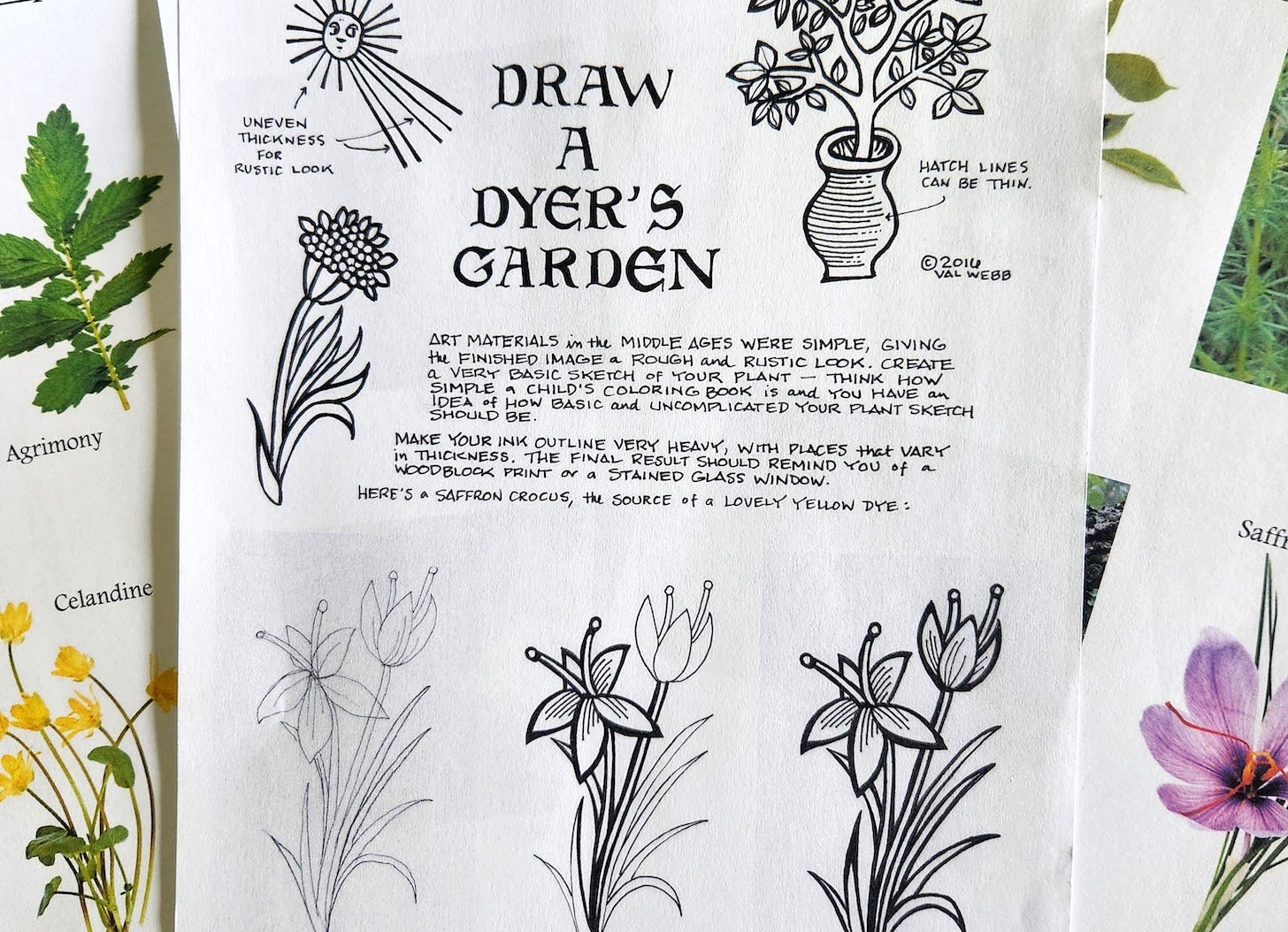
Drawn images, too, were rustic and simple in those days. Botanicals were reduced to their most rudimentary forms. Oak gall ink and a reed pen produced heavy, uneven lines that resembled woodcut printing.
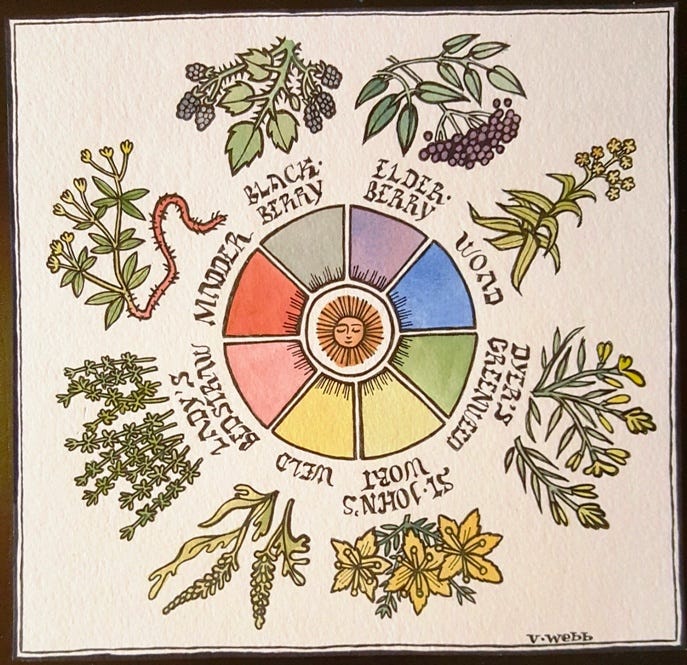
Scroll down to print the illustrated pdf pages. Today, we'll draw some traditional dye plants in a style that pays homage to medieval art. Tomorrow, we'll practice some lettering options from that period. And the next day, we will paint and letter a dyer's wheel:
Printable pages:
Comments
Nothing yet. Say the first thing.
Sign in to join the conversation.