
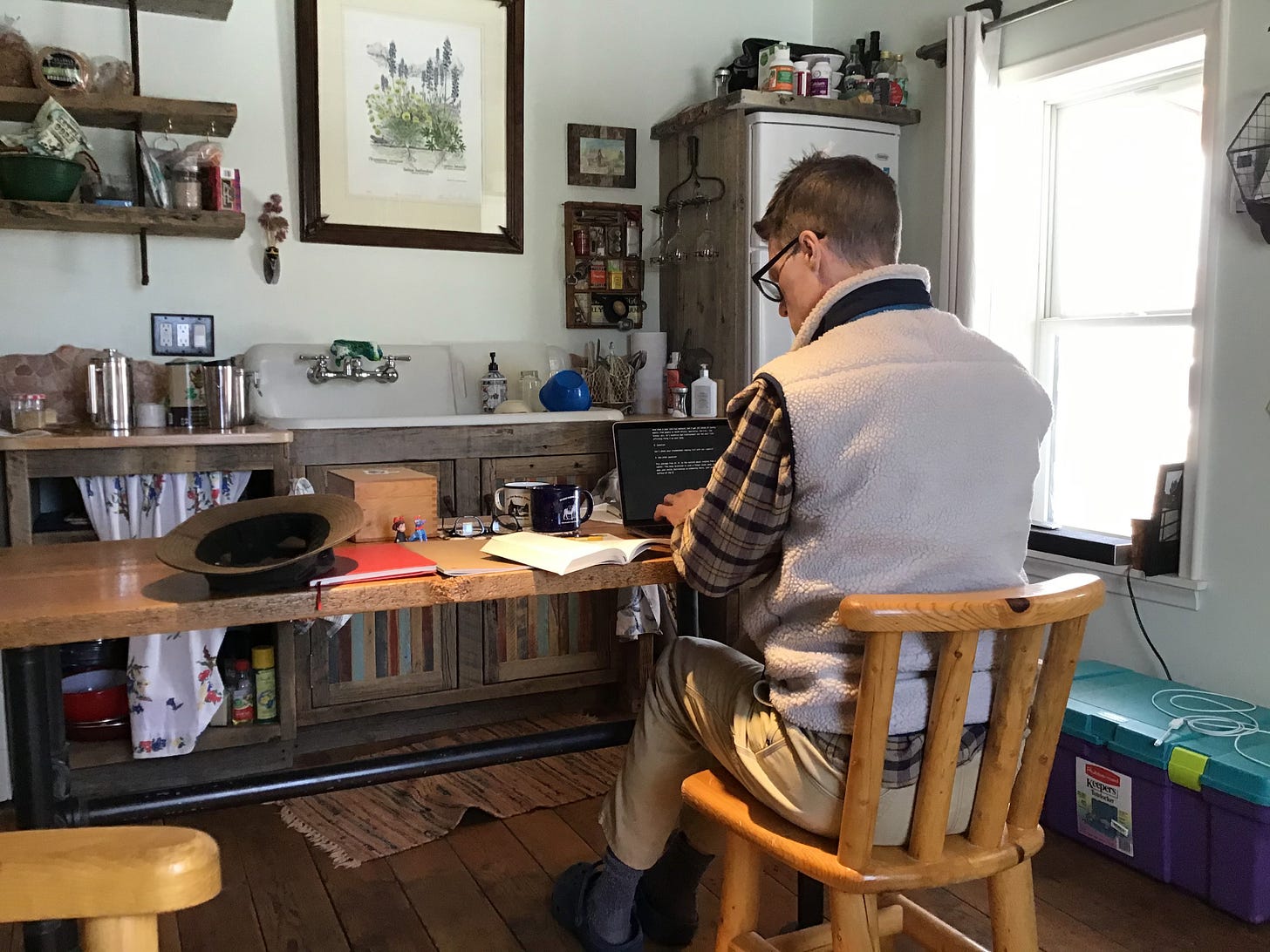
Change the world: Read with kids! 320 Sycamore Studios offers original kid stories served fresh monthly. Plus, essays, book recommendations, and links from Readerville. Everything is completely human-written.
There’s a bunch of (hopefully) great content below about books and crazy plans and how reading with kids will change the world for the better, but first…
One buck. One time. Once a year. No auto-renew. No shenanigans.
Here’s the link:
Basically, it’s a chance to “subscribe” for just a buck a year.
Totally on the honor system.
Think of it as small-dollar digital busking if you like.
I wrote eight of them below. My goal is to convince you that
this will be the best dollar you ever spend.
If you get to the end of this post and are still not convinced that 320 Sycamore Studios is worth one of your hard-earned, rapidly depreciating simoleons, well, no hard feelings.
But …
I’m likely not your guy, so let’s part as friends. (Whatever you do, though, keep reading with kids.)
Okay. Reasons!
This pretty much captures what I’m up to with 320 Sycamore Studios:
Because I believe that …
reading with kids can change the world for the better,
I write …
original kid stories served fresh monthly (27 and counting!)
plus …
book recommendations, Postcards from Readerville (news about reading from everywhere), and essays on reading in the age of digital technology
so you can …
set your kids up to be their best selves (reading IS essential equipment for human flourishing, after all)
and have a total blast doing it.
Like …
Gen-AI content.
Ads.
A paywall.
Sponsored content.
Unkindness.
Indifference.
Etc.
Maybe you’re thinking, “Surely your work is worth more than a buck!”
I’d like to think so, but ...
A lot of people have subscription fatigue. I don’t want to add to it.
I have readers from countries where a buck is a significant chunk of change.
You can use your book budget and support another writer, too. How great would that feel?!
Just so you know: While I will never paywall any content (it goes against the vision), I did activate the site’s subscription function as a courtesy to Substack for providing the newsletter infrastructure (they take a completely reasonable cut of monthly and annual subscriptions). If you can afford it, great. If not, you still get access to everything. The problem is that Substack doesn’t offer a $1/year subscription. Their lowest tiers are $5/month and $30/year. That can add up if you want to subscribe to multiple newsletters!
The Ko-fi tip-jar app that I use lets me cap tips at $1.
And okay, I did add a one-time “Kid Lit Hero” donation category of $320. But that’s only for broligarchs seeking atonement. (I like to think we can all change for the better.)
To repeat: Everyone gets access to everything I write.
Two weeks ago I asked you all why kids don’t read more. Thank you for your amazing answers (I’ll share more this Tuesday), but the gist is in what my 18-year-old stepson said when I asked him: “No one can pay attention long enough to read.”
Which is a problem.
You’re busy. You’re tired. You’re strapped.
Meanwhile, attention-sucking megacorporations are ever intent on finding ways to extract and monetize our attention, human well-being be damned.
From what I can tell, the point of being alive is flourishing. Aristotle thought so, anyway, so I’m going with that.
Which means that the main theme of everything I write will be this:
Reading serves human flourishing.
Disclaimer: I’m super-biased toward reading. But, no, reading isn’t the only thing. It’s just central because of how it helps humans think, feel, and be.
Think: Reading fosters critical autonomy, which as the philosophers Len Doyal and Ian Gough argue, is an essential human need.
Feel: Reading increases empathy. Which abets our humanity. Which serves our flourishing.
Be: Reading lets us try out other lives, opening possibilities for how we might ourselves live.
There are two other things I’ve come to believe:
Reading, in many ways, IS childhood.*
Reading with kids forgives all manner of parental imperfections. (At least I hope it does.)
Maybe you’re thinking, “This all sounds lofty, but what exactly do I get for my dollar?”
Right. Let’s get to the point. Here’s what’s in it for you.
Some are long (I’ll be sharing a 300-page middle-grade novel in a couple months.) Some are short. Some are poems, some wordplay, some realistic, some whimsical.

Conventional publishing wisdom says I should just write one thing, but my mind is too peripatetic for that. Sorry not sorry.
You can read them all for free.
Like this one: Reading with kids is an act of loving resistance against the uncontrolled growth of technology.
Looking ahead, there are so many questions to explore.
What’s the point of reading in a digital age?
What’s the connection between reading and childhood?
Between reading and parenting?
What’s with all the book banning?
What are screens doing to our kids’ brains?
And is the damage permanent?
That is, can reading build attention?
And why does that matter?
What’s so great about reading anyway and didn’t Socrates warn about the dangers of print?
Can reading be an act of mental self-defense? Like “Karate Kid” for our brains?
Isn’t it ironic to be reading this on a screen? (Well, sure. But find the balance, Reader-san.)
My dream-of-dreams is to give you the best arguments for reading possible so you can refine them, question them, make them better and then take them to your schools or show them to your nonreading friends and say, “Look at how important reading is” and we can all do that flourishing thing together.
Aside, wouldn’t it be cool to start a “slow reading” movement? Like the “slow food” movement that began in Italy? Or better yet, combine them! Let’s read books over bountiful repasts prolific with pasta and prosecco. Mmm.
One thing you can already do is start a FART habit: Families All Reading Together. If not for anything else but the acronym.
Because reading needs a good marketer.
I used to be a marketer.
And there are parts of it I adore. Like whatever Rory Sutherland says. He’s amazing.
If reading was a brand, I would have created a messaging framework; a slogan; the vision, mission, values; and a manifesto.
I would have a clearly defined enemy (AKA the “shark”). And relentlessly attack it.
And I’d write ad copy and create memes and run campaigns about the virtues of reading. You’d see them at bus stops and splashed on stickers and banners towed behind airplanes.
Wait, that’s exactly what I’m doing. As much as possible.
There are a lot of astonishing kids-book newsletters and resources out there. I treasure them, and their creators. And frankly, I cannot compete with their volume of recommendations.
Instead, each month, I’ll write about a book I liked in the spirit of, “Hey, I liked this. You might, too.”
And I’ll point you to those other great writers.
You may be wondering, “Are the stories any good?”
All I can do is share some testimonials. You can read a bunch on my Amazon author page. Here’s a trio.
“Ooh Odd Zoo: 25 Unusual Animals and 1 Ordinary Larva“
This brilliant, hilarious collection of playful (and surprisingly informative) verse is a huge hit in our house, right up there with “Where the Sidewalk Ends” and “Dragons Dragons.” I’ve read it to my son a dozen times now and three or four more times just to myself.
— Matt
I bought this book for my grandson to enjoy, but I have to say, I enjoyed reading through it first and will look forward to reading it with him. Love the thought of Messy Blessings...appreciating the things you might normally find unloveable. And the illustrations are as fun as the story! Kudos to the author. Five stars and highly recommended for young children!
— Rose
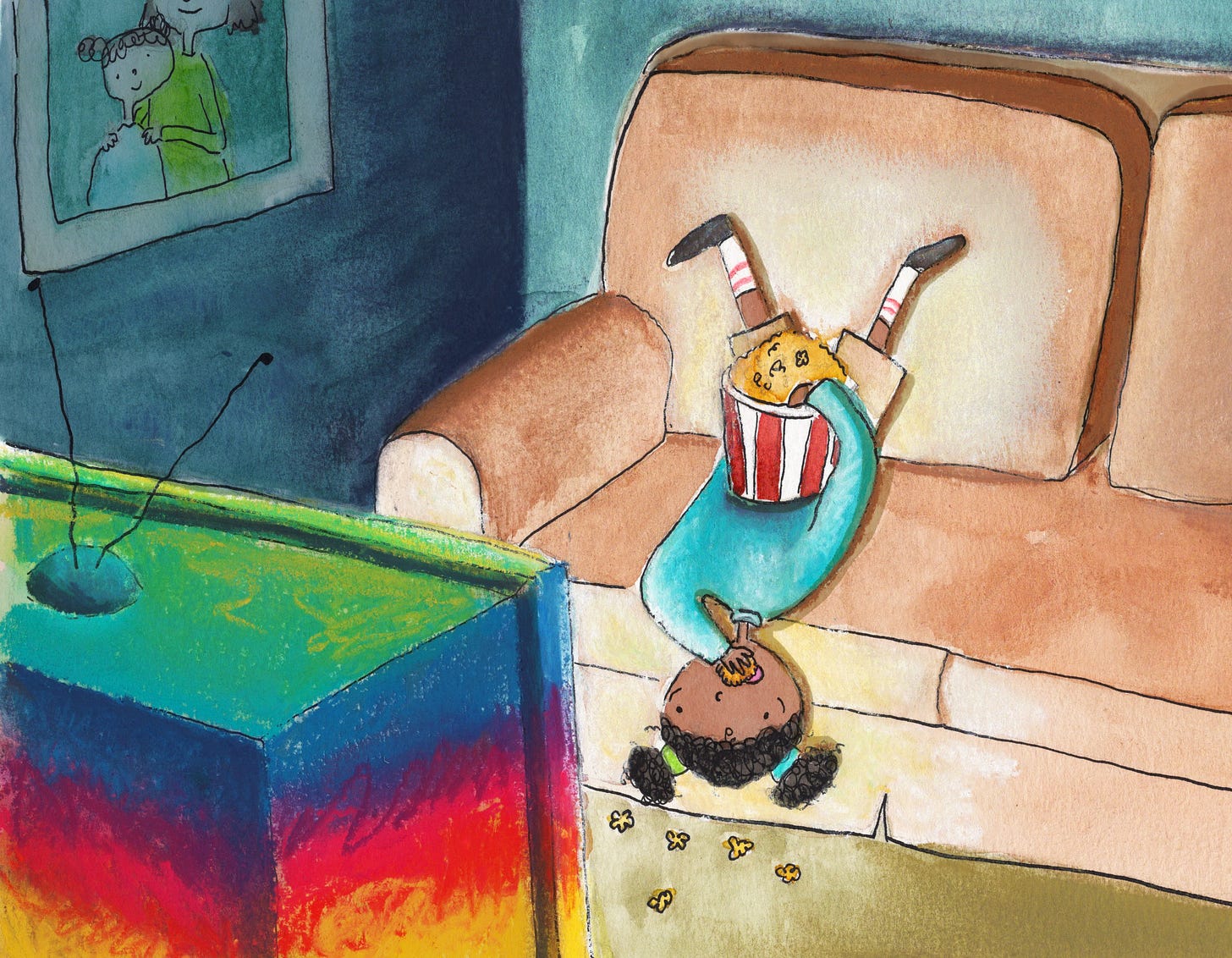
When my now 5-year-old-son was smaller, we read Goodnight Moon all the time.
As soon as we got “Goodnight Tomb” in we read it, then he wanted to read it 2 more times. He laughed so hard and then compared the two books side by side and laughed more. This book is so clever and already one of our new favorites!
— Bonnie
What’s next?
Stories. Lots of stories. I have about 20 teed up and ready to go. Some are short. One is a whopper — a middle grade novel called “Bobby Robinson Saves Seattle”. In physical form, it’d be more than 300 pages.
I’m working on a couple longer essays as well. One is an argument for reading books in a digital age; another is an exploration of book banning; and a third is about generative AI. I’d love to share more about the work of Neil Postman as well. I’m a huge fan of his writing on education, communications, technology, childhood, and reading.
And more shout-outs to kids books I like. The next ones up are “Here in the Real World” by Sara Pennypacker and Jerry Spinelli’s “Stargirl”.
I’ve got a storytelling game in development.
And a podcast in the works.
Postcards and stickers and T-shirts.
Illustrators to hire.
Beyond that, there are some great articles and movies and podcasts to point you to.
Basically, I’m just a little kid at heart who wants to share all kinds of bookish treasure with you.
No.
But you can support a billion-minus-one other writers and creative folks. Or build a whole bunch of libraries.

Sometimes I say “we” but it’s really just me. Jeff. Someone who grew up loving reading and sports, but not loving himself all that much. That took a while. Books helped. For my undergrad, I double-majored in English lit and the decathlon. (Just kidding about the decathlon. I didn’t get a degree in it, though I gave it more time than English lit.) I got a master’s in history after a chance meeting in Geneva with a Howard Zinn book. I spent a lot of years in Seattle being a copywriter and editor and dad. Wandered off to Europe a few years ago, fell in love, and now live in Germany. I’ve got two wonderful kids of my own and two wonderful stepkids. Jobwise the last few years, I went from being a startup marketing exec to Subway sandwich artist to a startup marketing exec again to TBC. So it goes. I read and write all the time. 320 Sycamore Studios is my true love.
You can call or message me if you like.
Send me an email and I’ll give you my phone number.
As far as I know, you can’t. Which is such a bummer.
All I can do is share why I write all the words myself.
Well, technically, yes. Maybe enough each year for a nice dinner with my wife.
To be honest, though, I’d rather not have the books on Amazon at all. I could give you lots of excellent reasons why I find Amazon problematic, but I’m probably still bitter about how I was treated when I worked there. Kidding! (Mostly.)
I’m also curious about ways to liberate stories from books. Don’t get me wrong, I adore physical books. But the machinery of the publishing industry is really cumbersome. I’m looking to remove the barriers between story and reader. Can each reader be the publisher? Can a podcast be the primary story format? I’m psyched to explore these ideas in the years ahead.
Ha ha ha ha ha!
Oh, you’re serious.
No.
But I quite like the idea of someday having enough money. Enough money to be able to write stories and promote reading and writing for the next 30 years full-time and utterly.
If I’m ever lucky enough to make more than what my friend Matt calls “pork-chop money,” I’ll cap my salary at some reasonable amount (like what a senior public-school teacher makes) and use the rest to promote reading and support illustrators and writers.
A fellah can dream.
Who am I not to?
And who are you not to do what lights you up, you beautiful human?
What do you think?
Have I earned your dollar?
If I have, click that link and leave a tip.
We’ve got some great work to do, we humans.
Reading with kids really CAN change the world for the better.
It’s gonna be fun.
Happy reading,
Jeff
PS. Would you share this post with a friend? I’d be so grateful.
*Neil Postman has been a big influence on my thinking. (He’s the author of “Technopoly,” “Conscientious Objections,” “The Disappearance of Childhood,” “Amusing Ourselves to Death,” “The End of Education,” and many other books.)
Check out our bookshelf page to access complete versions of all our stories (free, of course). If you’d like physical versions, 12 of our titles are available for sale.
Comments
Nothing yet. Say the first thing.
Sign in to join the conversation.