
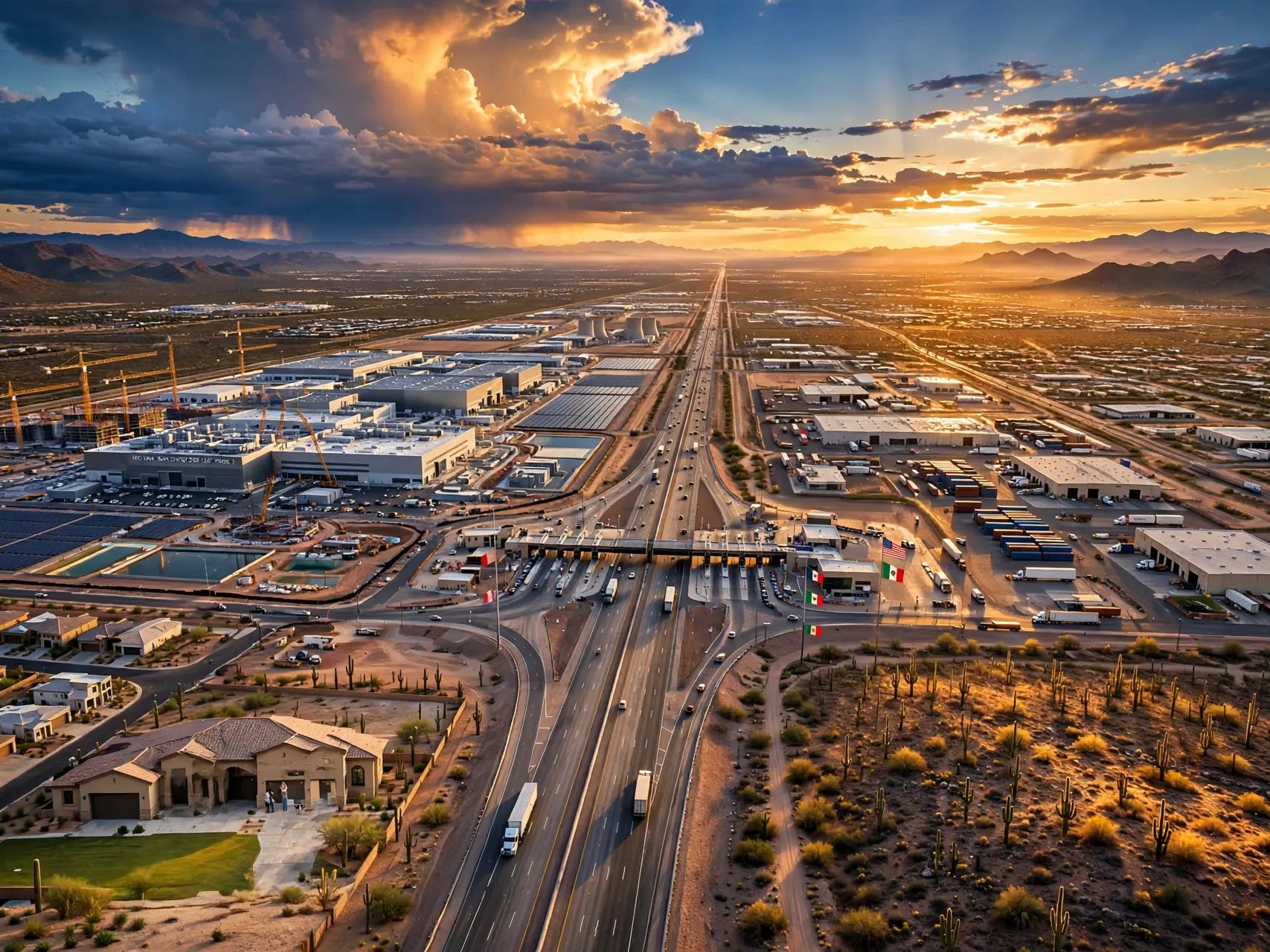
This week the map of North America is being redrawn in real time, and the border is where you see it first. A marquee Toyota line is leaving Mexico for Texas, the first shoe to drop as companies hedge against trade uncertainty. A landmark housing law just opened the door for capital to build the workforce housing our chip boom desperately needs. In Mexico, President Sheinbaum is claiming security wins while disowning the cooperation that made them possible. On the field, El Tri gave a proud nation a World Cup summer to remember. And in Washington, a fight over the ballot itself is testing who gets to be heard. Five stories, one throughline: the decisions being made right now will shape the border region for a generation. Let’s get into it.
First time reading? Join thousands of intellectually curious readers. Sign up here.
Baja California has built Toyota Tacomas since 2004. Tijuana workers turned that plant into a point of pride, and the truck it produces is the best selling midsize pickup in the United States. That is the strength worth naming first. Now comes the harder news.
Toyota will invest $3.6 billion to expand its San Antonio campus, add a second assembly line, and create roughly 2,000 jobs. Over the next four years, it will move Tacoma production out of the Tijuana plant and into Texas. The company was direct about why. The shift reduces its exposure to U.S. tariffs on vehicles built in Mexico.
Read that carefully. Toyota is not abandoning Mexico. Its Guanajuato plant keeps building the Tacoma, and Toyota still frames Mexico as part of its North American production network. But a marquee line is moving north, and the stated reason is trade uncertainty. That is the tell I have been watching for.
When Washington let USMCA drift without renewal, I said the cost would not arrive as a headline. It would arrive as decisions. Quiet ones. A line relocated here, a supplier contract not renewed there. This is the first shoe to drop, and more companies are running the same math right now.
For the border economy, the question is not whether we can stop this. It is whether Sonora and Arizona compete for what stays. The supply chain, the parts, the packaging, and the workforce do not have to follow assembly out. We can fight to keep them here. The auto map of North America is being redrawn, and border communities cannot afford to watch it happen to them.
Introducing the border art collection
I have spent my entire career at the intersection of two nations. I have sat across from diplomats, negotiated trade agreements, managed the busiest land ports of entry in the world, and walked the same desert ground that millions of people have crossed in search of something better. The border is not an abstraction to me. It is home.
For years, the walls of my office have told that story. Now I want to share it.
This week I am launching my Border Art Collection, a curated set of works that reflect the depth, complexity, and humanity of the U.S.-Mexico relationship. These are not decorative pieces. Each one carries a history, a people, and a point of view. The collection begins with the piece I consider the most fitting for where we stand today: a striking oil portrait of José Doroteo Arango Arámbula, the man the world knows as Pancho Villa, El Centauro del Norte.
Painted in July 2023 by artist Rita Amaya, the original hangs in my office in Phoenix. Every U.S. and Mexican business leader, diplomat, and official who walks through that door sees it. No one needs it explained. Villa was a fronterizo, a man of the border, who governed and operated across two nations as if boundaries were merely suggestions. He remains the only Mexican commander in history to launch a military invasion of the United States, forcing an American military response in 1916. He is complicated, defiant, and impossible to ignore, which is exactly what the border has always been.
Professional poster prints are now available for your home, office, boardroom, or any space where the U.S.-Mexico relationship matters. Visit my website for details, and follow along as the collection grows.
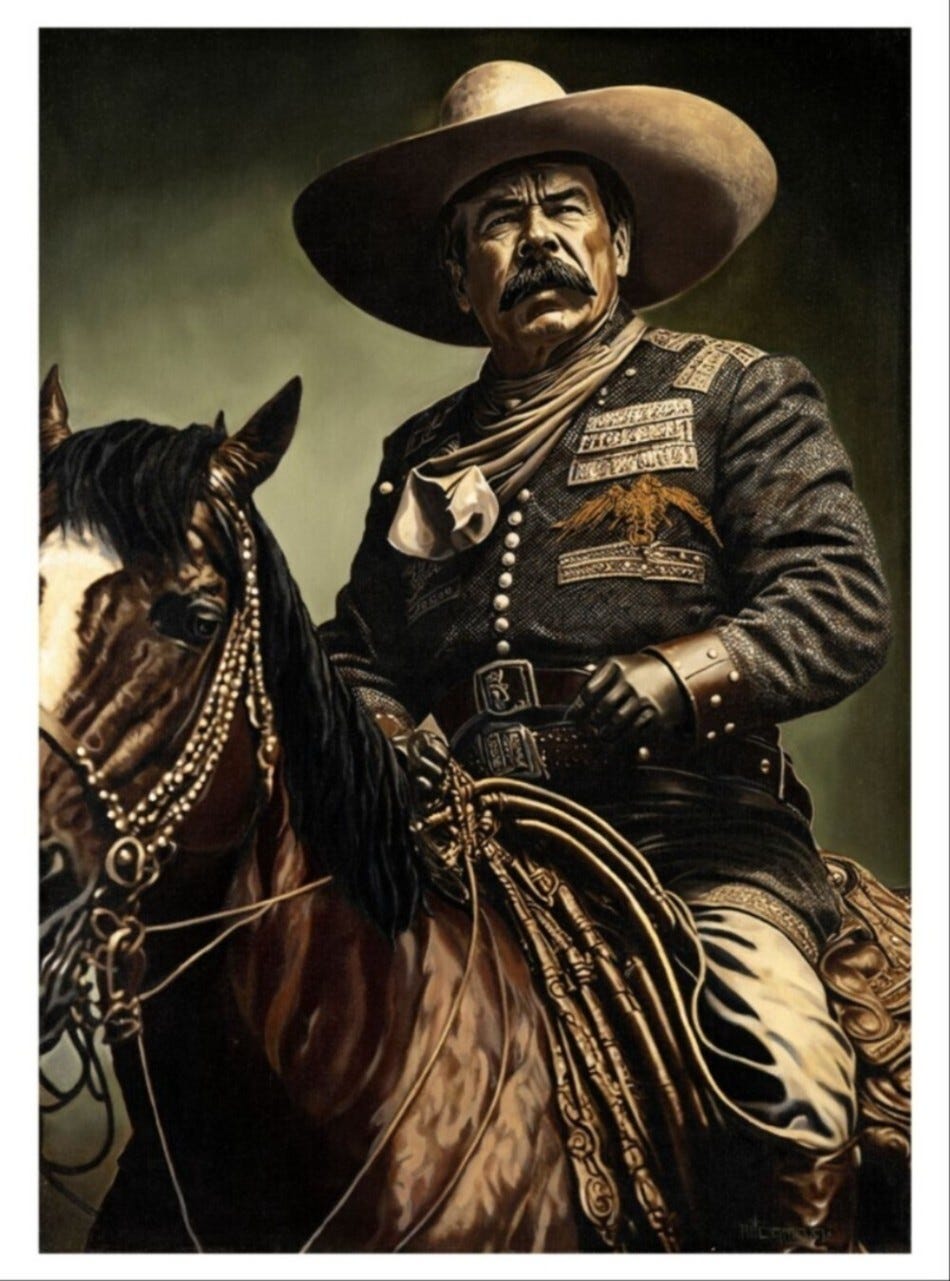
Pancho Villa - El Centauro del Norte
Born José Doroteo Arango Arámbula in Durango, Mexico, Villa commanded the largest military force of the Mexican Revolution, governed the border as if boundaries were suggestions, and remains the only Mexican commander to launch a military invasion of the United States.
Professional poster prints available now.
Shop now $25
Arizona has pulled in more than $205 billion in semiconductor investment since 2020, more than any state in the country. That is real strength, and it is ours. It also comes with a problem we have not solved.
You cannot run a $200 billion chip economy if the people who build it cannot find a home. Arizona faces an immediate shortage of 56,000 housing units and a longer term gap of 110,000. Maricopa County alone is short more than 34,000, and at today’s building pace it would take 262 years to close. The average Arizona home now runs past $426,000, and a family needs close to $95,800 a year to afford it. Tens of thousands of chip workers are moving into a market with nowhere to put them.
This week handed us an opening. The 21st Century ROAD to Housing Act became law on July 11, the first major federal housing law since the 1990s, passed with rare bipartisan force. It is a supply bill. It makes homes built in factories cheaper to produce, funds new construction and the conversion of vacant buildings, and frees banks to move more capital into affordable housing.
Here is the part that matters for investors. The law limits Wall Street from buying up existing single family homes, but it rewards capital that builds. That is the door. International investors who develop workforce housing in Arizona are exactly who this market now needs. Another opportunity to diversify development capital in Arizona.
At Intermestic Capital, we are already fielding those inquiries. Housing supply and semiconductor supply are the same fight. Let us build.
Earlier this year, Mexican special forces took down El Mencho, the leader of the country’s most violent cartel. That was a hard, professional operation, and Mexico’s forces deserve credit for it. Hold onto that, because the politics around it tell a more troubling story.
On July 10, President Sheinbaum blamed former President Calderón for “opening the door” to U.S. agencies operating on Mexican soil. The comment followed an April raid in Chihuahua that reportedly killed people tied to the CIA and DEA. Her position is that Mexico’s security agreement with Washington limits American agents to sharing intelligence, not running operations on the ground.
Here is the tension. The El Mencho takedown happened with U.S. intelligence. Sheinbaum wants the win at home while publicly drawing a hard line against the very cooperation that made it possible. That is not a stable place to stand, especially with Trump pressing for faster and harder action, and it leaves the whole binational relationship exposed to the next leak or the next raid gone wrong.
I have sat on the operational side of this. Cooperation works when it is quiet, clear, and trusted on both sides. What we are watching instead is a government that treats sovereignty and cooperation as a contradiction to be managed in public rather than a partnership to be defended.
My recommendation is direct. Mexico should own its operations, and it should be transparent with its own people about how they work. Say plainly what the United States contributes and what it does not. Secrecy breeds the exact suspicion Sheinbaum is now fanning. Public trust, not deflection, is what makes this partnership durable.
For the first time in a generation, Mexico played a World Cup on home soil. El Tri won Group A outright, beat South Africa, Czechia, and South Korea, and had the whole country believing. Cuauhtémoc Blanco’s old stadium roared like it was 1986. That pride is the story, and nobody can take it away.
Then came England. On July 5, in a 3 to 2 loss in the Round of 16, Mexico’s run ended, and all three co-hosts, Mexico, the United States, and Canada, were out of their own tournament. It stings. A team fights that hard at home, you want more time. But look at what actually happened before the final whistle.
Mexico did not back into this World Cup. It topped its group, it scored on England, and it made a proud nation prouder. The measure of a host is not only the trophy. It is whether the country showed the world who it is. Mexico did that.
Here is what I keep thinking about. Somewhere in Nogales, in Phoenix, in a border town where kids grow up with two flags, a young player watched El Tri walk out at home and thought, that could be me. That is the real return on a tournament like this. Not the ticket sales, though those matter. The next generation deciding the game belongs to them too.
The World Cup rolls on toward its July 19 final. Mexico is out, but the seed is planted. Our job on this side of the border is to make sure the kids who caught the fever this summer have a field to play on and a program to join.
Early voting is under way, and across the country Americans are already showing up to cast a ballot. That is the most basic act of citizenship, the one my parents dreamed about and millions of naturalized Americans still treasure. Hold that image, because Washington is trying to make it harder.
The SAVE America Act is back at the center of the fight. The bill would require documentary proof of citizenship to register, meaning a passport or birth certificate, and photo ID to vote in federal elections. It would effectively end mail and online voter registration, force states to hand their voter rolls to the Department of Homeland Security, and expose local election workers to prison time for a good faith paperwork mistake.
Supporters say the goal is simple: only citizens should vote. That is already the law, and every serious review, including from the Trump administration’s own allies, shows noncitizen voting is vanishingly rare. What the bill actually builds is a wall of paperwork. More than 21 million Americans do not have ready access to the documents it demands. It falls hardest on working families, young people, the elderly, women who changed their names, and naturalized citizens, including many of the 40 million residents of this country connected to Mexico that I write about each week.
Then there is mail voting, which Republicans are also moving to restrict, despite decades of evidence that it is secure and widely used.
This fight did not pause over the weekend, even as the Senate lost Lindsey Graham, a close Trump ally who died Saturday at 71. The president has tied the SAVE America Act to his agenda and keeps pushing it.
My message is simple. Voting is not a partisan privilege. Check your registration, and vote.
Thanks for reading Power Courier by Marco Lopez! Subscribe for free to receive new posts and support my work.
Comments
Nothing yet. Say the first thing.
Sign in to join the conversation.