
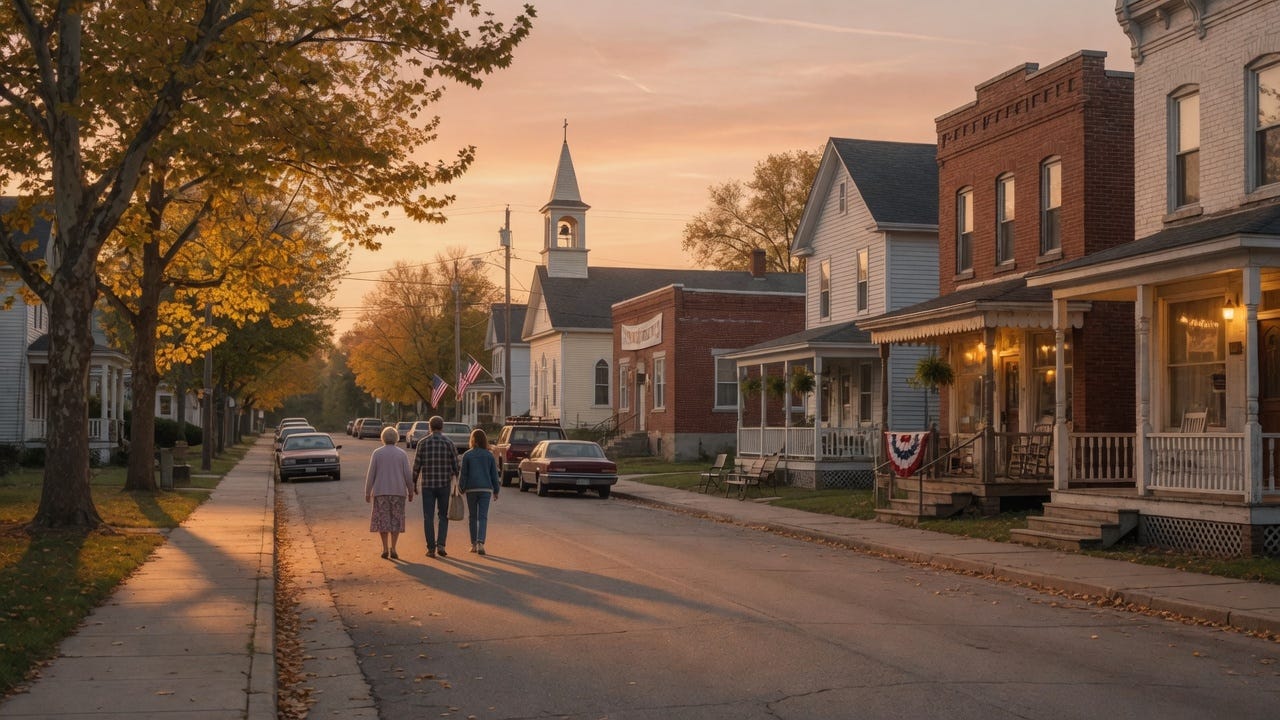
You don't need a badge for this tour. You don't need a degree in social work, a spare bedroom, or a single free weekday. You just need about ten minutes and a willingness to look at your own town a little differently than you did yesterday.
Because here's what I've learned: the hardest part of helping kids isn't the helping. It's finding the door. Most people genuinely want to do something — and have absolutely no idea where anything is. So today, I'm your tour guide.
One thing before we start walking, because it matters.
There is no off-switch on a child's hard life. A child carrying something heavy carries it everywhere they go, every hour of every day. The gap these kids live in isn't a weekend, and it isn't a time slot. It's 24 hours a day, 7 days a week.
And that's exactly why the answer has never been an institution with operating hours. Institutions close. People don't have to.
The people I'm about to show you figured that out a long time ago. Come on.
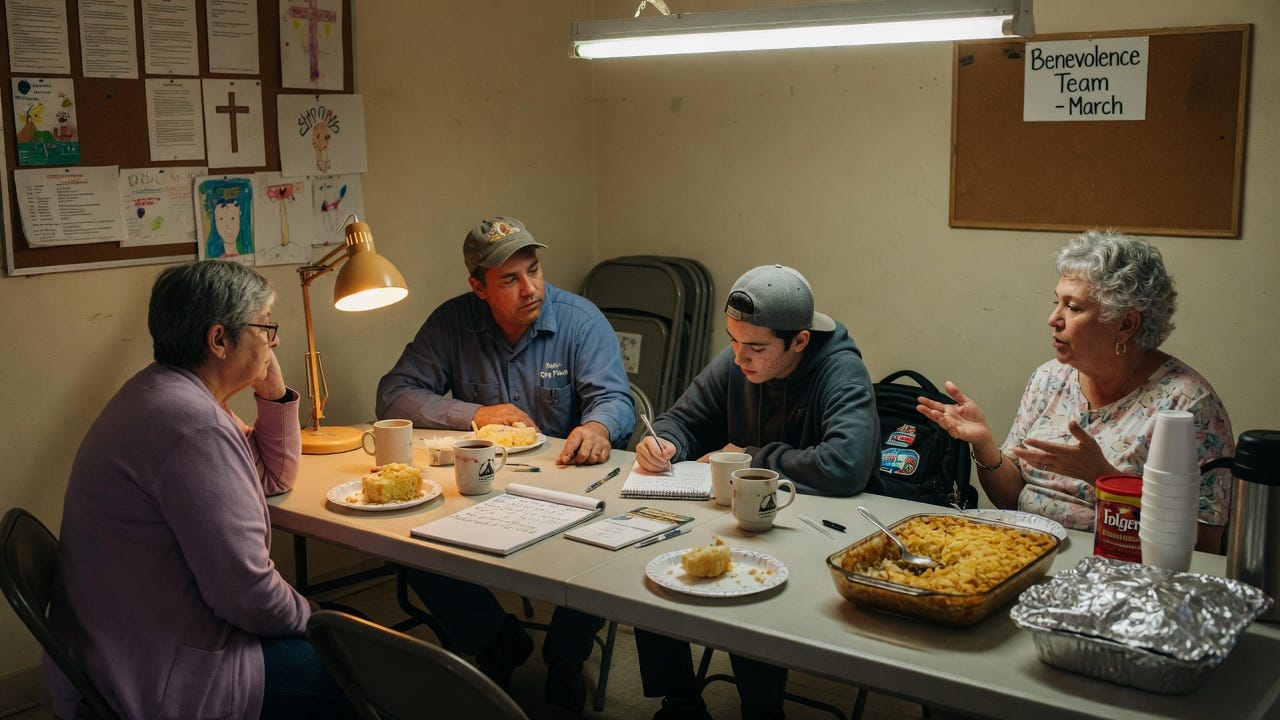
Over here on the left — the church you've passed a hundred times. Tuesday nights, a handful of people meet in a side room, and what they do has a name: wraparound. When a family in their community is barely holding on — a foster family stretched thin, a single mom one car repair from losing her job, a dad fresh out of rehab trying to keep his kids — this team wraps around them. One person owns meals. One owns rides. One sits with the kids so the parents can breathe for two hours. One just calls every week to say we haven't forgotten you.
Thanks for reading! This post is public so feel free to share it.
Nobody on that team is there in a professional capacity. They're a retired teacher, a mechanic, a college kid, a grandmother — and they'd be the first to tell you they're not a substitute for the caseworkers, counselors, and courts doing the heavy lifting. They work alongside those folks, and they cover the one thing no agency can put in a budget: they make a family known.
Your on-ramp: one meal a month. That's a real role on a wraparound team. Ask any church in your area if they have one — and if they don't, ask if they'd start one. Sometimes the question is the seed.
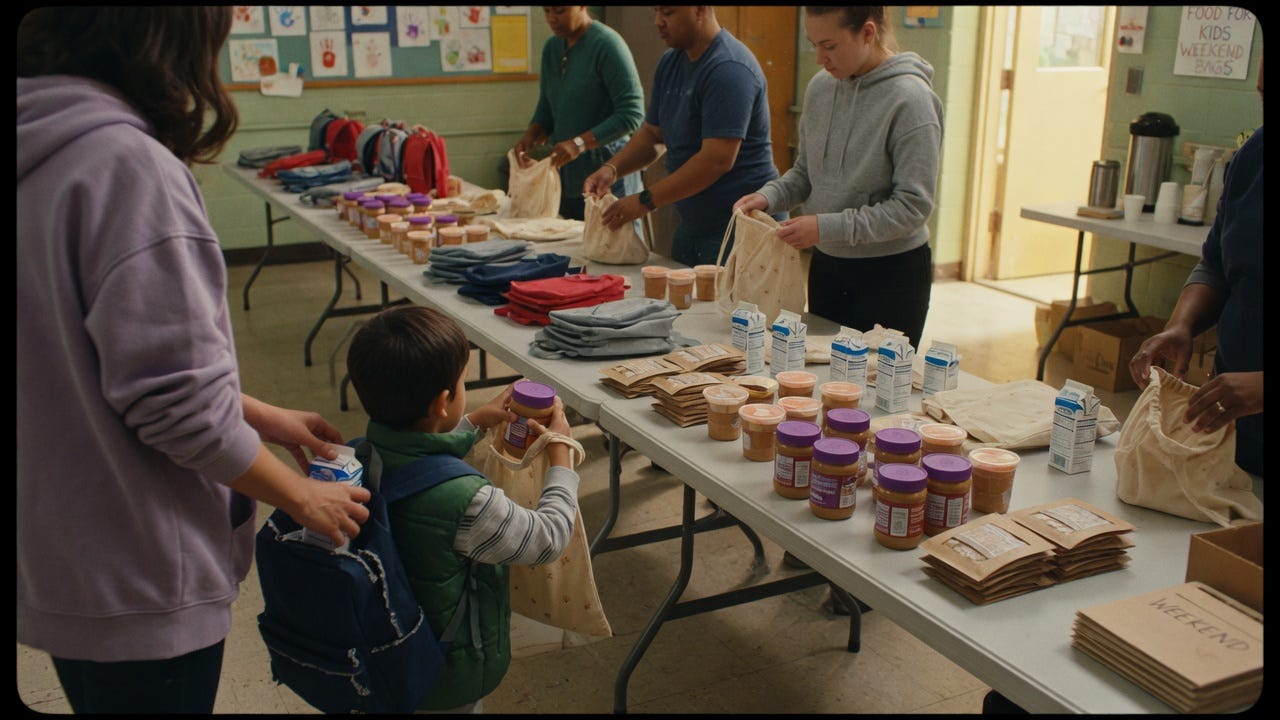
Down this way, behind the community center — see the folding tables and the assembly line? Every week, volunteers pack bags: peanut butter, oatmeal, fruit cups, shelf-stable milk. These go home with kids whose cupboards are thin.
Notice what these folks understand: hunger doesn't keep a schedule either. They're not solving childhood hunger — they're making sure that in their town, this week, some kids eat. There's a dignity to how they do it, too. The bags slip into backpacks quietly. No line to stand in. No spotlight on a child who's already carrying enough.
Your on-ramp: the humble jar of peanut butter. A case of it. Or one hour on packing day — bring your own kids; let them load fruit cups and learn what neighboring means.
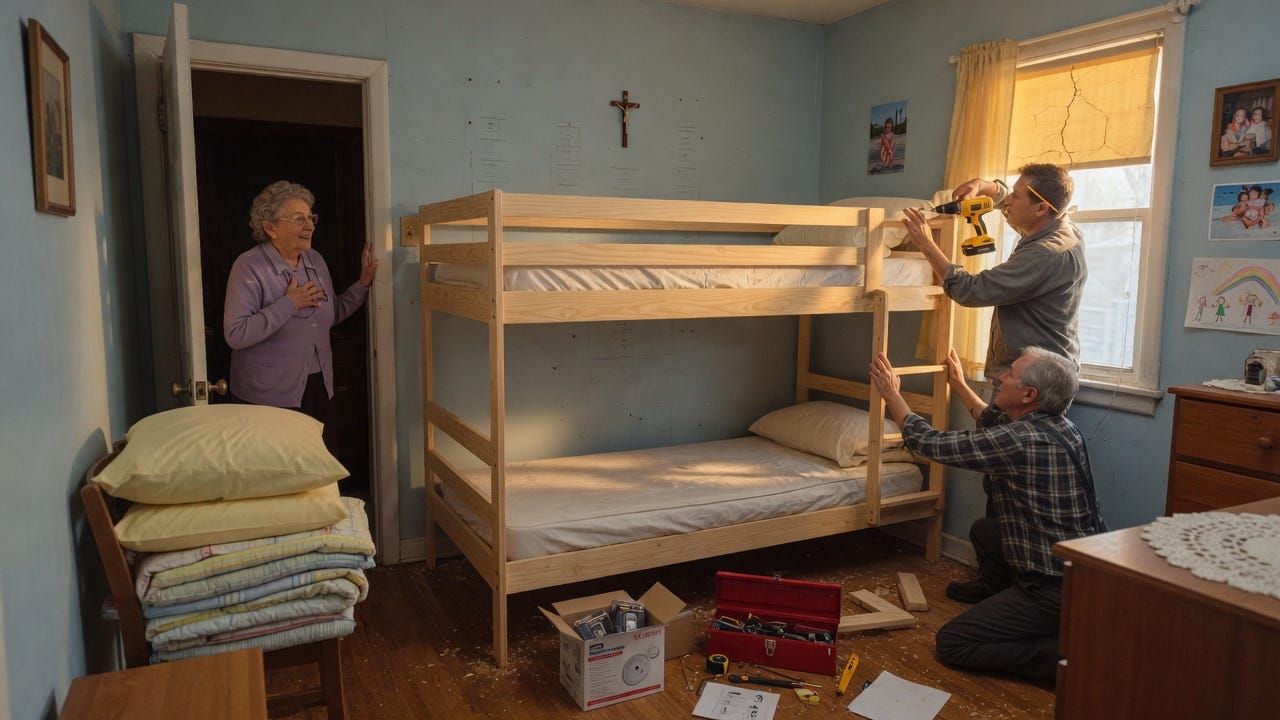
This one, most people have never even heard of — and it might be the most important stop on the tour. Walk in with me.
Here's what almost nobody outside the system knows: all over this country there are grandmothers, aunts, uncles, and ordinary families who are willing — right now — to take in a child who needs them. And standing between that willing family and that child is a checklist. Beds for every child. Working smoke detectors. A CPR certification. Fingerprinting and background-check fees. A bedroom window that meets code. A fence. None of it unreasonable — it's there to keep kids safe. But for a grandmother on a fixed income who just got a call asking if she can take her three grandbabies this week, that checklist might as well be a wall.
The people in this room saw that wall and decided to take it apart, item by item. They pool resources. Somebody's furniture store donates the bunk beds. Somebody's handyman crew installs the smoke detectors and fixes the window. Somebody just writes the check for the fingerprinting fees. A family that was six obstacles away from qualifying becomes a licensed kinship or foster home — and a child lands with people who already love them instead of with strangers.
Your on-ramp: pick one line on someone's checklist and make it disappear. A bunk bed. A car seat. A CPR class. Finding the door is easier than it sounds: search your state's name plus "become a foster parent" and you'll land on the agency that licenses homes where you live — it goes by different names in different states, but it's always one search away. Or start even closer to the ground: a foster-care closet, a kinship support group, a CASA office. Wherever you land, ask one question: "What's the item that's holding a family up right now?" You will not stump them. They know exactly who's stuck and on what.
One more, just around the corner. These volunteers do something almost invisible: they give foster and kinship parents a break. Trained, background-checked respite care — a Saturday afternoon, an evening, sometimes a weekend. It sounds small. It is not small. Caregiver burnout is one of the reasons placements fail, and when a placement fails, a child moves again. Every hour this crew gives a worn-out caregiver is an hour spent holding a family together.
Your on-ramp: ask a local foster-care support organization what their respite requirements are. In many places, the training is shorter than you'd guess — and the waiting list of families who need it is longer than you'd want to know.
Tour's over. This last stop is just you.
Notice what you did not see today: a single cape. Nobody here had to found a nonprofit, and nobody had to quit their job — somebody already did that founding, years ago, precisely so the rest of us wouldn't have to. The wheel exists. Everyone on this tour simply found the work already underway and attached themselves — a meal, a jar, a bunk bed, a Saturday. The organizations were already there. The dedicated ones, the ones who've been at this for years, will tell you their scarcest resource has never been passion. It's hands.
Now, honesty — because you'll find out anyway the moment you start calling around. Your town may not have all four of these stops. It might have two of them under names I didn't use, or one, or a version of the qualifying room that's just a county caseworker with a mental list of stuck families and nobody to hand it to. If you make a call and find an empty lot where a stop should be, you haven't hit a dead end. You've found the vacancy. Every program on this tour started the day one person asked, "Wait — nobody's doing this here?" You don't have to build it alone, either; ask the caseworker, the food bank, the church down the road who'd help. The question is the seed. It always has been.
At Project Milk Carton, we spend most of our days in the hard part of this world — the data, the system failures, the kids who fall through. We'll keep doing that work, because somebody has to keep the receipts. But transparency is only half of a mission. The other half is what you do with your own zip code.
The gap is 24/7. So is a community that decides to show up.
Pick one stop. Make one call this week. That's the whole assignment.
And because the phone gets heavy right about now — here are the only words you need. Say exactly this:
"Hi — I live here in town. I'm not looking to start anything big; I've got [a meal a month / an hour a week / a bunk bed / a Saturday afternoon]. Who's stuck right now, and what do they need?"
That's it. That's the whole script. In the history of this work, nobody has ever been mad to get that call.
If you enjoyed this work and feel encouraged by independent investigations like this, please consider becoming a paid subscriber to The Constitutional Republic on Substack or donate at Project Milk Carton Inc. Your gift keeps our site alive, spotlighting high-risk children! or at https://t.co/PvtnrODkNz
Your support helps us continue:
investigative reporting
public records research
educational transparency projects
community outreach
and future investigations like this series
Most importantly, please share this article.
Independent journalism survives when ordinary people help spread information powerful institutions would prefer to remain ignored, misunderstood, or buried beneath complexity.
Because silence protects systems.
Informed communities protect children.
ALL paid subscriptions are 100% tax deductible
Project Milk Carton | 501(c)(3) | EIN: 33-1323547
- Melody Jennings, CEO, Project Milk Carton
Thanks for reading! This post is public so feel free to share it.
No posts
Comments
Nothing yet. Say the first thing.
Sign in to join the conversation.