
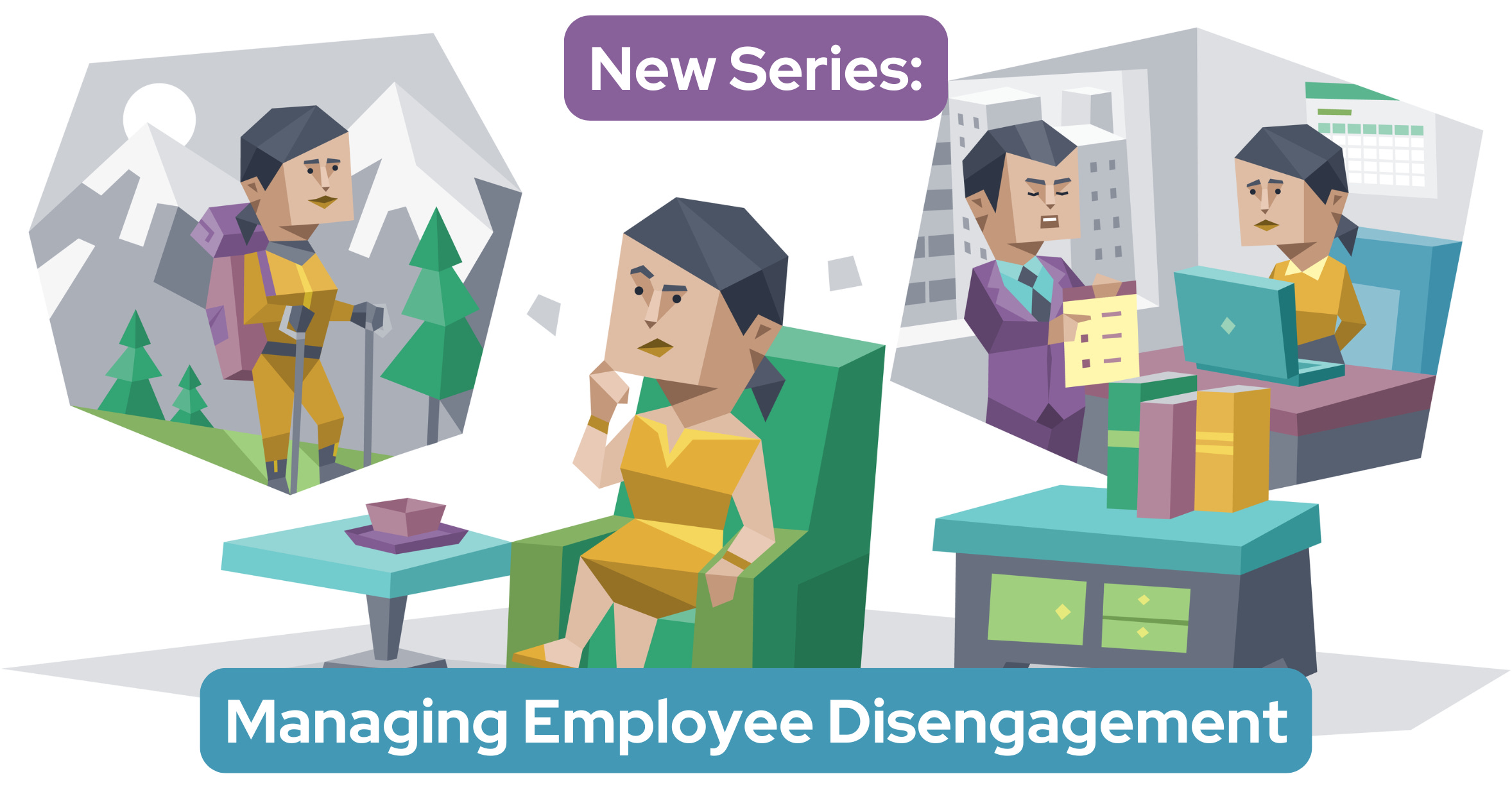
Employee disengagement is one of the most expensive problems in business – and one of the easiest to miss. According to Gallup’s 2026 State of the Global Workplace report, low engagement costs the global economy an estimated $10 trillion a year. That’s about 9% of global GDP.
It’s also incredibly common. Only about 1 in 5 employees worldwide are engaged at work – the lowest level Gallup has recorded since 2020. Close to two-thirds are “not engaged” – showing up, doing enough to get by, but mentally checked out. Another 16% are actively disengaged.
The tricky part is that disengagement rarely announces itself. It usually isn’t the person who quits. It’s the one who stays – still hitting deadlines, still ticking every box – while their ideas, energy, and extra effort quietly disappear.
It’s also easy to misread. Quiet gets mistaken for checked-out. A firmer boundary gets mistaken for a bad attitude. Boredom (or even burnout) gets mistaken for laziness. And when managers do notice, they often respond with more of what would motivate them – not what would actually reengage the person in front of them.
The upside: reengagement is a leadership skill you can get good at. It starts with reading the signals correctly.
Say hello to our new 5-Day Managing Disengagement Challenge – a practical series designed to help you spot disengagement early, understand what’s really behind it, and respond in a way that fits the person.
The challenge starts MONDAY (August 3). Be sure you’re subscribed to participate.
Each day tackles a specific piece of managing disengagement. By the end, you’ll have a practical way to recognize it early and respond without guessing.
By participating, you’ll learn how to:
✅ Tell real disengagement apart from a personality that just works differently
✅ Recognize what your people withdraw first – long before the work slips
✅ Understand why the same conditions energize one person and drain another
✅ Open a hard conversation without triggering defensiveness
✅ Decide whether – and how – to try to reengage someone
Day 1: Quiet Quitting – or Just a Different Working Style? Learn to tell true disengagement apart from a personality that never looked “engaged” by the usual standard.
Day 2: Why High-Performing Employees Stop Going Above and Beyond – Discover the contributions that disappear first, long before the work does.
Day 3: Why Good Employees Lose Motivation at Work – See how the same conditions that energize one person can drain another.
Day 4: How to Talk to a Disengaged Employee Without Putting Them on the Defensive – Get conversation openers that start with an observation, not an accusation.
Day 5: Can a Disengaged Employee Be Reengaged? – Figure out what actually needs to change, and how to tell whether it’s working.
After the Challenge, we’ll dive deeper into each personality Role.
The same signs of disengagement can mean very different things depending on who’s behind them, so we’ll dedicate an article to each of the four Roles – the Analyst who stops sharing ideas, the Diplomat who’s lost faith in the work, the reliable Sentinel who’s already checked out, and the Explorer whose boredom gets read as a bad attitude.
If you’re a paying subscriber, you’re already set – the challenge will arrive in your inbox automatically.
Free subscribers will have access to Days 1 and 2, plus previews of the rest. To participate fully, you’ll need to upgrade your subscription.
Still a free subscriber? Take advantage of our Big Birthday Bonanza to save up to 63% on an annual subscription!
(We haven’t done a promotion like this before, and we don’t know if we’ll ever run it again. So if you’ve been on the fence, now is the time to upgrade.)
Upgrading will give you access to this Managing Disengagement Challenge plus our complete leadership development archive, including articles on:
Human leadership in the age of AI
Adjusting to management as a new leader
Mastering 1:1 meetings
Leading multigenerational teams
Leading well as an Introvert
The top 5 leadership challenges each personality type faces
Leading through uncertain times
Managing stress at work
Leading remote (or hybrid) teams
Managing up to your boss
Claim your Big Birthday Discount
I’m looking forward to digging into this one with you. This challenge is built to be practical and doable – even if you’re already dealing with a team member who’s checked out. And if the one who’s feeling checked out is you, you’re in the right place too. A lot of what we’ll cover applies just as much to protecting your own engagement as your team’s.
Talk soon,
Carly from the 16Personalities Team
Comments
Nothing yet. Say the first thing.
Sign in to join the conversation.