
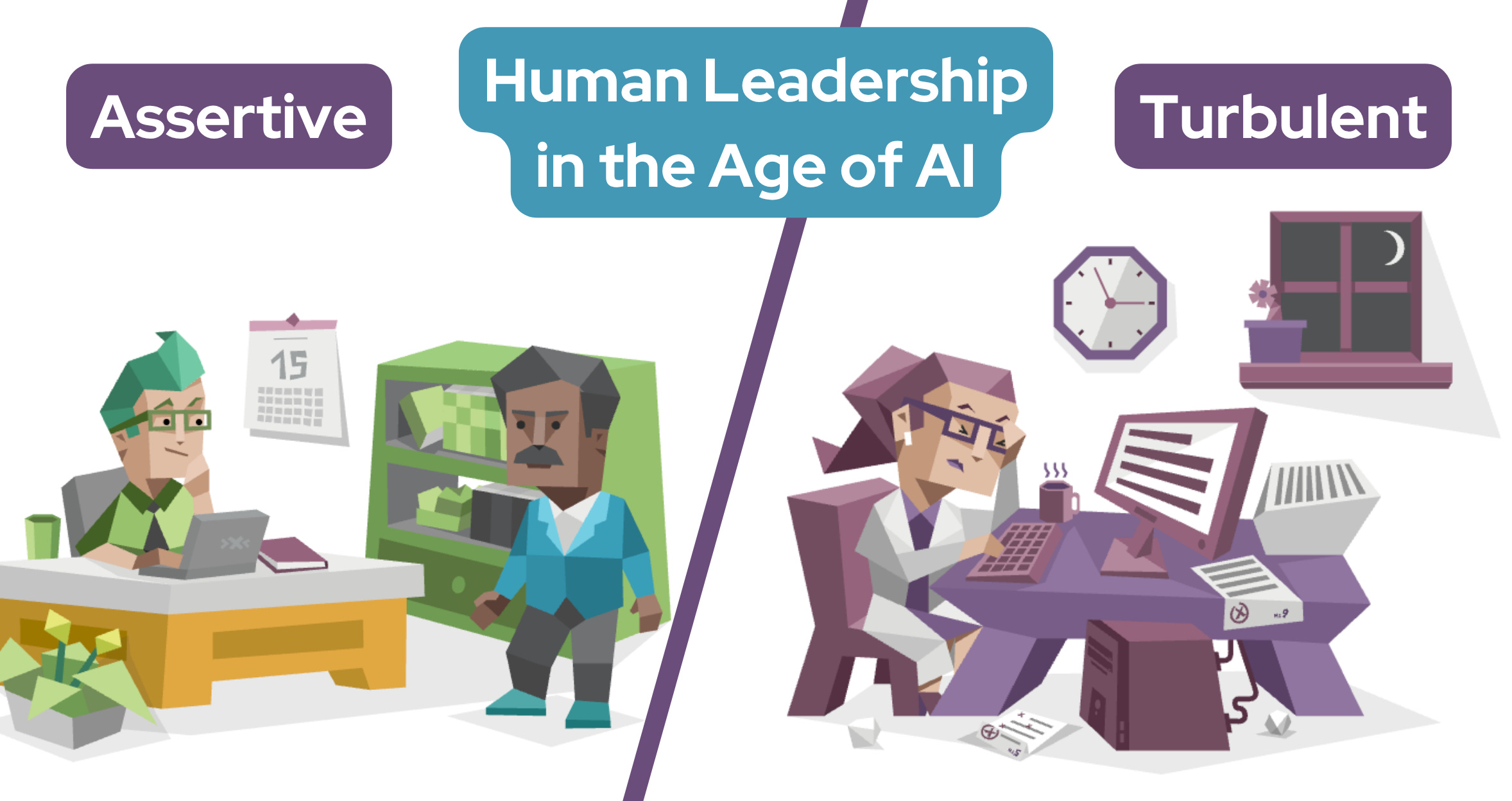
The Assertive-Turbulent personality trait scale shapes how much self-doubt people tend to carry day to day. Assertive personalities generally feel confident under pressure and steady in the face of setbacks. Turbulent personalities tend to feel their emotions more intensely and are more likely to question themselves, even when things are going well.
An Assertive person can still worry, of course, and a Turbulent person can still feel sure of themselves. What tends to differ is how much doubt is sitting in the background by default, and AI has a particular way of interacting with that baseline.
A 2026 study that tested 11 major AI models found they affirmed people’s actions 49% more often than human respondents did – even when the situation involved deception or clear harm to someone else.
Sycophantic AI – AI that agrees too readily, flatters the user, or reinforces their assumptions – can create different blind spots for Assertive and Turbulent personalities.
Assertive personalities may be more willing to jump into a new technology quickly. According to our “Fear” survey, just 27% of Assertive personalities said it’s difficult for them to try new things, compared to 53% of Turbulent personalities.
Assertive types might delegate a first draft to AI, let it make the first call on an ambiguous decision, or roll out an unfamiliar workflow without waiting to see how it goes for someone else first.
Our data also reveals that 92% of Assertive personalities say they feel confident facing life’s daily difficulties, compared to 57% of Turbulent personalities.
That baseline confidence can extend to how they treat AI’s output.
Comments
Nothing yet. Say the first thing.
Sign in to join the conversation.