
Writer’s note: I have been immensely inspired to host my own close/slow read by some of my favorite newsletters on this platform. From the OG substack slow-reader, over at Footnotes & Tangents, to the close read queens at Closely Reading and at Heavy Meta, and of course, by the woman who constantly has me thinking about The Fall, at Glutenberg Press. Thank you to every writer on this platform that encourages others to find friends among the pages of books, old and new.
Why close read The Book of the City of Ladies? Why now?
Written in 1405, The Book of The City of Ladies predates all recorded feminist polemics by centuries, yet within it we find a condemnation of socialized gender outcomes and a narrative rich in rhetoric hopeful to reform an ideological imagination too long monopolized by the machinations of male supremacy. Positioning this text alongside the modern moment that is witnessing an intentional redoubling of patriarchal rhetoric at the institutional level, reminds us of both the harm which befalls us all when society enforces roles of subordination indistinguishable from imprisonment by servitude and the power of social dreaming in the face of oppressive structures. Christine de Pizan’s allegorical City would become a foundational text for early feminists, but for her contemporaries, it offered readers a frame of reference to perceive the forces of male domination and elicited others to partake in imagining a possible new world order.
This 600 year old text holds a mirror up to many of the same social forces harming us today—war, famine, plague, wealth disparity, and gendered oppression—dispelling arguments of the naturality of male supremacy and the illusion of possible progress under patriarchy.
What can you expect from this close reading of The Book of The City of Ladies?
By Foucault’s definition, the text itself is an historical event—Christine appropriated the vocabulary of power and turned it against those who had long used it.
Aside from engaging with a seminal text of occidental feminism—which is a treasure in itself—we will unpack the ways in which Christine slid between the roles of historian and poetess, using fifteenth century French court culture to illuminate harmful social inequities burdening women past, present and, as she unfortunately foresaw, future.
We will unpack the language choices of both the medieval writer and the modern translators, looking at the ways in which language and literature have been integral in the maintenance of male supremacy, focusing specifically on Christine’s attempt to liberate women within “the realm of abstract ideas” (City of Ladies, 1.2.2) and the unfortunate ways that she, too, became bound by patriarchy’s shackles.
We will look at the world around Christine as she wrote, placing the text into broader contemporary context while also looking at how City of Ladies fits into Christine’s canon at-large, illuminating her attempts, over a long career, to recreate and preserve a literary production of reality without the imposition of misogyny. (Hawkesworth, 1988)
The once monthly posts will also consist of:
resources for further reading, including links to relevant research and communities of thought
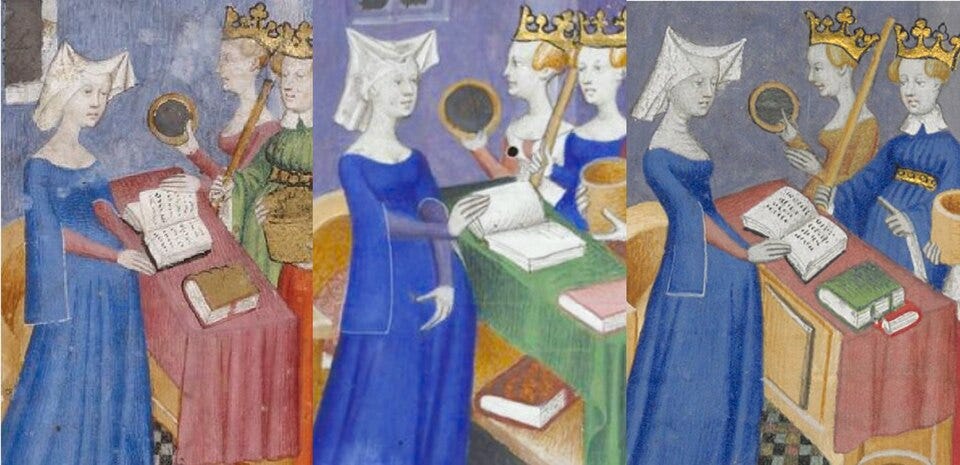
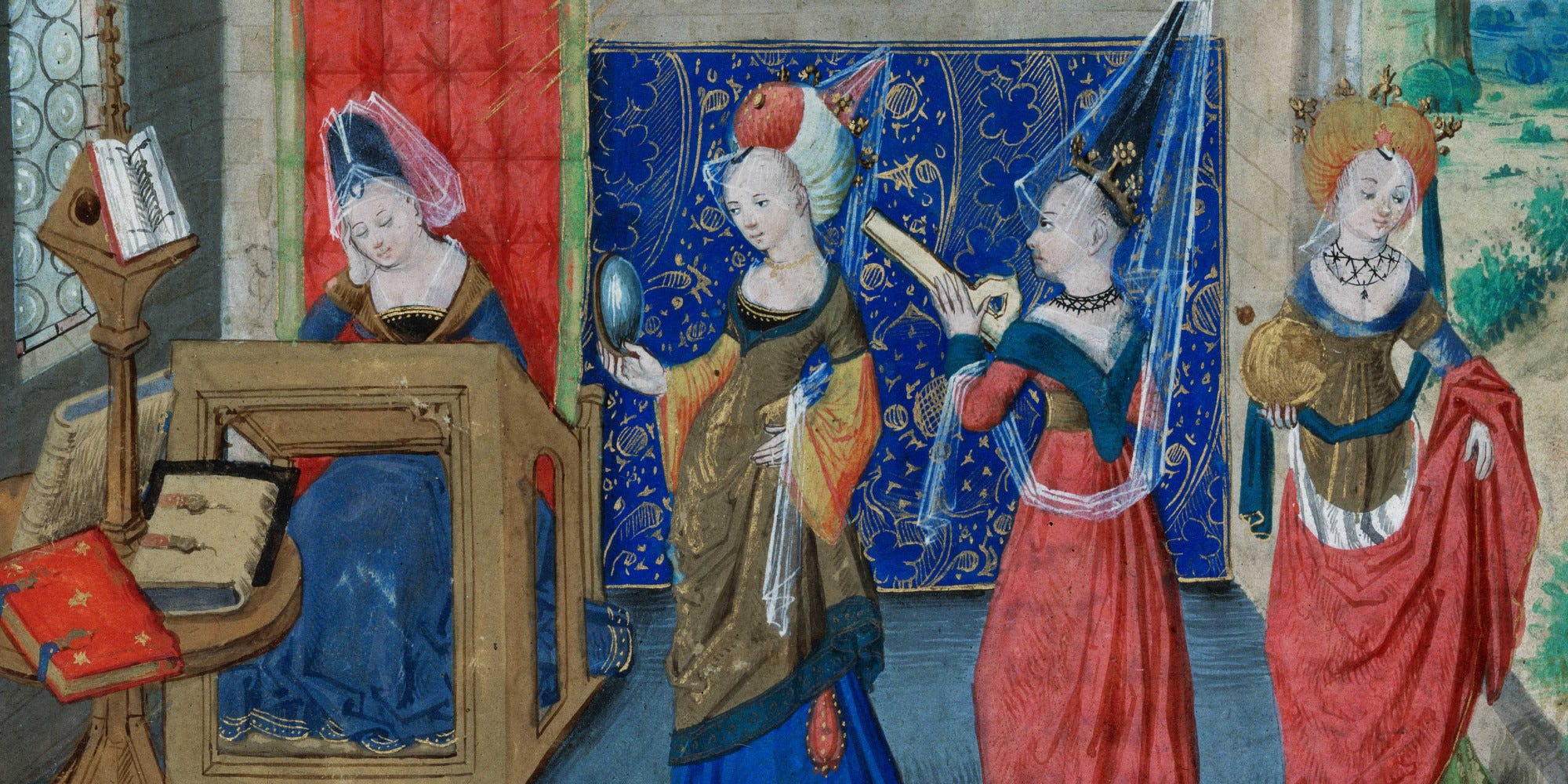
imagery from and links to the (many!) preserved manuscripts and reproductions of Christine’s work
a chat link to connect with fellow feminist close readers
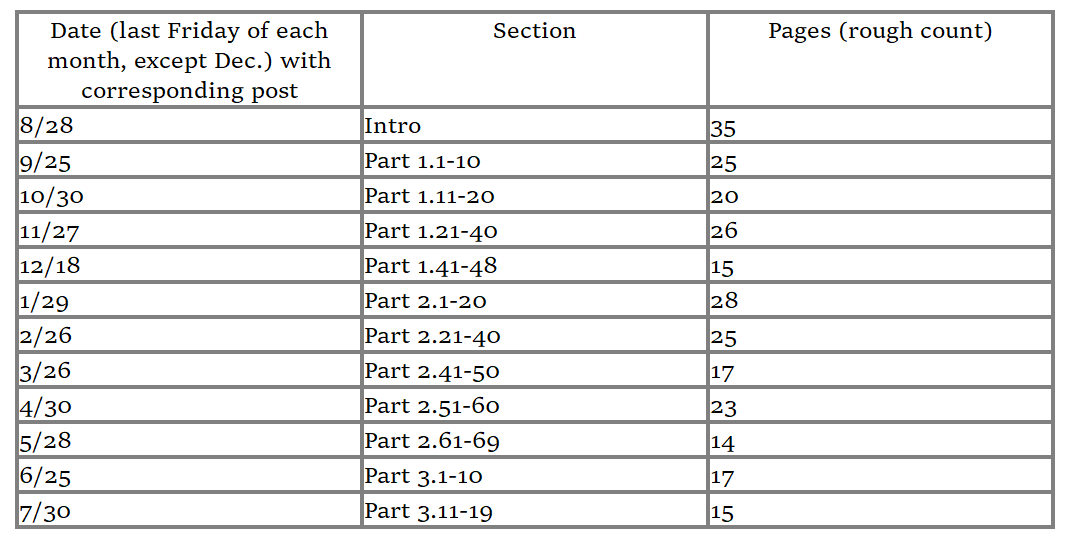
The reading schedule
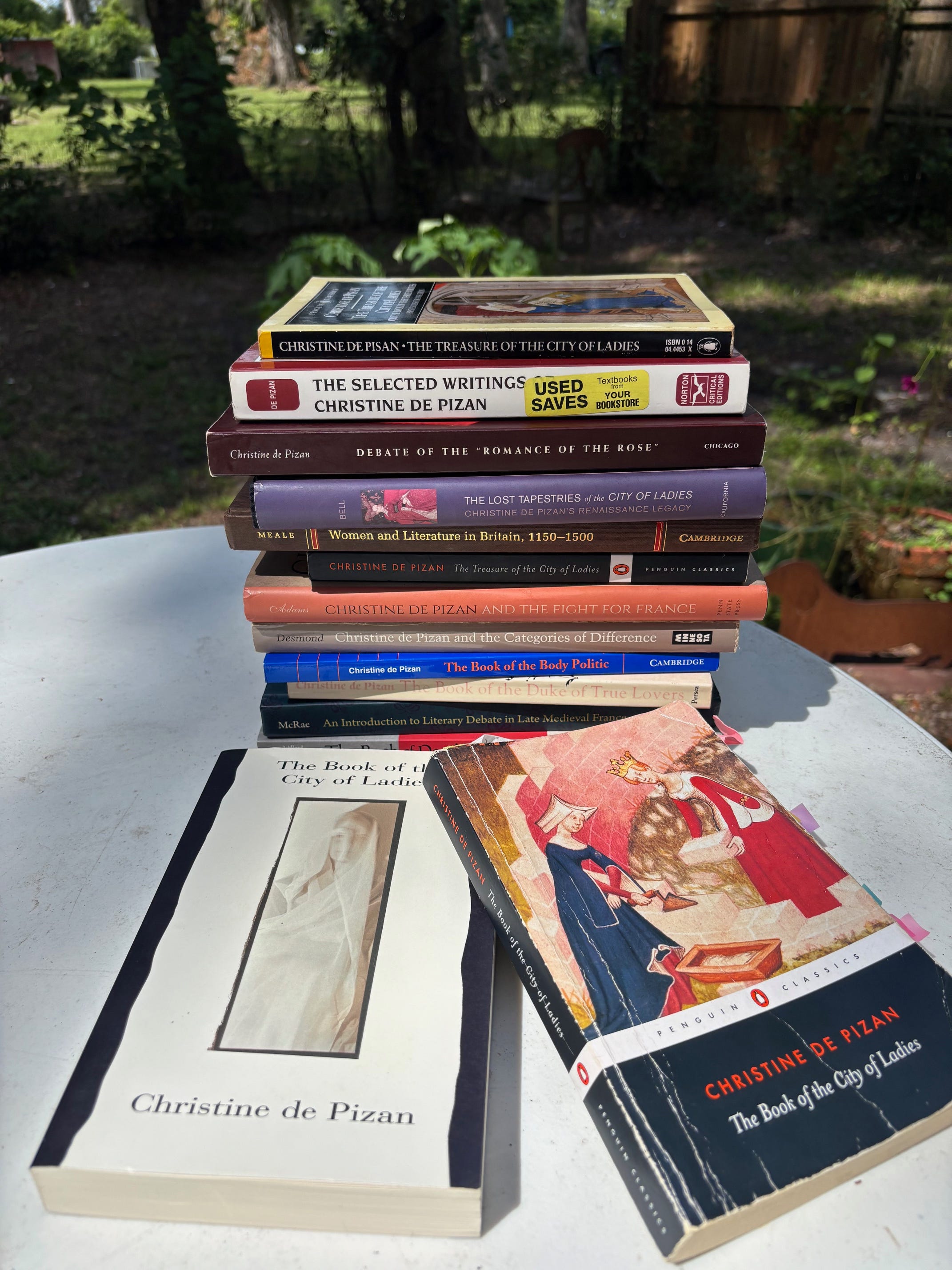
We will be working from two translations of The Book of The City of Ladies. Rosalind Brown-Grant’s translation will act as our primary translation, while Earl Jeffery Richards’ will be the comparative one. It is not necessary for you, as a fellow close reader, to move through both translations—I will simply be offering commentary when the translations provide different readings.
Who you are reading with

Hello! I’m Kate Wagner, the writer (and voice!) behind the 15th Century Feminist newsletter. Long time readers will be familiar with the themes of this newsletter, which often zooms in on the proto-feminisms of the 14th and 15th centuries that were ignored and excluded in favor of narratives that upheld the dominator model. The last few years I have been living within Christine’s translated canon and working through the ways women participated in and were impacted by literary culture, with a specific focus on City of Ladies as material and intellectual inheritance. This close read, and all of the accompanying research, is the result of that deep dive. If you’d like to better understand what Christine’s world would have looked like before the close read commences, I suggest taking a peek at my Women of the Hundred Years war series as she features prominently within.
How to join the close read of The Book of The City of Ladies
The close read is available to all paid subscribers of the 15th century feminist. I offer two separate subscription levels:
Both will receive full access to the close read as both support my efforts as an independent researcher and writer. If you are truly unable to afford a subscription, I ask that you leave a tip with what you consider an appropriate amount to compensate my efforts, including the e-mail you’d like the subscription to be allocated to. If you select this option and notice a gift subscription has not gone through in return, I ask that you follow up (gently! I’m a human!) in DMs or e-mail.
I am so excited to dig up the foundations of misogynistic mnemonics with you!

Comments
Nothing yet. Say the first thing.
Sign in to join the conversation.