
There’s something nobody tells you about Google Discover: e-commerce sites are everywhere in it.
If you don’t see them, you’re not looking in the right place.
The belief that’s holding you back
“Discover is for big media outlets.”
We hear that a lot. And it’s the belief preventing hundreds of e-commerce brands from seizing a real opportunity.
Yes, the NYT, CNN, and the BBC dominate the top 50. Yes, when you look at the monitoring tools on the market, all you see are giants.
But those tools capture generic, desktop, simplified feeds. That’s not what your customers see.
On mobile, in the personalized feeds your users actually browse, reality looks very different. Knitting pattern product pages. Plant shops. Small niche Shopify stores. Brands you’ve never heard of.
We’ve been capturing real Discover feeds for over two years. And what we see there changes everything.
Something else that changes the game: the SEO Summit, held at the Parc des Princes in Paris. In 2025, Sylvain presented a preview of our data on this very topic there. How small sites — and even spammers — exploit Google Discover... sometimes without even trying!
I encourage you to read Sylvain’s recap of that day: https://www.linkedin.com/pulse/seo-summit-2025-le-parc-des-princes-comme-de-sylvain-deauré-xty6e/ The takeaway: being there in person, the venue, the concentration of talent in one place creates a synergy that surpasses anything virtual.
The SEO Summit returns March 18–20, 2026:
https://seo-summit.com/
— don’t miss it! (Sylvain will be there, hands in pockets but mind on high alert)
What our data actually reveals
When you analyze millions of Discover cards every month, you start seeing patterns nobody talks about.
Big media dominates, yes. But in the gaps, something else is happening.
Knitting pattern product pages. Indoor plant listings. Niche audiophile headphones. Vegan leather bags from a small Shopify store.
Not “Discover-optimized” blog posts. Product pages.
And that’s where the logic flips.
Google Discover feeds are hyper-personalized. Each user sees content matching their interests, browsing history, and interactions. If our profiles — fairly generalist — pick up a knitting product page, it means the algorithm is actively pushing it.
And if it reaches us, it’s definitely reaching every knitting enthusiast out there.
That’s where the equation shifts for e-commerce: this isn’t mass traffic. It’s ultra-qualified audience, already interested in your vertical. Ready to convert.
The invisible transformation
What we’ve observed over two years is a deep, largely un-commented shift in Discover.
The era of generic Discover — where a single article gets massive reach because it’s shown to everyone — is over. Feeds are becoming hyper-personalized recommendation hubs.
From blockbuster articles to micro-targeting.
Visibility is dispersing: for the same traffic volume, hundreds of different URLs instead of a few dozen. Each user sees a feed tailored to their interests, history, and interactions.
Why does this matter to you?
Because in this new model, niche becomes an advantage.
Google is matching content to user profiles with increasing precision. The more specialized your product, the more qualified the audience seeing it. Less raw volume, but traffic that’s ready to buy.
Micro-targeting is exactly what e-commerce needs.
What the real-world examples teach us
At SEO Summit 2025 at the Parc des Princes, we shared concrete cases of e-commerce sites performing on Discover. Not theories: real data, product pages that pop.
What stands out isn’t a magic formula. It’s a recurring pattern, a logic that repeats.
The knitting site that optimized nothing
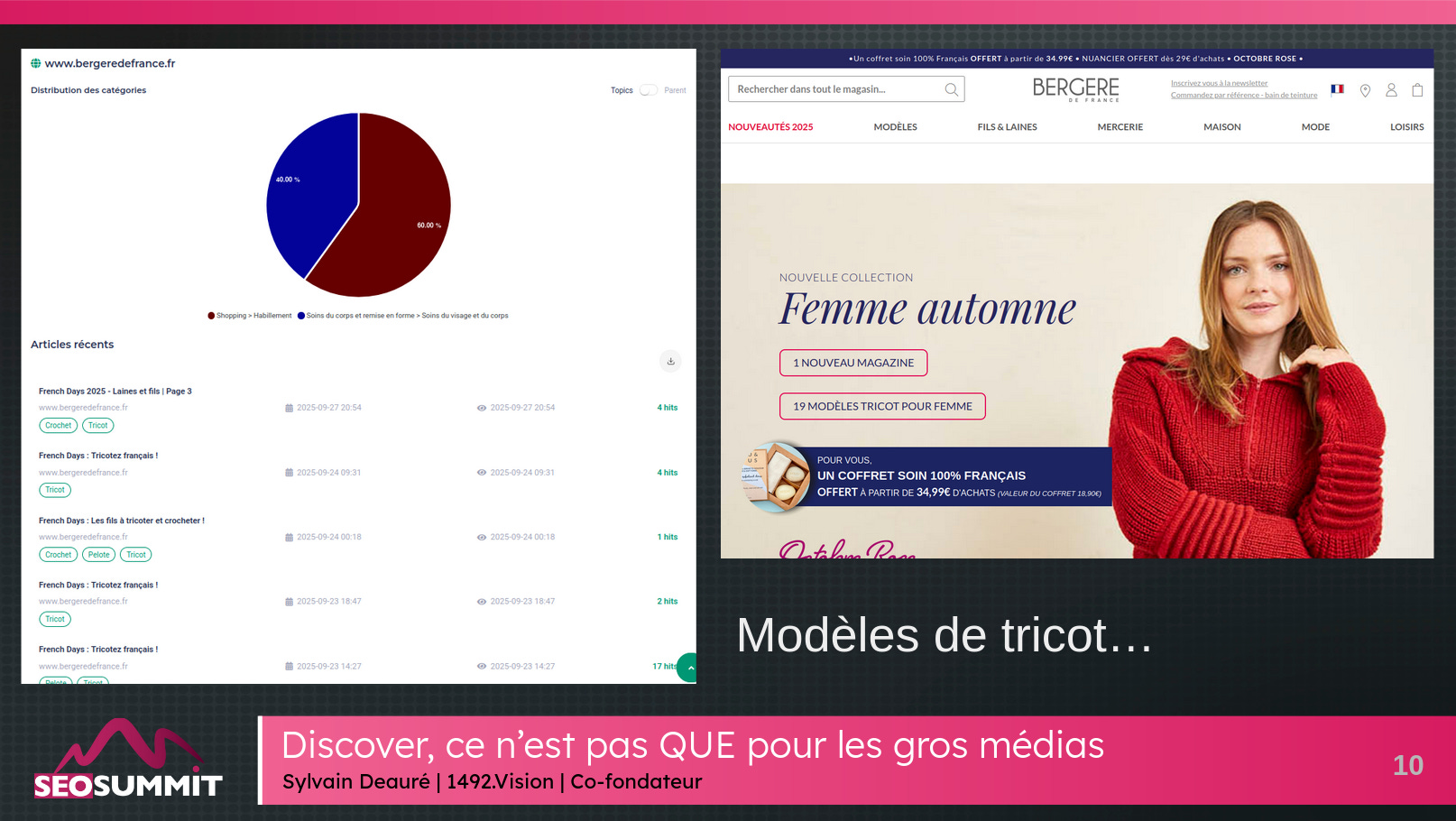
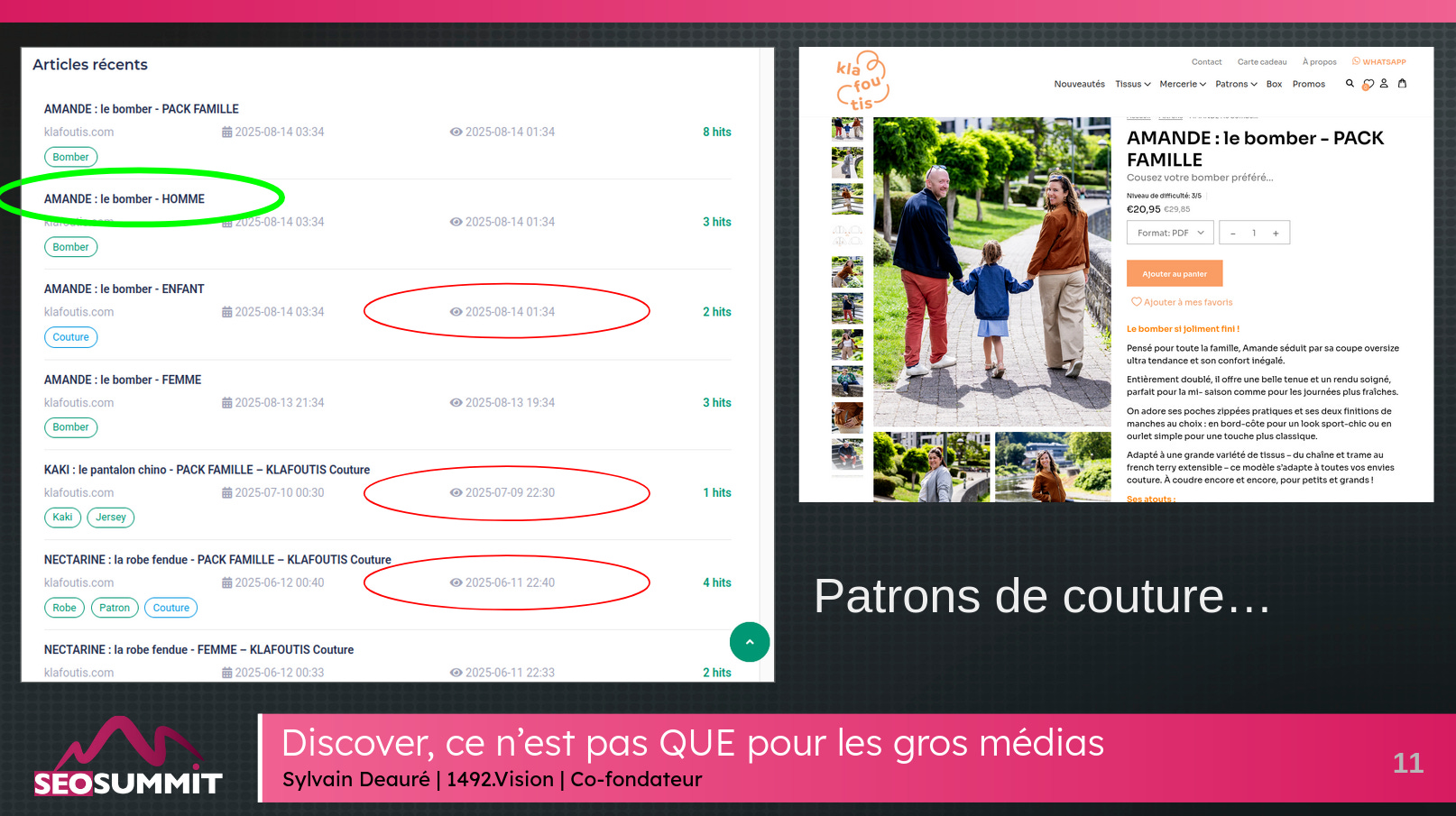
A knitting pattern site whose product pages pop regularly on Discover.
Purely descriptive titles, the polar opposite of “Discover-optimized” headlines. Irregular publishing: one pattern in June, nothing in July, four variations in August. Everything pops.
They did nothing for Discover. Yet their passionate audience sees them.
The insight: It’s not publishing frequency that matters. It’s the match between content and a passionate audience that Google knows how to identify.
Botanix and consistent social media
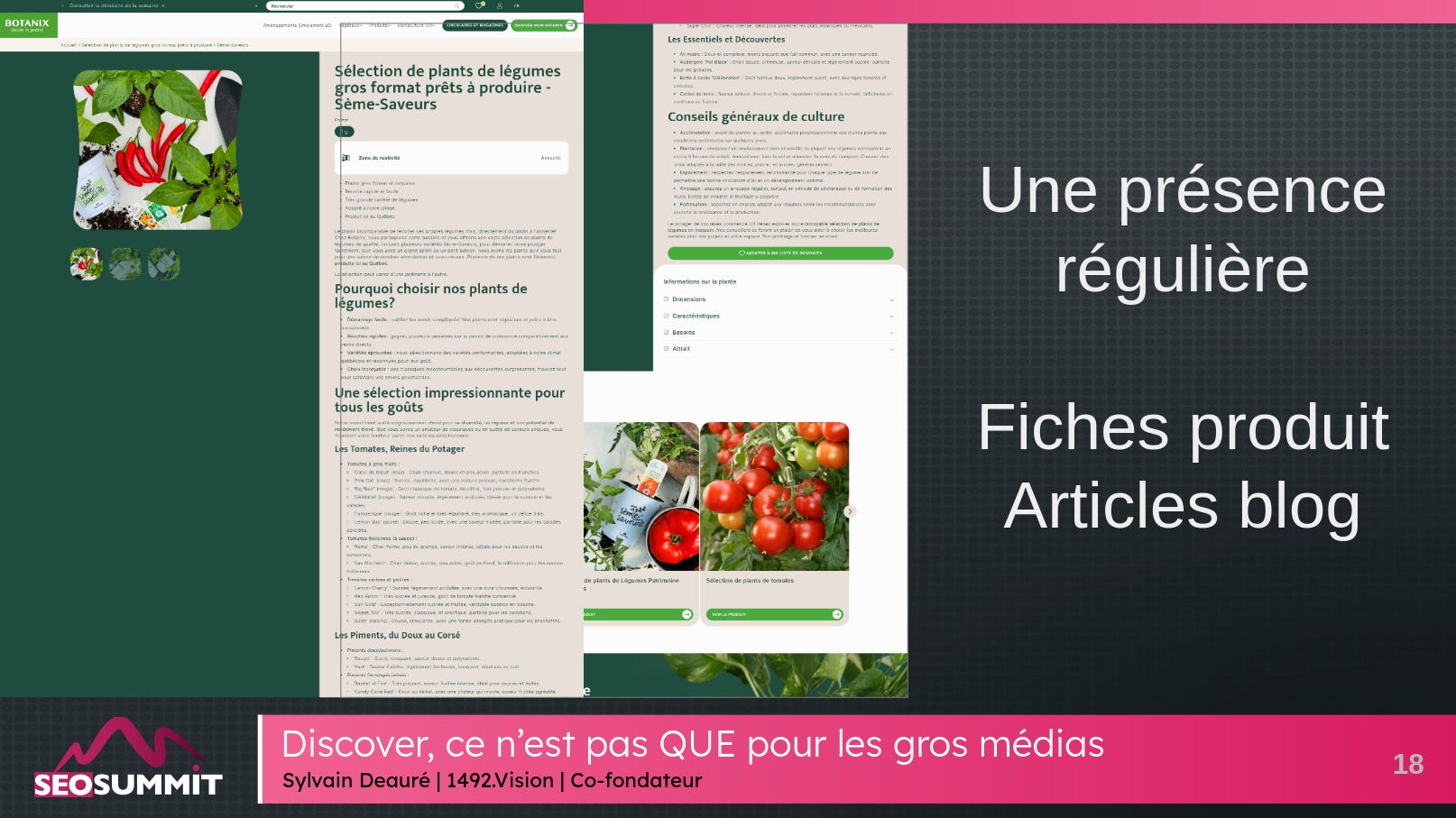
A plant shop, Botanix, with near-continuous Discover presence. 20 different URLs in a single week.
The trigger isn’t mysterious: a Facebook page with 49k followers sharing daily updates. Consistent social media activity creates the conditions for the pop.
The insight: Social media posts don’t pop directly on Discover (at least not in most markets). But they create the signals that boost your product pages. We call it the spark strategy.
Perfect timing: the PSG store
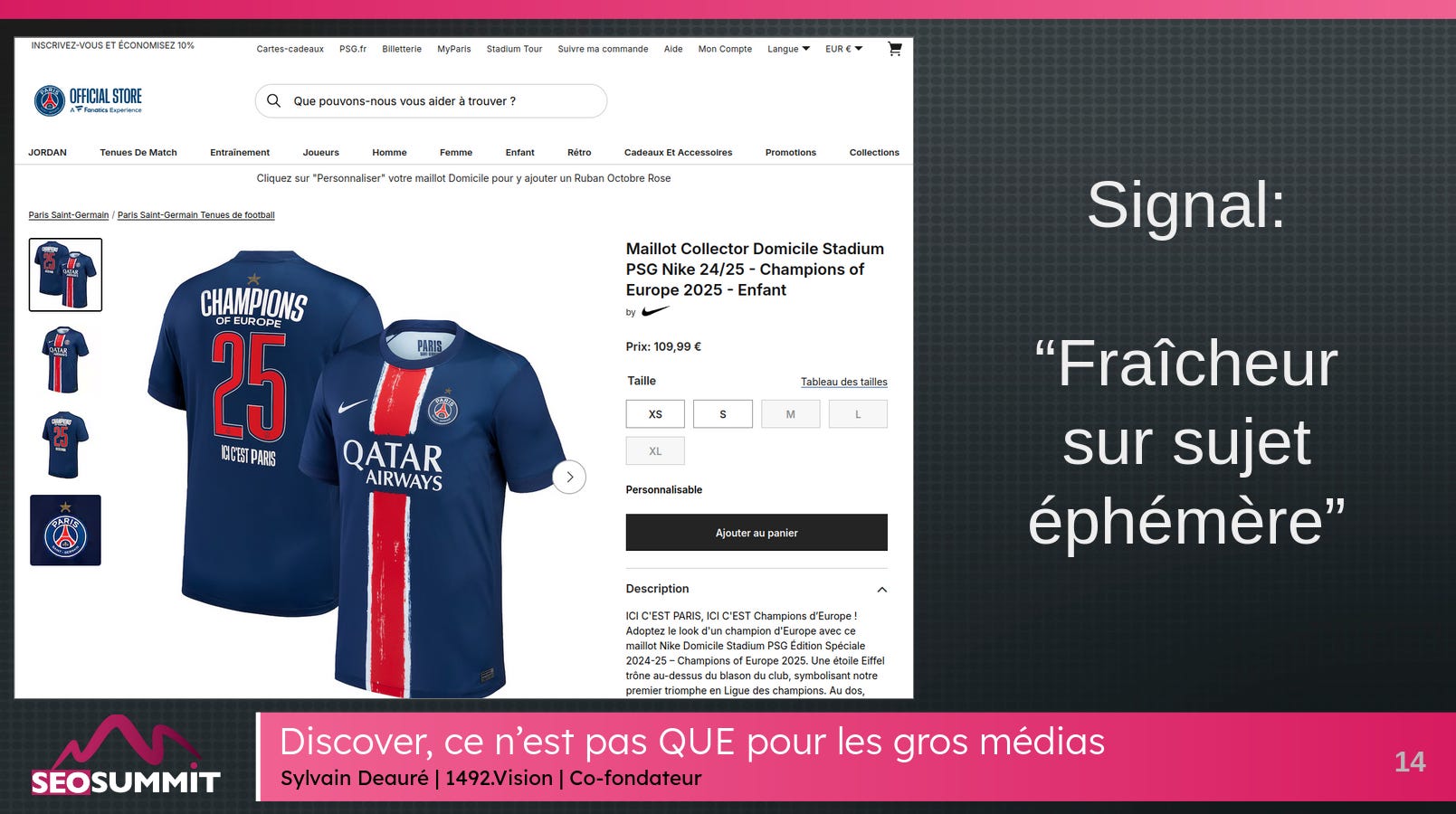
The day after PSG’s European title, the official store launches the “Champions Collection.” Massive visibility spike.
A purely descriptive title focused on the club and championship, not the product. Timing synchronized with the news flooding everyone’s feed.
The insight: The more Google identifies a trigger as time-sensitive, the harder it boosts. It anticipates the peak, over-boosts so it doesn’t miss the window. Typical duration: 24 to 72 hours.
The niche Hi-Fi site that beat Amazon
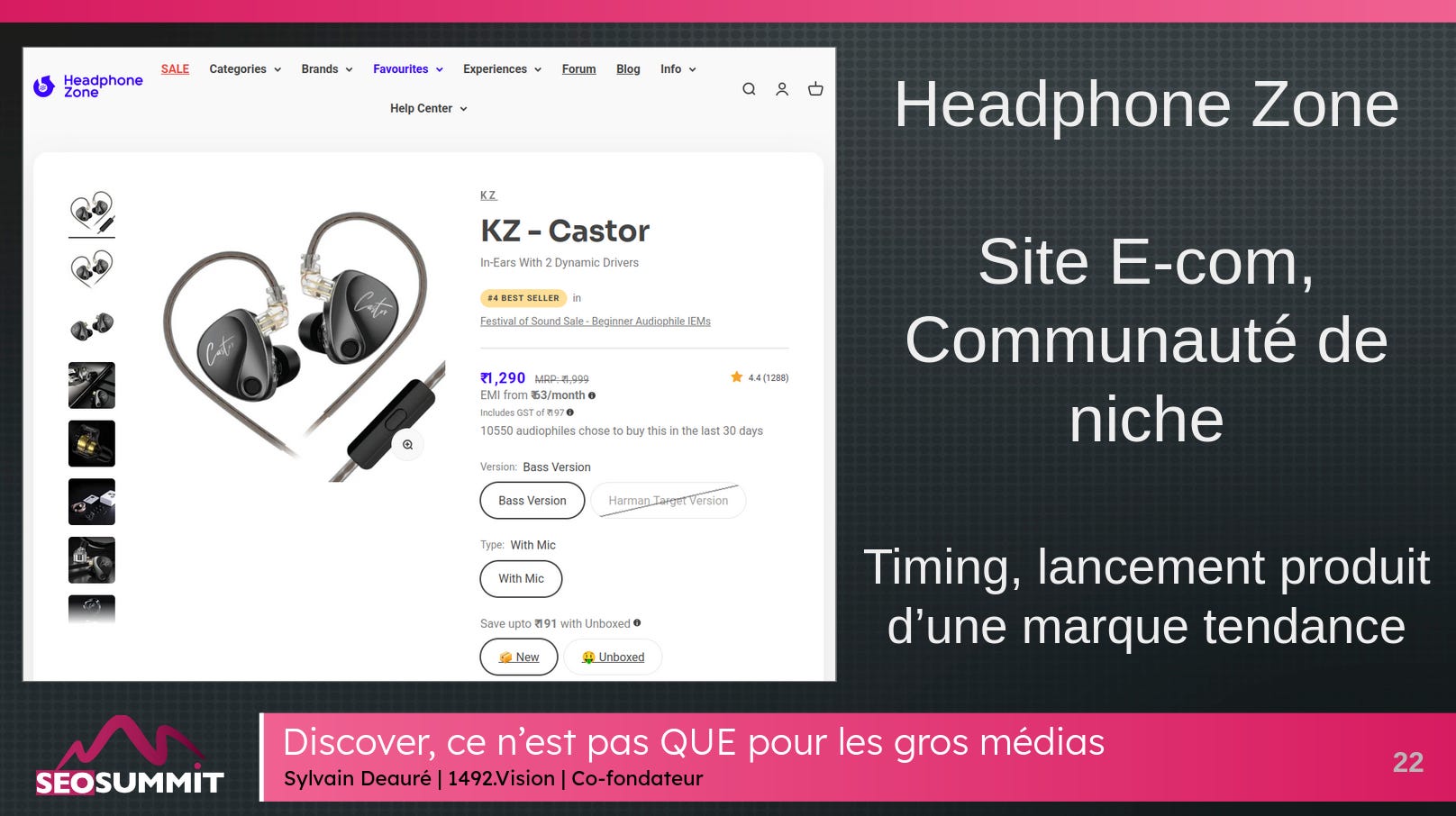
A niche e-commerce site publishes its product page on the very day a trending headphone brand releases a new model. Trend visible on Google Trends.
The site’s Hi-Fi community lit the spark. This site popped, not Amazon.
The insight: An engaged community beats a generalist giant. Your niche is your strength.
Small players succeeding without knowing it
A small Shopify store selling vegan leather bags. Trigger: a TikTok video with a thousand likes.
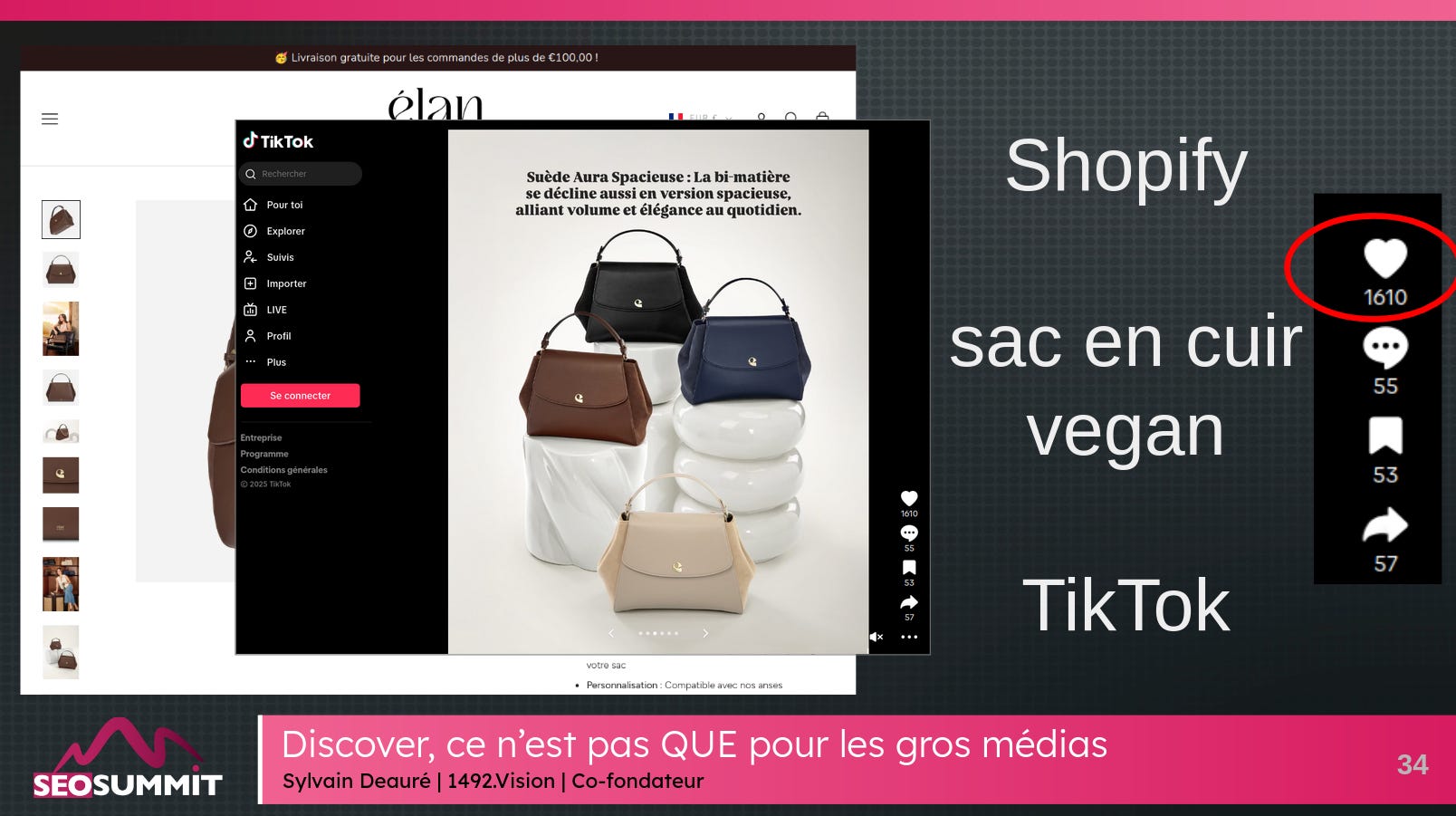
That’s enough.
A small niche brand launches a new product. 63 Facebook likes.
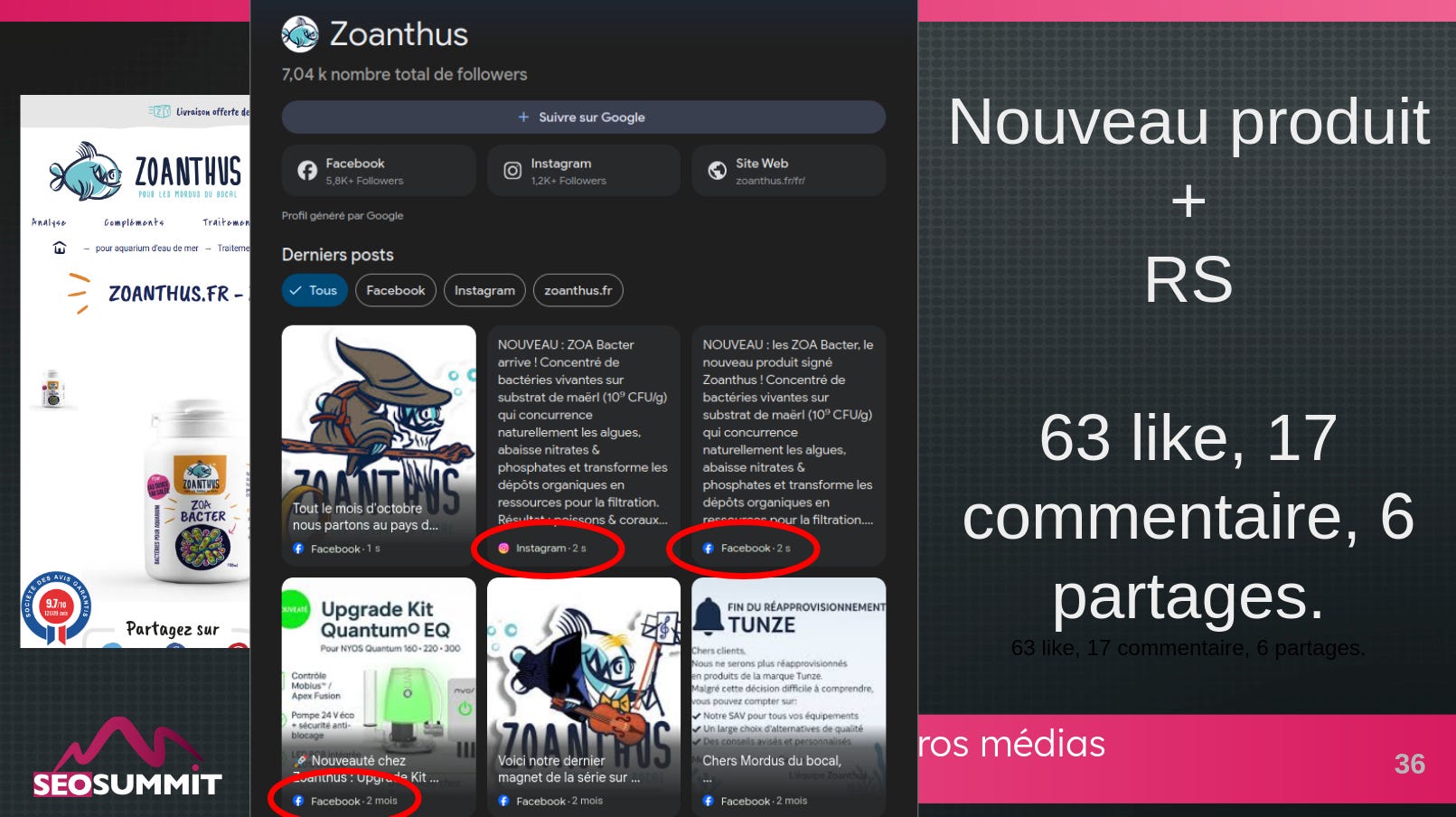
That gets through.
An advent calendar available for pre-order in late September. 1,000 Instagram likes, a real community.
Product sold out.
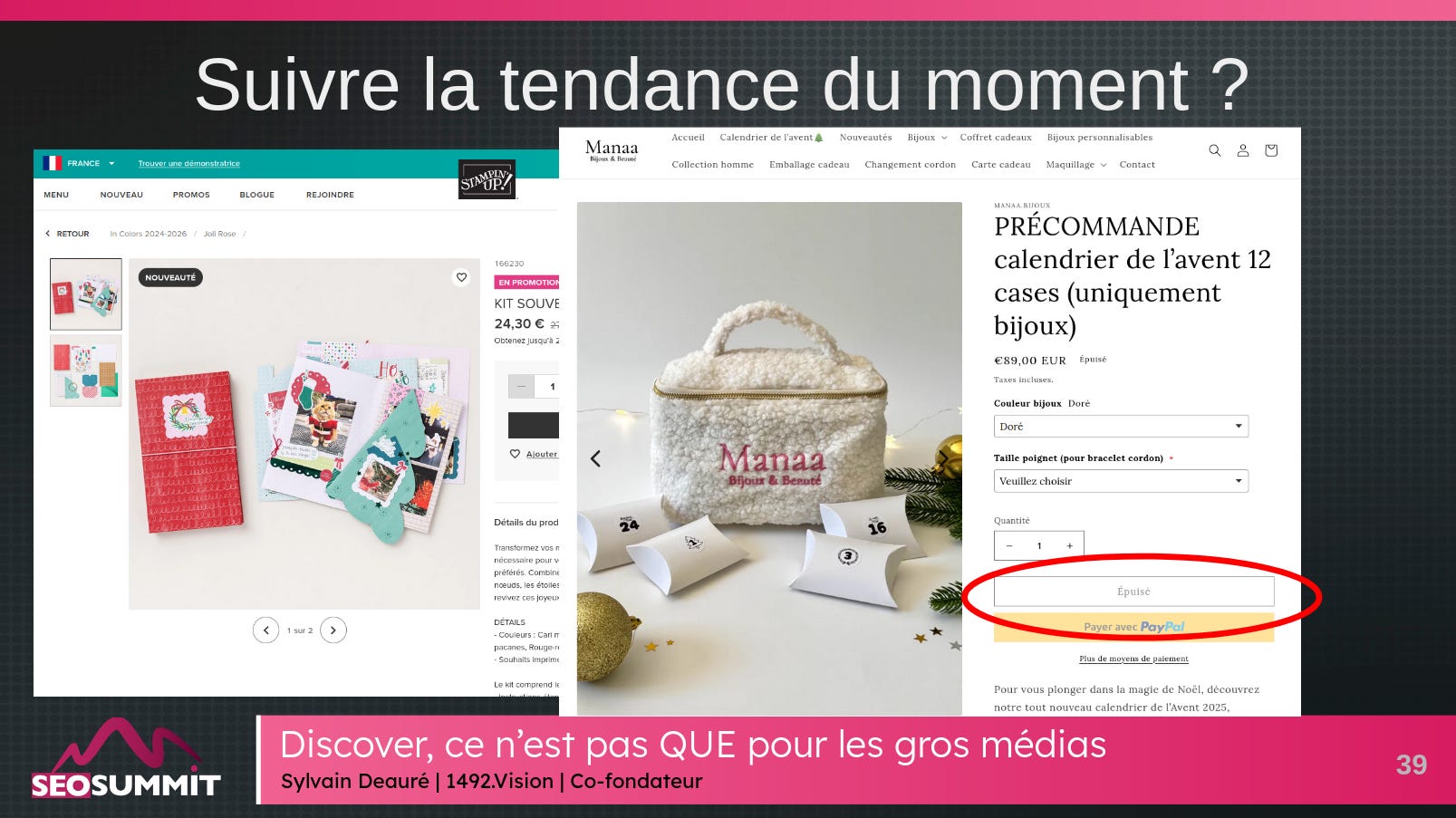
Most of these sites never explicitly targeted Discover. They did nothing for it. Yet they’re visible there and multiplied their audience through Google’s recommendation algorithm.
Imagine what you could do if you did it on purpose.
The new visibility economy
What we’re observing is a complete paradigm shift.
Visual real estate is being redistributed
A crucial element most people miss: on US feeds (Discover’s testing ground), a YouTube Short now takes up as much visual space as 3 article cards.
We regularly observe feeds where the first 3 cards are: 1 YouTube video, 1 X post, 1 AI Overview. Zero articles.
[screenshot]
Visual real estate in Discover is limited. When new formats take up space, there’s mechanically less room for traditional articles from big media.
But for a niche e-commerce site? That’s an opportunity. You’re not competing head-on with the New York Times. You’re in a parallel lane — the micro-targeting-by-interest lane.
The massive arrival of social media in feeds
Since September–October 2025, Twitter and YouTube have entered Discover feeds en masse (we first observed this at scale in France, but the pattern applies broadly).
X.com is now in the top 50 most visible sites on Discover. Not with viral tweets getting millions of views. With tens of thousands of ultra-targeted URLs, each shown to a highly qualified micro-audience.
22,184 tweets from 15,000 different profiles captured in one month. Nearly as many as the 22,421 articles from a major national newspaper over the same period.
Micro-targeting at scale. Invisible to tools that don’t have our capture volume. Visible in your potential customers’ feeds.
What this means for you
Social media doesn’t replace your site. It amplifies it.
The winning strategy we see from e-commerce sites that perform:
Social media (Facebook, Instagram, TikTok) triggers the initial exposure
Social posts themselves don’t pop directly on Discover (in most markets)
But they create the social signals that boost your product pages
Product pages convert better because the audience arrives already qualified
Result: Less overall traffic, but super-targeted traffic with higher ROI.
The patterns that work
Analyzing dozens of cases, three elements come up consistently.
1. An event-driven trigger
Something transient, time-bound:
New product launch
Limited-time promotion
External event (sports news, seasonal trend)
Back-in-stock availability
Pre-order opening
The more Google identifies the trigger as time-sensitive, the harder it boosts. It anticipates the peak, over-boosts so it doesn’t miss the window.
2. A niche audience base
User profiles that Google can target precisely. You don’t need to be huge.
Observed thresholds that are enough to trigger a pop:
77 Facebook likes + 15 shares → it pops
1,000 TikTok likes → that’s enough
63 FB likes alone → that gets through
No fake traffic: real users, a real community.
3. Social media signals as the spark
Cross-channel branding. Stay in touch with your audience through every channel you can. Don’t rely solely on organic traffic or paid acquisition.
Relationship building, not just traffic capture.
The actionable levers
On-page: descriptive titles win
Purely descriptive titles, focused on entities (brand, product, event)
If adding detail: emphasize the event angle (”available now,” “limited edition”)
No fluff, no clickbait
Page content: scrollytelling
One brand we analyzed went all-in on their product page: long-scroll page with animations, media, graphics. Scrollytelling (contraction of scroll + storytelling).
Huge positive signal: the user can stay and interact with the page for a long time. This helps for Discover, but also for traditional SEO.
Google Profile pages: the new lever
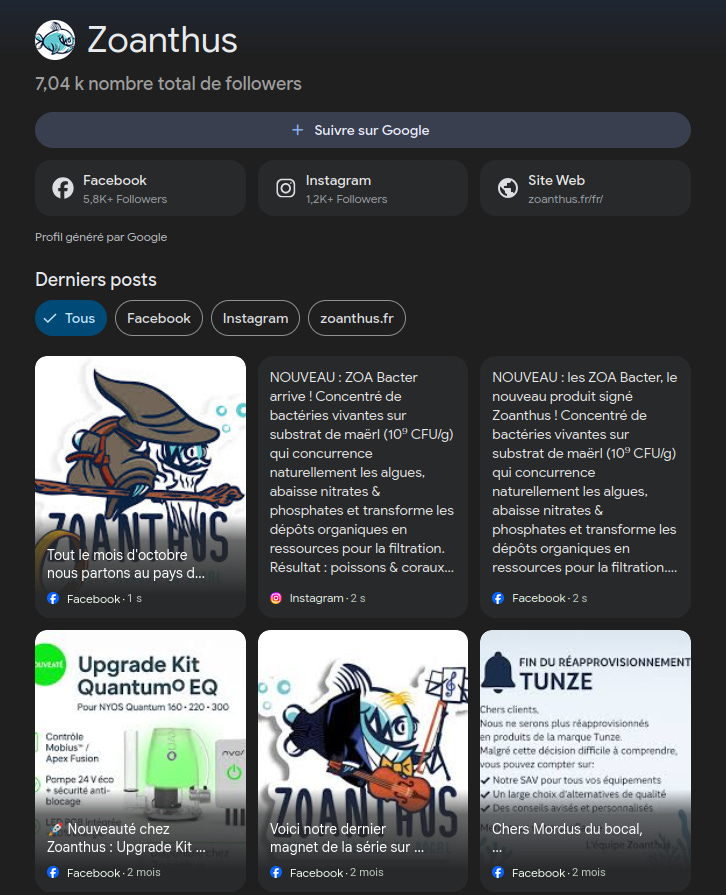
Google has rolled out Profile pages: media name, “Follow on Google” button, linked social media properties.
If a user clicks Follow, they almost instantly see much more of your content in their feed. (see a previous Substack edition on this topic)
What this changes:
A window into what Google knows about your social presence
An additional channel to stay in touch with your audience (notably via Google notifications)
The ability to invite visitors to follow you directly
Social platforms currently active on Profile pages: Facebook, Instagram, TikTok, YouTube, X (Twitter). A new one to closely follow… Substack !
Why now?
The transformation is underway. Feeds are getting more personalized by the day. Social media is taking up space. The blockbuster model is dying.
E-commerce brands that understand this now get a head start.
Now is the time to test. Not in 6 months when everyone’s caught on. Now.
The levers have been identified:
Timing + event-driven trigger
Niche audience base
Social media signals as the spark
On-page optimization
Consistent Profile pages
Things within reach of any brand, any e-commerce store. Maybe yours?
Where to start?
Minimum viable test:
Basic audit: Check your Google Profile page, list your active social channels, identify your next event/launch
Preparation: Optimize 1 product page (rich content, scrollytelling if possible), prepare synchronized social content
Activation (D-day): Publish the product page, activate social posts simultaneously, share in relevant communities
Measurement: Check Discover presence via 1492 or Search Console, analyze traffic sources
Iteration: Adjust based on results, test another product
Minimum budget: Can start at $0 with organic. If you have ad budget: $50–100 is enough to validate.
Going further
With 1492.vision, you can:
Find the e-commerce sites and products succeeding in your vertical
Analyze your competitors’ Profile pages
Identify product categories that pop
See which social signals worked
Detect the timing of effective publications
Our data captures real personalized mobile feeds. That’s why we see niche e-commerce sites — knitting, fish food, specialized tools — that never appear in generic top 50 lists.
Important note: Our data genuinely shows things others can’t see. That’s the whole difference between generic feeds and real personas. By default, Discover doesn’t serve “shopping” cards, and any tool capturing generic feeds will be blind to this angle. But when a user profile shows purchase intent, the feed changes and new cards appear. We capture real feeds — the ones real users actually see — and that makes all the difference.
For clients who want to dig deeper, we provide access to the full video of the SEO Summit conference presentation, with all the details and screenshots of the analyzed examples. (clients only)
Bonus tip (for those who made it this far — well done!)
Among the things that can be “easy,” low time-cost if you use an EdgeSEO solution:
An analysis pass of your site, to index (via proper embeddings and entities) your existing content
An entity bag to get a flow of matching items and detect trends (one-time setup)
And automatically, hands-free, you can push to your homepage and sidebar the pages that match the current trend...
Let’s talk whenever you’re ready!
Final word
Discover doesn’t follow a universal recipe. It’s a playing field where micro-targeting beats mass traffic. Where niche sometimes beats volume. Where an engaged community of 1,000 enthusiasts is worth more than 100,000 passive visitors.
In SEO as in e-commerce, the greatest wins come from daring to play differently.
Test. Experiment. Be bold.
The levers are there. Your move.
Enjoyed this edition? Questions about applying this to your industry? Share your feedback in the comments or on LinkedIn / X!
To never miss our Discover analyses,
Thanks for reading 1492.Vision - English Version! Subscribe for free to receive new posts and support my work.
And... see you at the SEO Summit?
Comments
Nothing yet. Say the first thing.
Sign in to join the conversation.