
I want to thank Lezley McSpadden-Head, Michael Brown’s mother, and Campaign Zero for trusting me with her story and reflections.
Lezley is navigating a life she never imagined for herself, one shaped by a loss that became public before she ever had the chance to decide what privacy, grief, or remembrance would look like on her own terms. I believe that even in the darkest circumstances, wisdom can emerge, transformation can take shape, and people can teach us something about how we are called to show up for one another.
I ask readers to engage with this piece in its wholeness and to resist the urge to flatten what is shared into a single conflict, conclusion, or headline. Hold the grief, the anger, the contradictions, the love, the political questions, and the humanity all at once.
Most of all, I ask that we believe Black women when they tell us what grief has required of them. We must learn how to support Black women whose private tragedies are thrust into national attention without their consent, and how to honor their voices even when what they ask of us complicates the story we thought we understood.
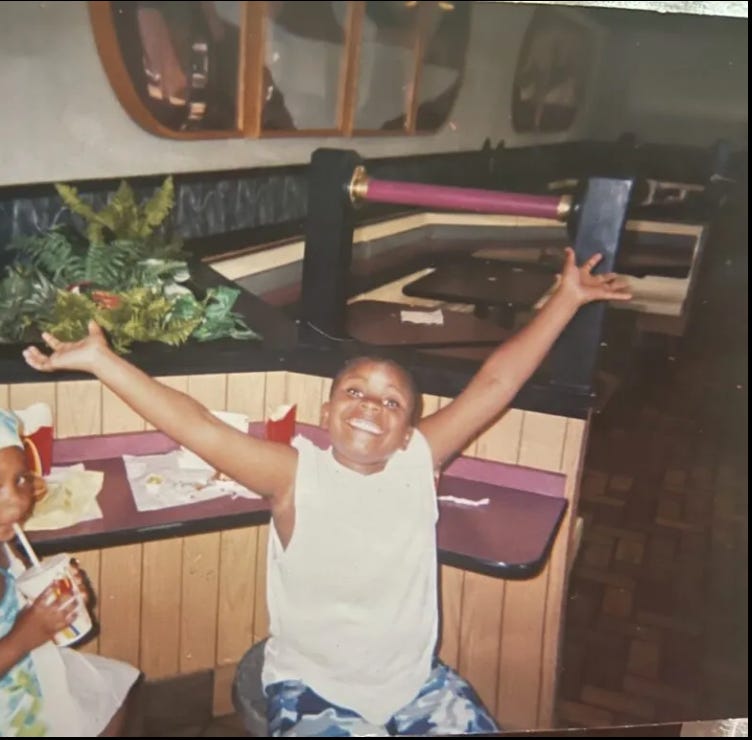
*For years, he has commonly been referred to as “Michael Brown Jr.” and variations of his full name have been misspelled or shortened in the public record. This section is not about semantics. It is about correcting an error that has followed him for twelve years and understanding why, for his mother, getting his name right is inseparable from respecting who he was.
His name is Michael Orlandus Darrion Brown.
Before speaking with Lezley, I did not know that.
Like millions of people, I knew Michael Brown Jr. I knew Ferguson. I knew Canfield Drive. I knew Darren Wilson. I knew the photographs, the protests, the armored police vehicles, the tear gas and the uprising that followed. I knew what the killing of an eighteen-year-old Black boy in Missouri came to represent for a generation of young Black people trying to understand police violence in America.
What I did not know was the full name his mother gave him.
Lezley says that your name, along with your face, is the first identification you have in this world. She knew what her son would be called before she ever saw his face. His name was settled before the rest of us knew he existed, before Ferguson became synonymous with uprising, before commentators debated his body and character, before his death entered the political vocabulary of the country.
Twelve years later, she is still correcting people.
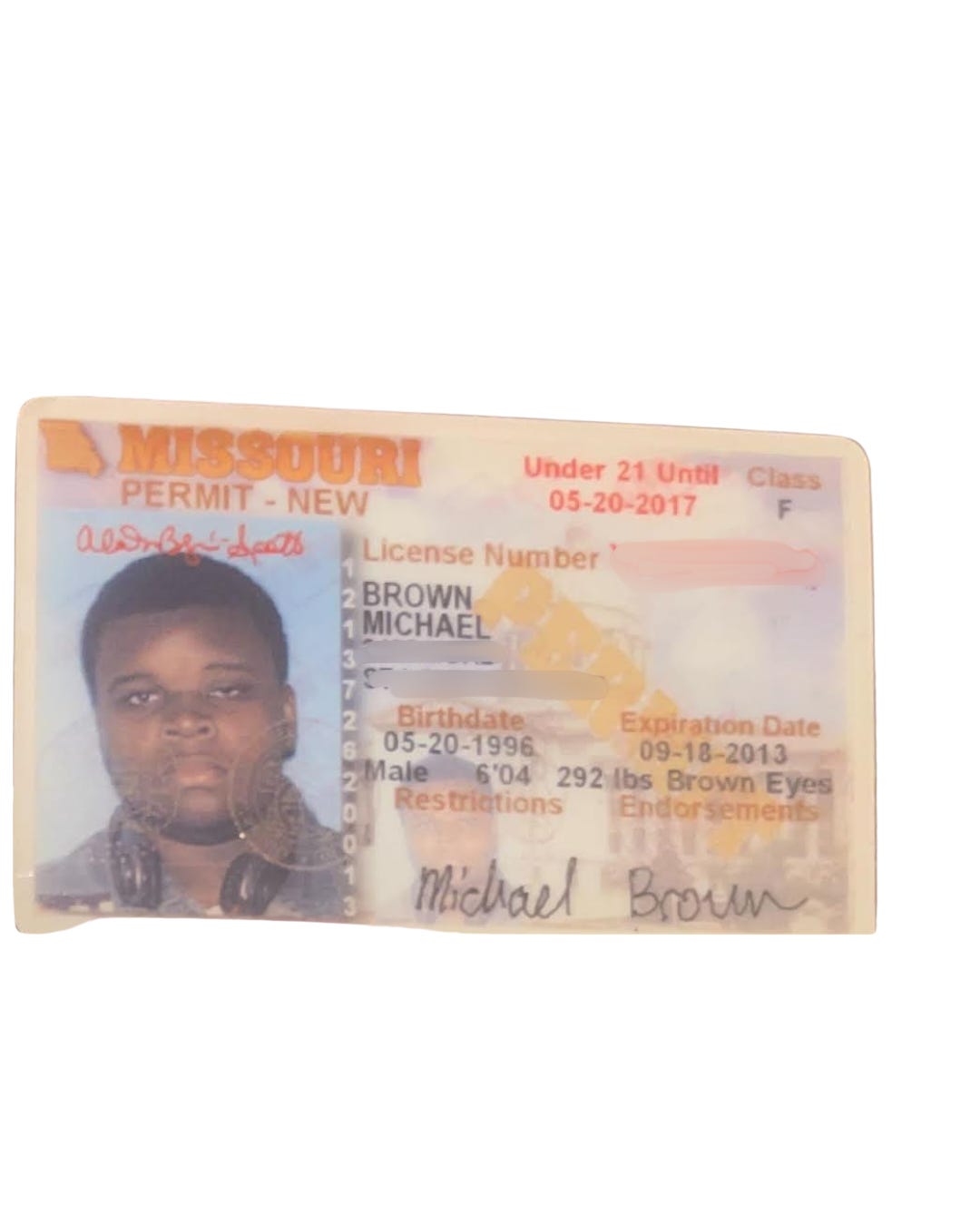
It may sound like a small thing until you understand everything underneath it. There is a version of Michael that has lived in the public imagination for twelve years that his mother has had almost no control over. Depending on who was telling the story, he became threatening, enormous, superhuman, a victim, a martyr, a symbol, a hashtag, a political argument, a reason to march. His image became useful to people on every side of what happened to him.
But Michael was a human being before he became evidence for anybody’s argument.
He was somebody’s child before he became a movement. And his mother knew who he was before any of us did.
That is what I hear when Lezley says: call him by his name. I do not hear a petty correction. I hear a mother asserting her son’s personhood after twelve years of watching strangers construct versions of him. I hear someone saying that if we claim to care about Michael Brown, the bare minimum is respecting the identity he actually had.
If a movement can mobilize millions of people around a Black child’s death but cannot bother to learn the name his mother gave him, something about our politics of remembrance is broken.
The fight over his name is not separate from the fight over his humanity. It is the smallest example of a much larger question: after someone dies and becomes public, who gets to define them?
For Lezley, that question has never been theoretical.
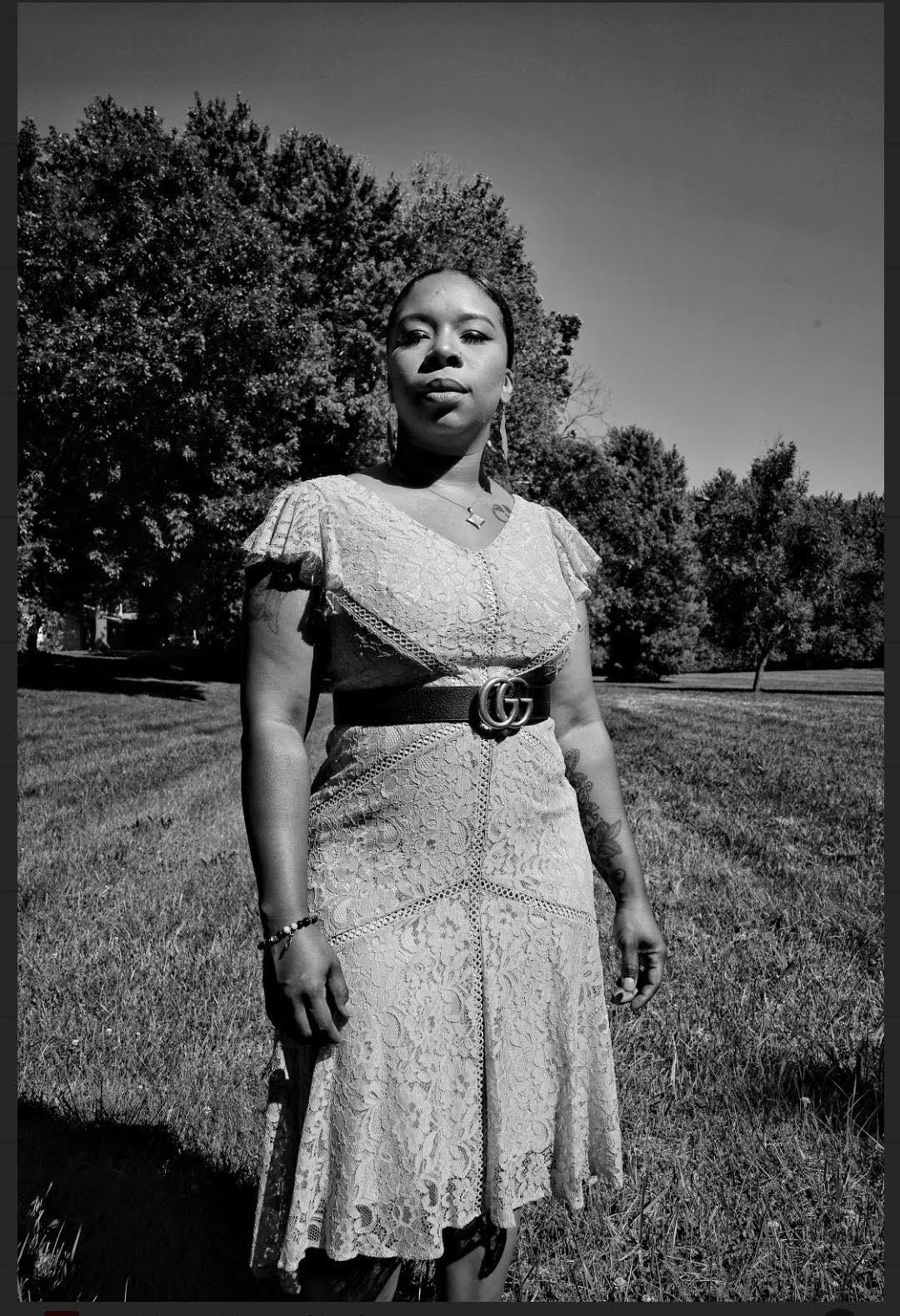
People assume the only battle most grieving families face when navigating such a public tragedy is the system that hurt them. But there is more to the battle than that, especially for families whose worst moment becomes nationally recognized before they have even had time to understand what happened to them.
For Lezley McSpadden-Head, one war has been external. It is the one the public recognizes: the fight for accountability that never came, the fight to get body cameras taken seriously, the fight to keep her son’s name in the mouths of prosecutors and politicians who have had the privilege of moving on. That war is visible. It gets covered. People understand how to show up for that.
The other war has been internal, and almost nobody speaks about that one. It is the daily work of carrying a grief that other people keep trying to reshape, redirect, or speak over. It is having to protect her son’s memory not only from strangers and institutions, but from people inside her own community and inside the movement built in his name who have, at different points, acted as though they knew better than she did how Michael should be remembered, what he should be called, and whose voice should lead. Lezley has had to navigate relationships that should have made the weight lighter and instead sometimes added to what she was already carrying.
I believe the second war is the one we talk about the least, and it may be the one doing some of the most lasting damage.
A movement can change policy and still fail the mother at its center if it never learns how to follow her lead.
That is what I kept thinking after sitting with Lezley, it’s now twelve years since her son was killed. I expected our conversation to be about Michael Brown, Ferguson, police violence, justice and everything the country has or has not learned since August 9, 2014. It was about all of those things. But underneath them was another story: what happens when a mother’s grief becomes public before she has consented to being a public person, when everyone develops an opinion about what should happen next, and when she has to fight to remain an authority on the life of the child she actually raised?
There is another part of her story that I think we have to understand in the context of when this happened.
We have seen this cycle enough times now that we recognize it almost immediately. A Black person is killed by police. Video, photographs or eyewitness accounts begin circulating. A name becomes a hashtag. Reporters arrive. Organizers mobilize. Lawyers appear. Fundraisers start. Politicians make statements. People across the country begin debating a person’s final moments before their family has even buried them.
In 2014, the machinery of that kind of public tragedy was still taking the shape we recognize today. Ferguson became a defining early moment of the modern social-media era of protest, when what was happening on a street in Missouri could move across the country in real time and become a national political crisis almost immediately.
There was enormous power in that. People on the ground could document what was happening without waiting for traditional media to tell the story. Black people across the country could see each other, respond to each other and organize. Ferguson reached a generation of us who were hundreds of miles away. I was one of them.
When Philando Castile was killed in Minnesota two years later, I was seventeen. I organized. I protested. I slept outside the governor’s mansion in St. Paul for weeks. Ferguson had already taught many of us something about what was possible when Black people refused to quietly absorb another killing. Michael’s death shaped the political consciousness of people who never met him, including mine.
But there is another side of that story, one I understood differently after sitting with his mother.
Ferguson may have helped teach the country how to watch a police killing become a national movement in real time. But Nobody taught Lezley how to survive being the mother at the center of one.
There was no infrastructure waiting for her that could give her back the private hours a mother should be allowed to have after learning that her child is dead. There was no handbook for how to deal with the lawyers, organizers, media, politicians, activists, opportunists, supporters and strangers who suddenly knew your child’s face. There was no clear boundary between what belonged to a growing movement and what still belonged privately to the family whose life had just been shattered.
Lezley was still trying to understand Michael’s last moments while other people were already interpreting those moments publicly. Narratives about who he was were moving faster than she could respond to them.
People were forming conclusions about her child while she was still trying to comprehend that she would never speak to him again. Before she had privacy, she had an audience. Before she fully understood what happened, people wanted statements.
Before she could decide what Michael’s death meant to her, the country was deciding what Michael meant to everyone else.
I think we underestimate the violence of that.
We have twelve years of hindsight. She only had hours.
We can now discuss Ferguson as history, movement strategy, policy, media, politics and legacy. Lezley had to live through it while figuring out how to bury her eighteen-year-old son. She was expected to navigate attorneys, interviews, protests, public appearances, money, decisions and family dynamics while her mind was still trying to understand that the life she knew had disappeared.
That matters when we look back and ask why someone did or did not show up, why they trusted certain people, why they signed something, why they stepped away, why they were angry, why they changed their mind, or why they could not keep carrying the public demands placed on them.
Lezley did not apply to become a movement leader. Her son was killed, and public leadership arrived at her door alongside grief.
Michael’s death became public before Lezley had any real chance to process it privately. While she was still trying to understand how her son had died, millions of people were already being introduced to a version of him she had no role in creating.
She knew his personality before strangers debated it. She knew what it took to get him through school before commentators decided what kind of young man he was. And she knew his name before millions of people began saying some version of it in the streets.
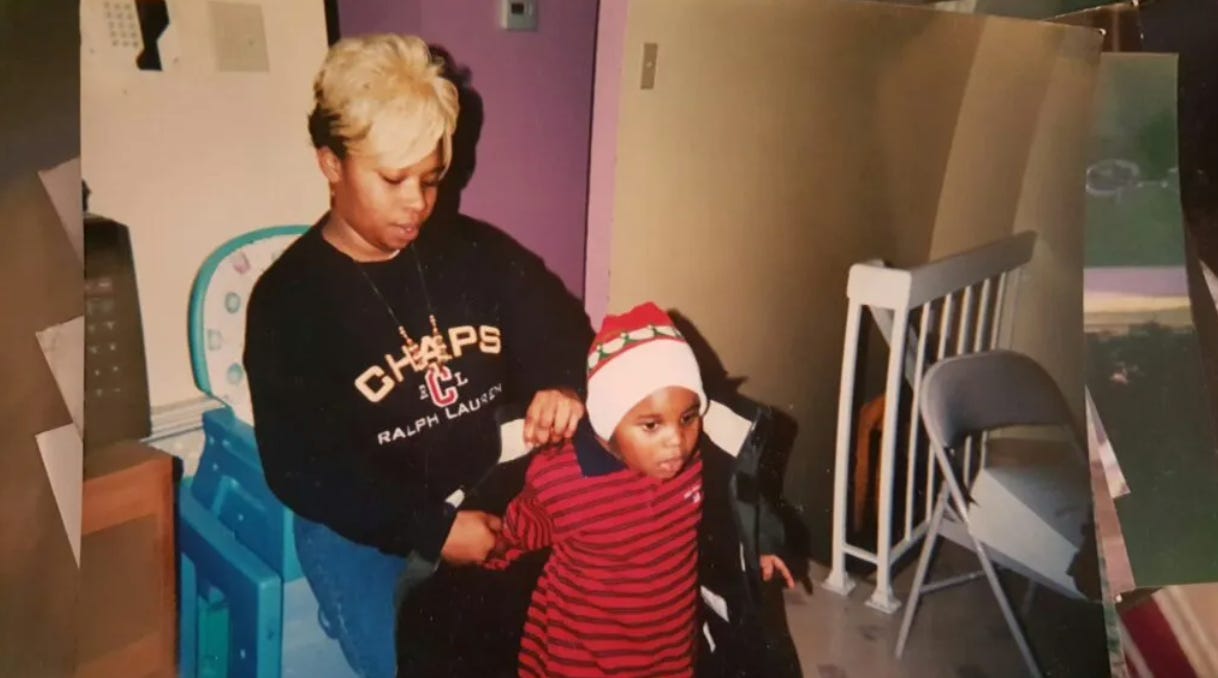
Michael Orlandus Darrion Brown.
For twelve years, many of us have known what Michael represented. We know Ferguson. We know the uprising. We know the images that exposed the militarization of American policing to people who had never been forced to look at it so directly. Some of us can trace pieces of our own political development back to those days. I certainly can.
But knowing what Michael came to represent is not the same as knowing Michael.
And remembrance without listening is incomplete.
We cannot claim Michael’s legacy while treating his mother’s voice as optional. We cannot spend twelve years saying his name and decide that getting his name right is too much to ask. We cannot claim that families should lead movements and then decide their leadership only counts when it looks like what we imagined leadership should look like.
Lezley’s ask is not complicated.
Respect her as his mother. Call her son by the name he was given. Support the Michael O.D. Brown Memorial Scholarship and the work intended to make his legacy mean opportunity for young people who are still here. Hold prosecutors, elected officials and institutions accountable for the work that remains unfinished. And when Lezley tells us where she wants the work to go, resist the arrogance of assuming we automatically know better because we have watched her story from the outside.
For twelve years, the country has had something to say about Michael Brown.
Maybe the question on this anniversary is whether we have learned how to listen.
His name is Michael Brown.
His mother has been telling us what she needs.
The least we can do now is hear her.
So this piece is not just about a name on a sign. It is about what happens when a Black mother says clearly what she needs and is still expected to fold and hold everyone else’s expectations. It is about a woman who kept building a scholarship, a coalition, a body of testimony and policy work, while carrying two wars most people never saw, and leading in ways most people never noticed.
Say his name correctly: Michael Brown. Support the scholarship built in his honor, so his legacy keeps opening doors for other kids. That is what she is asking for. It should not take twelve years to give it to her.
And to my audience and whoever reads this, I want to humbly ask that we follow her lead, in every season of her grief, including the ones nobody applauds.
Supporters can honor Michael’s legacy by contributing to a scholarship, helping fund dorm-ready care packages for students beginning college, or investing in the broader work of the Michael O.D. Brown We Love Our Sons & Daughters Foundation. The Foundation will open its fourth scholarship cycle for the 2027–28 school year this fall, with plans to expand the class again.
To donate, learn more about the scholarship, or view the current scholarship class, visit MichaelODBrown.org. You can also hear Lezley tell her family’s story in her own words through Still My Baby, produced with Lemonada Media and Campaign Zero.
No posts
Comments
Nothing yet. Say the first thing.
Sign in to join the conversation.