
In 1753, only a small, single-digit percentage of adult males could vote in Britain. One had to own a freehold (land held permanently) property worth 40 shillings (2 pounds) per year in rental value. Religiously, Catholics were barred as they could not take the Oath of Supremacy, which would have meant accepting the supremacy of the King of England in both religious and secular affairs. Most Protestant dissenters, such as Baptists or Presbyterians, enjoyed religious tolerance and could vote, but they would need to take Anglican Holy Communion to hold public office.
Jews, naturally, were excluded as well. Foreign-born Jews found that they were not even able to become naturalised citizens of Great Britain, for that would require one to receive Holy Communion. Legally, there was no racial discrimination against Jews, just religious discrimination, but this was not yet a secular world, and so few Jews would willingly part with their religion. Future Prime Minister Benjamin Disraeli’s father, for example, was an exception. He was being hounded for money by his synagogue after refusing to pay a fine, and so he converted to Anglicanism. He also had his young children, including Benjamin, join him. By this accident of history, his son was later able to become an MP.
For religious foreign-born Jews, there was only the option of applying to the King to become a Denizen, meaning they could live and work in Britain, but also had to keep paying alien customs duties. Any land they purchased could not be passed down to their children. Jews could, ever since the passage of the Plantation Act of 1740, acquire citizenship by residing in the American colonies for seven years, but this loophole was far too time-consuming and impractical for all Jews bar a tiny handful who made the trip.
Cromwell had allowed the Jews to settle in Britain and practice openly in 1656, and since then there had been a steady trickle of Jewish immigrants. By this point, almost a century later, there were a little under 10,000 of them, out of the total British population of just under 7.5 million people. Almost all of these Jews lived in London, and the vast majority of Britons had never met a Jew in their life. Over the previous century, Ashkenazi immigrants had gradually come to outnumber the original Sephardi community, who had extracted the initial concessions from Cromwell.
The vast majority of these Jews were poor, unskilled and often criminal. A new, urban underclass of them had been created over the previous century. A small number of Jews, however, were wealthy traders and looked down their noses at their co-ethnics. These Jews were the ones who sought out a path to naturalisation in 1753.
A group of rich Sephardi merchants requested legislative relief from the sacramental test, which would allow them, upon request (an expensive process), to receive citizenship. With citizenship, they could then own property, pass down that property, own British merchant ships, and avoid alien duties.
This would only ever impact a minuscule amount of wealthy Jews, and due to the financial help from these Sephardi merchants in the past, the government agreed to introduce the Jewish Naturalisation Act of 1753, better known as just the ‘Jew Bill’. Those in favour of the bill tried to get it passed quietly.
Word quickly spread of the bill, and the matter which was meant to be handled by stealth was instead blown out of all proportion. A national debate on the position of the Jews in English society as a whole had now begun.
Sir Edmund Isham, Baronet of Lamport and MP for Northamptonshire, had been one of the leading opponents of the bill. He warned that if the bill were made law, then it would be the clarion call for Jews from all over the world to come to England and buy up the country. This, he argued, would lessen the power of Englishmen in their own homeland:
‘But if those of true English blood have not now the power to prevent opening the sluice for letting the torrent in upon us, can we hope, that they will have power enough to shut it up, after the torrent is broke in, and the Jews are become possessed, not only of all the wealth, but of many, perhaps most of the land-estates of the Kingdom? This hope, I am sure, is much more chimerical than the danger of our being overwhelmed by the torrent before we begin to think of putting a stop to it.’
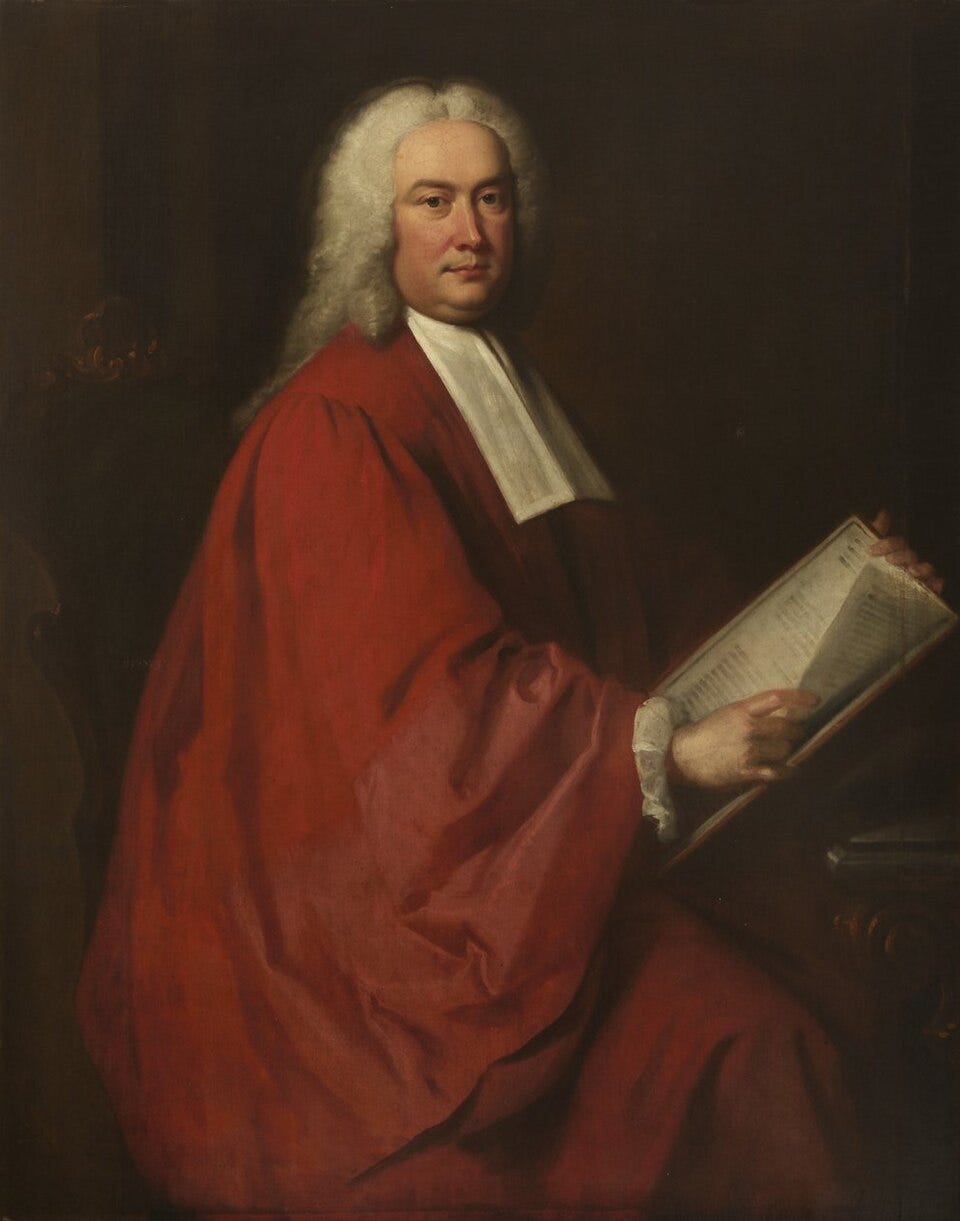
Sir John Barnard, who had earned the title ‘Father of the City’ and was often referred to as ‘The Great Commoner’, warned:
‘The Jews, Sir, are, and always have been, the most professed enemies of Christianity, and the greatest revilers of Christ himself: they are the offspring of those that crucified our Saviour, and to this day labour under the curse pronounced against them upon that account. I know, sir, that as a Christian, I am obliged to love my enemy; but whilst he continues to be so, no precept of Christianity enjoins me to take him under my roof, much less to put him in a way of making himself master both of me and my roof.’
Barnard, countering the claims that Jewish naturalisation would be good for the economy, argued that Jews merely exploited economies:
‘It is a very great mistake to suppose, that the Jews ever did, or ever can set up trade in any country; for the origin of trade in all countries is manufacture; but none of the Jews, even of the poorest sort, are ever bred to be manufacturers or mechanics, or indeed to any laborious employment; therefore they can never be the beginners of trade in any country… In Poland there have been multitudes of Jews for many ages, yet no man will say that Poland is a trading country.’
Jews, he argued, were therefore not needed in England:
‘For this reason, in the infancy of the trade of any country, it is right to encourage the Jews to come and settle amongst them: as the manufacturers have not then money of their own sufficient for carrying their manufacture to any great extent, and as the native merchants have not a foreign correspondence settled, perhaps, in those countries where some of their manufactures may be sold to the best advantage.
But in a country where trade and commerce have been fully and long established, where the manufacturers have money sufficient of their own, or of their friends, to carry their manufactures to the utmost extent, and where the native merchants have a correspondence settled in every foreign country where it is possible to carry on any commerce, and consequently must know where every sort of manufacture may be sold to the best advantage: in such a country, I say, it is madness, if not worse, to put Jews or any other foreigners upon an equal footing with natives, because it only enables the former to take the bread, or a part of the bread, out of the mouths of the latter, without increasing in the least the national trade or commerce; for no Jew, any more than a native, will export more of your manufacture than he can sell to advantage, and so much your own native merchants will always export, if there were not a Jew in the kingdom…’
Barnard finished by saying that England already had enough Jews, and warned that ‘they will probably leave the laborious part of all manufacturers and mechanical trade to the poor Christians, but they will be the paramount masters.’
Despite speeches like these, the bill sailed through its first reading, but this was when resistance against the Jews stiffened. Large numbers of citizens banded together to fight the ‘Jew Bill’ and, as it turned out, nine out of every ten Londoners declared themselves to be against the bill. Together, the leading figures of the anti-Jew Bill movement petitioned parliament, arguing that the bill was against Christian honour and would have dire consequences for English merchants. Many ordinary citizens submitted their own petitions.
One contemporary commented:
‘The sense of the city is nineteen out of twenty against the Jews. Indeed they got some men of fortune to sign for them, but they were under Ministerial Influence; others were guided by their Interest, and I know some whom these charitable, merciful Jews, threaten’d to trade with no more, if they did not sign. And though they used every possible art and method to get names to their petition, yet, after all, the number was not the greatest ever known.’
The MPs who sided with the Jews found that the consequences were immediate. Their constituents felt that they had, at the very least, been bribed to side with the Jews, and so, feeling betrayed, they turned against them. Sir William Calvert of the City of London, for example, lost his seat in the 1754 election, going from top of the polls when he was elected, to dead last.
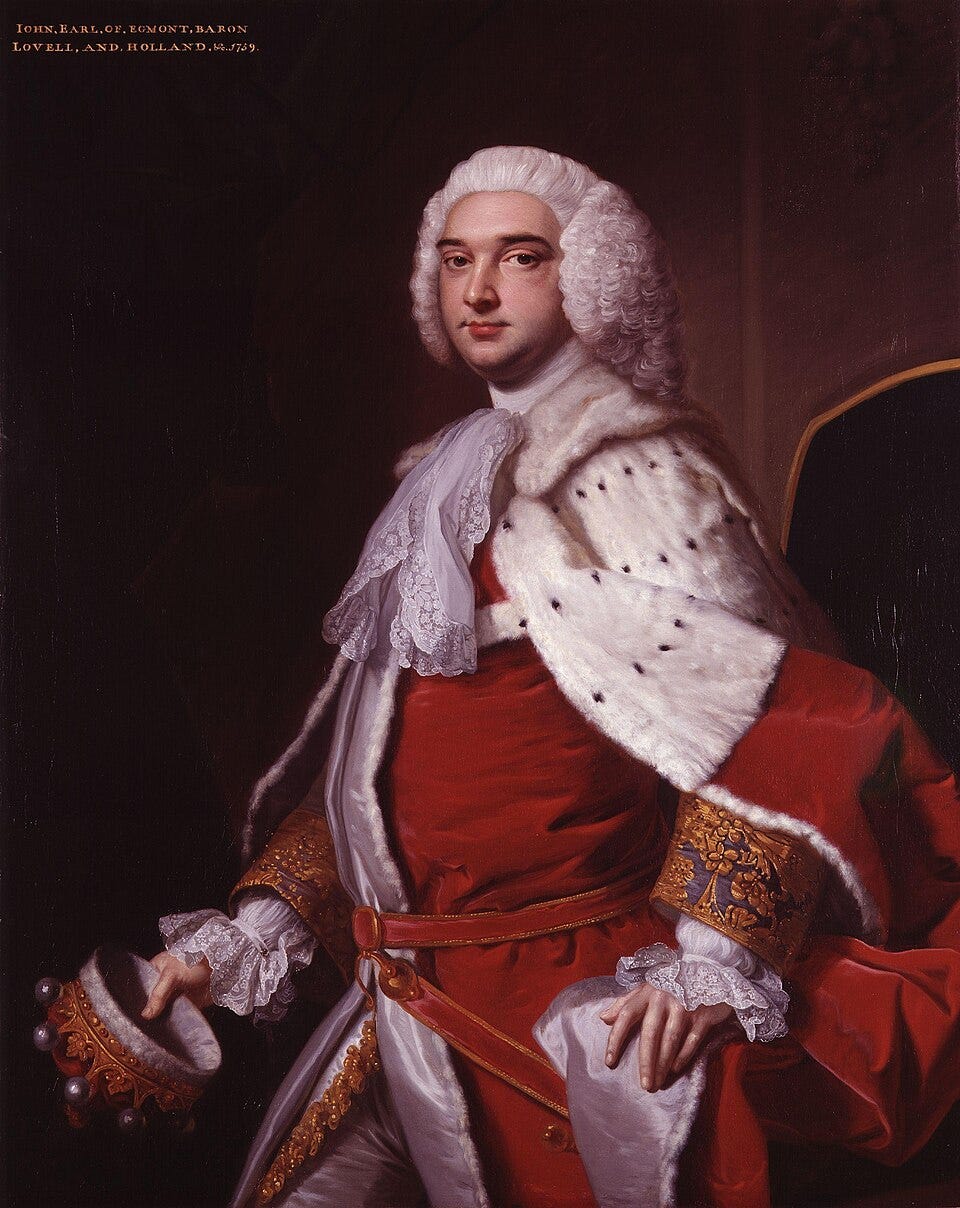
During the third reading of the bill, things were tense. The Earl of Egmont, MP for Weobly, spoke out most strongly against the bill. Through their usury, he said, the Jews had not only ruined individuals, but entire countries. Naturally, wherever they went, they incurred the hatred of the people. He went on:
‘The abomination in which they are held by the people of this kingdom, should they grow insolent, or obnoxious by their numbers, may provoke excesses against them, which, when all other arguments fail for a standing army, may furnish new ones for its support. For it is no extravagant supposition, should this Bill pass, that the consequence may hereafter be not only the establishment, but the employment of an army to knock our own Christian fellow-subjects on the head, in protection of our foreign Jews.’
Egmont continued, arguing that the rest of the Christian world would begin to view England as ‘the most impious nation on earth’ if they were to emancipate the Jews. Mass Jewish immigration, which he believed would come about if the bill passed, would have negative consequences in the realms of religion, politics and culture, and would threaten the overall peace of the nation. The bill would work, he said, ‘to turn the tables upon the Christians in favour of the Jews - to put the Jews upon the ground of the English, and the English upon the present footing of the Jews.’
Egmont’s long speech, and the overwhelmingly anti-Jewish feeling of the public, were not enough to prevail in the Commons, and the bill passed with a vote of 96 to 55, and the King soon gave his Royal Assent, making the bill law.
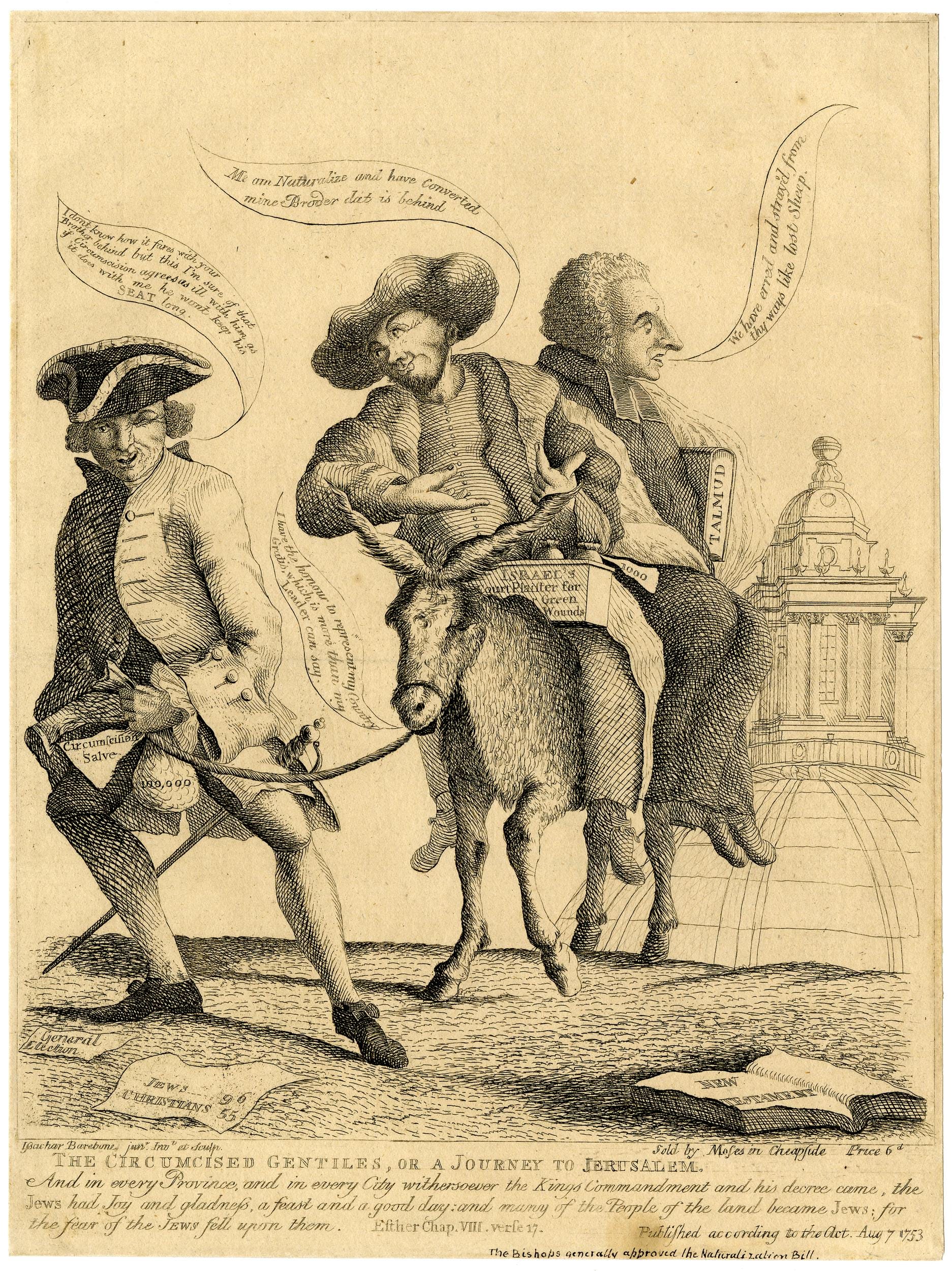
The passage of the bill, however, was not to be the end of the story. The English people decided to take the fight from Parliament to the public square. James Picciotto, himself a Jew who later moved to England from Syria, wrote of the strength of feeling amongst the people:
‘Not many measures caused greater commotion in London, or gave rise to warmer discussion, than an Act of Parliament which merely proposed to grant a few, only a few, of the privileges of Englishmen to a very limited number of foreigners. Neither the Repeal of the Corn Laws, nor the introduction of Free Trade, nor the passing of the Reform Bill caused more excitement in their day than the question as to whether or not some scores of Dutch or German Jews were to be allowed to go through the costly proceedings to acquire the right of holding property in England.’
The nation lived as if in a fever, as Fritz Krueger wrote in the 1930s, with both sides pouring out propaganda against the other. If the law were to be overturned, then the Jews knew that their hopes would be doomed for many generations, as long as the 1753 debate lasted in the public memory, and so they went all in.
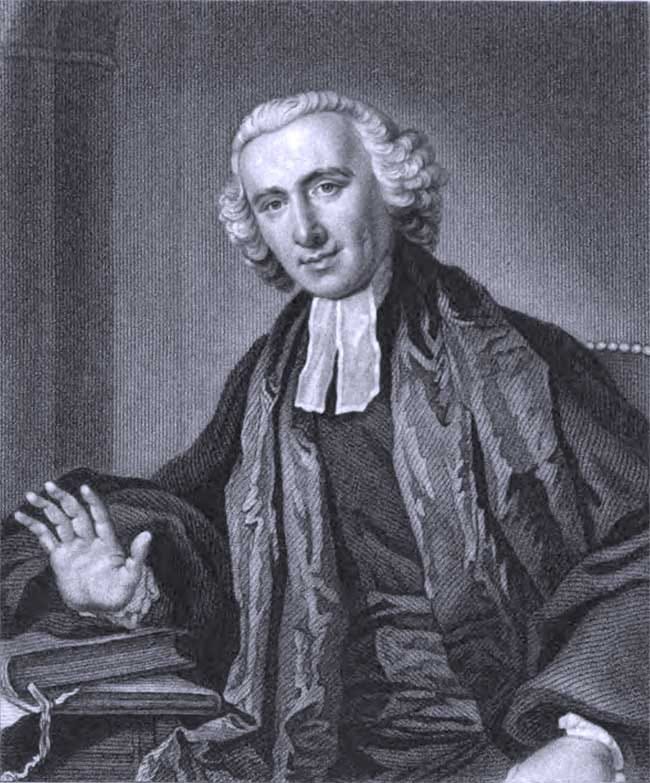
Along with the religious and trade arguments against the Jews, there were also the moral and labour arguments to be made. Reverend Romaine, one of the leading opponents of the Jews, summed up the English people’s general view of the Jews:
‘We know, that grapes do not grow upon briars, and yet we may as reasonably expect to gather a plentiful vintage upon our hedges, as to find a race of moral Jews growing in our cities.’
The philanthropist, Jonas Hanway, argued that the Jews would have no positive impact upon the labour market:
‘Among the lower classes of the people, however great their poverty, they are naturally, or by custom, averse to labour. Their religion cuts them off from commerce with the rest of mankind, and I cannot discover that they learn any art, or practice any manual labour. They are of no use in agriculture, or manufactory, neither will they serve us in our army, or navy.’
One Londoner wrote in to the London Evening Post regarding Jewish crime:
‘For several years past, most of the rich jewels, plate, watches, etc, have been stolen from the nobility and gentry, either from their houses, or on the highway, have been sold to the Jews; who carry them to Holland, and other places, where they dispose of them, so that their owners never hear more of them. Numbers of Jews are employed in this vile traffic. Pretty fellows indeed, and very proper for naturalisation!’
Another member of the public wrote in:
‘The predictions in the Hebrew Journal, calculated for one hundred years hence, may, in a century or two, be fulfilled, and our children, that are yet unborn, feel the direst effects of the pusillanimity and avaricious passion of their ancestors: They may see the Jews possessed of their principal offices under the Government; or at least, the principal offices of the state… And whenever that shall be the case, nothing but a miracle can save the Christian religion from utter destruction.’
Another, this time in an anonymous letter, warned of the Jews’ lack of loyalty to their host nations:
‘We shall find, that no people on earth are more apt to betray secrets and communicate private intelligence, from one country to another than the Jews, on condition that they are well paid for it. They are a people who by their religion are rendered indifferent, if not directly opposite to all Christians of what denomination soever; and their natural thirst of lucre makes them careless which party they betray, so that they can avail themselves thereby. Though to do them justice, they generally take care to advantage the highest bidder by their information.’
Public demonstrations took place all across the country, even in locations as remote as Northern Wales. Massive pressure was put upon the protesters’ respective local MPs to push for the repeal of the bill, or, if they had already voted against the bill, the huge crowds came out to voice their support. In constituency meetings all across the country, the message was clear: Get the law repealed, or you’re going to lose your seat.
One report gave an example of the mood that was prevalent across the country:
‘A Kent MP had the misfortune of voting for the bill, the news which spread like wildfire throughout his constituency and especially his hometown. Great excitement gripped the population, and they were quite angry with their honourable representative.
He had no idea of the storm that was brewing when he returned to his constituency a short time later, happy to have escaped the sweltering heat of London in the summer. His path took him past his local public house, where he knew his best friends were having lunch at the time. He quickly decided to enter the bar to proudly introduce himself to his electorate.
When he entered, his expectations were not disappointed: upright and sedate citizens of the small town were gathered and were discussing the latest events with each other. He greeted them with a hello and asked to sit with them, as was his old habit. In his joy at seeing them again, he had not noticed that everything had fallen silent when he entered, and so was shocked when his friends expressed great regret that he would not be able to eat with them because they had unfortunately ordered pork to be served. Only then did the poor sinner realise the situation and was left in a state of bewilderment. It took him a moment to recover, and only the booming laughter of those present broke him out of his dismay.
Grabbing his hat and rushing away was one thing. On his way he passed the market square and, to his joy, spied a longtime friend and loyal voter. Glad to have found someone – and this person in particular – to talk to, he rushed to greet him. He immediately bombarded him with a barrage of questions and, in his lingering state of confusion, wanted to get more detailed information from his friend about the attitude of the others. When he paused for a moment after a question, in the hope of getting a response, he saw that his friend was looking at him interestedly but in silence. The honourable member paused and impatiently pressed him with questions about why the hell he wasn’t answering. His friend surely had to hear and understand him. Without batting an eye, the brave man replied: ‘He… I can hear you – but unfortunately I can’t speak Hebrew.’ No sooner had he said these words, he left the astonished parliamentarian standing there in the middle of the square.’
In Lancashire, meanwhile, the people wore blue ribbons at their meetings with the inscription ‘No Jews! Christianity and the Constitution!’, whilst in Somerset the motto was ‘No Judaism! Christianity forever!’ In Cambridge, an unnamed government minister was met with sarcastic shouts of ‘Hail, King of the Jews’ in Latin from his constituents. Wiltshire, meanwhile, saw similar scenes to those that took place in Somerset, as the local MP was hounded by a group of men on horseback with labels in their hats reading: ‘No Jews, no naturalisation bill, old England and Christianity forever!’
The most common slogan nationwide was simply ‘No Jews!’ along with cheers of ‘No long beards nor whiskers, Christians forever!’ Huge gatherings all across the country were parroting these slogans, and the atmosphere was electric, as if the nation were possessed by the exact same feeling, and shouting out as one.
Philosemitic Bishops in particular came under attack. They had, after all, allowed the bill to pass through the House of Lords. As the Bishop of Norwich was about to confirm a group of youths, they stopped him and called out for him to circumcise them, and a paper was fixed to the door of one of the churches, stating that the Bishop would confirm the Jews the next day. The Bishop of Oxford, meanwhile, was accused of being bribed to the tune of 20,000 pounds, and was harassed relentlessly.
All across the country, philosemitic priests were preaching pro-Jewish sermons to their flocks, but it was no good. In Monmouthshire, for example, during one such sermon, the congregation simply walked out. In Northumberland, a common joke went that a certain philosemitic priest was called to baptise a child, and, by habit, he circumcised the poor child instead. Clergymen who had decided to side with the people, meanwhile, had a fund set up in their name and money poured in from the public to those who would ‘rather starve than become apostles for circumcision.’
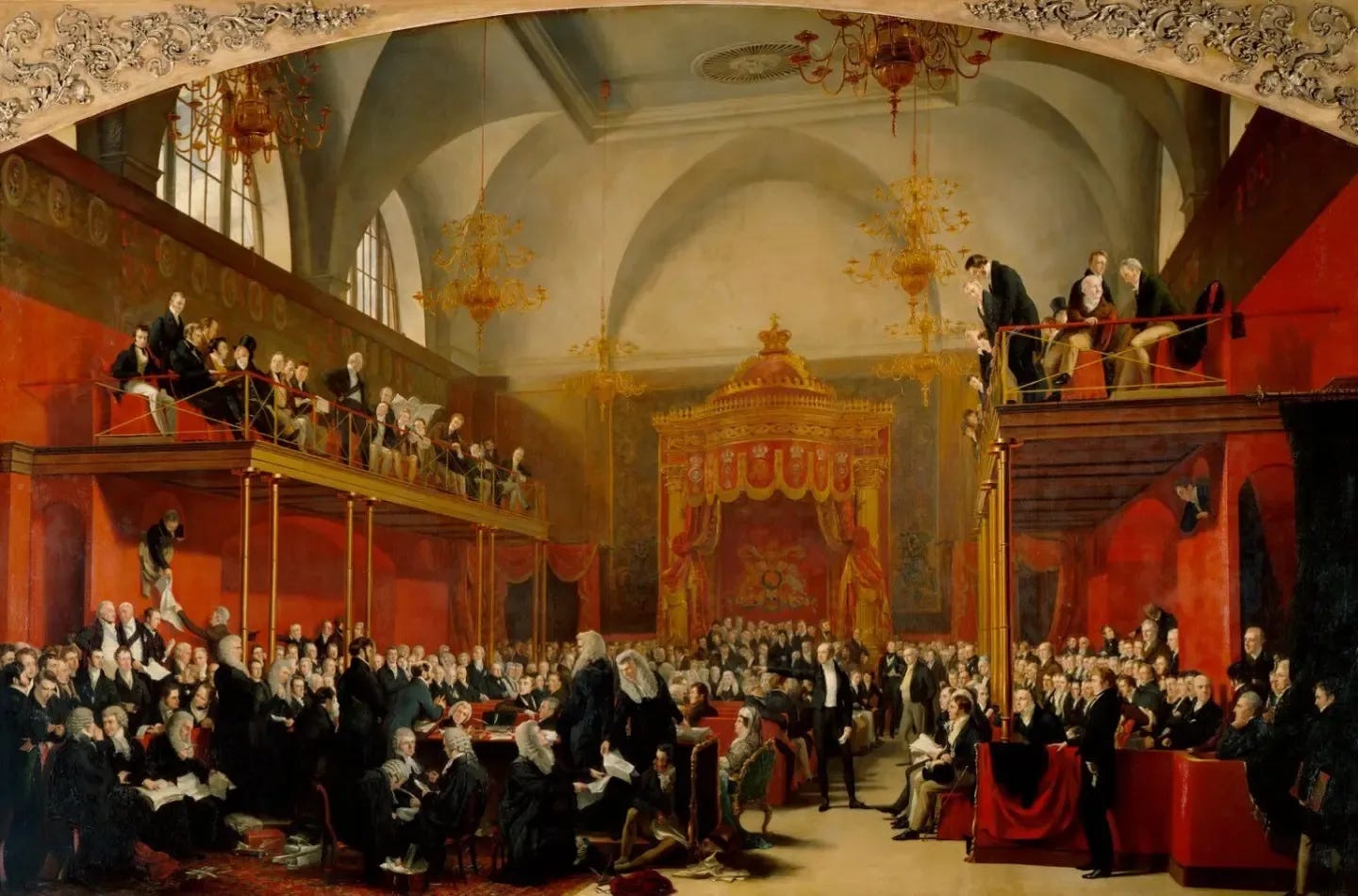
The frenzy that the public had been whipped up into over the matter did not abate with time. Their anger only grew more fierce, and their numbers only increased. With a general election due in 1754, the government was left with no choice. The Houses of Parliament were due to convene in November, and the government recommended that the law be repealed.
Between the fear of losing their seats, and the fear of continued, escalating unrest, including riots, the government completely and utterly caved to the will of the people. On 15 November, as soon as the King had finished his speech, the Duke of Newcastle arose in the House of Lords and requested that the Jewish Naturalisation Act be repealed.
Only one Lord, Earl Temple, spoke up in favour of the Jews, warning that the rabble would next come for the Plantation Act. If the act were overturned, he warned, then the burning of Jews would come next, followed by that of Christian dissenters. The rest of the Lords listened to the hysterical speech with indifference.
Lord Hardwicke chimed in, agreeing that the Plantation Act of 1740 must be maintained:
‘Even with respect to the Jews, the discouraging of them to go and settle in our American colonies, would be a great loss to, if not the ruin of, the trade of every one of them; for we know that the trade which gives life to the whole, a trade which I do not for very good reasons choose to name, is chiefly carried on by the Jews, by means of the correspondence they have with their brethren in other parts of America, and without which no such trade could be carried on.’
The trade which Lord Hardwicke chose not to mention here, obviously, was the slave trade.
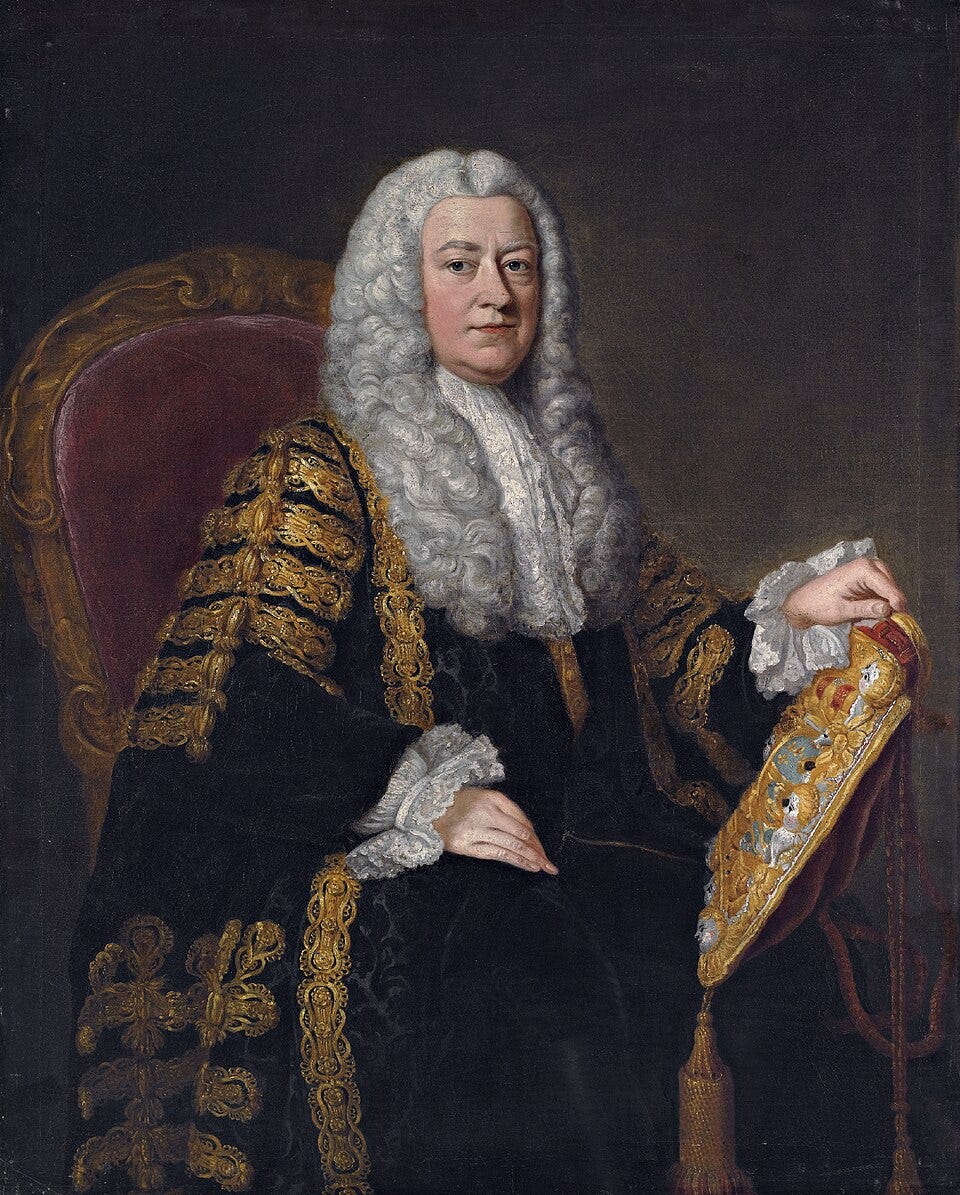
The Duke of Bedford also spoke up, expressing his delight that this law, which he had opposed from the start, was being overturned. He warned against more concessions to the Jews, for, ‘if they have the sole or the greatest command of money, they may prevail with one half of the natives to assist them in subduing the other, for we know the power of money in politics as well as in war.’
Jews, he said, would always remain ‘a people quite distinct and separate from the ancient people of this island’ whose influence would be detrimental to the interests of the English people. Bedford suggested that the Plantation Act should also be overturned, but this went nowhere.
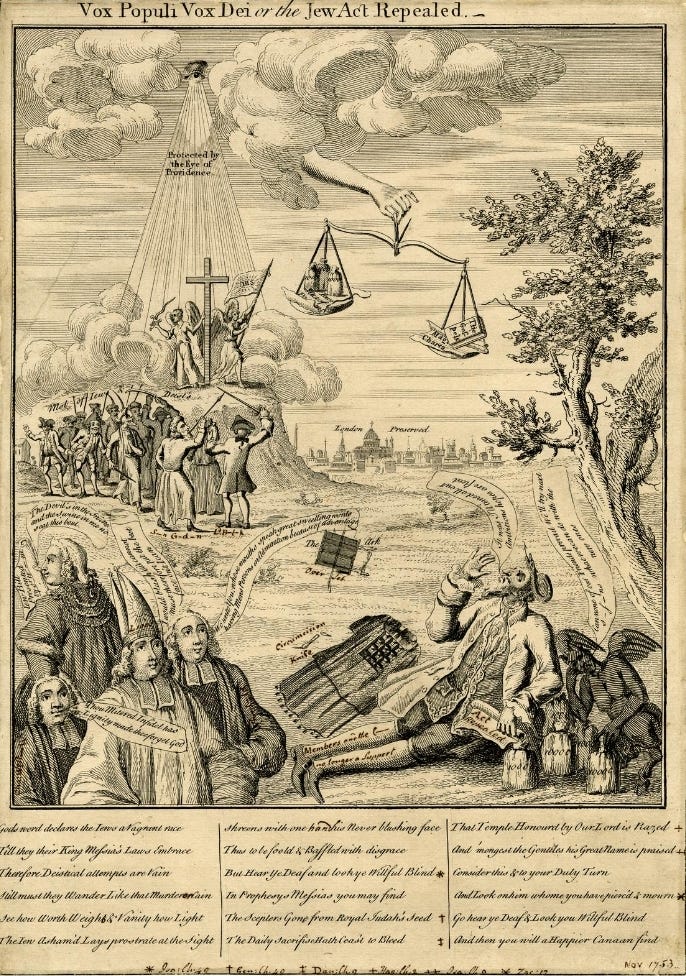
The repeal bill sailed through the Lords without a division. During the first reading in the Commons, only one MP, Thomas Potter, pushed back, citing the high qualities of the Jews and their services to England. On 20 December, the King gave the royal assent, and the Jew Bill was repealed. The anti-Jewish faction attempted to introduce a bill to overthrow the Plantation Act, too, but this failed. Still, the people had completely prevailed, and in the days leading up to the 20th, when the King gave his assent, great celebrations took place all across London, and then all across the country.
The Jews would have to wait 101 years for their next chance, with the Jewish Relief Act of 1858.
No posts
Comments
Nothing yet. Say the first thing.
Sign in to join the conversation.