
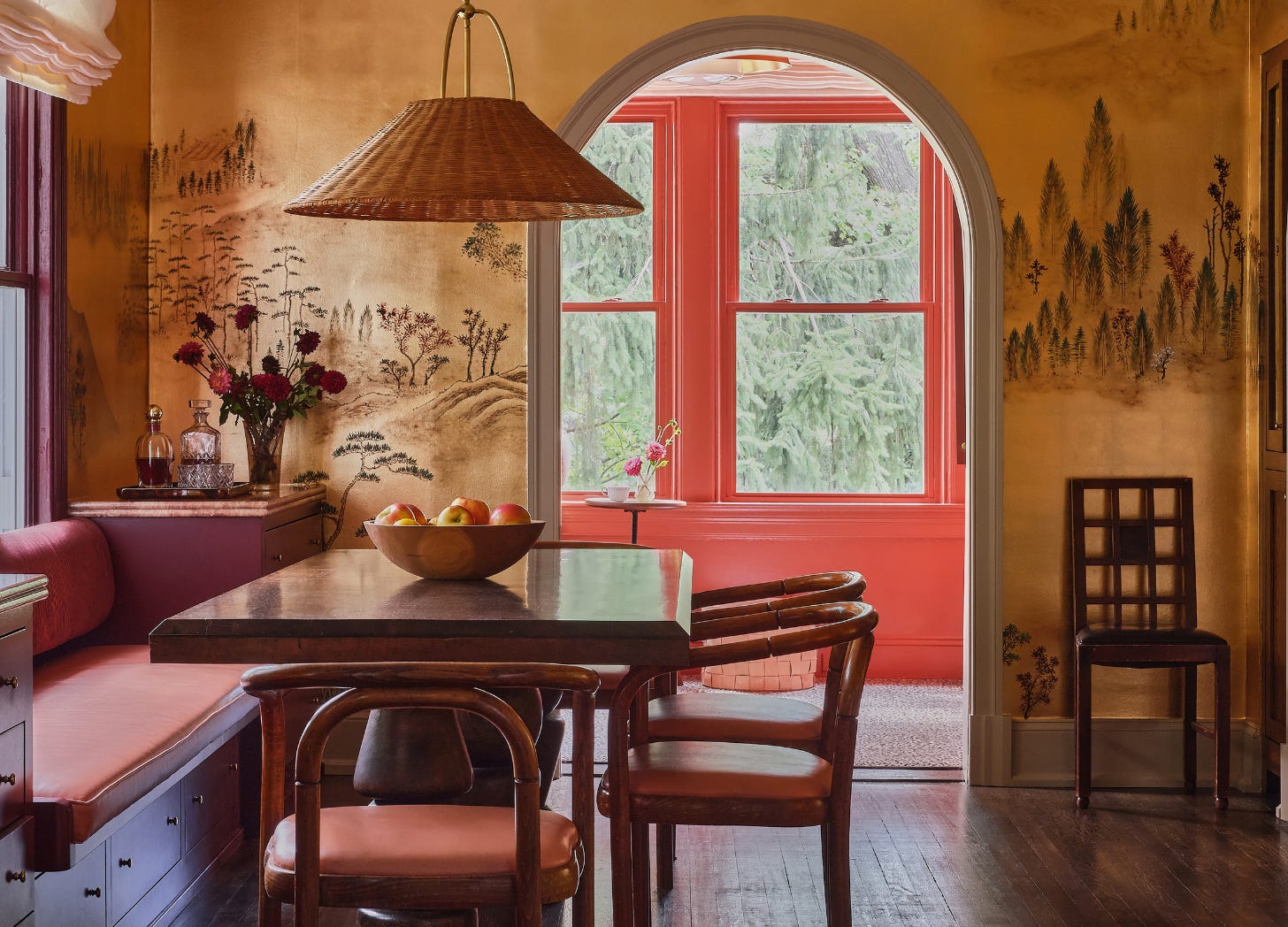
I've always preferred intimacy to cavernousness. Give me a cozy room over a double-height great room any day. Small rooms have a way of pulling people in. They're cozy and usually more interesting. They're also the spaces where I'm most likely to take risks. I love color-drenching them, pattern-drenching them, or both. What might feel like too much in a larger room somehow feels exactly right in a small one. Functionally, because there isn't much room to hide, every inch has to earn its keep.
Two of my favorite small spaces from our previous house couldn't have looked more different—a tiny guest room and an even tinier sunroom—but they were both some of the most-utilized rooms in the house. I’m breaking down how they came to be, and the principles of small room design that have allowed me to live large inside of them.


The guest room was originally our younger daughter’s nursery. Matchbox-sized rooms make wonderful nurseries. You don’t need much—a crib, a rocker, books, and somewhere to put the endless collection of tiny socks. At night, the room practically glowed. It felt almost candlelit, even when it wasn’t. Light bounces around small rooms like that.
A few years later, when the girls moved into a shared bedroom, the nursery got a second life as a guest room (and sleepover headquarters). We built a daybed upholstered in a periwinkle blue with bookshelves tucked around it and built-in charging outlets. Beneath it was a trundle for guests, cousins, and an endless rotation of sleepovers. The room itself was tiny—just the daybed, my grandmother’s antique vanity and chair, and a slipper chair tucked into the corner. The trundle could be lifted to create a king-sized bed if two adult-sized humans were staying over.
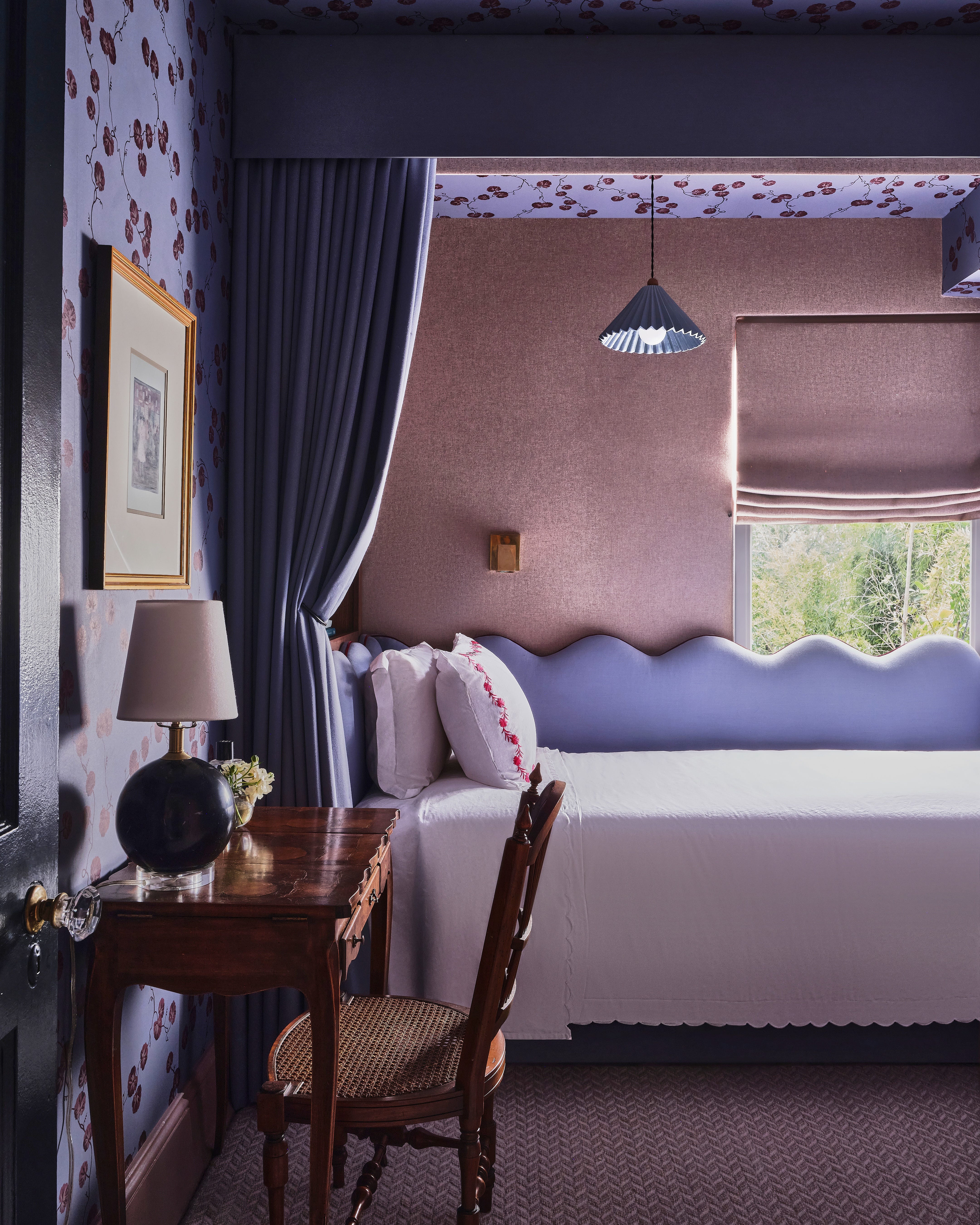
The walls and ceiling were wrapped in pattern, while the bed niche was lined in wool upholstery and separated by curtains to make it feel cocoon-like. There was a visual distinction between sleeping and everything else. Cozy on top of cozy. It became one of those rooms that was always being used. Guests enjoyed staying there; my daughters read books there. I'd occasionally sneak in to answer emails or hide out for a few minutes.
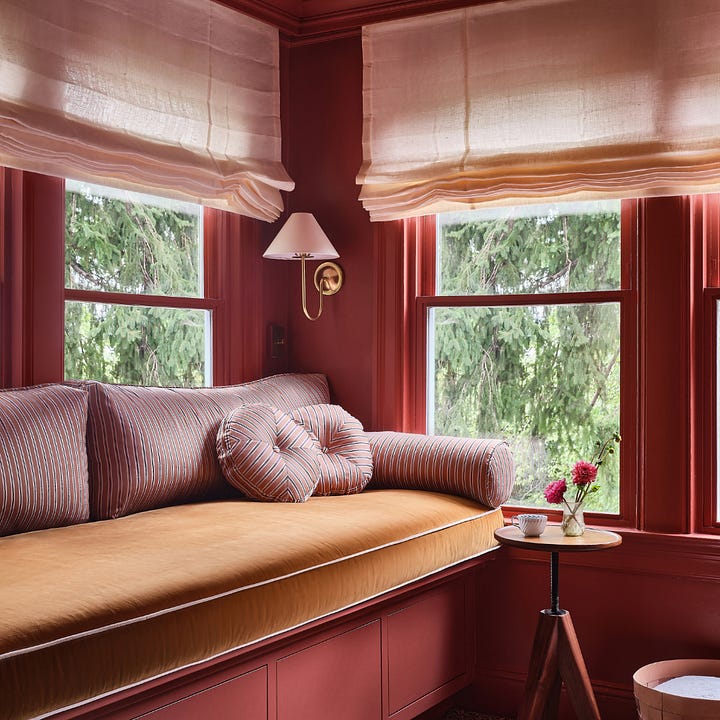
The sunroom taught me something different about small rooms. Located just off the kitchen and breakfast room, it was wrapped in windows and flooded with sunlight all day long. It wasn’t much bigger than the guest room, but it became the center of my family’s life.
When the girls were little, it was their primary playroom. We needed to be able to see them from the kitchen, but I didn’t want to spend my days staring at piles of plastic toys, so we designed it to easily transform. By day, it was toy central. By night, it all got gathered up in a few deep drawers, and suddenly it was an adult room again.
One wall was lined with floor-to-ceiling built-ins that hid toys, games, puzzles, books, art supplies, a television, and even the radiator. We used metal mesh for the radiator cabinet, then repeated it across the remaining doors for continuity. I love when cabinetry solves five problems at once while looking effortless. (Note: Functional details need not scream “utilitarian.”)
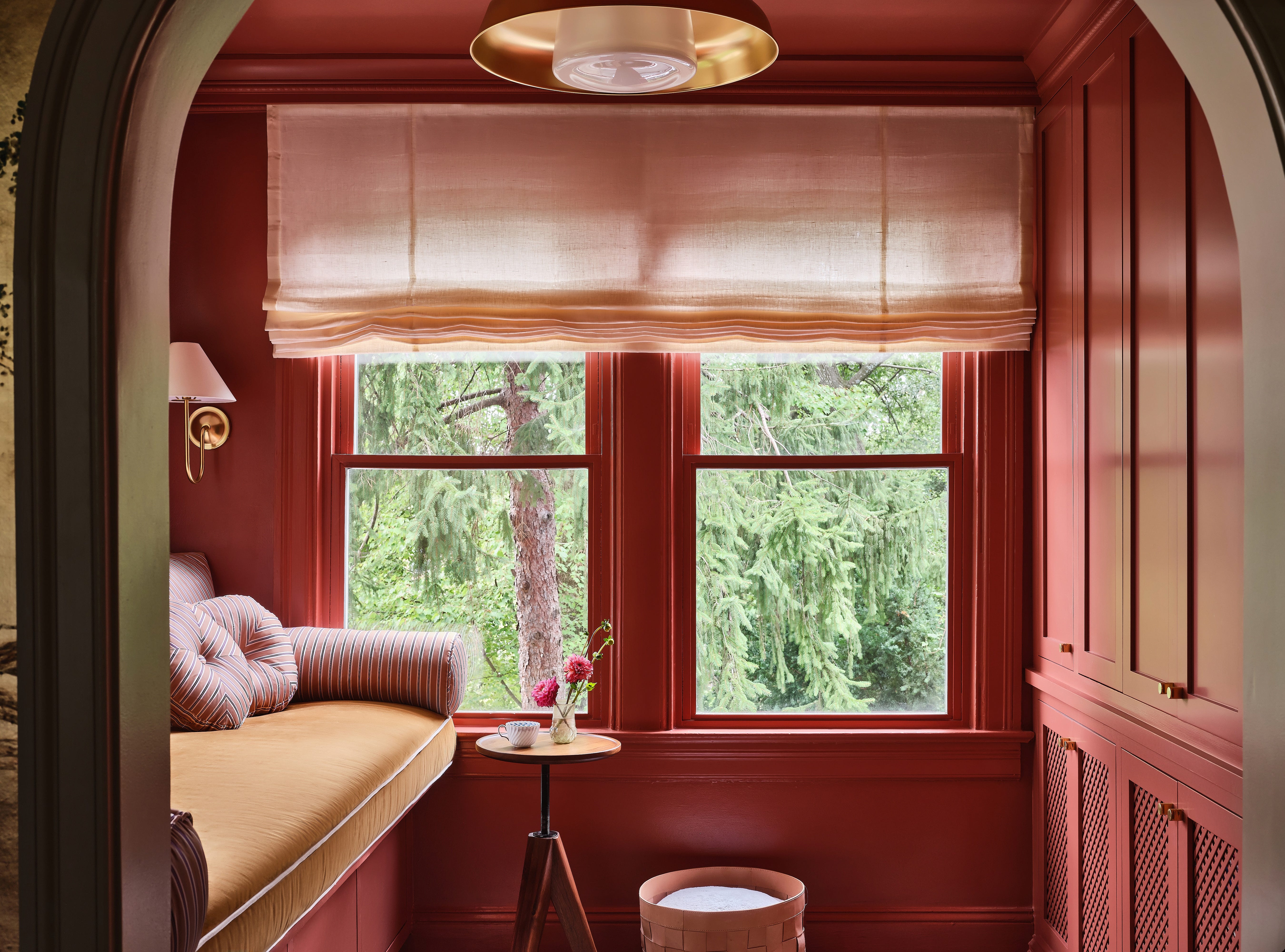
On the opposite wall, we built a daybed beneath the windows. I intentionally designed it a little higher than normal because the house sat above the landscape (always consider the views from your small room!). When you climbed up and looked out, it felt like you were floating in the treetops. It was one of the most fought-over seats in the house. The girls read there, friends piled onto it, and I drank coffee there. Someone was always curled up on that daybed. And underneath were the giant drawers that I lovingly referred to as the toy dump. (Also note: Not every storage solution needs to be beautiful…sometimes it just needs to work.)
Looking back, what I love about both rooms is that neither wasted a square inch. One was atmospheric, one was practical, and both were hardworking.
When you feel stumped by your small room, ask yourself a whole slew of questions. Where would I put a suitcase? A glass of water? A phone charger? A pile of Legos? Can the light be switched off from bed? Can a bookshelf hide a bunch of ugly cords? Can a piece of furniture also provide storage?
Small rooms force you to think this way. They’re little puzzles. No decision can afford to be superfluous, and every inch counts. Maybe that’s why they become the rooms people like me remember most: not because they’re the grandest, but because they’re the ones that are the most considered.
Do you have any small space suggestions? I’d love to hear in the comments. I read them all!
No posts
Comments
Nothing yet. Say the first thing.
Sign in to join the conversation.