
To be clear, I don’t think this article is a failure. I’m extremely proud of it. I think it highlights a struggle that isn’t talked about nearly enough, and writing about it was one of the ways I found my bearings in a thick fog of grief.
Losing my mom was hard. It also brought to the surface another grief that I have been carrying around for years and still don’t have a name for. Maybe it’s parentification. Maybe it’s a wistfulness for childhood ignorance. Maybe it’s Little T trauma, I don’t know. All the labels feel a bit too much right now.
Most likely, this is just being human and this is one human’s story.
I submitted this to the NYT nine months ago, so of course it would get rejected as I approach the one-year mark of it happening in real time. I debated sharing it, maybe it’s too sad. This isn’t what people want to read. But then I thought, if there is just one other person who knows the dance of the Eldest Millennial Daughter in this particular style, then I want to join in the steps with them. We don’t have to talk about it. We can just keep keeping time and tapping right along, eyes ahead, finding our center. That’s what we do—but at least we’re not on the stage alone.
This is modern love in one of the truest ways I’ve experienced it.
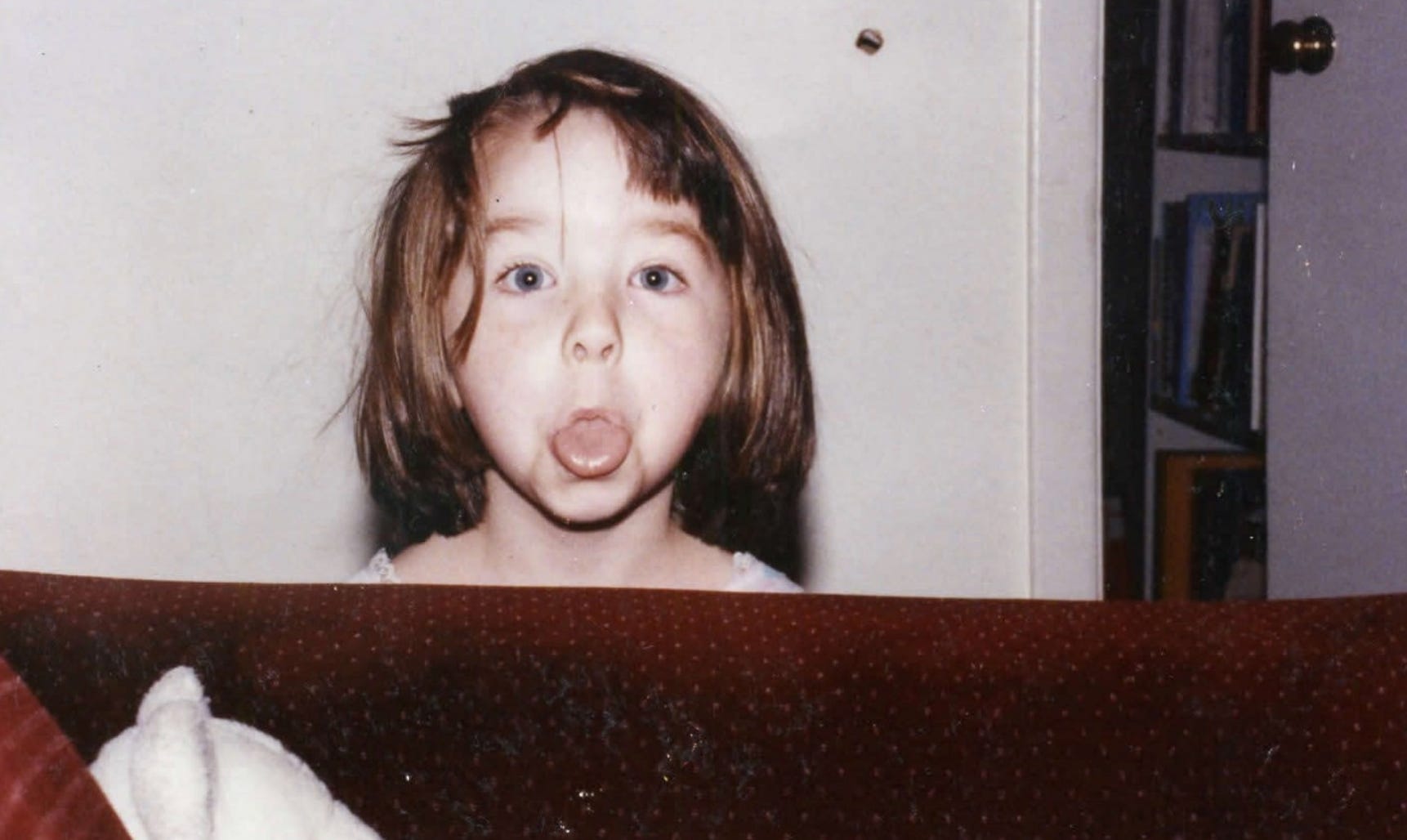
A note to recent subscribers: Hello. I apologize if you signed up for this newsletter thinking you were getting La Dolce Vita. Well, you are. You just also happened to find me in the midst of a life-changing event that I’m still processing. Vita is real—and sometimes it’s raw. This is what I write about and it happens to take place in Italy. Benvenuti :)
I Loved The Parent Trap. Then I Lived the Real One.
I could handle being a mother. It was being a daughter that nearly broke me.
By Nicole Ziza Bauer
I had made a wrong turn. The vaccine department wasn’t where I thought it was, so I navigated the stroller with my four-year-old son back through the maze of the comune’s health complex. Sweat beaded on my upper lip. There, past the row of Italian pine trees, I finally found it. ULSS 7 Pedemontana.
As my husband and I prepared to heave the stroller up the entrance steps, a man informed me that there was a passeggino ramp around the corner. He said a few other things in Italian, and I pretended to understand, pantomiming comprehension in the way I had grown accustomed to since moving to Italy. Sometimes you’re so desperate for normalcy, even feigning casual interaction feels like fluency.
We had just collapsed the stroller in the waiting room with exhausted sighs when I felt my phone vibrating in my bag.
Four missed calls.
Voicemail transcribing.
Mom.
It was not uncommon for her to call many times in succession. Whether she had forgotten a password, where the car’s spare key was, or wanted to know why my father was being so mean (“He has dementia, Mom,” I’d often remind her), I had some form of interaction with my mother every day. I was both her first-born child and tether to rationality—her confidant for remembering what could rise above the mire.
I sent her a text.
At the doctor getting Costa’s shots, I’ll call you after.
The text bubble stayed green.
The phone rang again.
“Let me take this real quick,” I whispered to my husband. Outside, back on the passeggino ramp, my eyes readjusted to the July sun while cicadas trilled in my ears.
“Hi, honey. I’m at the hospital,” she said slowly, her voice garbled. “I’m with the doctor and he wants to talk to you.”
My mind raced through the scenarios we had previously faced about my father. The time he passed out and gashed his head on the sink. The time he passed out and fell on his hand, breaking it. The time he passed out and my mother had to do compressions on his chest while calling 911.
I had been preparing to grieve my father for the last five years. Once a college film professor and my preferred bedtime storyteller, I had felt him slip farther behind the veil of diminished cognition with every visit. His drinking didn’t help.
This must be it, I thought. I gripped the hot railing in expectation.
“I’m here with your mother,” the doctor cut in. “She has what’s called an aortic dissection. It…”
The hum of cicadas ratcheted up to new volume and the heat in my cheeks immediately dropped into my stomach. Maybe, if every muscle tensed and I stayed perfectly still, I could repel the words that were coming. I could go back to wrangling my son.
“…a pretty serious situation,” the doctor continued. “Around 80% of people die within the first 24 hours, so surgery is recommended. Ideally, as soon as possible.”
This wasn’t what was supposed to happen. My mother, like my father, had also been in the hospital many times in the last year. Any attempts of mine to get her to be more diligent with her blood pressure were always met with the same resistance to being parented by a child. Now, a thoracic surgeon was asking permission to cut open her chest—all because this same mother had said I’d be the one to know what to do.
I needed a pen.
Through the glass doors I saw that my son’s appointment had come and gone. He had wandered out to find me, along with my husband and a nurse busy translating the Italian vaccine schedule.
“Mama!” he yelled, reaching for me as I squeezed his hand.
“Potrei avere una penne?” I asked shakily, mistakenly requesting a pasta shape instead of a writing utensil. I pulled a random scrap of paper from beneath our stroller and rushed back outside, scrambling to scrawl anything else the doctor might tell me.
It amounted to: heart is breaking.
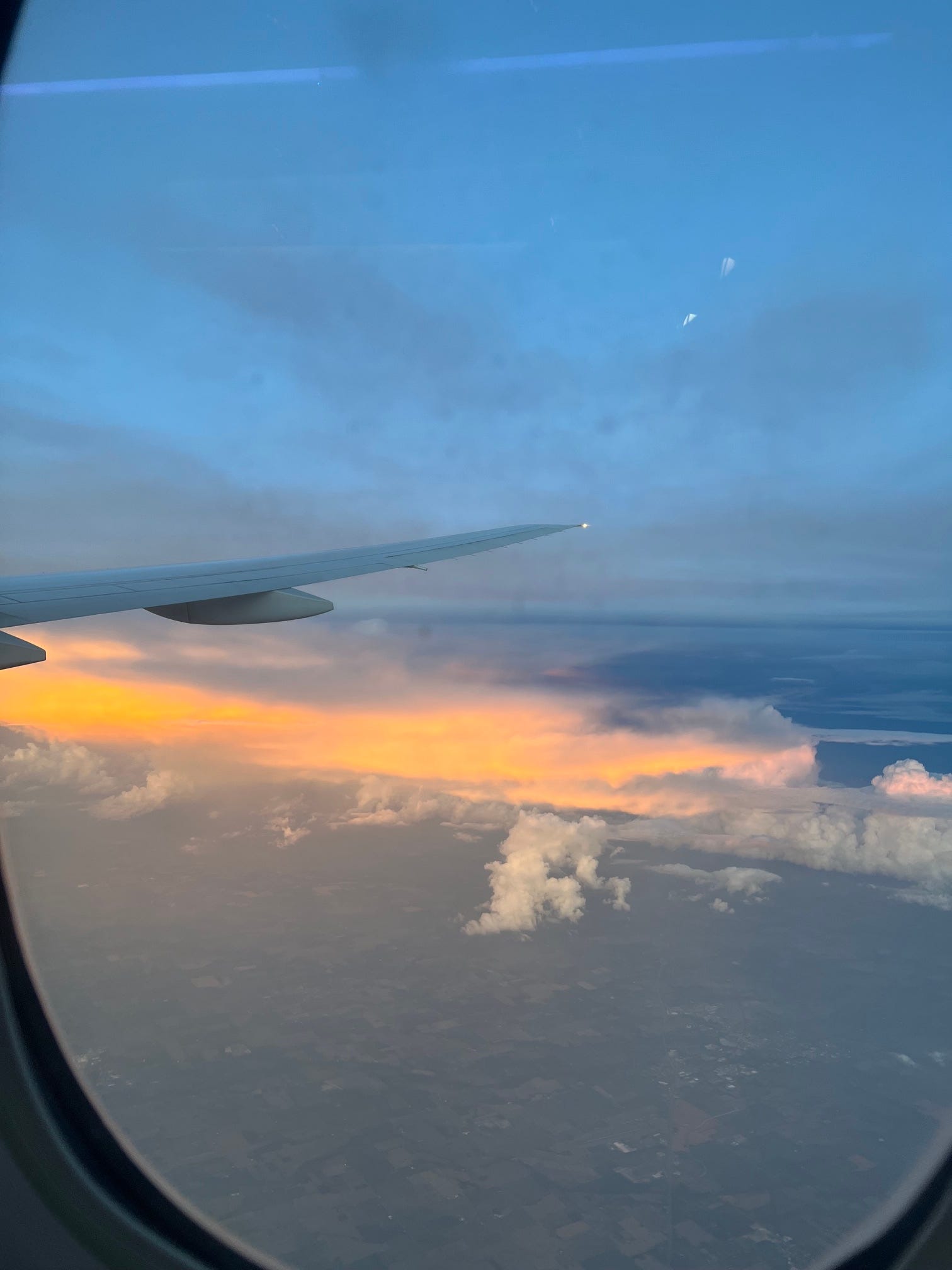
Twenty-four hours later, I was going through US Customs in Atlanta. After a connecting flight, I landed in Columbus, Ohio, and drove straight to the hospital.
Mom.
It was not our usual reunion. Beneath her web of plastic tubing, I searched for the familiar. Her brown curls, now grown out, that revealed a subtle crown of white. Her freckled hands, nails bare, that had loved to paint and twirl my hair. I looked for the mother who had trusted me with her life. How happy she’d be to see me. That she’d have dinner waiting when I got home.
Instead, the room was a study in stillness, punctuated only by the hiss of a ventilator and pings from the EKG.
I sat lost in its rhythm until a nurse suggested rest. I kissed my mother on the forehead, willing the warmth of her skin to survive while inhaling her favorite Davines shampoo. I felt frozen there for minutes, straddled between worlds. Silently, I exhaled another prayer: how to explain all of this to my dad.
His request was a cheeseburger and fries, my sister had told me, so on the way to my parents’ house I stopped at a McDonald’s. I’ve been a vegetarian for twenty years, yet in that moment nothing sounded better than a hamburger. I could taste the irony. For breakfast, I had successfully made small talk with the Italian man making my cappuccino. For dinner, I had crossed an ocean and was ordering meat from a screen.
The house was dark, no porch lights on. It had been two days since my father had driven my mother to the hospital. He left after spending eight hours in the waiting room—presumably, forgetting to go back.
“Hi, Dad,” I gently called, finding him tucked in front of the TV.
“Oh, hello,” he said in faint surprise, rising with his cane.
I gave him a cautious hug, registering his thinness was more pronounced. Pulling away, his crystal-blue eyes focused on me—clear, expectant—and I could tell from the softness in his voice that he hadn’t been drinking. At least, not today.
“Why are you here?”
“Well,” I began, clearing my throat, “I wanted to come back for Mom.”
“Oh gee, you didn’t have to do that.”
“Actually Dad, I think I did.”
I explained how she had been transferred from the local hospital to the bigger hospital downtown. That she needed open-heart surgery. That I wanted to be here to help when she came home. I was saying these things as much to my father as I was trying to convince myself. That maybe everything would be OK. That it was enough to speak it and make it so.
Holding his attention only briefly, I suggested we eat. I left to take inventory of the kitchen, noticing my mother’s cooking abandoned on the stove and wet tea bags drying in the sink. I opened the cabinet and instinctively reached for the faded Lion King plate I had used as a child—the one my mother had kept around for her only grandson—to arrange my father’s cheeseburger and fries. I brought it out and sat next to him, curious what my presence would register.
He paused after his first bite.
“Could you bring me a can of ginger ale?”
***
My mother died one week later.
It had been days of bad news, from learning she had a series of strokes, which led to the cancellation of the heart surgery, to discovering an underlying condition called NPH, to the fact her teeth had clamped so tightly around her breathing tube that they broke. All of this, and her heart was still shredding.
We intuited what she’d want, but after finding her living will, my sister and I decided to remove her from the machines. She passed in nine minutes, and it felt like part of me had left my body too.
I spent another week at home with my father. Running the dishwasher. Organizing the linen closet. I tried to make sense of the mail that had piled up on the coffee table, newly aware with each outdated, unopened bill of just how much my mother had been managing.
Every morning I’d FaceTime my son before bedtime in Italy, listening to his adventures and ensuring he brushed his teeth. Then I’d go downstairs to make breakfast for my father. Sometimes, I’d find him asleep on the couch in the same clothes from the day before. Other times, he’d have made it to the twin mattress in the corner of the den. I’d switch off the TV.
I tried my best to gauge what he was feeling. How much was illness and how much was personality. I wanted to acknowledge the emptiness that surrounded us and if it would envelop him after I left. He offered little introspection.
“I didn’t expect this,” was his only refrain.
When asked what he wanted for dinner, the request was always the same. The man who had inspired my vegetarianism—he rarely used to eat red meat—now had a recurring order of cheeseburger and fries. He’d say it with a hint of mischief, as if quietly cracking a joke and giving a little chuckle in reply. In that chuckle, I clung to what remained of my dad.
Sometimes you’re so desperate to be a daughter, even feigning recognition feels like love.
So I’d get the burgers, unwrapping each one and going through the ritual of crumpling paper, arranging plates, squirting ketchup, remembering the ginger ale. He was eating, I was surviving. In the space across the table, it was as close as we’d been in years.
For over half a decade, I’d been preparing to grieve someone who was still here. Distance had felt safer than love, just like believing parenting my parents would somehow keep away the pain.
I had made a wrong turn. Holding everything prevented nothing—neither of my parents were where I thought they’d be. That wasn’t failure. It was release.
It was sharing a meal. Just him and me.
No posts
Comments
Nothing yet. Say the first thing.
Sign in to join the conversation.