
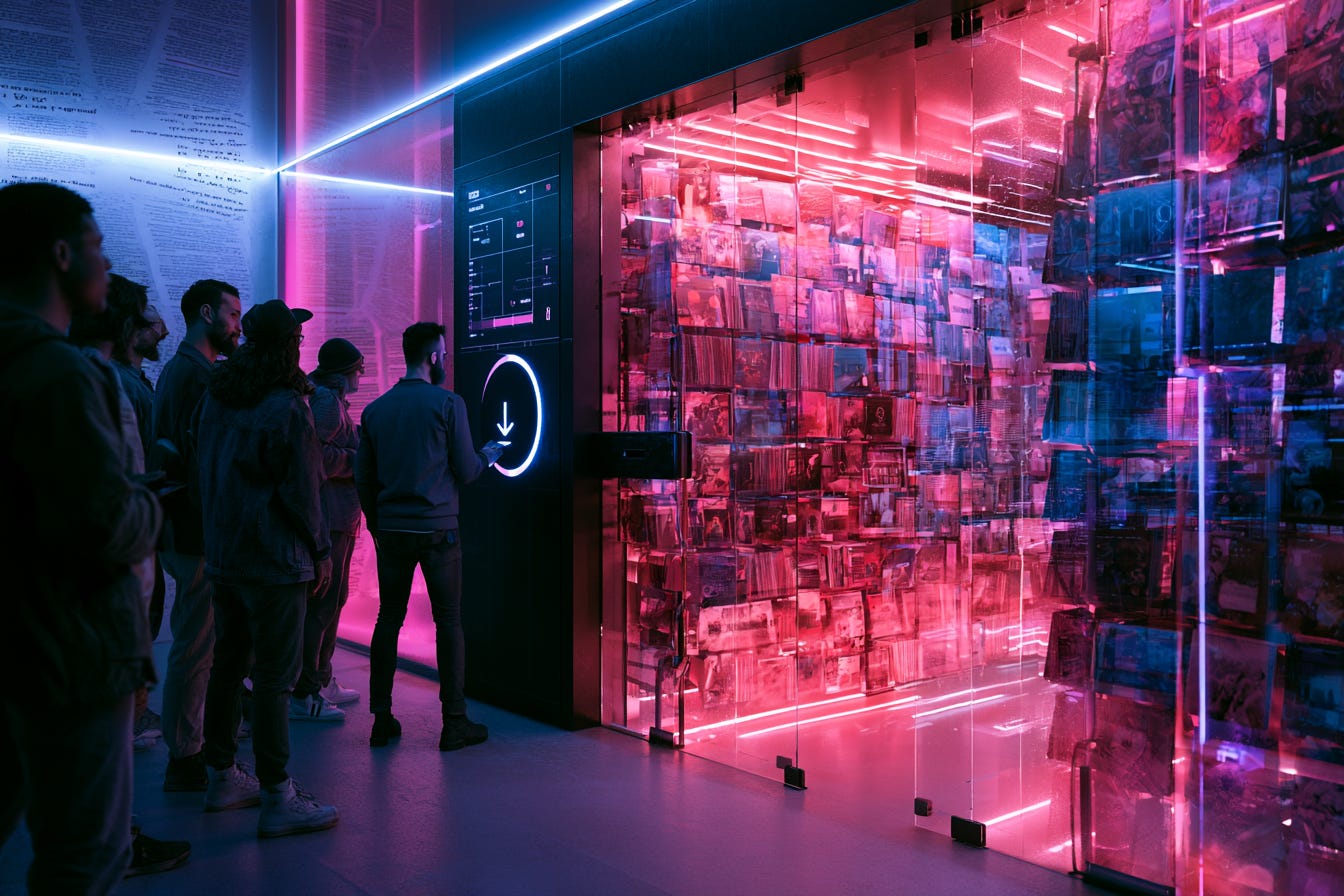
Suno announced its terms of service are about to change, and the download button is becoming the gatekeeper for commercial rights for paying users — just as Suno puts new limits on how often they can use it.
Starting Sept. 3, Free users get seven lifetime downloads — but they will stay limited to personal, non-commercial use. Pro subscribers get 20 downloads per month, and Premier subscribers get 60 per month. Premier users working inside Suno Studio remain unlimited, and additional downloads will be available for purchase.
Once a paying user downloads a qualifying track through Suno’s approved channels (no stream-ripping), they get commercial rights — which survive cancellation, downgrade, suspension, pricing changes, and future changes to download limits. This is clearer language than we saw in previous versions of the terms.
The download button is officially part of the rights chain — and now it’s metered.
The updated terms also clearly state you own your Submissions: the prompts, lyrics, audio, images, vocal takes, whatever you feed in. Suno still gets a broad license to use them, but the ownership language is more explicit.
Worth noting what didn’t change since the previous terms: Suno still doesn’t promise your Output is copyrightable or unique, and its liability cap remains extremely low.
Other changes: Suno is switching arbitration providers and creating a new batch-and-mediation process that slows down mass complaints. It dropped its promise to cover arbitration fees for users who couldn’t afford them and removed the 15-day advance notice before price increases. Finally, intellectual property disputes are now carved out of arbitration and go straight to court.
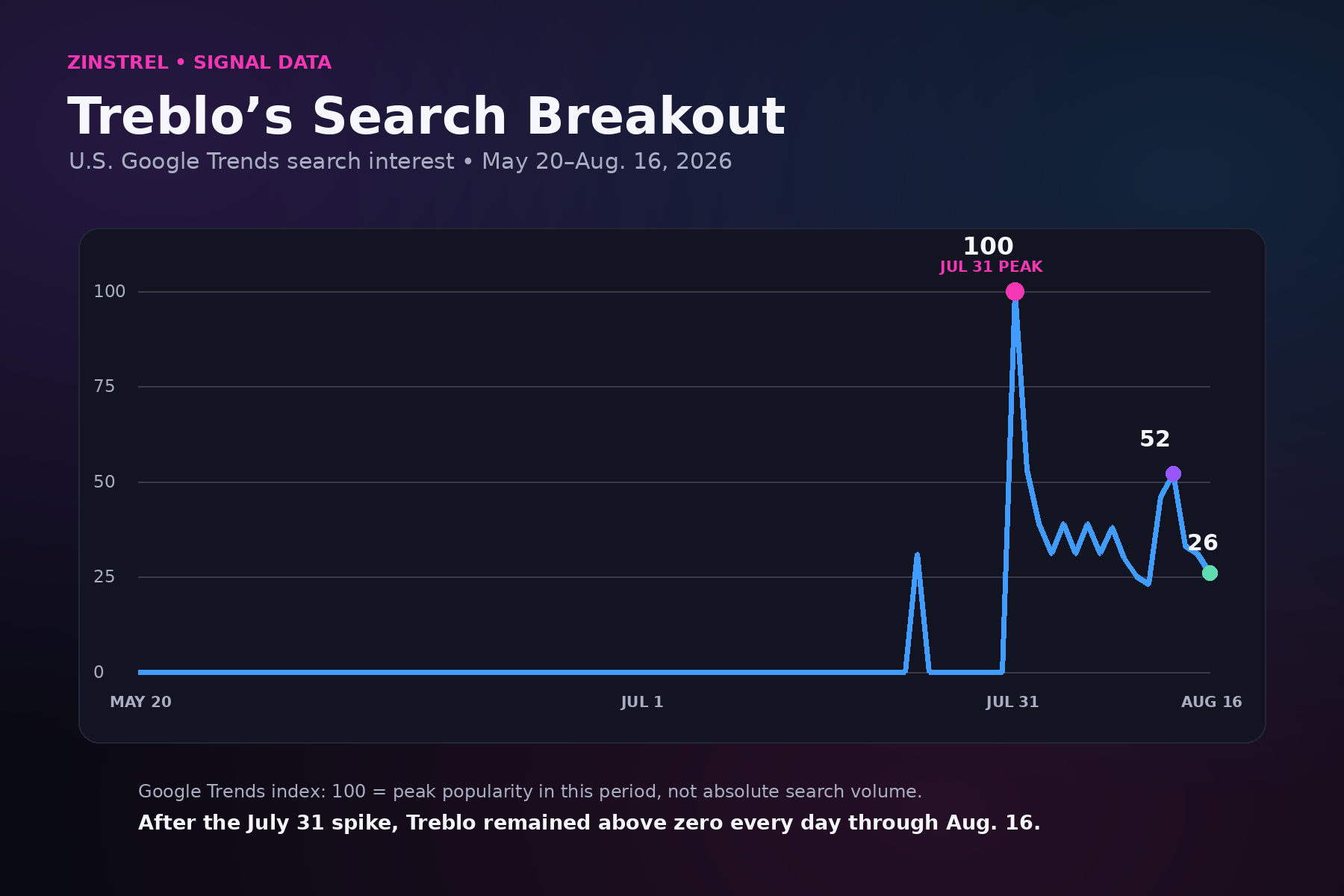
Search interest in Treblo — the free AI music app formerly known as Sonauto — surged around its July 31 rebrand and mobile launch, and has remained elevated through mid-August instead of immediately falling back.
The pitch is aggressive: unlimited free generation on version 3 of its Melodia music model, no credit card, output rights assigned to users even on the free tier, and first audio in roughly 15 seconds. Its Android app has also logged about 69,000 downloads in six weeks.
Treblo still has some unanswered questions around training data and artist imitation, but the momentum is becoming harder to dismiss — especially after Fenix Flexin’s “RUBBERZ” put the platform in front of a much wider audience.
Mozart AI is getting a fairly serious real-world test: producer Arthur Penna (DUX) used the platform while reworking his official remix of Elton John’s “Your Song.”
In the first episode of Mozart’s new In The Studio series, Penna rebuilds the track as a house production, playing his own chords and groove before using Mozart to generate bass, guitar, and loop variations around them. Mozart is positioning the series specifically around professional workflows rather than one-click generation. Instead of asking AI to make the song, the producer is using it as another instrument inside an already human-led session.
The bigger name attached to the source material doesn’t hurt, either.
ElevenMusic rolled out several new features this week that push the platform deeper into actual music creation. Its new Composer editor lets users modify songs section by section — rewriting lyrics, changing tempo or key, rearranging structure, and regenerating individual verses or choruses without touching the rest of the track.
It also launched Sounds, a free library of AI-generated loops and production elements that grows as users generate new sounds, plus Achievements, a rewards system that gives creators additional daily generations for publishing, maintaining streaks, and participating in the community. We’re seeing it play out rapidly: ElevenMusic increasingly wants to own more of the workflow around AI music, not just the initial generation.

Starchild Music has launched an unconventional marketplace built around human-written songs that can be auditioned in multiple AI-produced styles before being licensed.
Users can browse songs by genre, mood, tempo, vocal type, and lyrical theme — or describe what they want and have AI search the catalog. Individual compositions can then be heard as everything from acoustic indie to industrial metal, piano ballads, salsa, or punk before a user chooses a production to license.
The catalog currently shows more than 6,400 songs, including work from professional writers such as Michael Jay, whose credits include Celine Dion and Martika. Participating songwriters and catalog partners opt their work into the system and share in revenue.
It’s essentially flipping the normal AI-music equation around: start with a licensed human composition, then let AI compete for the production.
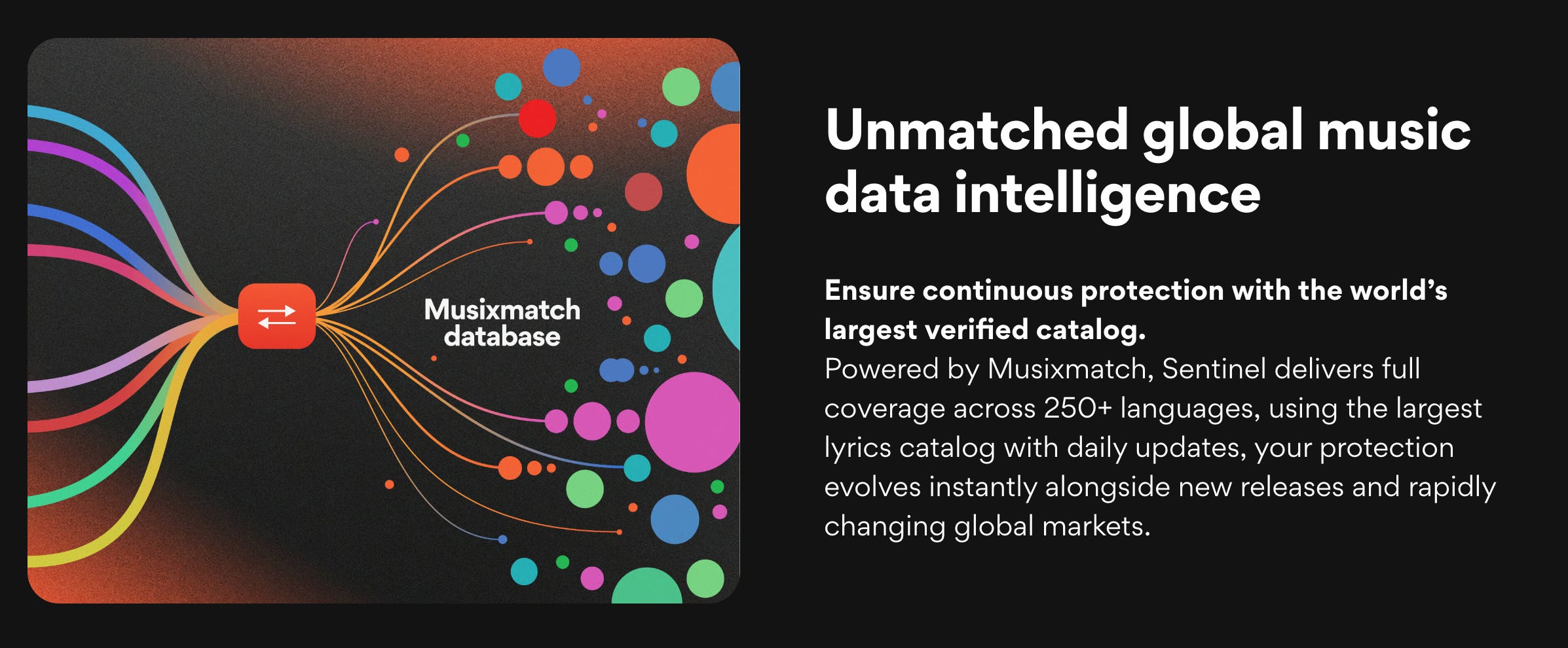
Suno has become the first customer for Musixmatch Sentinel, a new copyright-detection system designed specifically for AI and user-generated content platforms.
Sentinel can inspect both prompts and generated outputs for copyrighted lyrics, with matches connected back to rightsholders. According to MBW, Musixmatch says the technology will give Suno greater visibility into copyrighted material entered by users and help inform its moderation and compliance systems.
It’s one piece of a much larger rights-infrastructure push at Suno, which has also committed to adopting audio fingerprinting and watermarking.
After years in which the argument around AI music centered on what went into the models, platforms are increasingly building technology to police what comes out of them — and even what users ask them to make.

Delphos says the second generation of its Copilot can now read music sessions and operate software on a creator’s behalf, taking on larger production tasks rather than simply helping with composition.
The company is currently rolling the system out to enterprise music-library customers, with a broader beta planned afterward. That puts Delphos in the second generation of AI music tools with OwlDuet and Tamber, where instead of replacing the producer’s workflow with a generator, it becomes the agent sitting above the tools producers already use.
Synthwave vibes, dreamy vocals, and poetic lyrics caught our attention with this single from Obsoletha.
“The music industry is being rebuilt by AI right now, and almost nobody in the developer world is paying attention.”
— Aryan Katragadda, organizer of Philadelphia’s first Gen Audio × Tech meetup, held in partnership with Audiotool

MORE ZINSTREL: Written by Marcus Lawrence, courtesy of composition platform Versey.ai
Zinstrel.com | @zinstrel_ai on IG | AI Underground on Discord
Copyright 2026 Zinstrel, LLC - All rights reserved
Special thanks to our paid subscribers: C.Y. Lee, Daryl Dekking, Lynn Clapp, Steve Clapp, Mete Dibi, Daniel Lares, Dexter Garcia, Matthew Marturano, Sammy Stoltz, Tim Burley, Drew Thurlow, Sheila Spence, Lenny Skolnik, Màuhan Zonoozy, Matti Kuha, and Jacci Cenci-McGrody.
No posts
Comments
Nothing yet. Say the first thing.
Sign in to join the conversation.