
The dvar this week is in honor of the wedding of Yoela and Alex.
This entry is this substack’s original intent: Raf’s Dvar/Riff Torah.
Select Parsha Highlights (From 2025’s Re’eh)
This is a “packaging” parsha: Here is what you are going to do, procedurally:
Cross the Jordan
Live in that Land
Do all the things G-d tells you/told you
Don’t do what other tribes do
In your places, there should be no idols
Offer sacrifices of only the right kind in the right place
And much more...
Thank you Rivy for offering the Zimberoff crew this dvar opportunity. Thank you Louis for ignoring the clock.
This dvar was created with the help of Rabbi Kletenik, the writings of Rabbi Sacks and a recent book by David Brooks.
Some of you read Is Raf OK--my blog from Tel Aviv. Thank you for your emails and texts. Questions. Complaints. Howls of frustration. This week, “Is Raf OK” is live at OC.
Why? This weekend we celebrate Yoela’s wedding. So much celebrating that Yoela and partner Alex made it clear they need this afternoon off and would not be here at Ohr Chadash today. We are sorry you cannot congratulate the couple in person. Be assured: The Zimberoff crowd here today has been celebrating with Yoela for the past few days and will continue into the coming week.
My mother would call it a Polish Wedding.
This is the first marriage for our family. We have been thinking a lot about marriage and celebration: How it’s done. What people expect. How to show respect. What is celebration? Joy? Happiness?
Yoela’s Bnei Mitzvah parsha, Matot Masei, was a few weeks ago. In my dvar that week I talked about the tension between the absolutes expressed by many Torah psukim and the lived Jewish Tradition that is heterodox and humanist.
An axis of this week’s Parshat Re’eh is happiness:
י’‘ב-ז: וַאֲכַלְתֶּם־שָׁ֗ם לִפְנֵי֙ יְהֹוָ֣ה אֱלֹֽהֵיכֶ֔ם וּשְׂמַחְתֶּ֗ם בְּכֹל֙ מִשְׁלַ֣ח יֶדְכֶ֔ם אַתֶּ֖ם וּבָתֵּיכֶ֑ם אֲשֶׁ֥ר בֵּֽרַכְךָ֖ יְהֹוָ֥ה אֱלֹהֶֽיךָ
Together with your households, you shall feast there before the ETERNAL your God, happy in all the undertakings in which the ETERNAL your God has blessed you. [JPS 2023]
Happy.
A paragraph from a Rabbi Sacks’ dvar on our Parsha:
Joy is not the first word that naturally comes to mind when we think of the severity of Judaism as a moral code or the tear-stained pages of Jewish history. As Jews we have degrees in misery, postgraduate qualifications in guilt, and gold-medal performances in wailing and lamentation. Someone once summed up the Jewish festivals in three sentences: “They tried to kill us. We survived. Let’s eat.” Yet in truth what shines through so many of the psalms is pure, radiant joy. And joy is one of the keywords of the book of Devarim. The root ש-מ-ח -- ‘s-m-ch’ (the root of the word simcha, joy) appears once each in Genesis, Exodus, Leviticus, and Numbers, but twelve times in Deuteronomy, seven of them in our parsha.
Our experience of life flows from our posture toward life. Our orientation. I have a friend in Tel Aviv who is living her dream life: In the city she loves, watching the sun set over the sea almost every day. And writing for Israeli newspapers about contemporary artists, which is her passion.
But you would never know that listening to her. She is a consistent downer. I can handle an hour. Twice a year.
Her mother was born in Poland late in World War Two and is one of the last surviving Shoah victims in Warsaw. Yes, in Warsaw to this day.
The writer and philosopher Anaïs Nin observed: “We do not see things as they are. We see them as we are.”
An Israeli friend of mine ran a “good news only” feed on Facebook. Only Israeli topics and only happy ones. Science breakthroughs. Human interest and success stories. Economic development. Peace. Coexistence. Everything else -- noise. He did this in addition to being a hypnotherapist which he practiced though he was blind. Cliff died a few years ago in Karmiel, Israel. When I think of him, I think about all he did in spite of his blindness. I think about his lifelong bias to the positive.
Cliff’s perspective, relevant to marriage as well, can be thought of as seeing with a good eye, a favorable eye. As we read in
מסכת אבות · פרק ב · משנה ט
אָמַר לָהֶם, צְאוּ וּרְאוּ אֵיזוֹהִי דֶרֶךְ יְשָׁרָה שֶׁיִּדְבַּק בָּהּ הָאָדָם. רַבִּי אֱלִיעֶזֶר אוֹמֵר, עַיִן טוֹבָה.
He [Rabban Yohanan] said unto them: go forth and observe: What is the habit we should stick with? Rabbi Eliezer said, a good eye;
What is a “good eye?” It is not to “assume positive intent.” Professor Avigdor Shinan pulls from Mishlei to help us understand:
רַבִּי אֱלִיעֶזֶר אוֹמֵר: עַיִן טוֹבָה :: נדיבות המתבטאת בנכונות לחלוק את הרכוש והידע עם אחרים. כך, למשל, נאמר על משה רבנו (מדרש תנחומא, כי תשא לה) שה’ נתן את התורה רק לו, אך “מתוך עין טובה שהיה בו במשה נתנה לישראל”. וראו עוד: “טוב עין הוא יבורך כי נתן מלחמו לדל” (משלי כב, ט).
Rabbi Eliezer says: A good eye: Generosity as expressed in the willingness to share property and knowledge with others. For example, it is said of Moses (Midrash Tanchuma) that God gave the Torah only to him, but “by Moshe’s good eye the Torah will be given to all of Israel.” And also from Proverbs: “One with a good eye will be blessed because of giving wealth to the poor”
Shlomo Goldberg has long observed that a middle class life in Seattle is beyond what kings of yore had: Better, safer food. Modern medicine. Warmth in winter. Our son Noah noted how the scientific breakthroughs of the Corona period demonstrate constructive human potential to innovate quickly--potential always at hand but rarely realized.
Contrast this with the anger and fear factories that are social and mainstream media.
“We do not see things as they are. We see them as we are.”
If media has the power to change us... why do we use it?
John Milton wrote: “The mind is its own place, and in itself can make a heaven of hell and a hell of heaven.”
Blind Cliff did one of those.
The pessimistic Pole I mentioned does the other.
Who do we want to be?
Let me quote again from Rabbi Sacks:
Happiness is something you can feel alone, but joy, in Tanach, is something you share with others. For the first year of marriage, rules Deuteronomy (24:5) a husband must “stay at home and bring joy to the wife he has married.” Bringing first-fruits to the Temple, “You and the Levite and the stranger living among you shall rejoice in all the good things the Lord your God has given to you and your household” (Deut. 26:11). In one of the most extraordinary lines in the Torah, Moses says that curses will befall the nation not because they served idols or abandoned God but “because you did not serve the Lord your God with joy and gladness out of the abundance of all things” (Deut. 28:47). A failure to rejoice is the first sign of decadence and decay.
There are other differences. Happiness is about a lifetime but joy lives in the moment. Happiness tends to be a cool emotion, but joy makes you want to dance and sing. It’s hard to feel happy in the midst of uncertainty. But you can still feel joy.
Joy is what we feel at a wedding--whatever our relation to the couple. Happiness is what parents and family experience when a good match is made.
Outside the wedding, do we have happiness from our larger identity? Being Jewish in 2026? Being alive in 2026?
Have you heard of the World Happiness Index? Gallup and a team at Oxford have been surveying the world for decades asking: How do you evaluate your life? Not “are you cheerful” but “How are you doing overall?”
A lot like the Joy-and-Happiness framing of Rabbi Sacks.
The Happiness Report web site is loaded with gems: Survey data; academic essays: A hundred pages to say what Anaïs Nin says fourteen words, but the Happiness index is backed by surveys and measurements. An example:
[A majority of college students] wish that social media platforms did not exist. They use them because others are using them, but they would prefer it if no one did.
We see things as we are.
And we notice when phone apps affect us.
As you might imagine, a number of family members and acquaintances think living in Israel must be miserable. Just a few days ago I was at a table with two couples--one of which goes to Israel once or twice a year, even during the war, is actually there right now... and the other has not been for many years and can not imagine going now.
My usual response: Israel is a great place to visit though not an easy place to live. It is, however, a fantastically interesting place to live. It is also in the top five in the World Happiness Index, where the U.S. is number twenty three and France is twenty seven:
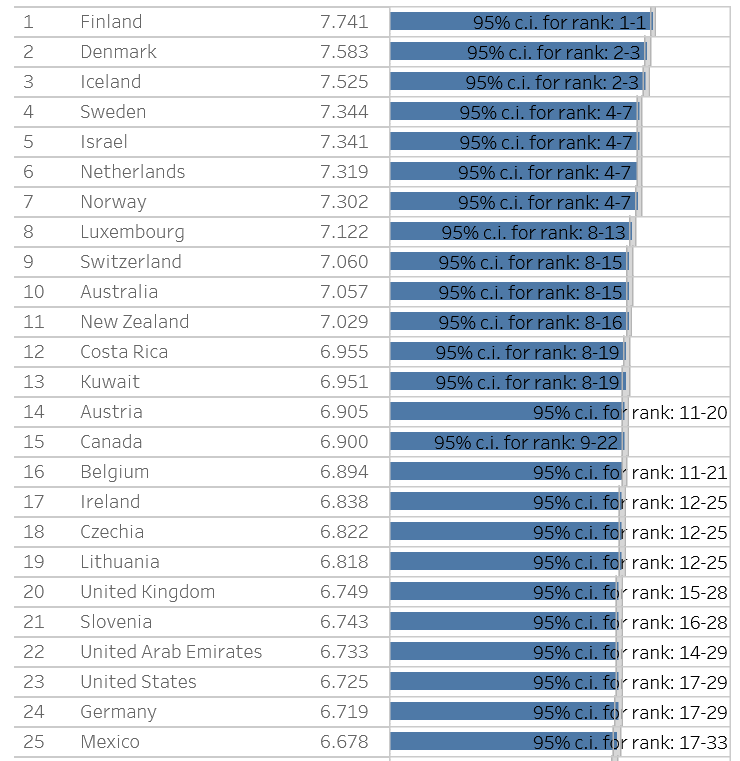
We see things as we are.
What does Yiddishkeit “see?” Shlomo Goldberg, in his dvar on Parshat Eikev said, “There is no Yiddish word for fun.” But there are words for joy and happiness: “Joy” is the “event theme” of Rosh Hashana, Pesach, Simchat Torah, Shavuot and Sukkot. What about Yom Kippur?
Mishna in Taanit 4:8:
אָמַר רַבָּן שִׁמְעוֹן בֶּן גַּמְלִיאֵל: לֹא הָיוּ יָמִים טוֹבִים לְיִשְׂרָאֵל כַּחֲמִשָּׁה עָשָׂר בְּאָב וּכְיוֹם הַכִּפּוּרִים
Rabbi Shimon ben Gamliel said: There were no days so good among Israel as the fifteenth of Av [Tu B’Av] and Yom Kippur
The Gemara expands on this in תלמוד בבלי מסכת תענית דף ל עמוד ב
בשלמא יום הכפורים - משום דאית ביה סליחה ומחילה, יום שניתנו בו לוחות האחרונות.
Joy on Yom Kippur? “From where springeth this joy?” Because in Yom Kippur is forgiveness and absolution--It is the day the second set of Tablets were given.
On a serious day, given to a serious process, Jewish Tradition keeps a hidden treasure of joy.
Yom Kippur is about seeing things differently, right? To see things from a different place?
Two weeks ago, on the Ninth of Av, someone was surprised to find that I enjoy fasting. Fasting changes my state. Fasting creates, for a few hours, a different Raf. It’s an opportunity to be a different me.
On our landscape of joy and happiness are weddings. While a wedding is the opposite of fasting, watching a marriage changes us, the observers. Weddings remind us who we can be. Who we might be or be-able-to-be. They are a spotlight on a kind of collective self knowledge reminding us all that relationships, fed and watered, are ongoing opportunities. Opportunities to create pieces of happiness--the slow version of Joy.
In the Zimber-verse it is a time of joy. Anya and I thank you for the many blessings this community has given our family, and thank you for joining us in blessing the new couple.
All of us have an opportunity to be a “we” that can see joy and feel happiness.
Shabbat Shalom
(Thanks to A.K.)
Comments
Nothing yet. Say the first thing.
Sign in to join the conversation.