
Prior Post | Next Post
Read This Entry, #271, in Web Browser
Top Ten IsRafOK Entries (revised April, 2026!): All Time Most Viral: #234; Second Most Viral: #237; #85; #136; #128; #140; #144; #180; #161; #238
Tags: 10 Min Read; Analysis--Economics & Other; Relief
Updates: Post email release, enhancements were made to the Pew 2026 Poll section and Relief Gimmel
Hamas, Hezbollah and the IRGC function in ways that Western Media cannot track. A simple example: In Lebanon, Hezbollah killed in action are typically buried days, weeks or months later. For burial, their coffins are wrapped in yellow Hezbollah banners--confirmation that they were Hezbollah and were legitimate military targets.
But when they are first struck, the announcement says something like, “A school principal and ambulance driver were killed in an Israeli strike.” Two weeks (or two months) later, when they are buried along with ten or forty other Hezbollah members, you can see (if you are paying attention, which Western media is incapable of) that they whatever else they might have been, they were also part of Hezbollah’s military.
Below: An example: July 18 in Southern Lebanon: The funeral of 45 Hezbollah operatives in the village of Majdal Selm.
In recent months, each week sees five to fifteen Gazans killed in targeted strikes. The burials show why (coffins are often not used in Muslim burials):
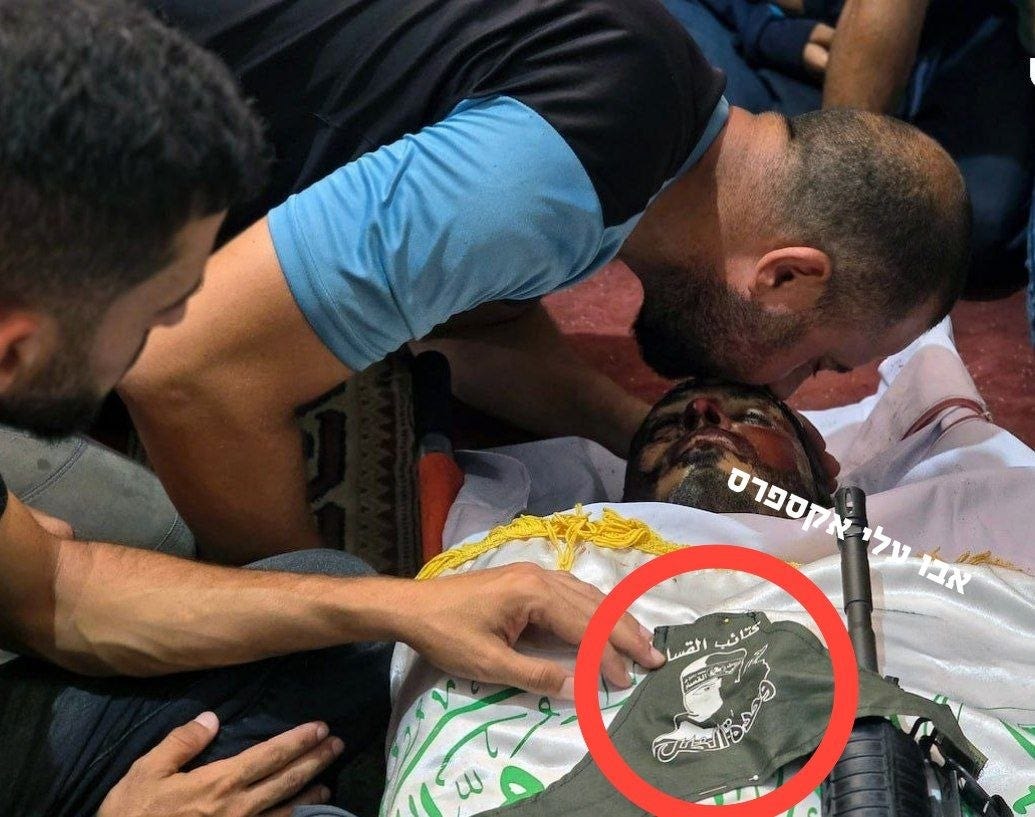
Above: The Hamas terrorist Anas Hamdan, who was eliminated July 16 in Khan Yunis, was a member of Hamas’ Shadow Unit-—the unit responsible for holding Israeli hostages in the Strip.
These organizations don’t need to maintain fictions because the media consumes their announcements as is, without qualification. An announcement says a city administrator was killed, and that is what Western media reports. They can bury their dead in full colors because they know Western media is not watching (and even if it were, westerners themselves aren’t “doing the math”).
The truth will out...
If you have an attention span. (And are willing to avoid snap judgements and ideological posturing…)
The “Gulf States” section (below) alludes to something we have discussed: The post Cold War world seeks a new equilibrium. The USA/Europe vs. Russia-Iran battle in Ukraine evolved into a set of conflicts when Iran’s proxies ignited the Middle East (October 7 et al).
The rising Sunni Axis (discussed in #269 and #239) is consistent with (though probably independent of) the “23 State Solution” (currently articulated by J Street, but, I think, a dreamed-of phase of Trump I’s Abraham Accords).
Whether Israel is ultimately part of a regional system or a pariah, the shift toward Sunni-vs-Shia axes appears inexorable. Iran’s attacks—now and two months ago—span Gulf states and make it clear to all that the IRGC’s regional militancy is hazardous. Imagine: If the US halted strikes tomorrow, what would insurance rates be for cargo in the Persian Gulf? For refineries? Infrastructure?
Is the region, or the world, ready to accept an “IRGC is hostile” tax, indefinitely?
You know the saw: The only way to get the worms back in the can is to use a bigger can. That’s a life lesson. A militant, offensive Iran is incompatible with free trade in the Persian Gulf. This is top of mind for the whole region and is independent of Israel.
In a rare interview with Israeli TV, former Saudi General Abdullah bin Ghanem Al-Qahtani discusses the issue, making clear that it is a militant Iranian regime that is the hazard.
The only question for Israel is to either get on the regional-alignment-bandwagon or to stew in its own juices. [And we should be clear eyed: Recent Israeli trends—and biblical narratives of earlier Jewish eras—indicate that stewing and decline are likely. Jewish attitudes and traditions evolved to survive decimation and dispersal. Self governance is not, to my knowledge, a recognized strength of Jewish “national character.”]
Items invisible/less-visible in the Western media. (Starts to the north of Israel and goes, clockwise, around the region, ending up in Gaza and then Israel. Not all countries appear in every entry.)
UNIFIL is expiring... To be replaced by “EUIFIL” as suggested by Germany’s Foreign Minister?
I follow the feed of an Israeli Druze who watches events in Lebanon and Syria. He has discussed that Waleed Jumblatt--a Lebanese Druze leader who was widely known in the 1980s & 90s--seems to be under the influence of Turkish and Syrian money. There are those who see Jumblatt as having become a self dealing leader who is now participating in the demise of the Syrian Druze.
Last week Wiam Wahhab (Lebanese politician and journalist from Jahlieh, Chouf District, and the founder of the Arab Unification Party, Druze) used the stage in the popular program of Marcel Al-Waqat “Sar al-Waqat” (It’s time) to slam Waleed Jumblatt in public. Mr. Wahhab recognizes the influence on Jumblatt: Big money and Turkish/Syrian support for Jumblatt’s agenda, which has one goal: Dissolution/destruction of the Druze community in Syria. (1 min, Arabic w/Hebrew [by Khalifa Khalifa] & English subs [by Raf])
The commander of the Syrian Navy (the one with the beard--former ISIS militant) welcomes the commander of the Turkish Navy, who arrived for a visit to Syria – this is the first docking of a Turkish warship at a Syrian seaport in 15 years.
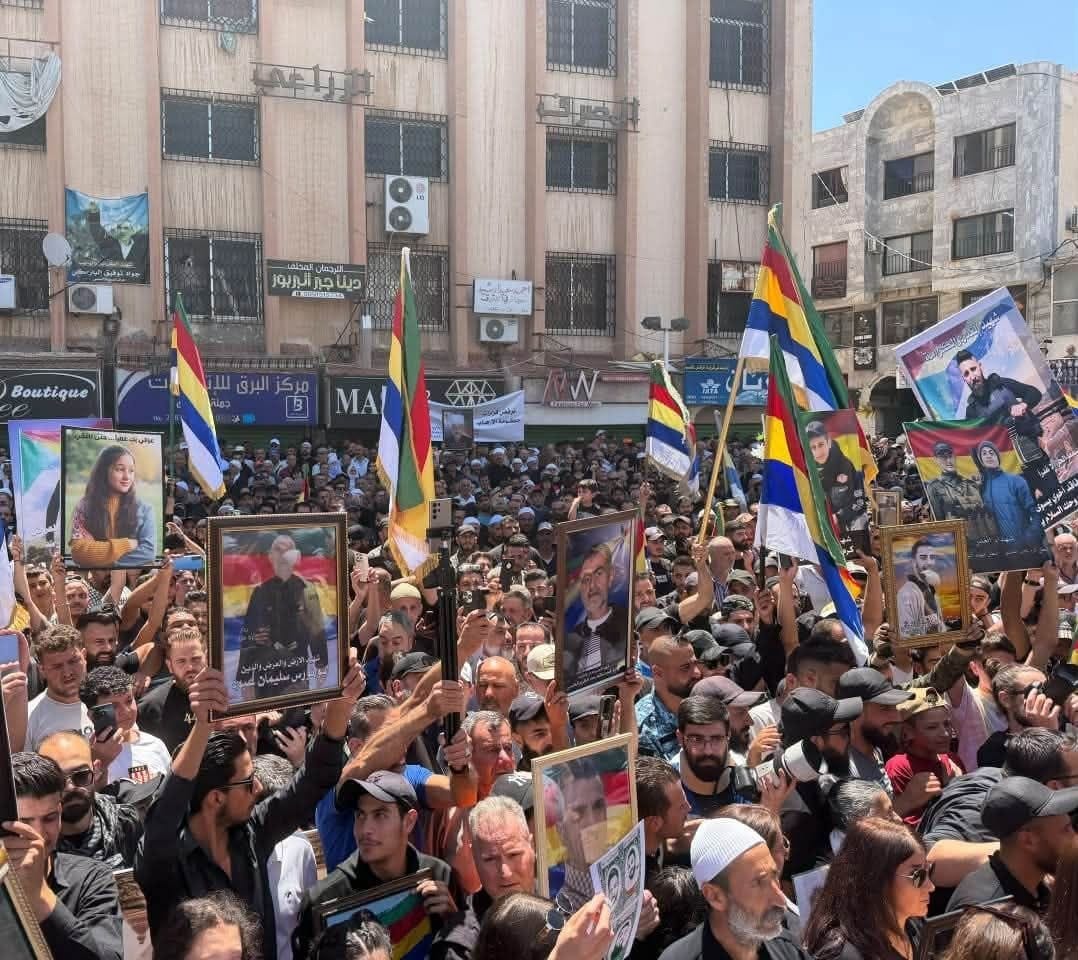
Below: The Druze marked July 15: The first anniversary of the massacre carried out against them in As-Suwayda. The massacre, by the Syrian regime of Abu Mohammad Al-Julani, killed more than 1,700 and there are still hostages and missing.
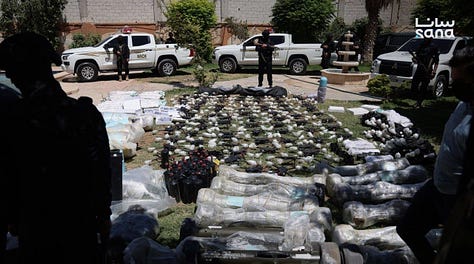
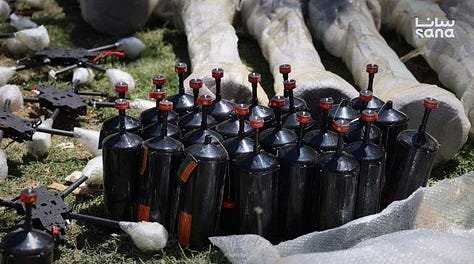
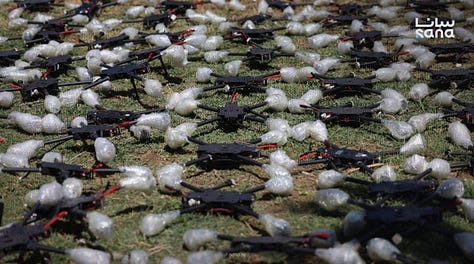
The Syrian Ministry of Defense claims to have foiled the smuggling of advanced weaponry from the Iraqi border, through Syria—a smuggling operation that was intended to reach Hezbollah via Lebanon’s eastern border.
According to the Israeli Alma Research Center:
The weapons were hidden in a truck/oil tanker that was allegedly on its way to the city of Banias in northwestern Syria. This route is routinely used to transfer fuel from Iraq through the Al-Tanf crossing to Banias, apparently for the purpose of refining or export by sea. Hezbollah exploited this same civilian route and the truck’s cover story to smuggle the weapons. The arms were apparently unloaded from the truck in one of the smuggling areas along the land border with Lebanon and then smuggled into Lebanese territory.
In the photos published by the Syrian authorities, one can identify, among other things: Drones (at least about 100 drones were counted); Optical fibers [used to control the drones]; RPG warheads prepared for mounting on drones—with an electric mechanism and dedicated screws—rather than as improvised solutions as seen in the past; And anti-tank missiles and apparently also cruise missiles of the Paveh type.
And... surprise!
Hezbollah published an official statement: It denies any connection to the smuggling of weapons through Syria. [They import their weapons from France! Not!]
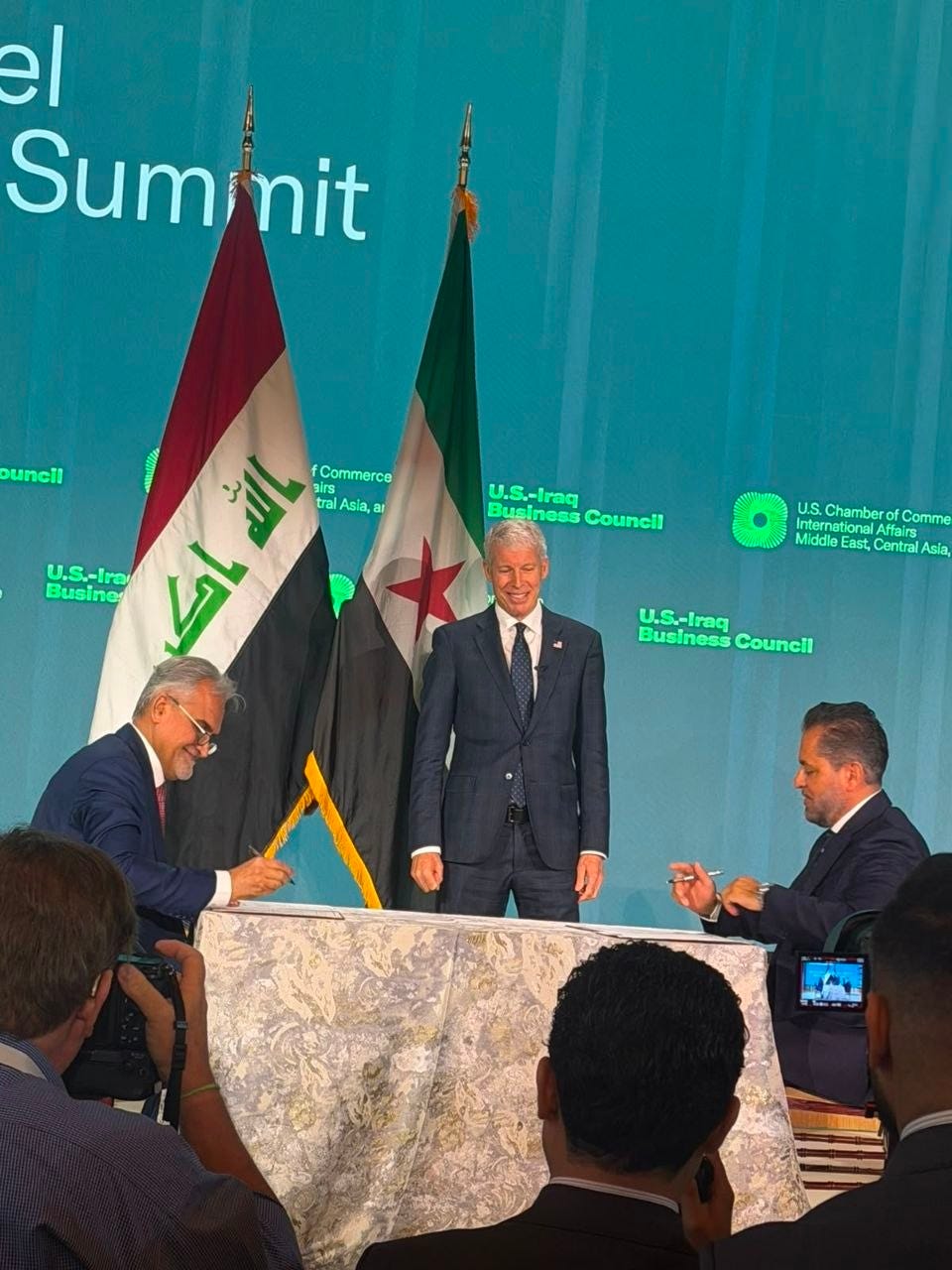
The US State Department: Iraq and Syria have signed an agreement to rehabilitate the oil pipeline connecting the two countries.
So far, Iran is not attacking the United Arab Emirates, Saudi Arabia, or Israel.
Below is reported to be a protest being broken up by Iranian police. Reportedly, there are many videos and testimonies of protesters. The main reason is around issues related to the economy, money and unemployment.
There are reports of Revolutionary Guard soldiers preparing machine guns and mounting machine guns on pickup trucks in preparation for the “next phase”--chaos on the streets of Iran.
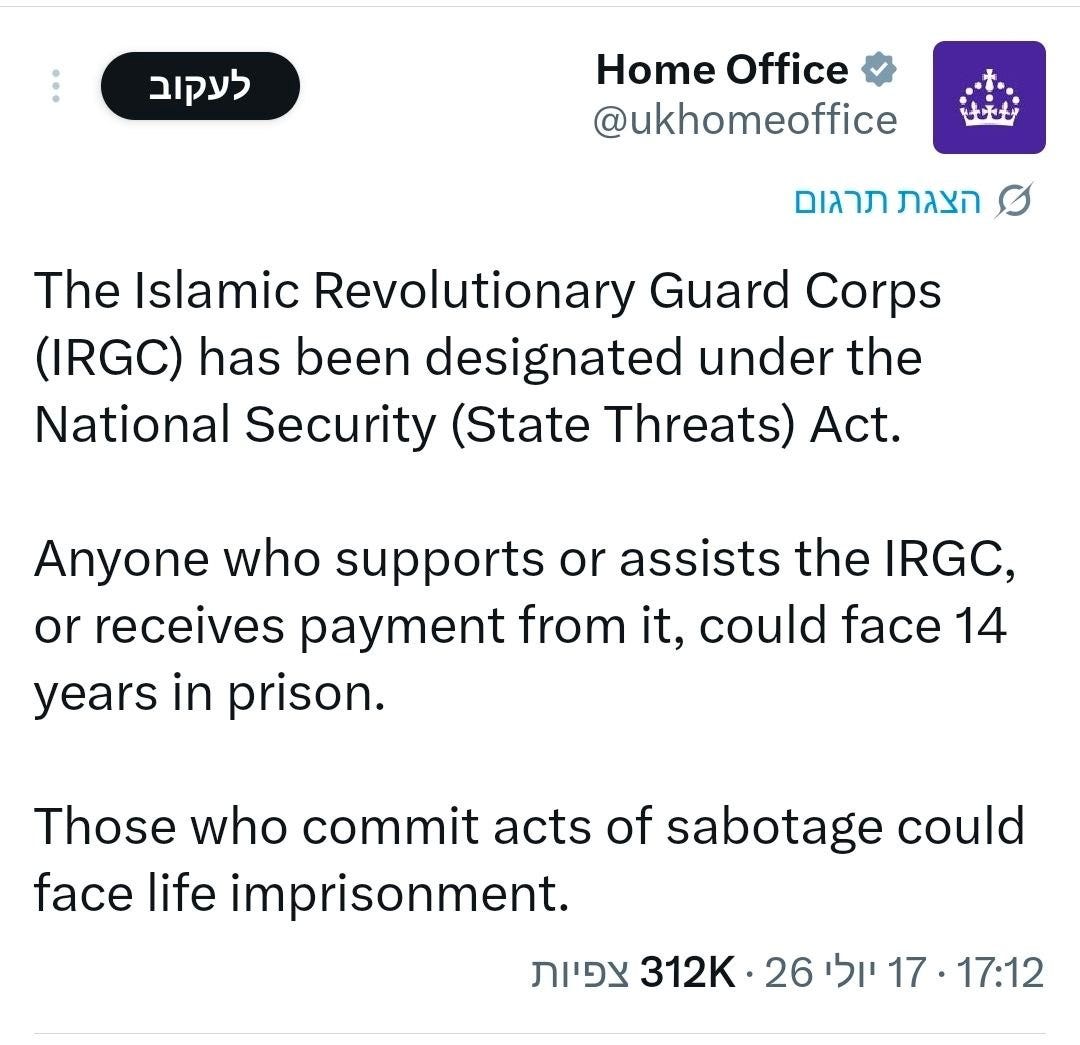
In the UK, a 14 year sentence for helping the IRGC!? In Israel, there must be a dozen or so folks convicted of helping the IRGC. Sentences have been much shorter...
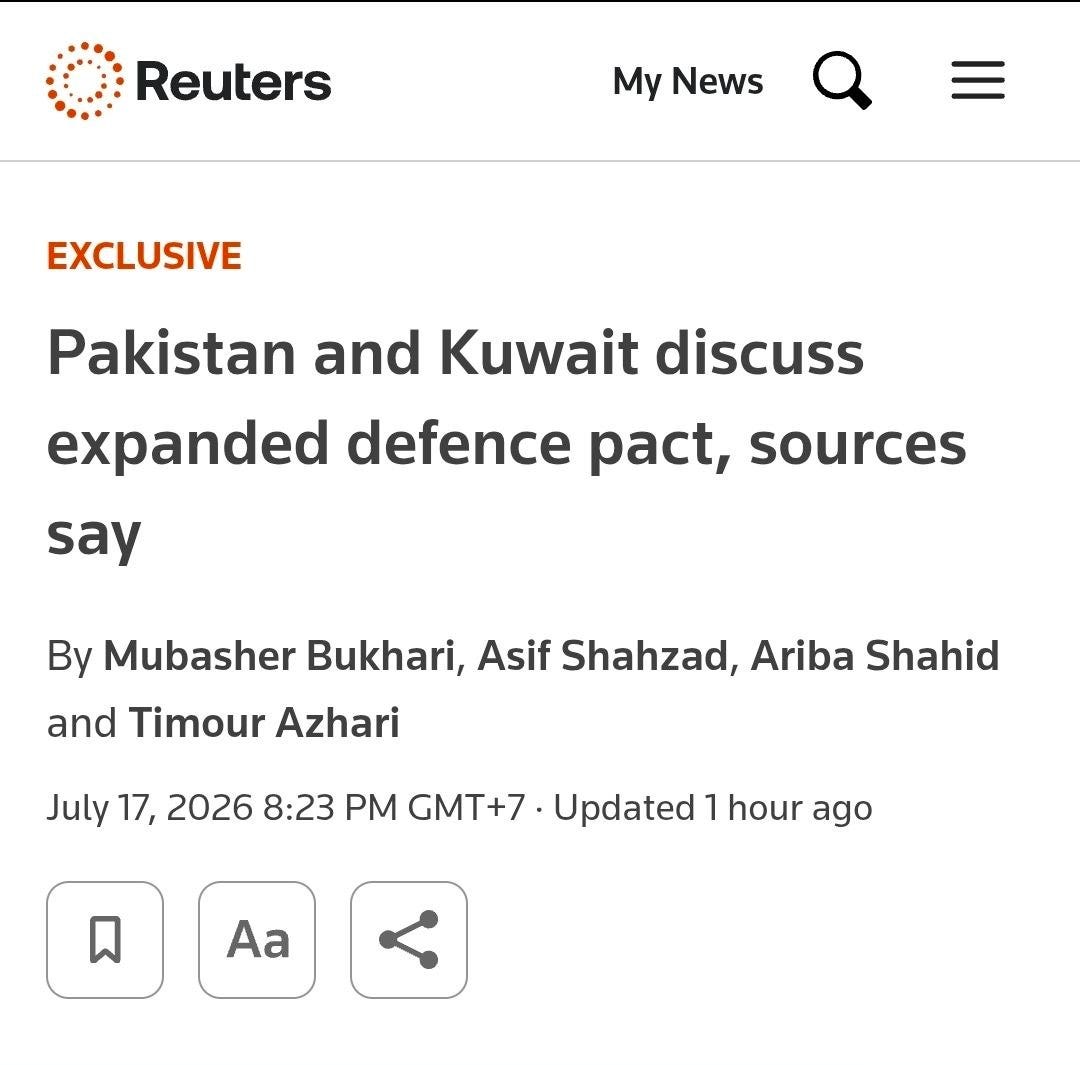
Reuters: After the Houthis’ attack on Saudi Arabia this week, Pakistan warned Iran that any attack against Saudi Arabia would be considered by Pakistan as an attack against itself.
It is reported that Kuwait (which is attacked by Iran almost daily) is in talks with Pakistan for a mutual military alliance, similar to the alliance between Pakistan and Saudi Arabia. The outline: military defense in exchange for cooperation in the energy sector.
10 year, inflation-adjusted oil prices:
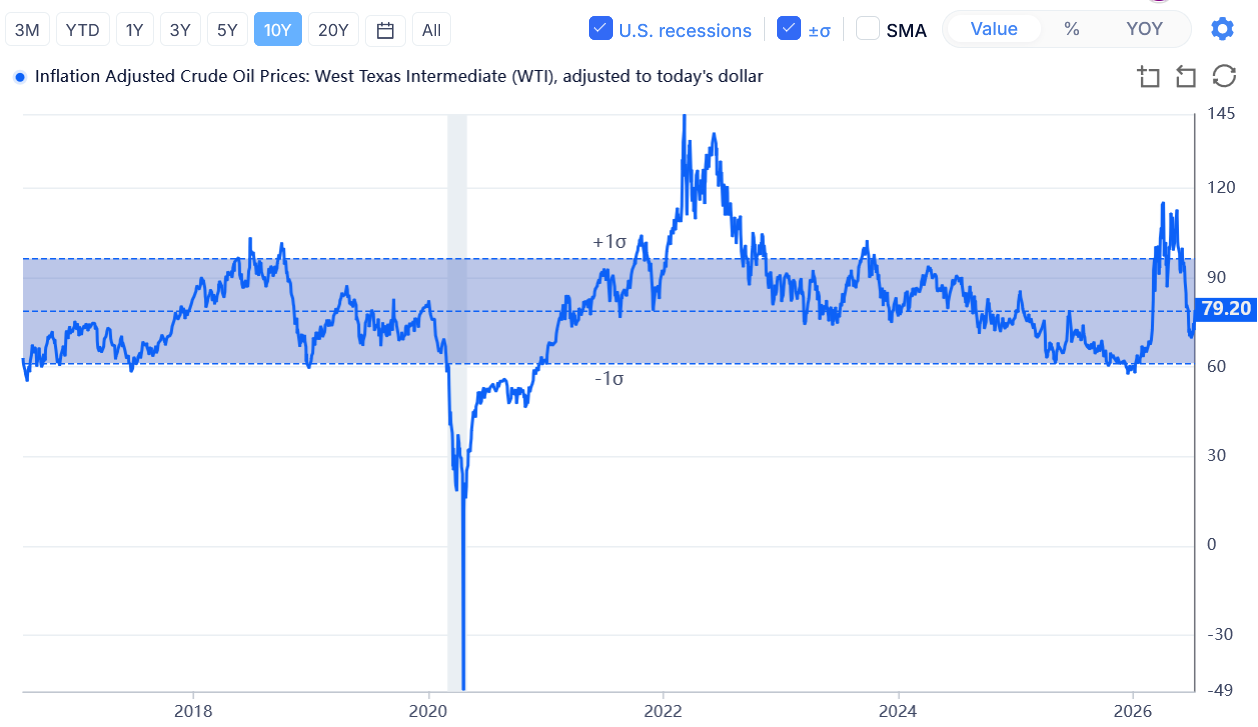
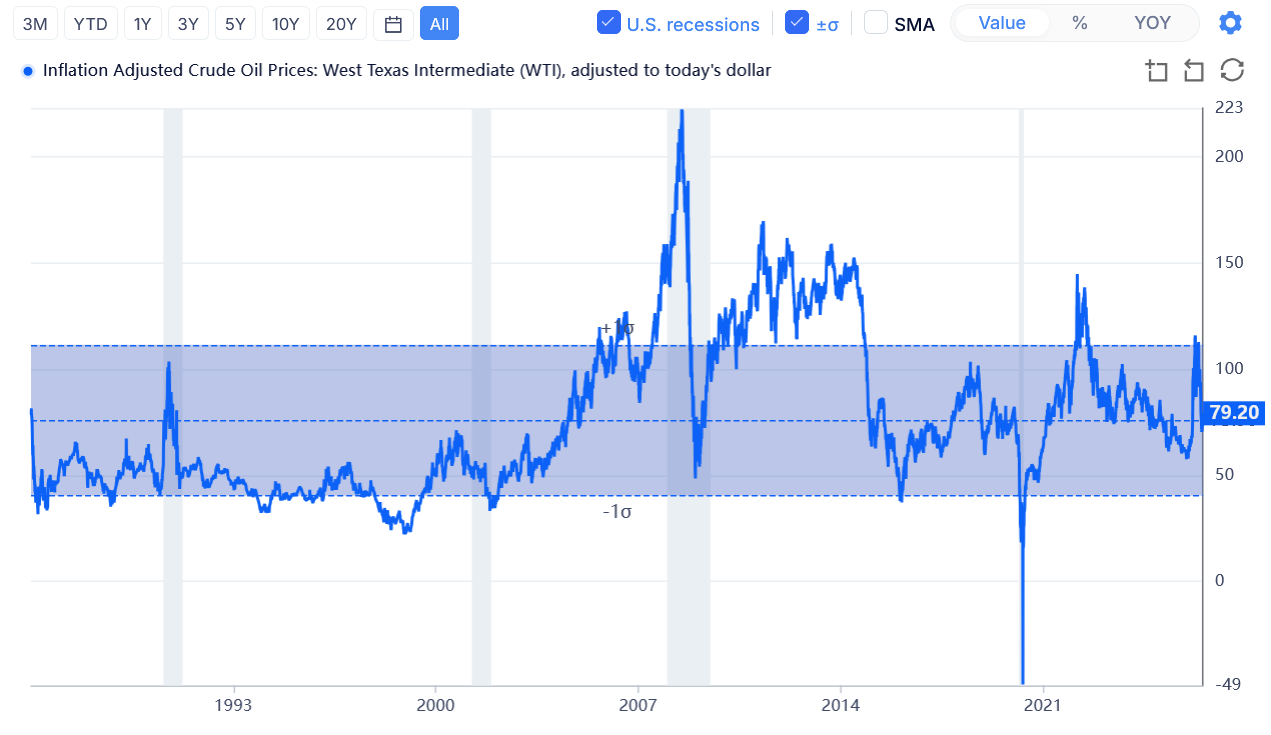
During the March-April time frame, the “news” had a heyday catastrophizing. If I were to list even half of the catastrophes they listed each day, we’d be surprised to find ourselves here, in July, obsessed with the World Cup and still drinking cold, imported beer! (A guy handed me a Corona at the watch party.)
It’s not that there aren’t changes, adjustments, even catastrophes. It’s just that they aren’t, in themselves, what the media is good at talking about. And much of it can be seen (still through a glass, darkly) in retrospect.
The Economist [as big a catastrophizer as any] just published: How India is weathering the energy shock (PDF here). Excerpts (emphasis by Raf):
... India looked particularly vulnerable. Not only did it rely on imports for most of its crude oil and more than half its gas, but most of the stuff came from the Middle East. At about a week’s worth of consumption, its petroleum reserves were more tactical than strategic. Its currency plummeted, worsening the dollar-denominated pain.
Yet by the time America and Iran stopped (if briefly) lobbing missiles last month, India looked to be in surprisingly good shape. Analysts surveying the country’s growth prospects in the aftermath found little to worry about. Fuel prices had risen, but modestly. Inflation was under control. The currency had stabilised. As other Asian countries saw energy prices surge, mandated working from home and, in the case of the Philippines, declared a national emergency, most Indian households barely noticed any disruption.
...
India also started the crisis in a stronger position than its dependence on Middle Eastern energy would suggest. To reduce that dependence, it had spent the past decade expanding its roster of energy-supplying countries from 27 to 41. Its long-standing foreign policy of maintaining bilateral relationships across ideological blocs also came in handy. It enthusiastically bought oil from America and its vassal, Venezuela, while also pouncing on supplies from Russia and Iran. [When sanctions on such purchases were suspended. -Raf] It had built sophisticated refineries capable of processing a wide variety of grades. And it had cut down on its need for oil by electrifying almost the entire 70,000km-long rail network. It hit its target of blending 20% ethanol in petrol in 2025, five years ahead of schedule. [Ethanol can be domestically produced or easily imported from non-OPEC countries, further reducing dependence on the Hormuz-routed supplies. -Raf]
Evidence suggests that nearly every country has a similar story: 1) Reduced dependence on petroleum inputs (thanks to climate-change related policies, bias-toward-greening/electrification and prior energy shocks); and, 2) Global oil supplies are more diversified than implied by the Hormuz tag line “a fifth of the world’s oil and gas supplies.”
Hormuz’s “tag line” makes great panic news (the kind that makes the most money for media companies). But it masks a world that is always evolving and has many moving parts.
The invisible hand works night and day. Who feeds Paris? No one. Everyone. It’s actually that hand. Where does energy come from? The same “place.”
[Credits: Wheelan’s Naked Economics. The conceptual framing of “who feeds Paris” is derived, Raf believes, from the work of French economic journalist Frédéric Bastiat, 1801-1850.]
The Houthis in a message to the airlines: The Saudi airspace is closed!
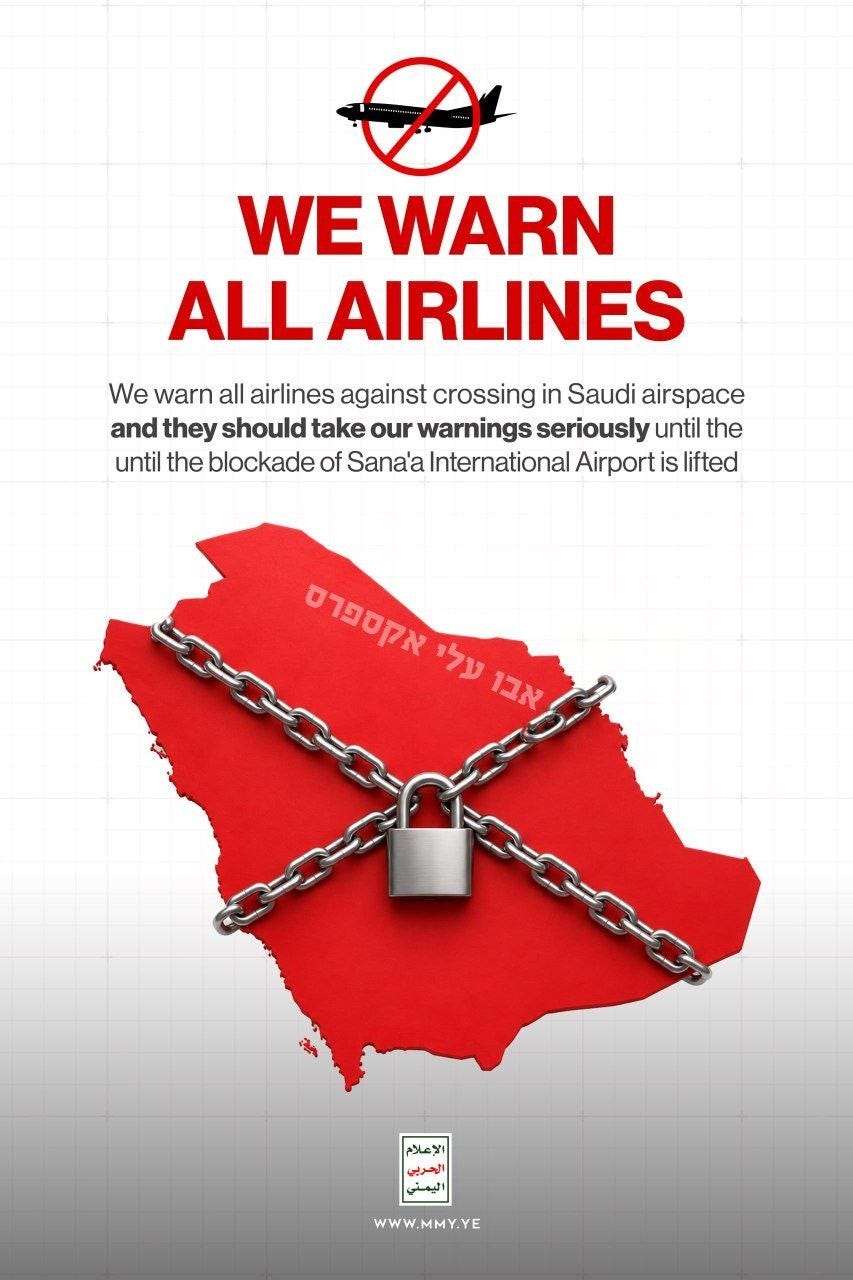
That wasn’t enough, so on July 20 the Houthis announced a maritime embargo on Saudi Arabia.
What the Gaza war has done to the mind…
44% of American Muslims expressed favorable views of Hamas
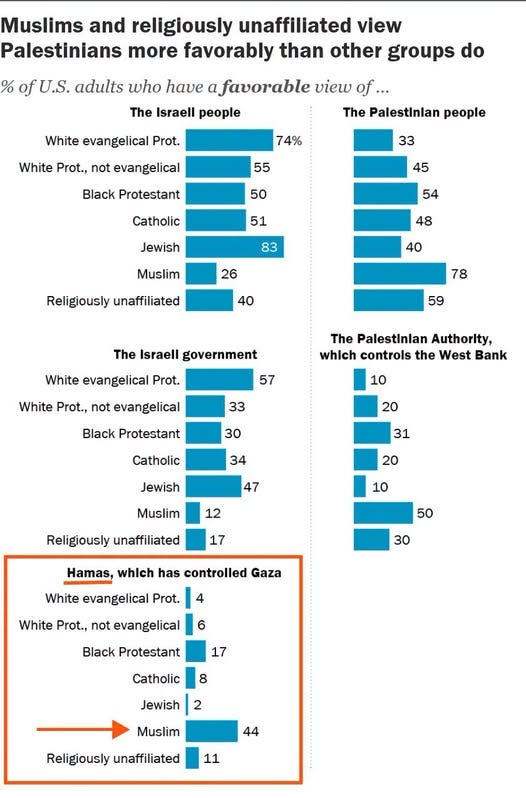
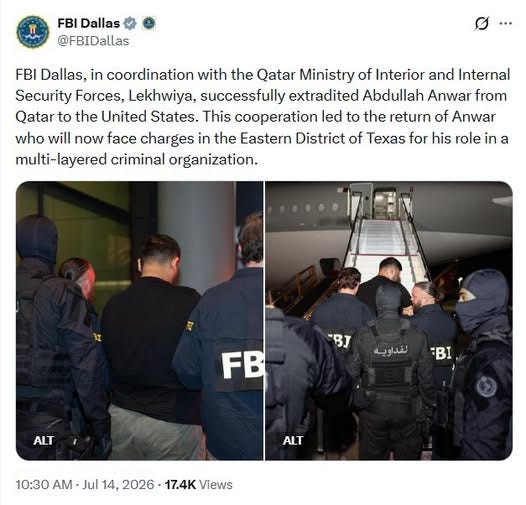
Ahmed Fouad Alkhatib wrote on July 16 (emphasis Raf’s):
The FBI just executed a joint operation with Qatari special police to capture a U.S.-wanted fugitive; a striking precedent that raises an unavoidable question for both the Biden and Trump administrations. If Washington can leverage Doha’s security services to arrest criminals on U.S. warrants, why hasn’t that same cooperation been used to extradite Hamas’s leadership living openly in the gas‑rich Sheikhdom? These individuals are complicit in the October 7 attack, an assault in which American citizens were murdered and taken hostage by a U.S.-designated terrorist organization.
Why, then, are Hamas’s leaders still moving freely a short drive from al-Udeid, the largest U.S. military base in the Middle East, home to American intelligence and law-enforcement assets? Two successive administrations, Democrat and Republican, appear to have made a deliberate choice not to pursue one of the deadliest terrorist organizations to have killed Americans and ignited the most serious conflict in the modern Middle East. That choice now sits squarely before incoming Attorney General Todd Blanche, FBI Director Kash Patel, and President Trump himself: either use the leverage and cooperation already proven effective with Qatar to hold Hamas accountable, or accept the charge of having allowed a terrorist leadership, fully within reach of U.S. power, to remain untouched.
It’s “complicated,” right?
First the US halted the pullout of refuelers from Ben Gurion Airport and now more American refueling planes are coming ... what will the impact be?
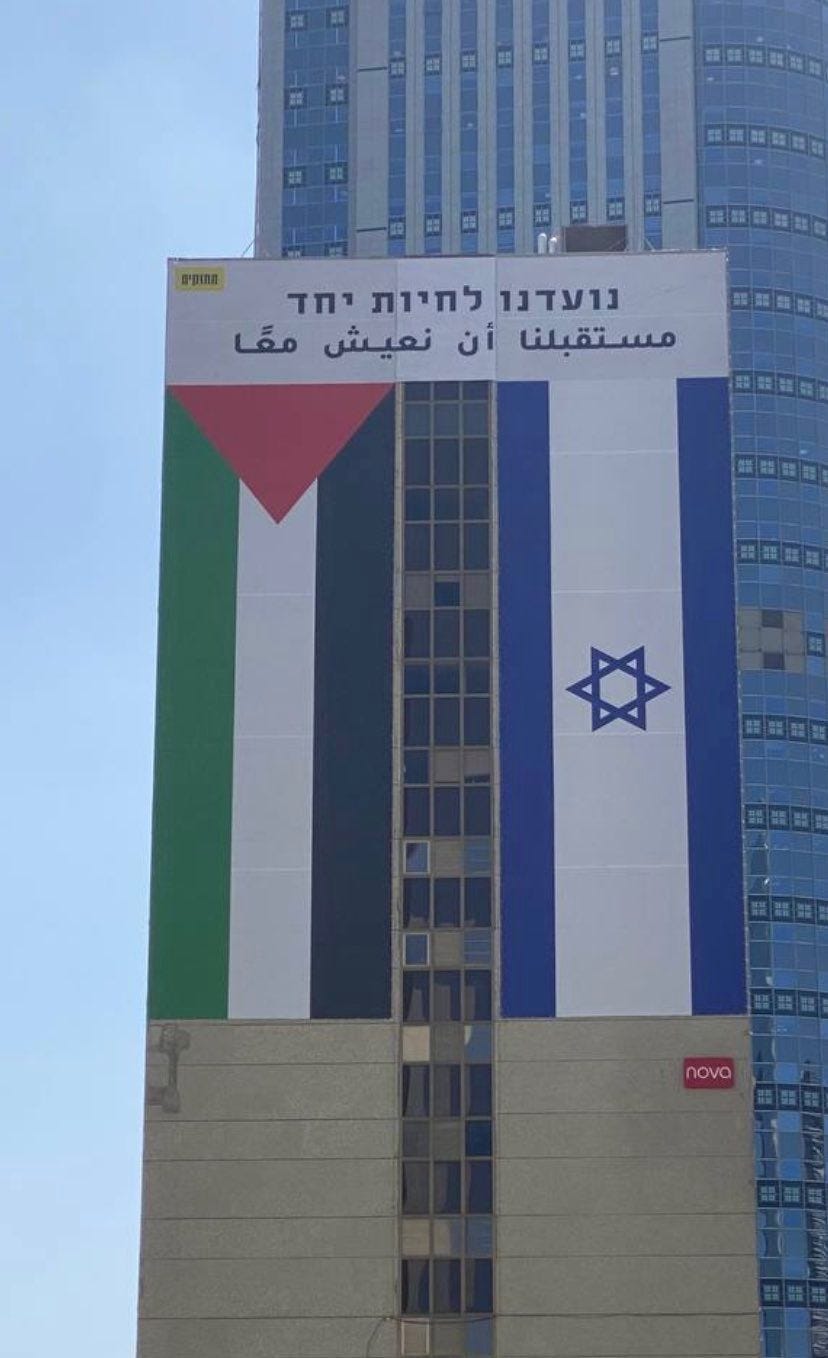
A material part of Israeli society gets it: There will, eventually, be an evolution in the region. The Mehazkim advocacy group put this up in Ramat Gan a few years ago:
A 90 second clip from the Bennet campaign. English subs by Raf.
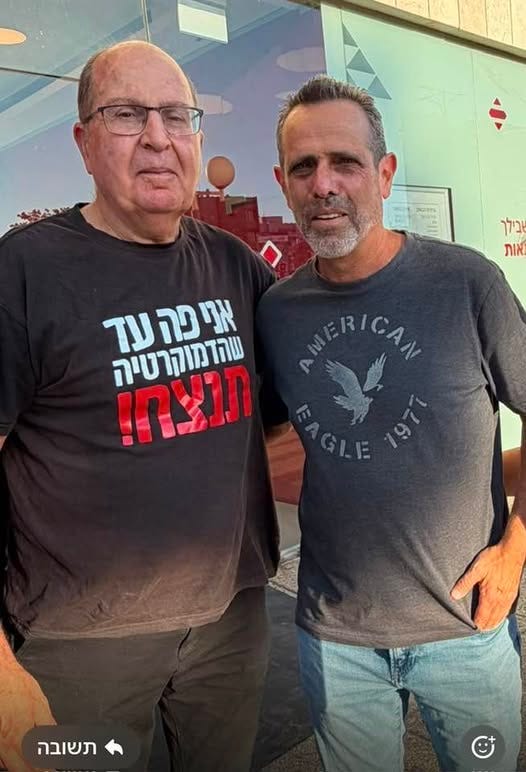
Below: Shirt: I am here until The Democrats [Labor] Wins!
Don’t miss the video in Israel | Elections, above (for those who only read Relief).
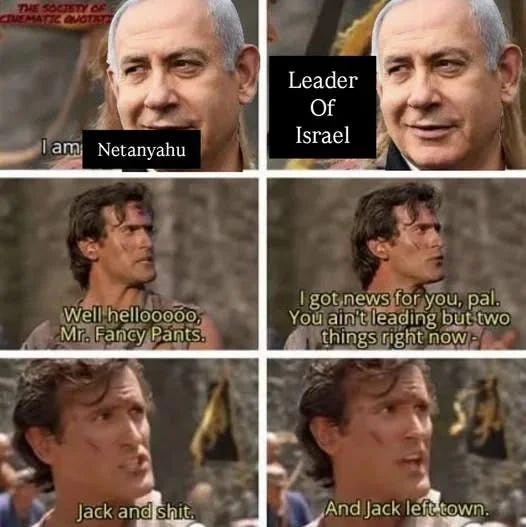
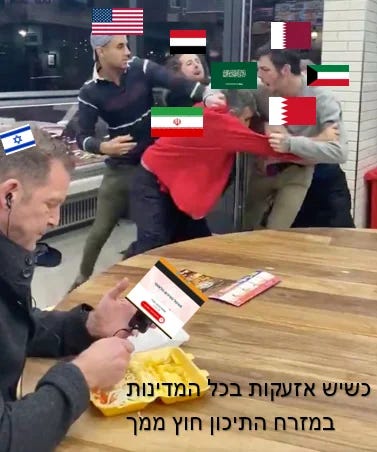
When there are air raid sirens in the every Middle Eastern country but yours.
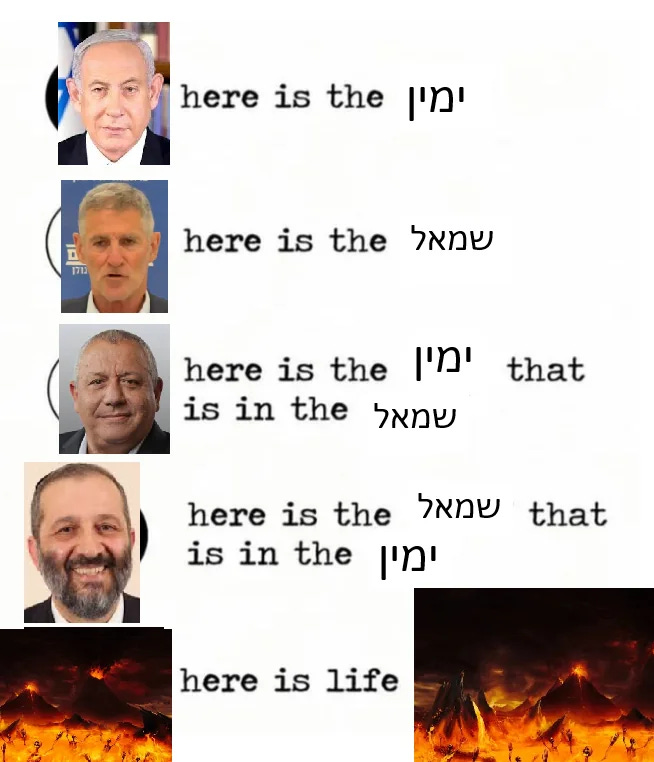
Here is the Right [Bibi]
Here is the Left [Golan - leader of Labor/The Democrats]
Here is the Right inside the Left [Eisenkot, likely to ally with Labor]
Here is the Left inside the Right [Aryeh Deri, convicted leader of Shas—religious parties have, historically, valued human life—e.g. peace agreements]
Here is life

Maybe you could dress more respectfully?
Maybe you could think more respectfully?
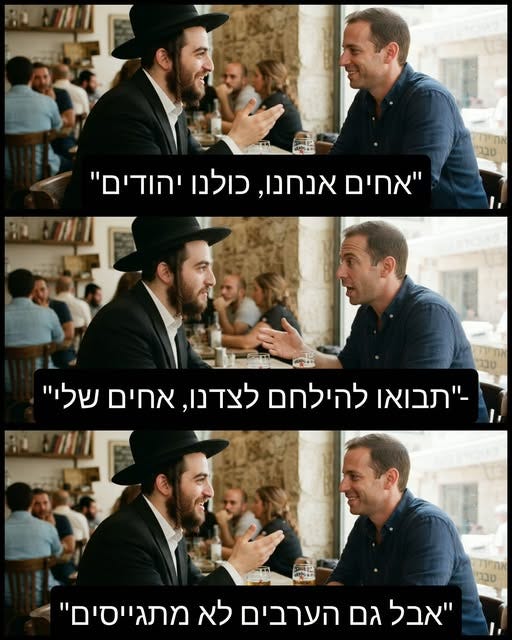
We are brothers, all of us are Jews!
Come serve with us in the army!
But even the Arabs aren’t drafted into the army...
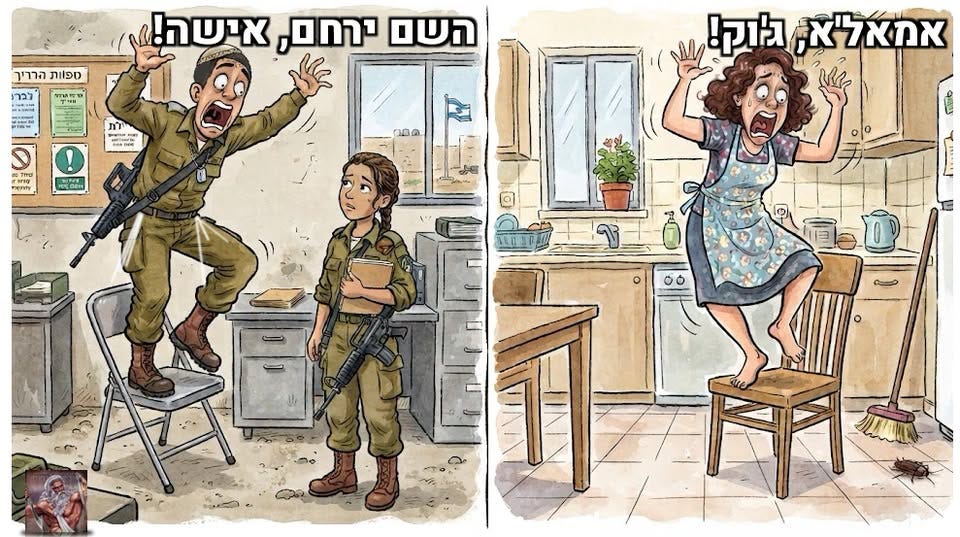
(right to left)
Mama mia! A cockroach!
G-d have mercy! A woman!
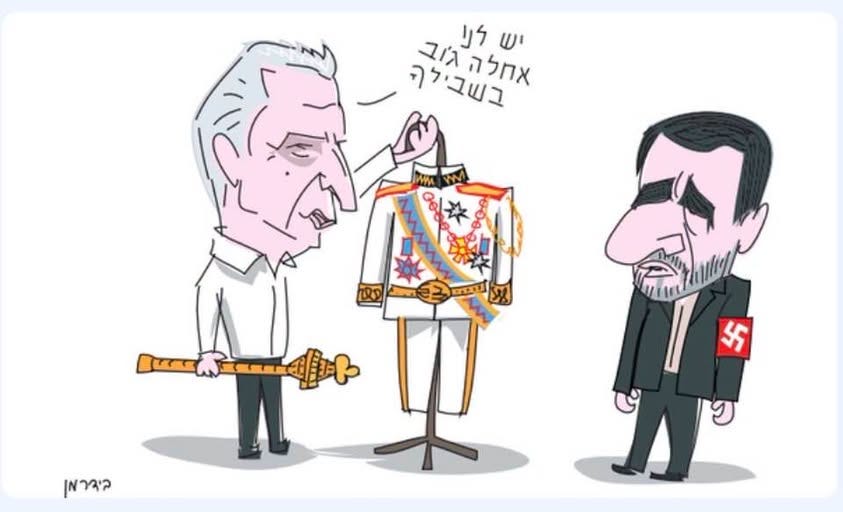
We have an awesome job for you!
(Offering Ahmadinejad the royal suit)
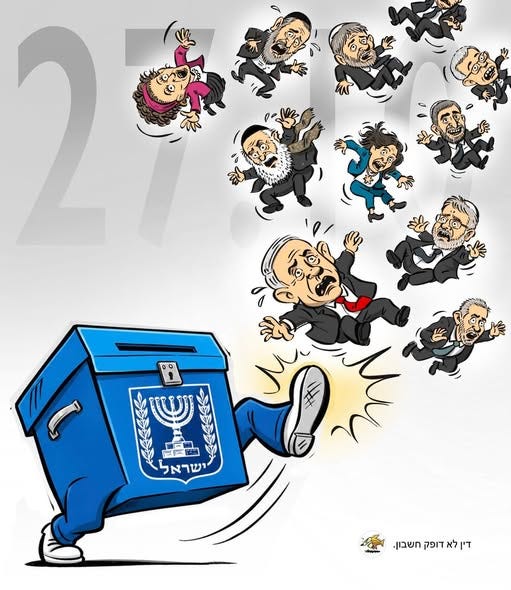
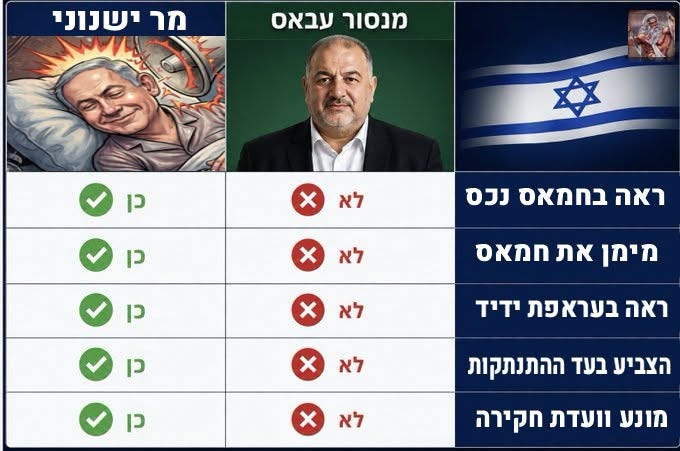
Saw Hamas as an Asset
Funded Hamas
Saw Arafat as a friend
Voted to Pull Out of Gaza [in 2005]
Prevents Commission of Inquiry [into October 7]
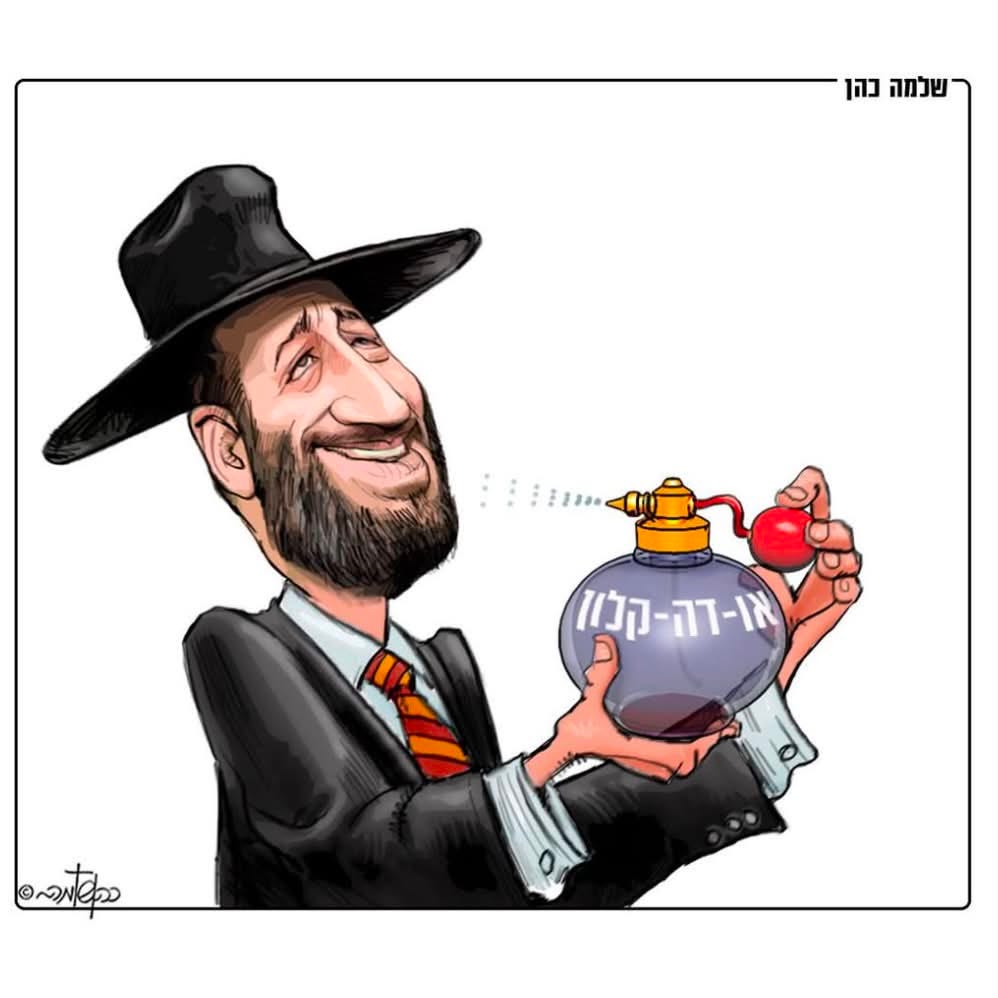
Another impudence record broken: Aryeh Deri, a convicted felon whose criminal record prevents him from being appointed minister - attacks the Chief of Staff
Word play: קלון - “cologne“ also means stain or corruption (e.g. it is both a cognate from French and a Hebrew word)
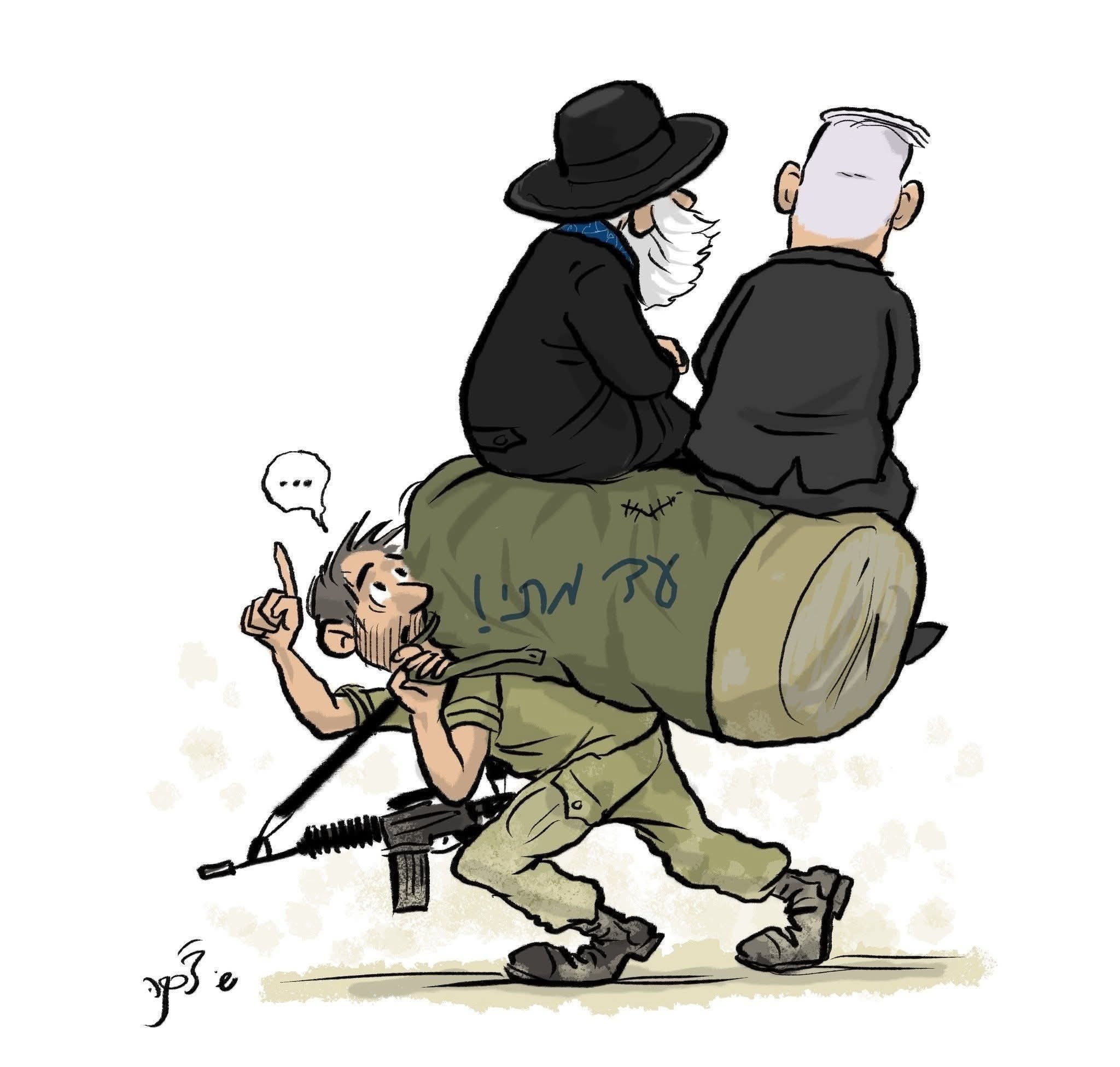
right-to-left

That’s it. It’s over.
Oof! It’s going to be so boring without the World Cup!
Don’t worry...
Seen at the Jerusalem Film Festival: “In Pursuit of Gross National Happiness:”

Cover of Israeli paper Yedidiot Aharonot a few days ago: IDF Under Attack
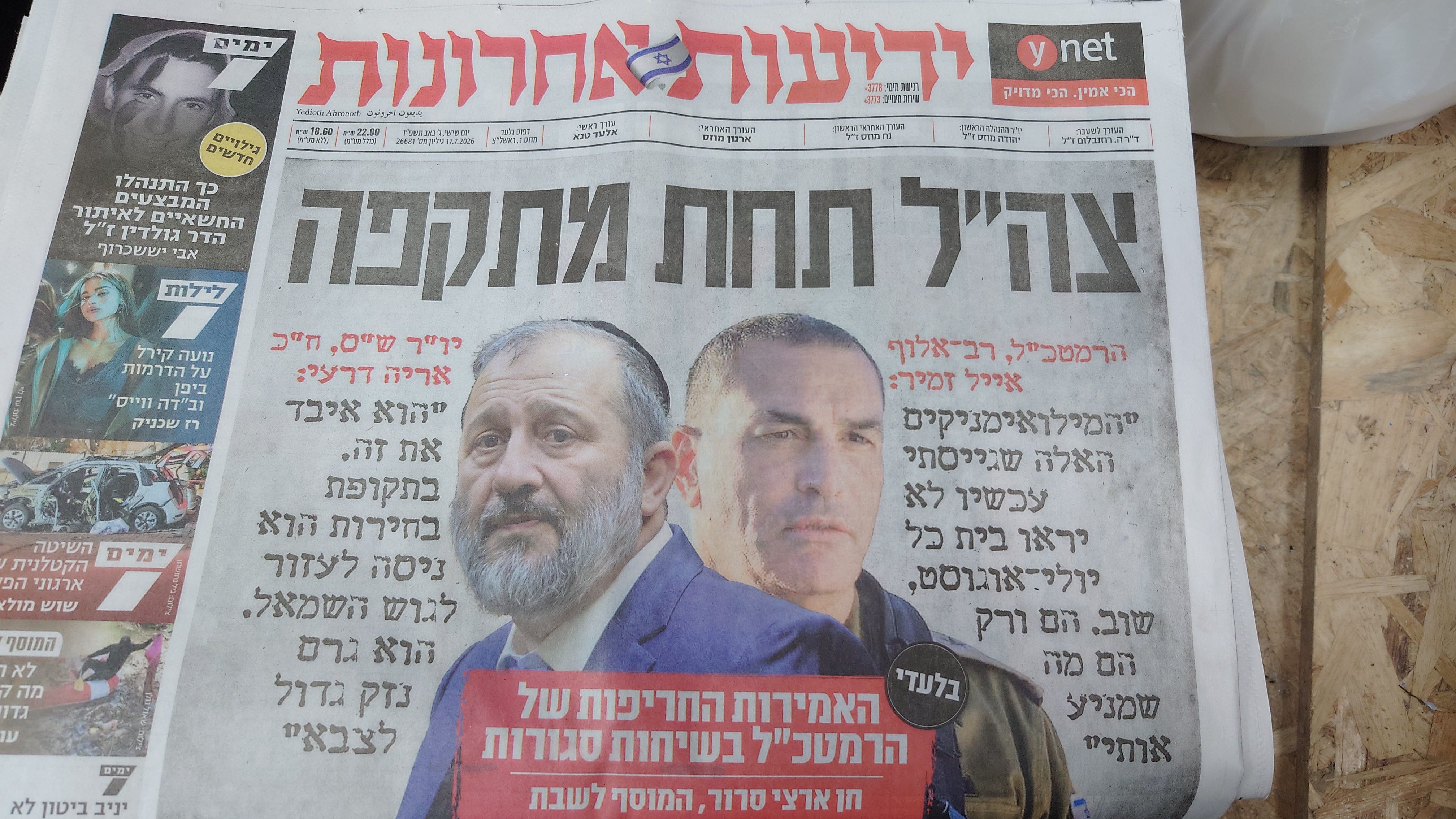
On the right: Chief of Staff Zamir: “The reservists we just called up won’t see home all summer. Again. They are the only thing keeping me going.”
On the left: Religious Party-Shaas-Leader, Knesset Member Arieh Deri: “He [the Chief of Staff] has lost his cool. In an election year he tries to help the Leftists. He is really damaging the IDF.”
Israeli society is tearing itself apart. The non-serving bloc of society has grown significantly over the decades and has controlled the governing coalition for the past four years. The serving side says: Come on folks… let’s all do something. The non-serving side says all kinds of nonsense (“We will emigrate!” “We will die first!” “It’s you, the Generals, who are harming the country by trying to draft us!”).
It’s hard to watch.
Where I watched the World Cup final a few blocks away (we got the overhead lights turned off shortly after this photo):
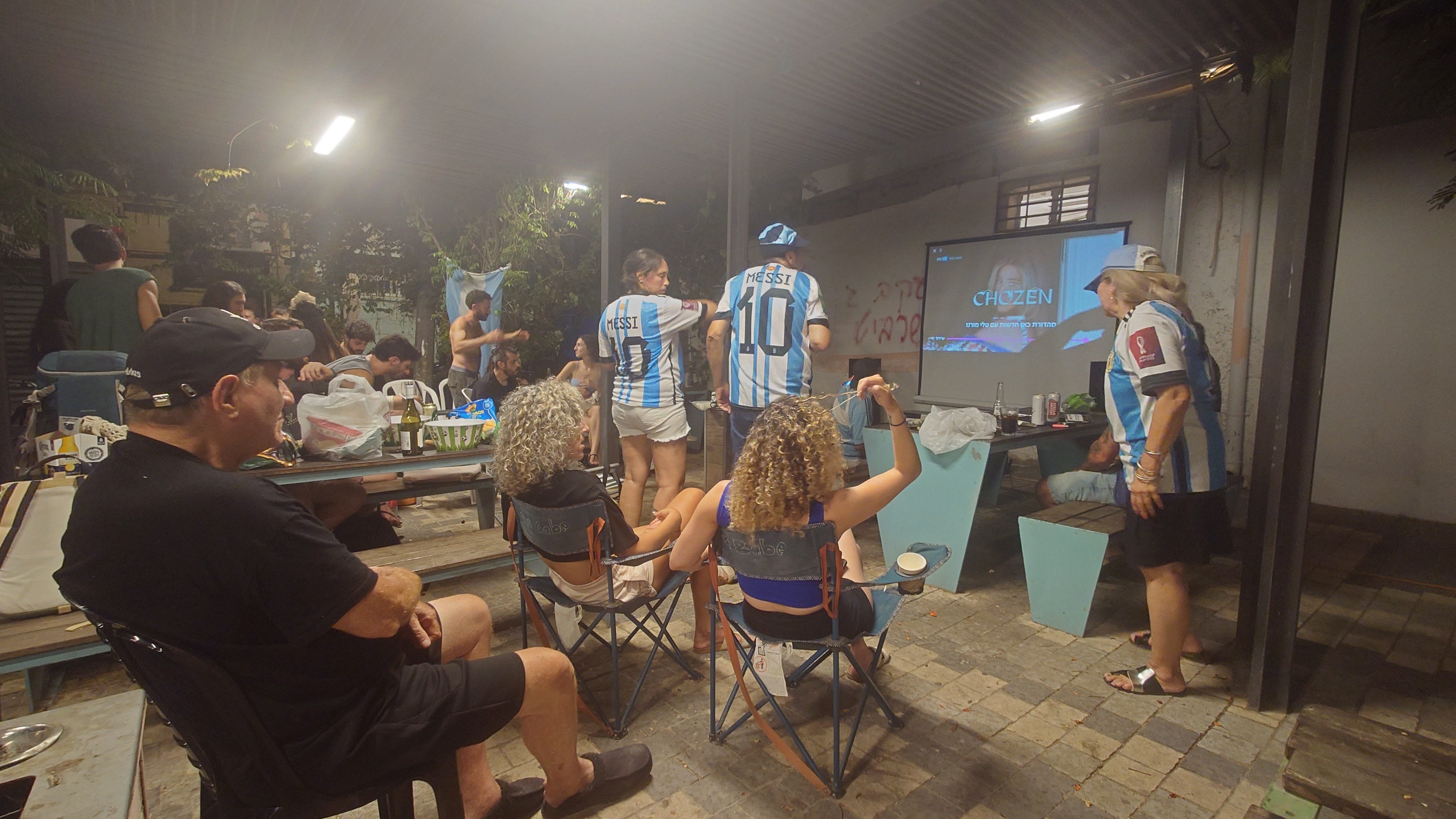
To Peace,
Raf
Prior Post | Next Post
Read This Entry, #271, in Web Browser
(Thank you A.K., M.T., R.G.)
Comments
Nothing yet. Say the first thing.
Sign in to join the conversation.