
As the climate changes, we’ll experience higher temperatures, more extreme weather events—and more drought. In my state of California, we are not currently experiencing drought. However, over half the state is abnormally dry.
With farms here using “80 percent of all developed water (water that is controlled and managed for a variety of purposes)” and US data centers no one wants sucking up millions of gallons of water, saving a bucket of water here and there may seem futile. But every drop of water saved now can be used later.
The following methods recycle water that can then be used in the yard.
Rather than directing a washing machine’s spent water to the sewer, a laundry-to-landscape greywater system will send that water out to several, open-bottomed, gallon-size mulch basins buried in a landscape. The roots of nearby plants soak up that captured water. If you don’t want your plants to soak up that water (e.g., the machine contains a load of dirty diapers), turn the system off and send the water to the sewer.
In 2022, I had a laundry-to-landscape system installed in our front yard. Because I have since planted (mostly) drought-tolerant native plants out there, I use it in the fall, winter and spring and rarely in the summer. Some of my native plants (like ceanothus) will die if I water them in the summer. And greywater cannot be stored for more than a day. So in the summer, the laundry water goes to the sewer. But if I had planted fruit trees in the yard, I would use the system all summer long. Greywater from the laundry can be used to water fruit and vegetables that grow off the ground. You wouldn’t water root vegetables with it.
Greywater from bathroom sinks and showers is also suitable for a greywater system but here in California, depending on the system style, a bathroom system may require a permit. A laundry-to-landscape system does not. (Some states don’t allow any type of greywater systems.) You’d want to use mild soaps and shampoos in a bathroom system.
Greywater Landscape Design installed our system. You can DIY a similar greywater system and save hundreds of dollars. Save more money if your municipality offers a rebate for these water-conserving systems.
These systems require liquid detergent free of salt and sodium compounds, boron (including Borax) and chlorine bleach. This is the brand I use. I’m lucky that I can buy this near me in bulk!
Because a load of synthetic fabrics (polyester, acrylic, nylon, blends and so on) sheds millions of microfibers in the washing machine, I wash natural fibers when using the greywater system—cotton, linen and wool. If I had hemp, I’d throw that in there as well. Microplastics are in the air, the water, our food and us. I don’t want send more microplastics to the soil.
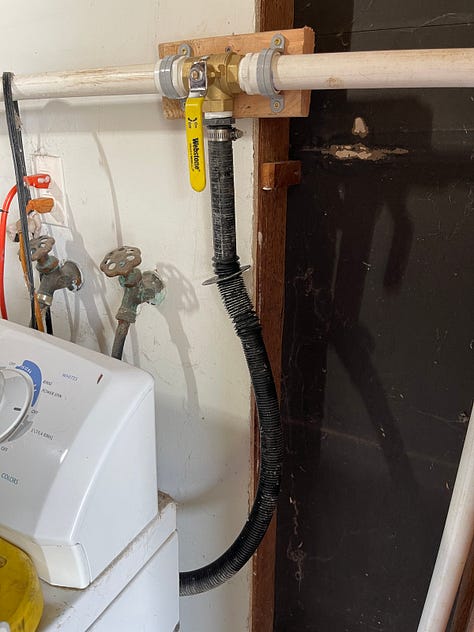
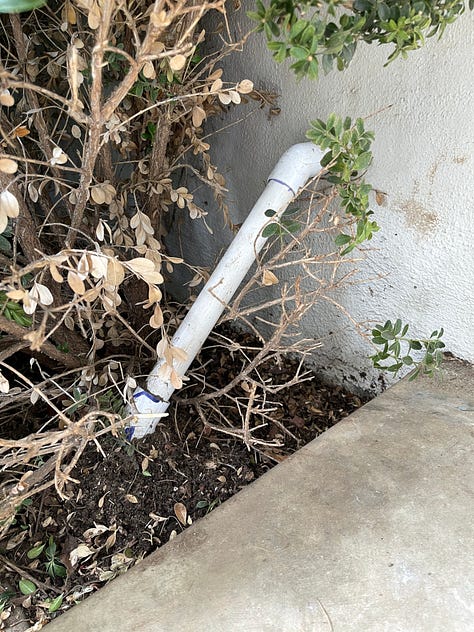
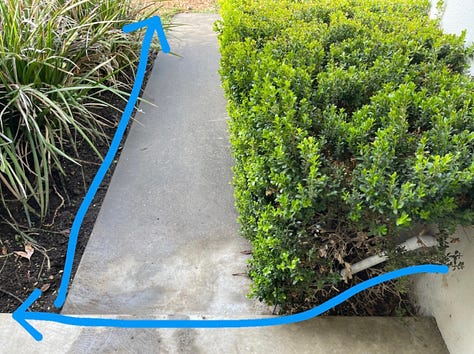
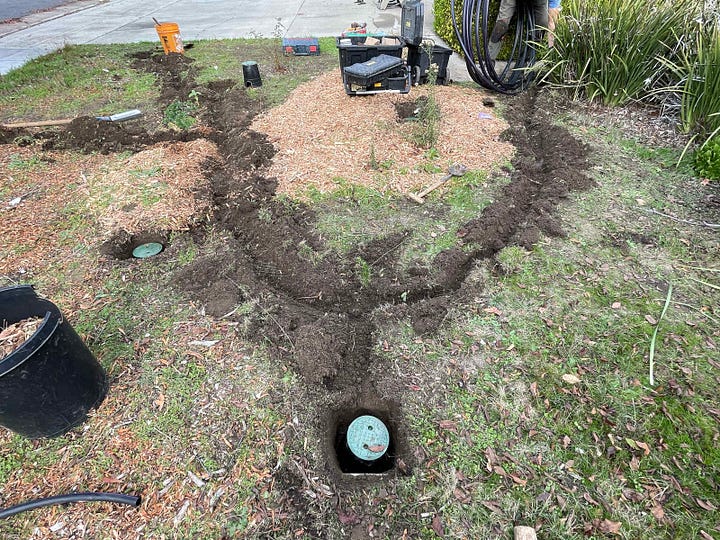

Go here for more details and more pics of this system.
Capturing water as it heats up in the shower can quickly fill a bucket. A few years ago, my daughter MK stayed in a hotel in Mendocino that asked guests to fill the buckets they provided in the shower. Hotel guests would place the full buckets on the decks off of their rooms and staff would pick them up to water the beautiful landscaping. Smart!
We keep a bucket in our shower and I also capture water from the kitchen sink in whatever large container I have sitting in there—a large mixing bowl, a stock pot or even a large jar. The back door to our yard is four feet away from the sink and a watering can sits next to it outside. I fill that up to water my plants. This may sound time consuming but it actually saves time—I don’t have to turn on the tap outside and stand there waiting for the watering can to fill. Conserving water this way also makes me more mindful of conserving other resources.
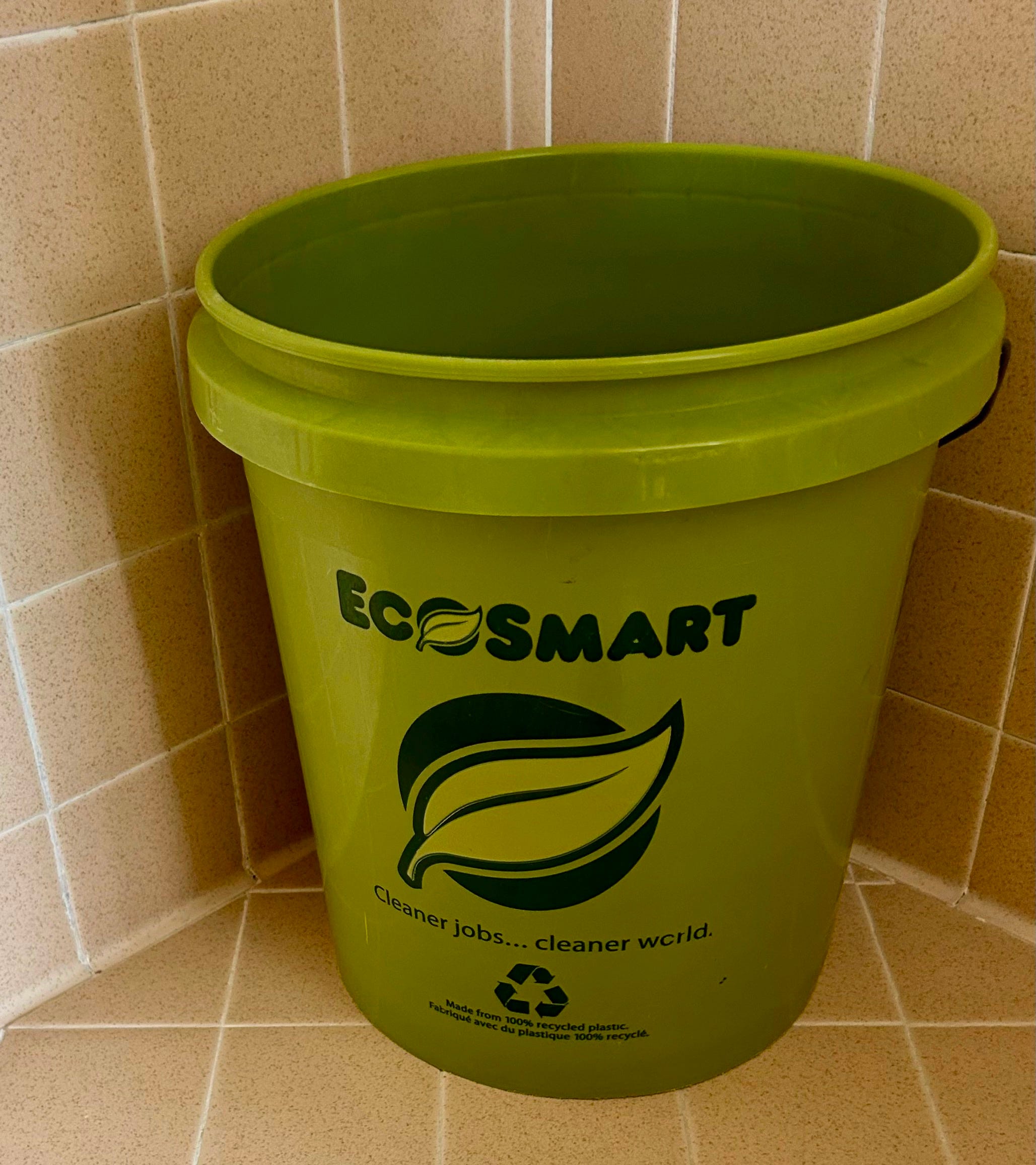
Next to two of our downspouts, we placed wine barrels for capturing rain water. Unfortunately, we have not yet hooked these up to the downspouts. The barrels are a bit small (approximately 50 gallons each) compared to some rain collection systems but better than nothing. (They currently do collect nothing but that will change!)
Go here for an article in The Guardian that features an Oakland resident who set up a rain collection system (and greywater system) for his home.
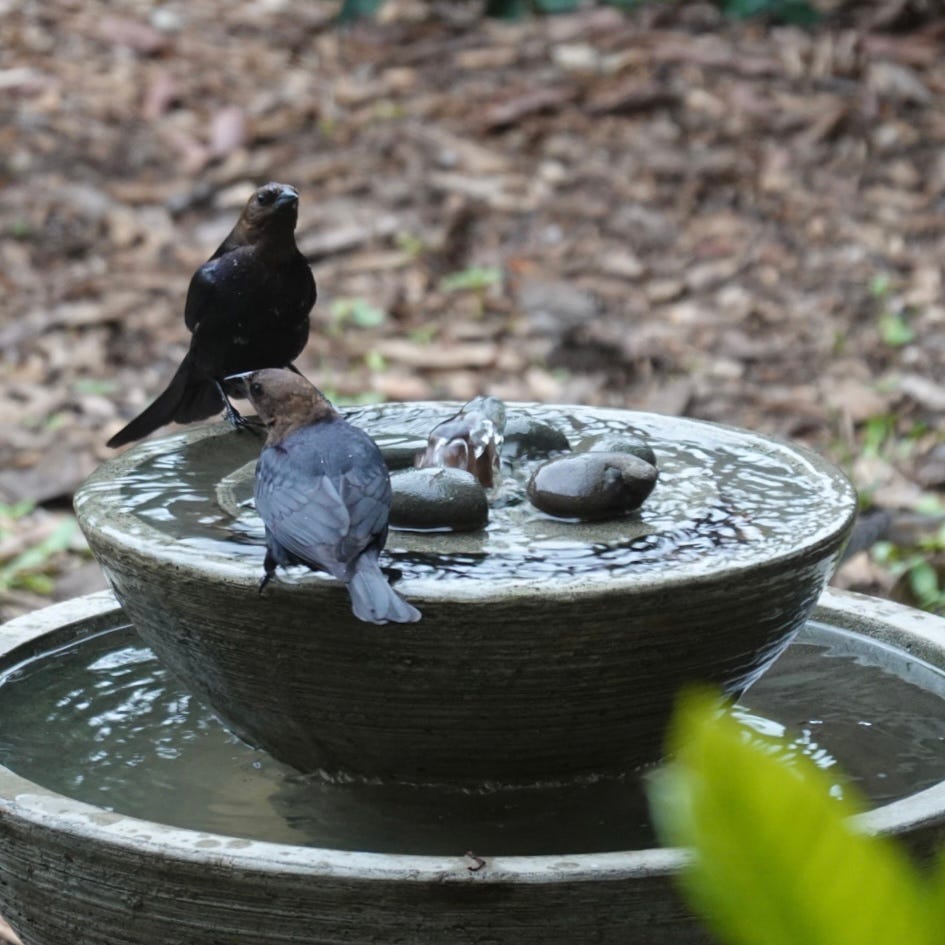
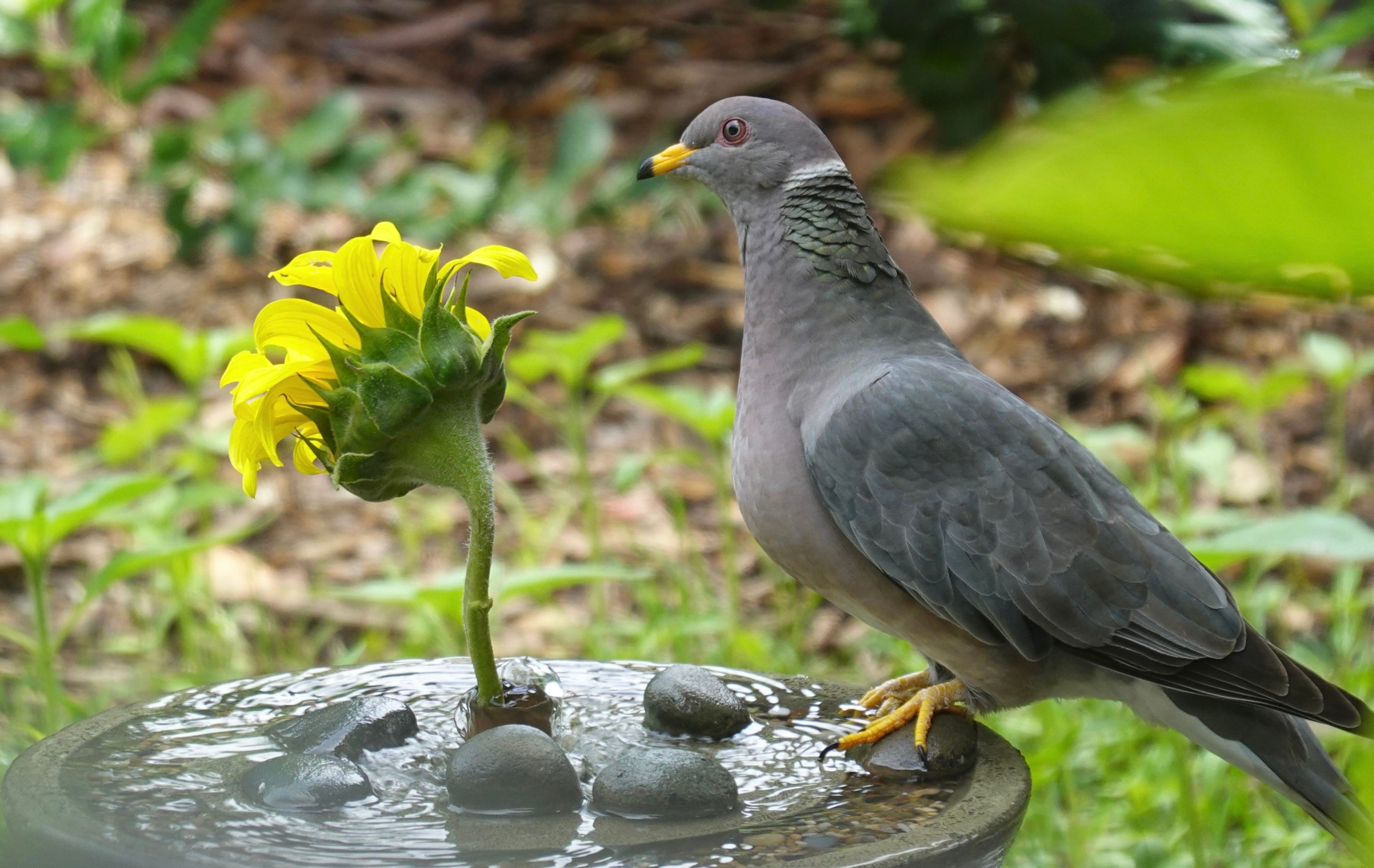
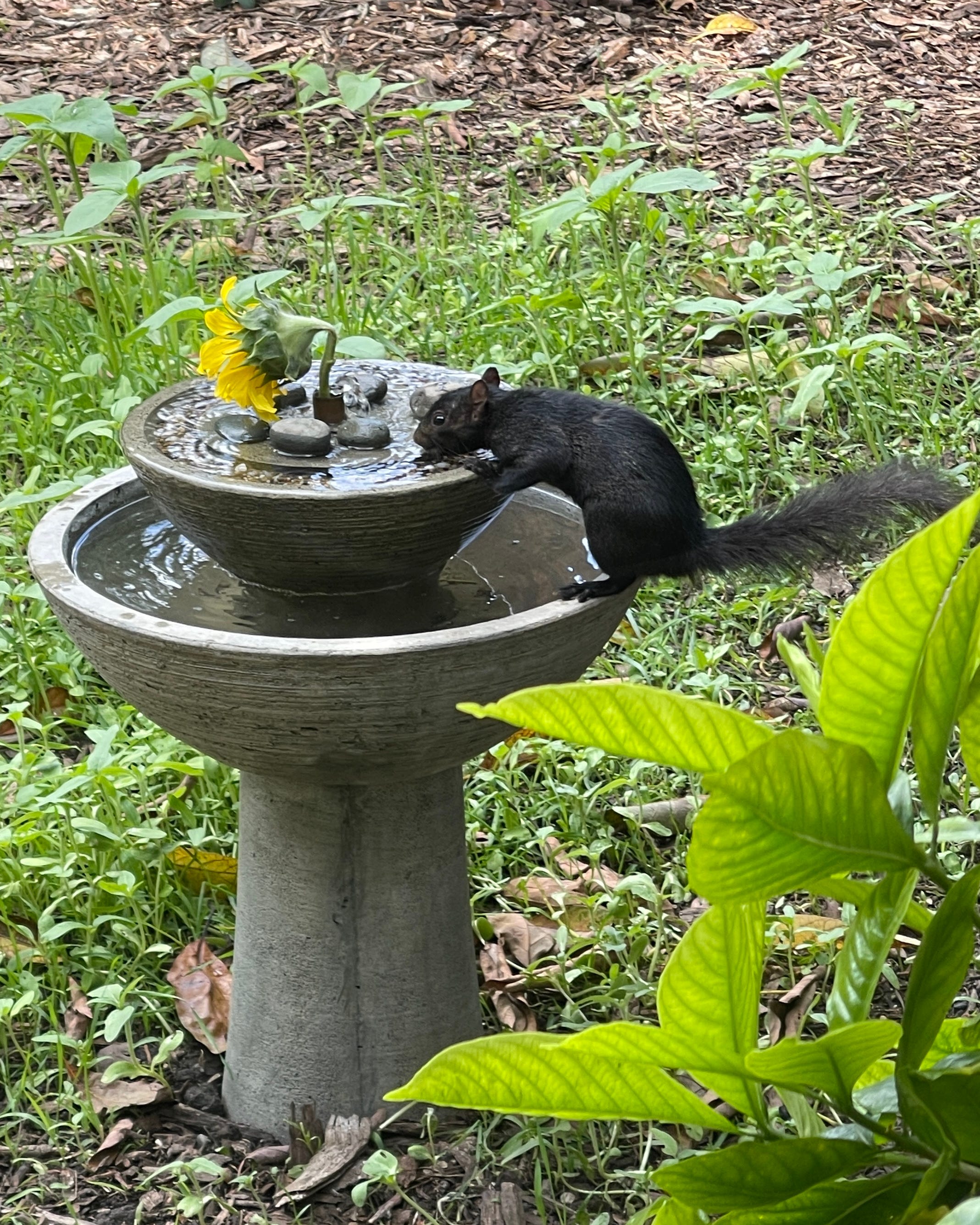
This isn’t a capture system like the previous examples but I wanted to include it because a bubbler recycles the water in its basin—you don’t leave a tap open to run it. A pump constantly circulates the basin’s water to prevent the bubbler from becoming a breeding ground for bacteria, algae and mosquitos. You will need to change the water every few days or so. Use that for your plants.
The sound of the moving water attracts all kinds of birds to the yard. Within a week of installing our bubbler in the backyard this spring, we began seeing birds that we had never before seen (or heard) back there: brown-headed cowbirds, band-tailed pigeons and cedar waxwings. We see more of the elusive Stellar’s jay and oak titmouse. The regulars—house finches, lesser goldfinches and hummingbirds—also love it. My husband’s desk in the window of his home office overlooks the bubbler and I wonder how he gets any work done.
We bought our Campania International brand bubbler in Half Moon Bay at Sun Studios. This it not a paid ad for either business. I just know some people will want that info. You can also build your own bubbler for the price of a pump and a shallow basin of some sort, saving hundreds of dollars.
In the meantime, as you browse bubblers or order the parts to build one, a shallow dish of water set in the shade outside will help wildlife that find it. Birds and critters need water, especially in this heat.
No posts
Comments
Nothing yet. Say the first thing.
Sign in to join the conversation.