
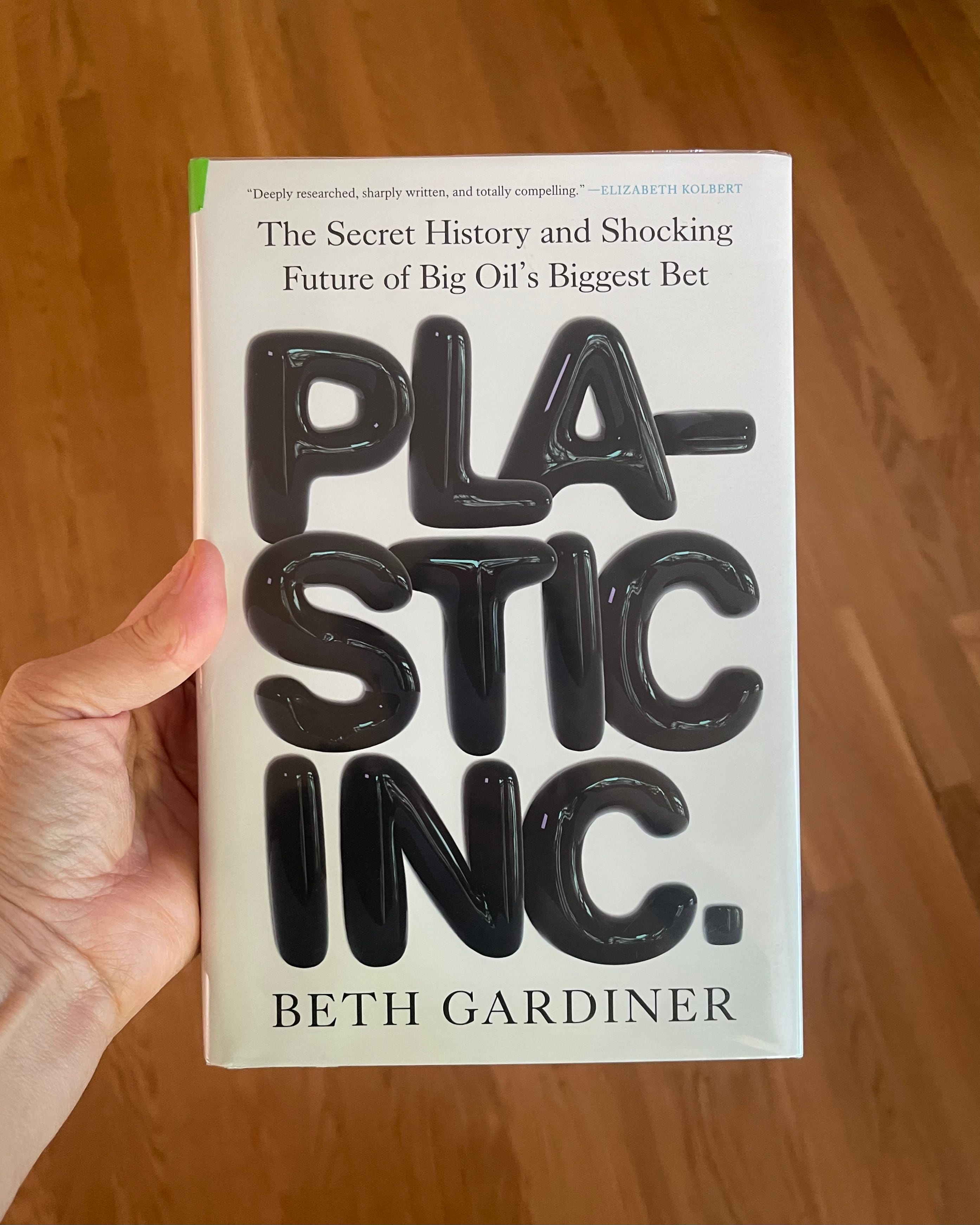
As the world (slowly) transitions away from burning fossil fuels to power it—in order to mitigate climate change—Big Oil wants to continue to sell its products. So the industry has big plans to pivot to plastic, which is made of fossil fuels—and exacerbates climate change. Environmental reporter Beth Gardiner delves into Big Oil’s big plans in her excellent and well-researched new book, Plastic Inc., The Secret History and Shocking Future of Big Oil’s Biggest Bet.
About two garbage trucks full of plastic enter the ocean every minute. Microplastics have infiltrated our food, our water and our bodies. Exposure to plastic chemicals has lowered fertility rates in both humans and some non-human species. And yet, the oil industry has been pouring billions and billions of dollars into new plastic plants, hoping to double or even triple plastic production. Given plastic’s inherent problems—problems which the industry fully comprehends—fathoming increased plastic production and pollution boggles the mind.
Petrochemical companies manufacture plastic out of fossil fuels. These companies are basically subsidiaries of oil companies. Think ExxonMobil Chemical or Chevron Chemical.
When the fracking boom began in the early 2000s in the US, a boom in plastic production soon followed. In addition to methane and petroleum, fracking draws out ethane gas, which, unlike methane, is not a good candidate for burning to generate energy. Initially, frackers regarded this abundant byproduct as waste. But industry soon realized that by using ethane as a raw material for plastic, it would have a new income stream.
To transform ethane into plastic, first, under high temperatures in a giant “cracker” facility, ethane is “cracked” apart into ethylene molecules. These undergo another process that fuses them together into long chains to create polyethylene, the most common plastic used around the world. Many types of packaging—bottles, milk jugs, bags, food wrap, the linings of paper cups and so on—are composed of polyethylene.
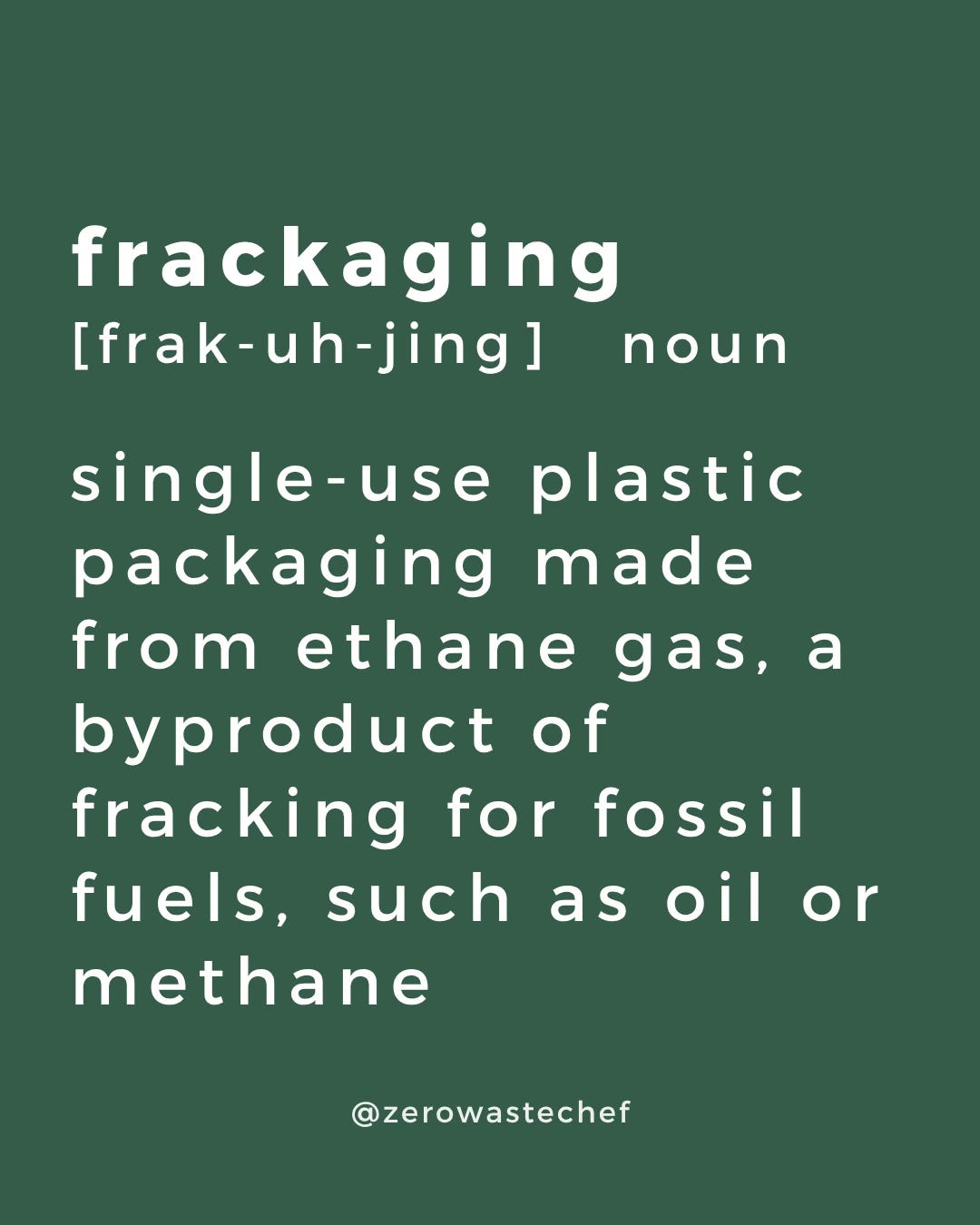
With much of that ethane eventually becoming single-use plastic, critics coined a term to highlight the connection: frackaging.
— Beth Gardiner, Plastic Inc.
In the late 1960s and early 70s, plastic was still quite new. As plastic production and pollution increased, plastic developed a bad reputation that nearly ended the nascent industry. Today, news stories such as the spoon’s worth of microplastics infiltrating our brains have further sunk plastic’s reputation. So why don’t we have all kinds of regulations limiting the core of the problem—plastic production? Enter recycling.
Disposability rakes in profits. Coca-Cola used to package its drinks in reusable, refillable glass bottles for which customers would pay a deposit. Upon returning the empty bottles to the store, customers received their deposit back. The bottles would then head to a nearby bottling plant, where employees operated machinery to clean and refill the bottles. Coca-Cola and their ilk eliminated expensive infrastucture and embraced the disposable system of the “one-way bottle,” slashing costs and boosting profits.
Once a Coke-filled PET bottle leaves the plant, the company ends its responsibility for the plastic it has sent out into the world, like a bad parent. A customer buys a Coke, drinks it and tosses the bottle, possibly into a recycling bin. Municipalities, funded by taxpayers, and not Coca-Cola, pay to clean up that plastic trash: picking it up curbside in expensive trucks, processing the waste at a recycling plant using heavy equipment, packing the plastic into bales and, finally, given the 5 to 6 percent recycling rate in the US for plastic, usually landfilling or incinerating the plastic after all that effort and expense. In other words, Coca-Cola, a $345 billion company and top plastic polluter that annually sells 137 billion products packaged in single-use plastic has externalized the costs of its packaging onto society.
We can’t recycle our way out of the current deluge of plastic and certainly won’t be able to recycle our way out of a more polluted future. We could legislate real solutions to curb plastic pollution, however: Make polluters pay to clean up their mess (they’ll stop) and require them to implement reuse systems. Reusable, returnable, refillable packaging was the norm just a few generations ago. It can be the norm again.
The same rich, powerful, politically embedded industry that has successfully fought mitigating climate change at every step is the same industry determined to crank out even more plastic. What can we ordinary citizens possibly do? Consider getting involved in the fight. Just some of the organizations working to stem the tide of plastic pollution:
You may also want to reduce plastic in your own life. Go here and here for tips to do just that.
No posts
Comments
Nothing yet. Say the first thing.
Sign in to join the conversation.