
A quick shoutout: We usually talk about finance through markets and investing. This one is different — our friends at Rainmatter spent time with farmers behind Akshayakalpa to see how better practices transformed their incomes, in some cases over 10x. Worth a watch. Link.
A few days ago, I was on a call with a friend in the US. His family had just come back from a trip to Colorado. In our conversation, somewhere between “the weather was good” and “the kids loved it”, he told me how they learned about budgeting with a visual AI (artificial intelligence) tool.
He saved a Budget Tracker link on the kids’ devices. They were asked to log every expense during the trip. When the kids did so, a color-coded bar moved to show how much of their $3,000 budget had been used and the remaining balance.
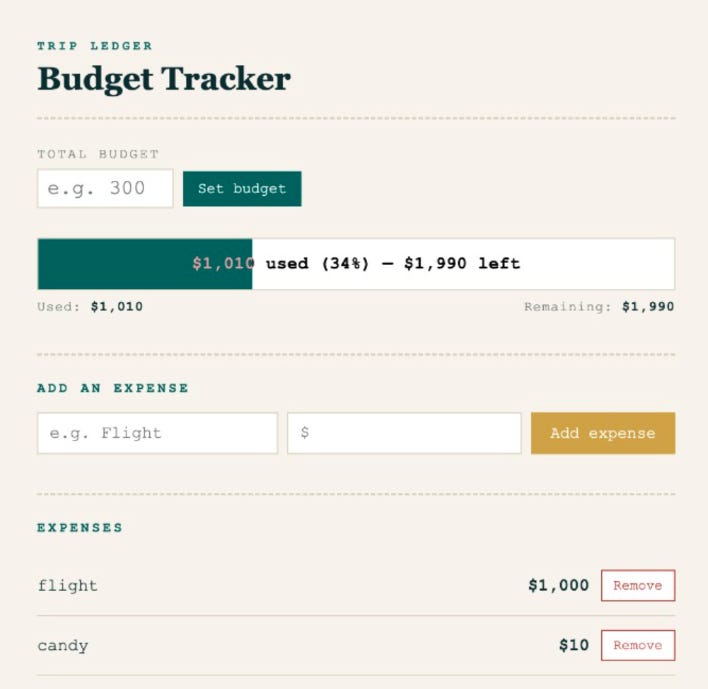
His seven-year-old daughter was hooked and logged every purchase. When the chart hit 60%, she asked for the exact dollar amounts spent and remaining. She even convinced her younger brother to share an ice cream instead of buying two. She grasped the basics of budgeting without anyone teaching her a word.
I really enjoyed listening to this story.
That got me thinking about how different people are using AI to make money decisions and, in fact, to build small tools that can come in handy.
See, I do not know the first thing about code, nor am I an expert in LLMs (large language models). You may be better equipped than me.
I am here to just share some ideas behind some of the interesting money tools and apps I came across while searching online. I’ve also included prompts and screenshots from my own experiments.
With that, let us get into it.

In Bangalore, people don’t measure distance in kilometers. They measure it in time. A place is not five kilometers away; it is a thirty-minute drive. Time puts things in perspective.
Now apply the same to money. A pair of shoes costs ₹5,000. That is one way to look at it. The same pair costs eight hours of your working life. That is another.
It is a very simple idea, but it’s a powerful way to see if something is really worth buying.
That is the first tool I came across, and I found the idea behind it interesting. And when I tried to build something around it using AI, this is what it looked like.
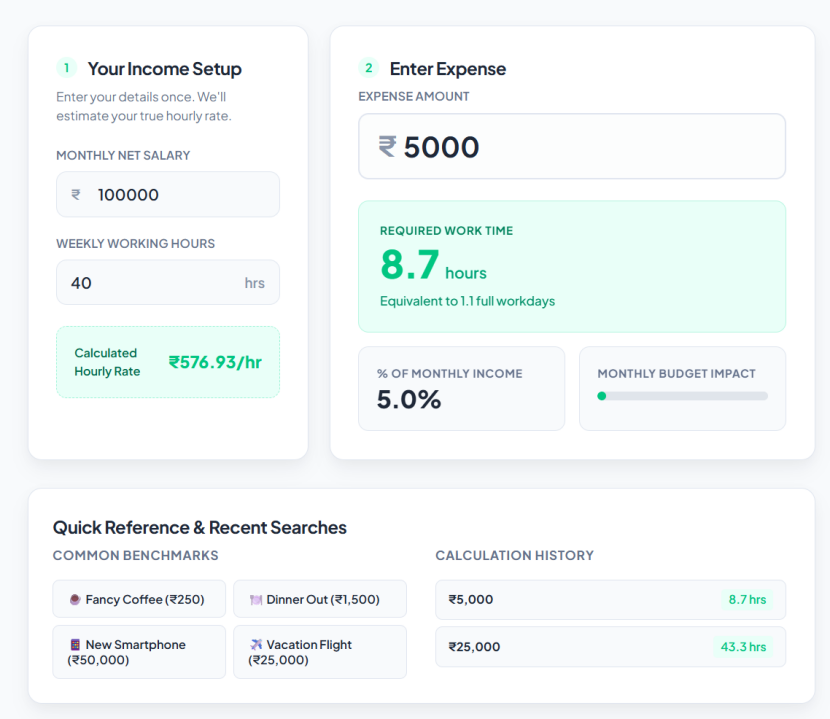
You key in your income and the number of hours you work, and it shows you how many hours you would need to work to afford what you want to buy.
Now, I know what you are thinking: if we sit and calculate every little thing like this, when do we actually live? Fair point :)
But as a way of looking at money a little differently, even once in a while, is a nice idea.
The prompt to build this: “Build me a simple web page where I enter my monthly salary and weekly working hours once, and then I can type in any expense amount and it tells me how many hours of work that equals. Also show what percentage of my monthly income it is.”
2. The debt payoff visualizerThe next one is on managing loans.
“Should I use this ₹50,000 to pay off my loan early, or should I invest it instead?”
“What if I increase my EMI by about ₹2,000 a month?” These are the things that cross our minds occasionally when we have a loan.
This tool removes the guesswork. You enter your loan details, try different what-ifs (what if I add ₹5,000 extra every month? what if I use up all my bonus to repay the loan?), and it clearly shows exactly when you’ll be debt-free, and how prepaying compares with investing the same money under different assumed returns.
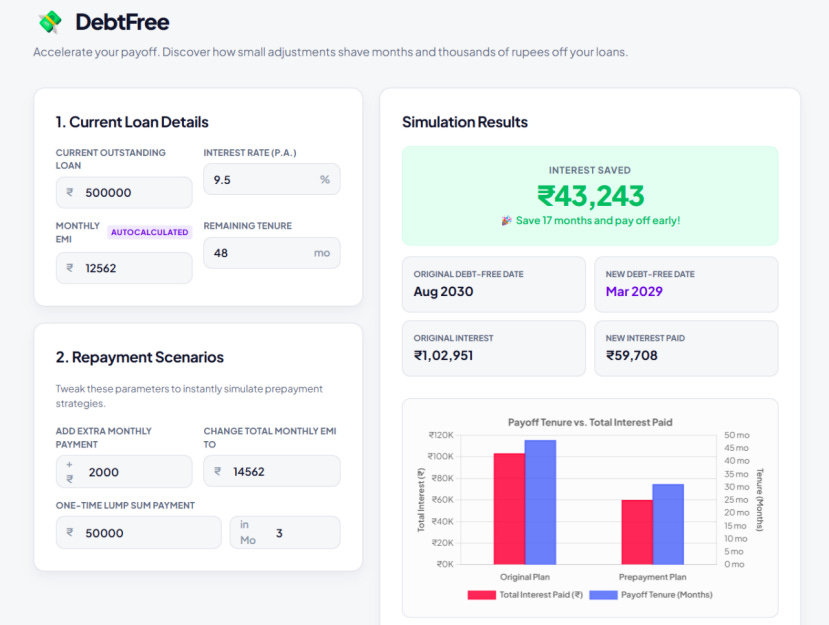
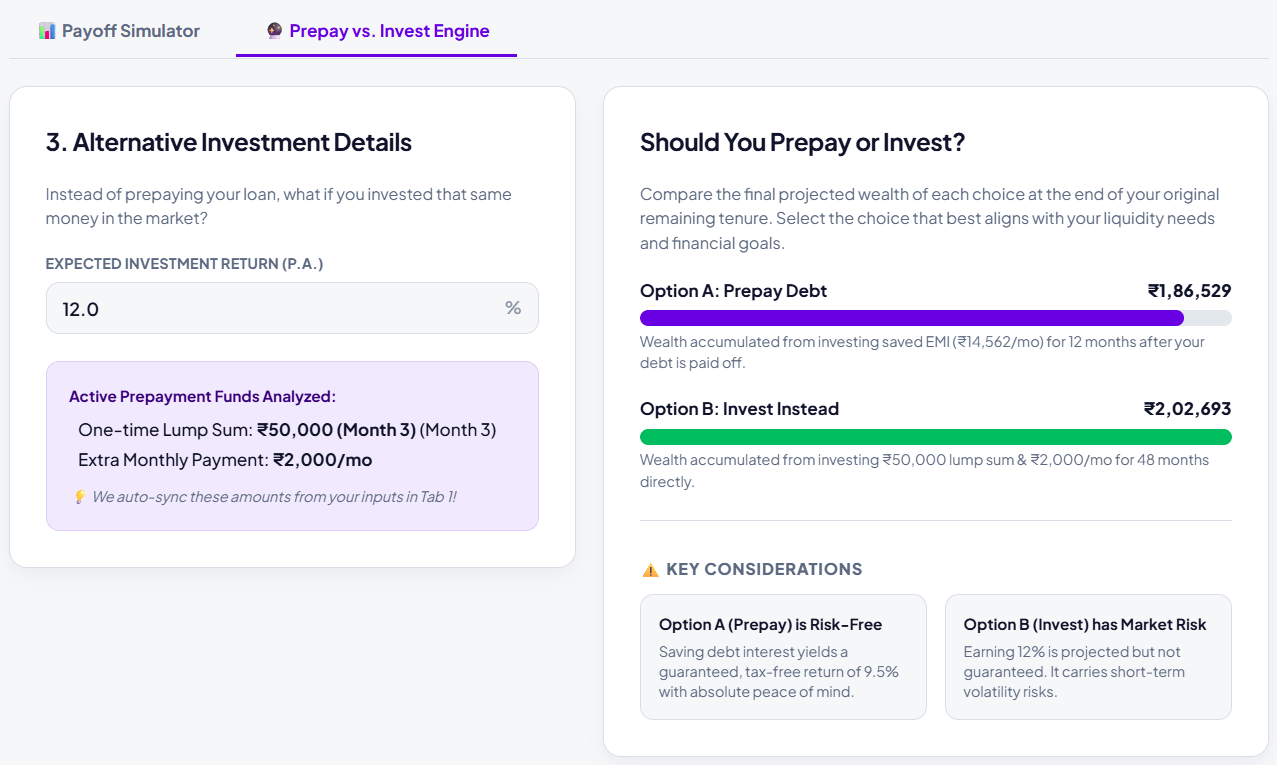
The prompt to build this: “Build a debt repayment simulator where I enter my loan amount, interest rate, and remaining tenure, which automatically calculates my standard monthly EMI (with an option to override it). Then I can try different scenarios by adding extra monthly payments or making a lump sum prepayment. For each scenario, show me the new debt-free date, total interest paid versus the original, and interest saved, using split bar charts to compare the original payoff months and interest paid side-by-side, along with an objective prepay-versus-invest opportunity cost comparison.”
Now, here is the thing about these two tools we just discussed. They are calculators. AI writes the code, and after that, it is just maths running locally on your device. In fact, ready-made calculators already exist for some of these, but the idea of building them yourself is to experiment and customize them the way you want.
The limitation, though, is that these calculators only solve one scenario at a time. But what if you have multiple moving variables and want an interactive back-and-forth, just like a regular AI chat? That won’t work with the tools above. For that, you need AI intelligence. Let’s look at some examples of how people are using it.
A friend suggests a fund, and we invest. An IPO looks attractive; we apply. A financial influencer recommends a small-cap fund; we add that too. Each decision makes sense on its own, but we rarely step back to look at the whole picture.
For that, people opt to simply download the portfolio data and upload it to Claude, ChatGPT, or any other LLM to chat.
You can ask questions like - “Which five holdings account for 60% of my portfolio?”, “If my biggest holding falls 10%, roughly how much would my portfolio fall?” and “Am I heavily concentrated in one sector?”
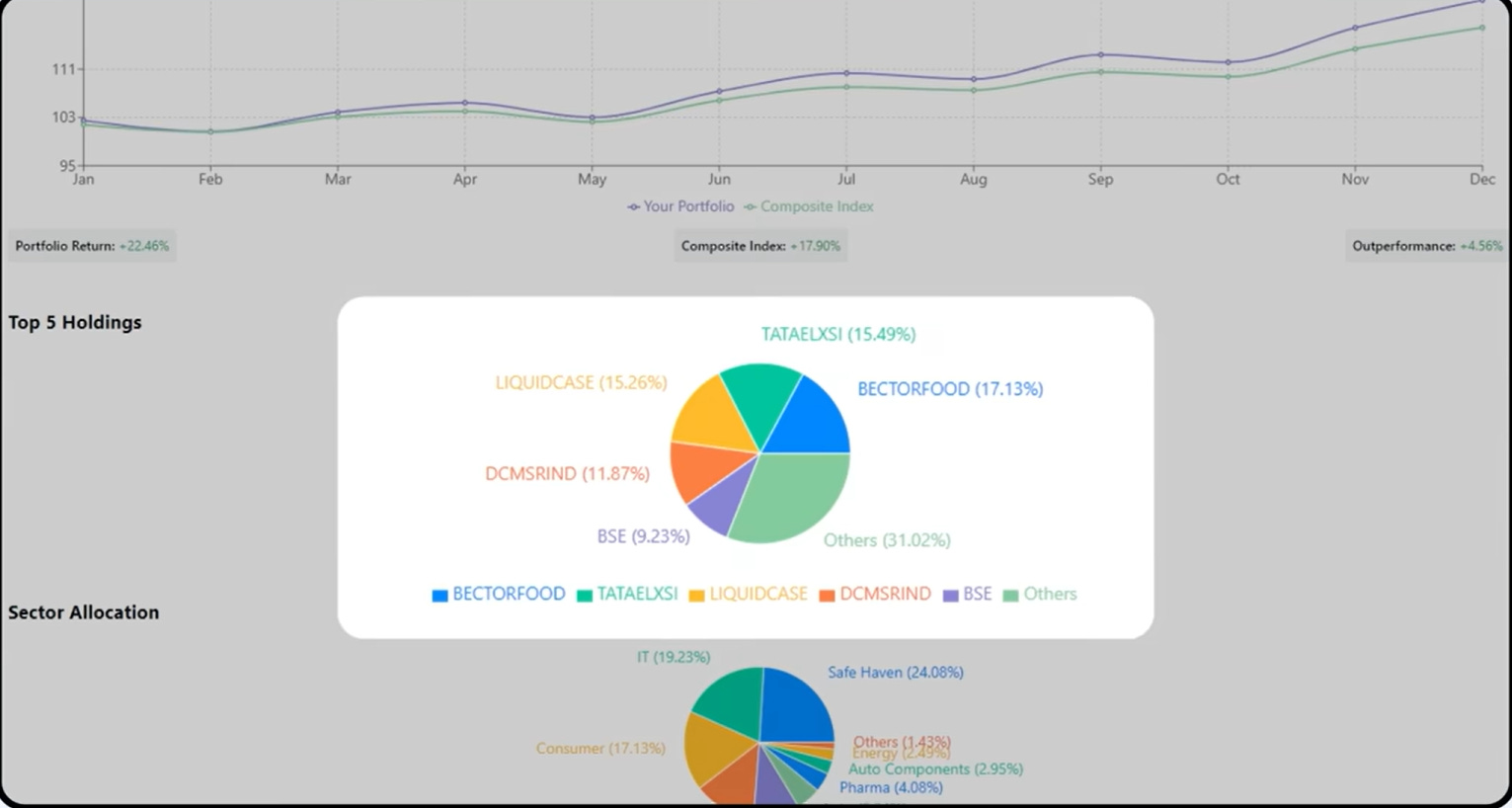
This is the AI money-management application I am most excited about.
There are broadly two kinds of people when it comes to money. One over-saves, constantly anxious that whatever they have will not be enough. The other does not think that far enough ahead, spends now, and only realizes the impact later.
“Can I afford this?” sounds simple. But it takes a village in your head to answer it, because the answer depends on your income, expenses, savings, goals, and the priority you give to each.
That is where these AI tools, in my opinion, are adding a lot of value.
Here is how it works. You save your financial picture in a spreadsheet:
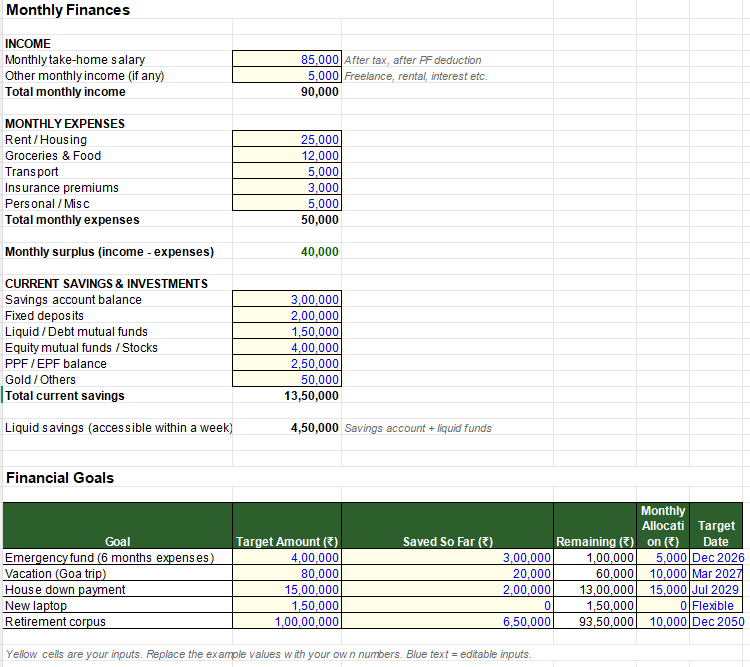
Once that sheet is ready, you upload it to LLMs and ask questions like:
“What happens to my goals if I spend ₹1.5 lakh on a laptop?”
“If I save an extra ₹2,000 a month, how much sooner do I get to go to Goa?”
The AI may give you the hard math you might otherwise ignore when you’re excited. It might tell you: ‘Your emergency fund is safe, but your house down-payment is delayed by two months,’ or ‘warn you that you might need to take on debt.’
What is MCP?
So far, we talked about uploading your data to the chat by downloading your portfolio, putting it into LLM, and asking questions. That works. But every time your portfolio changes, you have to download and upload again.
What if the AI tool could just connect to where your data already lives?
That is what MCP does. Think of it like giving your AI tool permission to look at your apps directly. Your broker, your Google Sheets, whatever. You are not copying anything. It just reads what is already there.
For example, Zerodha’s Kite MCP lets you connect your trading account to an AI tool like Claude. It is read-only and free. You are essentially giving the AI permission to read your portfolio. Once connected, you just ask your questions in plain language and it pulls the answers from your live data.
Google Sheets works similarly: connect it once, and tools like Claude or ChatGPT can read your income, expenses, and goals whenever you ask.
Now, to be clear, we can all do this math ourselves, but AI takes the headache out of it. By taking away the mental effort of calculating everything, these tools make managing money much easier, especially if you hate numbers.
Of course, we cannot end a story on using AI without the caveat you see on every chat screen — ‘AI can make mistakes. Please double-check responses.’
Also, understand what it can be relied upon for and what it cannot.
Calculations can be checked. Judgment is harder to outsource.
It can show you that one sector makes up a third of your portfolio. But it cannot be relied upon yet to tell you whether that exposure is right for you.
It can calculate that you are ₹8 lakh away from your retirement goal. But it cannot be relied upon yet to build you a perfect plan to get there.
It can show you that buying a laptop delays your house goal by two months. But it cannot be relied upon yet to decide whether that tradeoff is worth it.
That difference matters.
And going back to my friend’s story: Remember how he set a $ 3,000 budget for the Colorado trip? They came back home having spent $2,994 on the trip, just $6 away from breaching the budget. His daughter considered that a win. My friend considered it a win in teaching finance.
If a tool that simple can do that for a kid, imagine what the right tool could do for us.
Have you used AI to make money decisions? Tell us in the comments. Curious to know :)
This newsletter is written by Satya Sontanam.
Do read The simple math behind a better portfolio in our Delta newsletter.
For any feedback or topic suggestions, write to us at varsity@zerodha.com

No posts
Comments
Nothing yet. Say the first thing.
Sign in to join the conversation.