
There are wounds that leave no scars upon the skin, yet they quietly reshape the entire soul. Perhaps one of the deepest is the pain of loving someone who was never written for you someone whose heart beats for another, someone whose future belongs elsewhere, while yours remains suspended between hope and surrender. It is a strange kind of grief because nothing has truly been lost, yet everything inside you feels as though it has. You smile when their name is mentioned, but your heart carries the unbearable weight of knowing that you may never be the one standing beside them. You replay conversations that never happened, imagine futures that were never promised, and hold on to possibilities that exist only within the quiet corners of your own heart. It is a loneliness that cannot always be explained, because the world often dismisses it as "just a crush" or "just move on." But Allah, the One who created the human heart, knows that love can become one of the greatest tests a person will ever face. He knows how attachment can keep a person awake long after the world has fallen asleep. He knows what it feels like to silently pray for someone while simultaneously praying for the strength to let them go if they were never meant to be yours. And perhaps that is where the greatest lesson begins: not when the heart gets everything it desires, but when it learns that even its deepest longing must eventually bow before the decree of Allah.

Love, when it is not anchored to Allah, has the power to become an obsession. The Qur'an does not hide this reality. Instead, it presents it with remarkable honesty. Allah says:
"And she, in whose house he was, sought to seduce him. She bolted the doors and said, 'Come to me.' He replied, 'I seek refuge in Allah. Surely my master has treated me well. Indeed, the wrongdoers never succeed.'" (Surah Yusuf 12:23)
Pause at this moment. A house with every door locked. No witnesses. No escape. A woman consumed by her desire. A young man far from his family, sold into slavery, carrying no worldly power. From every human perspective, Yusuf (AS) was vulnerable. Yet the first words that left his lips were not words of fear they were words of faith: "I seek refuge in Allah." Before he protected his reputation, he protected his relationship with his Lord. That is the difference between love that is driven by the nafs and love that is guided by taqwa. One demands, while the other surrenders. One says, "I must have what my heart desires." The other says, "I will only take what Allah has made lawful for me."
When Yusuf (AS) fled, she ran after him, and in desperation she tore his shirt from behind. But when the door opened and her husband stood before them, the truth was not the first thing she chose. Fear overcame honesty. To protect herself, she immediately shifted the blame onto Yusuf (AS). Allah says:
"She said, 'What should be the punishment of one who intended evil for your wife except imprisonment or a painful punishment?'" (Surah Yusuf 12:25)How familiar this scene is throughout history. Sometimes the innocent stand accused while the guilty hide behind convincing words. Yet Allah is Al-Haqq the Absolute Truth. Human beings may succeed in deceiving one another for a while, but no one can deceive Allah. Before Yusuf (AS) defended himself, Allah had already begun defending him. A witness from her own household testified that if the shirt was torn from the front, she was telling the truth, but if it was torn from the back, Yusuf (AS) was truthful. When they saw the shirt torn from behind, the evidence spoke louder than any accusation. Yusuf (AS) did not need to manipulate the truth, because Allah Himself became the Protector of his honour.
This is one of the greatest lessons hidden within this passage. When a believer chooses obedience over temptation, they may still be misunderstood, falsely accused, or even made to suffer. But the One who witnessed their sincerity is the One who ultimately unveils the truth. Allah does not abandon those who choose Him over their desires. Even when every door appears to be locked, He is already opening another that no human eye can yet see.
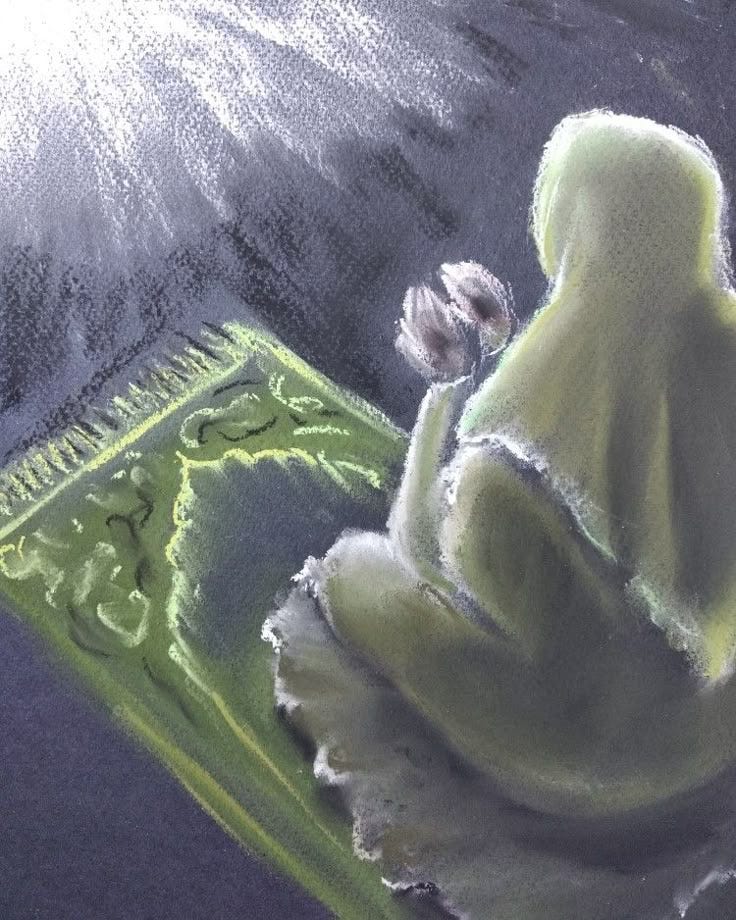
Now there is another perspective.
Among the most beautiful lessons drawn from the story of Zuleikha is not the story of lov it is the story of guidance. At first, her heart was consumed by a love that was misplaced. It was a love that pushed her towards obsession, deception, and eventually the imprisonment of an innocent man. She desired Yusuf (عليه السلام) so intensely that she was willing to sacrifice truth for the sake of her own longing. Yet Allah, the One who turns hearts, had written a different ending for her story. Time passed. Years passed. Yusuf (عليه السلام) endured prison with patience,

while Allah elevated his rank through every trial. Meanwhile, something far greater was happening within the heart of the woman who had once been responsible for his suffering. Allah guided her. The same heart that had once been attached to a creation slowly became attached to the Creator. Instead of running after Yusuf (عليه السلام), she turned towards Allah. Instead of demanding love from a human being, she begged for the mercy of the Lord of all worlds. Instead of justifying her mistakes, she admitted her sins. This is the true miracle of guidance: it changes not only a person's actions but also the direction of their heart.
The beauty of this perspective is that Allah did not simply forgive her He honored her repentance. According to traditional narrations found in some Islamic historical works, after sincerely repenting, Allah restored what she had lost. It is said that her beauty returned, her youth was renewed, and eventually she was blessed with marriage to Yusuf (عليه السلام). Whether every detail of these narrations is historically established or not, the lesson they convey is profoundly moving. When a servant leaves something for the sake of Allah, Allah is capable of returning it in a way far more beautiful than they could ever imagine. Zuleikha's greatest achievement was not that she attained Yusuf (عليه السلام); it was that she attained Allah first. Had she continued chasing Yusuf while remaining distant from her Lord, she would have remained empty no matter what she possessed. But when she sought Allah's forgiveness before seeking anything else, her entire destiny changed. Allah, whose treasures never diminish, granted her dignity after humiliation, peace after regret, hope after despair, and according to these narrations, even the very person she once desired. It is as though Allah was teaching humanity that when your priorities are corrected, your life is corrected.
This perspective speaks to every believer today. We often spend years chasing people, opportunities, relationships, dreams, and worldly ambitions, believing that our happiness lies within them. We exhaust ourselves knocking on the doors of creation while forgetting the Owner of every door. Yet the story of Zuleikha reminds us that the moment a heart sincerely returns to Allah, everything changes. Perhaps Allah grants what we asked for. Perhaps He grants something even better. Perhaps He replaces what we lost with something that brings us closer to Jannah. But one thing is certain: no one who sincerely repents to Allah leaves His mercy empty-handed. Allah is Al-Ghafūr, the Most Forgiving, and Al-Wahhāb, the Ever-Bestowing. He does not merely erase sins; He heals broken hearts, restores honor, opens impossible doors, and gives beyond imagination. The greatest transformation in Zuleikha's story was not the restoration of youth or the fulfillment of a worldly wish it was the transformation of a heart that finally understood that the One worthy of ultimate love was never Yusuf (عليه السلام), but Allah سبحانه وتعالى. And once she found Allah, everything else that was good followed by His permission.
No posts
Comments
Nothing yet. Say the first thing.
Sign in to join the conversation.