
Clearing the Emptiness of the Heart
Perhaps the emptiness inside you is not a void. Perhaps it is a homesickness for Allah.
There comes a strange season in a person's life when nothing is necessarily wrong, and yet nothing feels right. You wake up beneath the same ceiling, walk through the same rooms, answer the same people, perform the same responsibilities, and somehow feel as though you are watching your own life from a distance. You are present, but you are not really there. You laugh, but the laughter does not reach the deepest chambers of your heart. You achieve something you prayed for and, after the excitement disappears, you find yourself staring at the ceiling again, wondering why the thing you thought would save you could not even stay long enough to make you feel whole

. You begin to wonder whether something is wrong with you. Why does the heart become tired even when the body has barely moved? Why does a person become homesick for a place they have never been? Why can you be surrounded by people and still feel unbearably alone? Why can you have a hundred reasons to be grateful and still wake up with an unnamed heaviness sitting upon your chest? Perhaps because there are wounds that no worldly possession can touch. Perhaps because the human heart was created with a door in it that only Allah can enter.
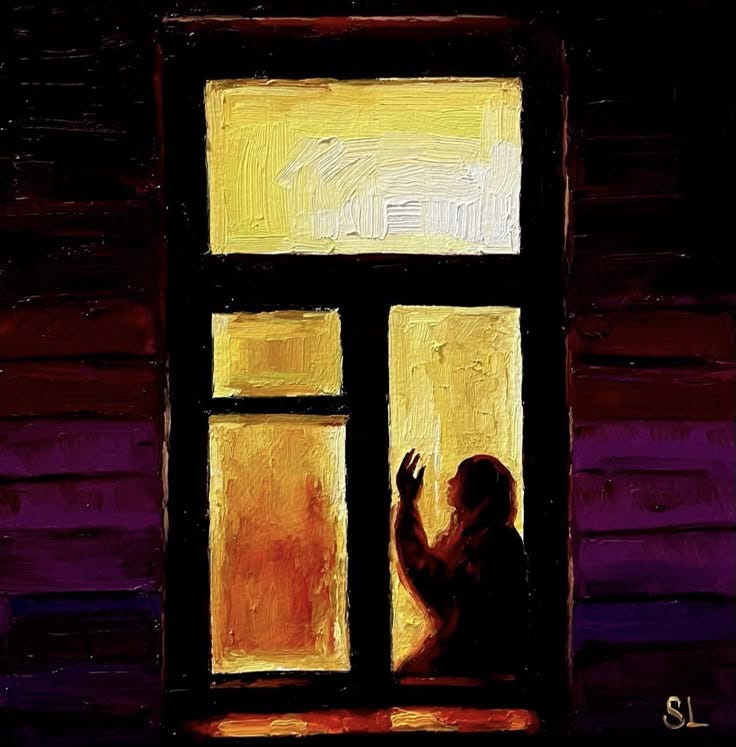
And when that door remains closed for too long, everything else begins to feel strangely insufficient. We spend years trying to furnish an emptiness that was never asking for furniture. We fill our phones, our rooms, our schedules, our friendships, our bank accounts, our achievements, our photographs, our futures and then wonder why the silence still sounds the same when the night comes. We keep adding things to a heart that is not asking for more things. It is asking for its Lord. Allah tells us, “Surely, in the remembrance of Allah do hearts find comfort.” (Qur'an 13:28). There is something devastatingly beautiful about this verse because Allah does not promise that the heart will find its deepest rest in getting everything it wants. He does not say the heart will become tranquil when you finally become beautiful enough, successful enough, loved enough, rich enough, married enough, admired enough, or accomplished enough. The heart finds its itmi'nan in Him. ❤️
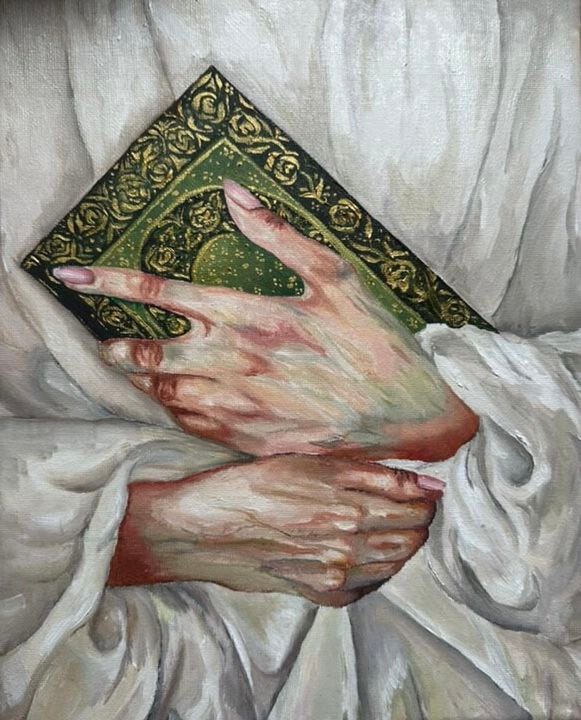
And perhaps this is the secret we spend half our lives learning and the other half relearning: the world can entertain the heart, distract the heart, stimulate the heart, flatter the heart, even temporarily comfort the heart but it cannot become the home of the heart. Because the heart belongs to Allah. And sometimes Allah allows you to become exhausted by everything else precisely so that you finally stop asking everything else to be what only He can be
.
There are moments when life becomes so confusing that you no longer know which road to take
. Every direction seems uncertain. The plans you made begin collapsing one after another. The future becomes a fog. You start asking, What is the point? Where am I going? What am I even supposed to do with this life? And I want you to remember something before despair convinces you that your story has already been written in disappointment: Allah can change a life in a moment. The same Allah who opened the sea for Musa عليه السلام does not need a thousand years to open a door for you. The same Allah who brought Zakariyya عليه السلام a child when worldly circumstances appeared impossible does not require circumstances to make sense before answering you. The same Allah who brought Yusuf عليه السلام from the darkness of a well to the honour of a position he could never have imagined does not need you to understand the route by which He will take you to your destination. You are looking at the road. Allah is looking at the entire map. You are looking at the locked door. Allah knows what is behind it. You are looking at the delay. Allah knows what the delay is protecting you from. You are looking at the absence. Allah knows what is being prepared in the unseen. So never confuse delay with denial, and never confuse silence with abandonment. A closed door is not proof that Allah has forgotten your address. Sometimes Allah closes a door because you were about to walk into a room that would have destroyed you. Sometimes He removes something because you were beginning to worship it without realizing it. Sometimes He lets you lose what you loved because He knows that if you kept it, you would eventually lose Him. And there is another uncomfortable reality that we must be brave enough to discuss: the unseen exists. The Qur'an teaches us to seek refuge from the evil of envy, and the Prophet ﷺ taught us authentic forms of protection and ruqyah. But faith does not mean turning every unanswered dua, every illness, every failure, every bad day, every financial problem, and every closed door into evidence of evil eye or supernatural harm. We must learn the balance between spiritual awareness and spiritual paranoia. Protect yourself, yes. Read your adhkar. Recite Qur'an. Make ruqyah. Seek refuge in Allah. But do not become so terrified of the eyes of people that you forget the protection of the One who created those eyes. Do not become obsessed with wondering who envied you while neglecting to ask what is happening inside your own heart. Because perhaps the most frightening eye is sometimes the eye that looks at another person's blessing and silently wishes, I wish they did not have it. We are very comfortable speaking about the envy of others, but much less comfortable admitting that envy sometimes visits us too. You see someone's marriage and something inside you aches. Someone gets accepted into the university you wanted and your smile becomes slightly heavier. Someone becomes beautiful in the way you always wished to be. Someone's father is proud of them. Someone receives the opportunity you spent years praying for. And suddenly you are forced to meet a version of yourself you did not know existed. A version capable of looking at another person's blessing and feeling pain because it was not yours. Do not romanticize that feeling. Do not feed it. But do not despair because you discovered it either. The heart is a battlefield, and purification is a lifelong war. Say, Ya Allah, purify me from hasad. Bless them, and bless me with what is good for me. Make me content with Your decree. Because someone else's rizq does not mean Allah has run out of yours. Their wedding did not cancel yours. Their acceptance did not reject you. Their beauty did not steal yours. Their success did not make Allah less capable of blessing you. Allah's خزائن do not become smaller because someone else received something beautiful. The ocean does not become less of an ocean because one person filled a cup from it. So stop looking at another person's chapter as evidence that Allah has forgotten to write yours. You do not know what Allah is doing with your life simply because you cannot see it. And perhaps you have also learned a painful lesson about privacy: not every blessing needs an audience. Not every plan needs to be announced. Not every dream needs to be carried into every room. Some blessings are safer when they remain between you and Allah until they become reality. Not because every human being is secretly waiting for your downfall, but because the heart is fragile and the dunya is full of eyes, opinions, comparisons, and unnecessary noise. Sometimes silence is not fear. Sometimes silence is wisdom. And if your heart has become empty, do not wait until you feel religious enough to return to Allah. Return while you are numb. Return while your prayers feel heavy. Return while your iman is weak. Return while you are ashamed. Return while you are still carrying the sins you promised yourself you would never repeat. Return while you are disappointed in yourself. Return while you cannot even formulate a beautiful dua. Allah does not ask you to return as a perfect servant. He asks you to return. Perhaps your entire spiritual journey will be nothing more glamorous than falling and returning, falling and returning, falling and returning—until one day you realize that the greatest evidence of Allah's mercy was not that you never fell, but that He kept giving you the desire to get back up. Shaytan does not always need to make you love your sins. Sometimes he only needs to make you ashamed of returning. He whispers, Look at what you have done. How can you stand before Allah after this? And you must answer him: Because there is nowhere else to go. I am not returning because I am worthy of His mercy. I am returning because He is Ar-Rahman. I am not returning because I am pure. I am returning because He is the One who purifies. I am not returning because I have never betrayed my own promises. I am returning because He has never stopped opening the door of repentance. Allah says, “Do not despair of the mercy of Allah.” (Qur'an 39:53). There are few things more beautiful than the fact that Allah did not tell the sinner, You are too far away. He told them not to despair. So if you want to rebuild your life, do not begin with a hundred impossible promises. Begin quietly. Wake before Fajr if you are able. Let there be a portion of the night that belongs only to you and Allah. Pray two rak'ahs. Sit there when the world is asleep. Tell Allah what you cannot tell anyone else. Tell Him about the fear you hide beneath your confidence. Tell Him about the dream you are embarrassed to admit you still want. Tell Him about the person you cannot forgive. Tell Him about the sin you keep returning to. Tell Him that you are tired. Tell Him that you are confused. Tell Him that you do not know what you are doing anymore. There is no performance required in front of Allah. You do not need sophisticated vocabulary. A broken Ya Rabb can contain more truth than a thousand polished sentences. Then pray Fajr. Stay for a while after the prayer. Make istighfar. Send salawat upon the Prophet ﷺ. Read Qur'an. Let the first voice your soul hears in the morning be the remembrance of its Creator rather than the endless demands of the world. And when the sun rises, pray Duha if you are able. Then go into the world and do what you are supposed to do. Study. Work. Apply. Build. Heal. Exercise. Learn. Try again. Make the phone call. Send the application. Ask for forgiveness. Ask for help. See the doctor when you need medical care. Seek professional support when life becomes too heavy to carry alone. Islam never taught us that tawakkul means abandoning the means. The Prophet ﷺ taught us the principle beautifully: tie your camel and trust Allah. Tie the camel. Then trust Allah. Make the effort with your hands and surrender the outcome with your heart. Pray Dhuhr. Continue your day. Give sadaqah. It does not have to be extravagant. Perhaps it is twenty rupees. Perhaps it is food. Perhaps it is water. Perhaps it is helping someone carry something. Perhaps it is kindness to someone who cannot repay you. Do not despise small goodness simply because it cannot be photographed. Some of the deeds that matter most will never be witnessed by another human being. And then, when the day begins to disappear, return to Allah again. Pray Maghrib. Read Qur'an. Make your evening adhkar. Pray Isha. And then let the world become quiet. Sleep with the intention that you will wake again. Set the alarm. Because sometimes your spiritual revival begins with something as ordinary as deciding that you will no longer allow your sleep to consume every opportunity to stand before your Lord. And throughout all of this, make Astaghfirullah a language your tongue knows instinctively. Not as a magical formula. Not as a transaction where you count words and demand outcomes. But as an admission of dependence. Astaghfirullah means: Ya Allah, I have wronged myself. Ya Allah, I have forgotten. Ya Allah, I have become distracted. Ya Allah, I have chased things that were never worthy of my heart. Ya Allah, I have been ungrateful. Ya Allah, I have allowed the dunya to become louder than You. Forgive me. Bring me back. And perhaps the deepest form of istighfar is not merely asking Allah to remove the consequences of your sins, but asking Him to remove the version of you that keeps returning to them. There is a difference between wanting forgiveness and wanting transformation. We often ask Allah to forgive the same sin while secretly making no intention to leave the road that leads back to it. We want the mercy of Allah without the discomfort of changing ourselves. But real repentance rearranges a person. It changes what they tolerate. It changes what they chase. It changes what they call success. It changes what they are willing to lose for Allah. And perhaps this is where the emptiness begins to disappear—not because suddenly everything in your life becomes beautiful, but because you finally understand what your life is for. Your purpose was never to collect enough worldly things that you could finally stop being afraid. Your purpose was never to become so admired that nobody could reject you. Your purpose was never to become so successful that you could finally prove your worth. You were created to worship Allah. And worship is not merely prayer beads and prayer mats. Worship is honesty when lying would benefit you. Worship is patience when you have every excuse to become cruel. Worship is lowering your gaze when nobody would know. Worship is earning halal when haram would be easier. Worship is forgiving when revenge feels sweeter. Worship is getting up for Fajr when your body begs you to stay asleep. Worship is studying because you have been entrusted with an ability. Worship is serving your parents. Worship is feeding someone. Worship is controlling your tongue. Worship is refusing to become the person your pain wants you to become. And perhaps one of the darkest truths of growing closer to Allah is this: sometimes Allah will not remove the test immediately because He is using the test to remove something from you. Pride. Attachment. Arrogance. Dependence on people. Obsession with control. The need to be understood. The need to be chosen. The need to know exactly what tomorrow contains. We ask Allah to change our circumstances while He is trying to change our hearts. We say, Ya Allah, remove this hardship, while perhaps Allah is saying through the hardship, Let Me remove what this hardship revealed about you. And when you understand this, suffering begins to look different. It does not become pleasant. Pain is still pain. Loss is still loss. A broken heart still hurts. But suddenly the darkness is no longer meaningless. You begin to see that perhaps there are lessons hidden inside the wounds that could never have been learned in comfort. Perhaps the thing you called a delay was training. Perhaps the person you called a loss was protection. Perhaps the rejection you cried over was redirection. Perhaps the door you begged Allah to open would have led you away from Him. And perhaps the emptiness itself was mercy—a terrifying mercy, but mercy nonetheless—because it made you realize that the world could never be enough. So if you are standing in the ruins of a life you thought would look completely different by now, do not assume Allah has abandoned you. Yusuf عليه السلام had a well before he had a palace. Musa عليه السلام had a sea before he saw it part. Maryam عليها السلام had labour pains beneath a palm tree before Allah brought provision from where she could not have expected it. The story is never only the moment you are currently living. You are reading one page and calling it the whole book. Allah knows every page. And yes, He can change everything in a moment. He can bring the opportunity. He can open the door. He can send the person. He can solve the problem. He can restore what you thought was permanently lost. He can make the impossible possible. But until that moment comes, let Him change you in the waiting. Let the waiting make you softer, not bitter. Let disappointment make you wiser, not cruel. Let rejection make you more dependent on Allah, not more desperate for human approval. Let unanswered duas deepen your relationship with the One to whom you are making them. Let your loneliness become a place where you meet Allah instead of a place where you hate yourself. Let your failures teach you humility. Let your blessings teach you gratitude. Let your sins teach you repentance. Let your wounds teach you mercy. Let the things you cannot control teach you surrender. Because perhaps the greatest miracle Allah can give you is not always the thing you begged Him for. Sometimes it is the heart you become while waiting for it. Sometimes the blessing is not that Allah gives you the world. Sometimes the blessing is that He gives you the world without allowing the world to possess you. So tie your camel. Make the effort. Guard your salah. Read Qur'an. Make ruqyah and authentic adhkar. Give sadaqah. Make istighfar until your tongue becomes familiar with returning. Send salawat. Protect your heart from envy. Ask Allah to purify you from the envy you find within yourself. Keep your blessings private when wisdom calls for privacy. Do not live in fear of people's eyes. Live beneath the protection of Allah. Take worldly means. Seek knowledge. Seek treatment when necessary. Seek counsel. Work for what you want. And then, after you have done everything within your ability, place the outcome where it has always belonged: with Allah.

Because you may not know what tomorrow holds, but Allah does. You may not know how the story ends, but Allah does. You may not know which door will open, but Allah does. And perhaps one morning you will wake up and realize that the thing you thought would take ten years happened in ten minutes. The opportunity arrived. The phone rang. The email came. The door opened. The answer appeared. And you will sit there stunned by how quickly Allah changed what you had spent years believing was impossible. And when that happens, do not say, I was lucky. Say, Alhamdulillah. Do not say, I finally fixed my life. Say, Allah carried me here.
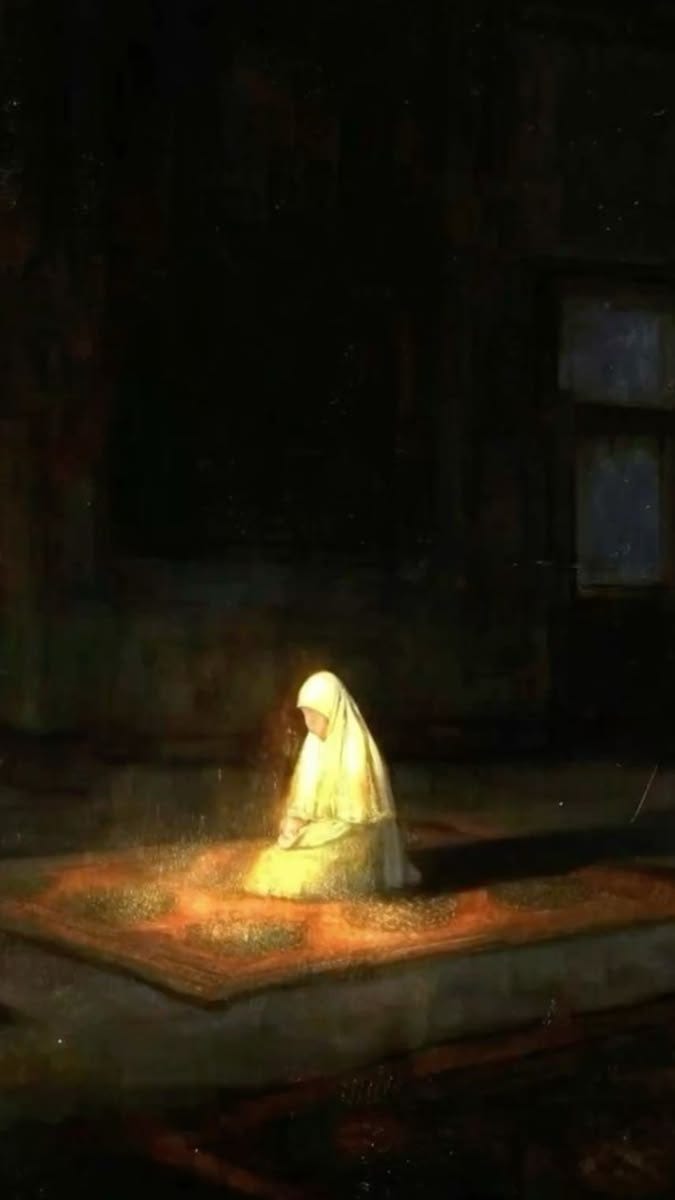
Do not become so fascinated by the miracle that you forget the Miracle-Giver. Because the most dangerous moment is not always when you have nothing. Sometimes it is when you finally have everything you wanted and forget Who gave it to you. So if your heart is empty tonight, perhaps do not rush to fill it with another person, another achievement, another purchase, another distraction, another dream. Sit with the emptiness for a moment. Listen to what it is trying to tell you. Maybe it is not saying, Give me more. Maybe it is whispering, Take me back. Maybe your soul is not starving for the world. Maybe it is starving for its Creator. And perhaps the entire journey back to Allah begins with one small, trembling sentence whispered into the darkness when nobody else can hear you: “Ya Allah, I have spent so long trying to find my way without You. I do not know how to come back, but I am coming anyway. Take me back.” And maybe that is where the emptiness finally begins to close not because the world suddenly became kind, not because every prayer was immediately answered, not because every wound disappeared overnight, but because you finally remembered where your heart belongen d. To Allah. Always to Allah.
No posts
Comments
Nothing yet. Say the first thing.
Sign in to join the conversation.