
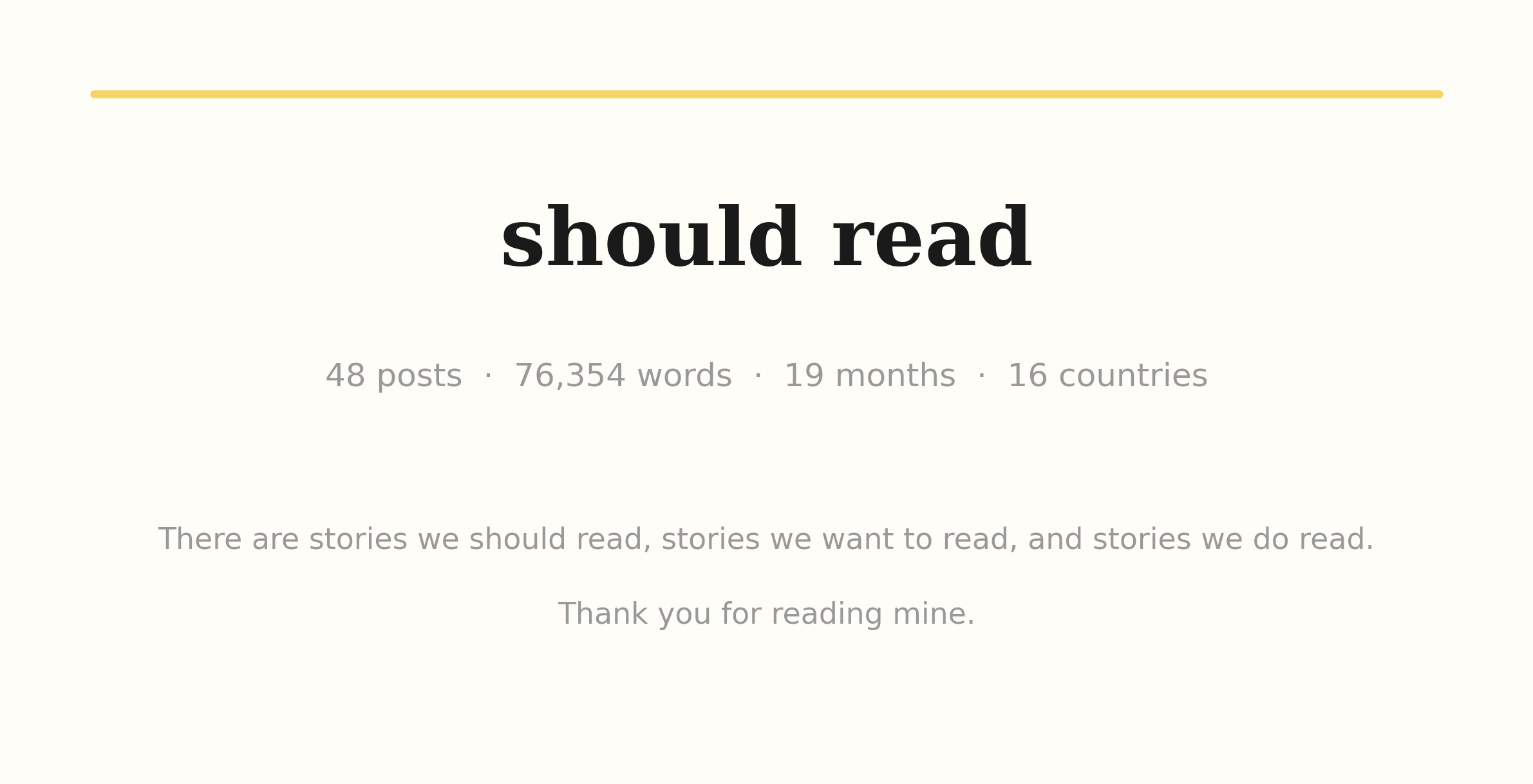
In September 2024 I started posting consistently on Substack — roughly once a week, tackling topics from geopolitics to parenting to AI. Nineteen months and 48 posts later, I finally sat down with the data. Here’s what a year and a half of writing produced:
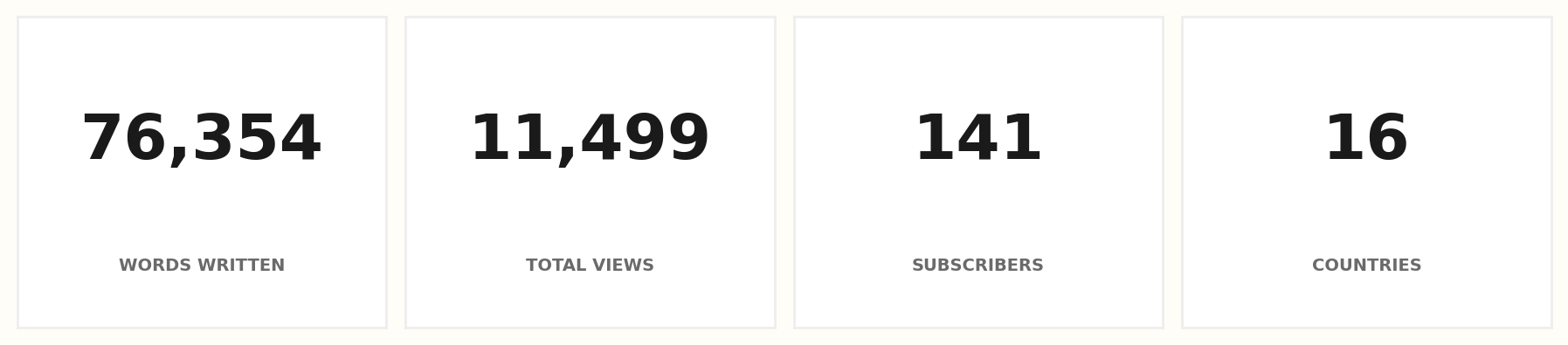
76,354 words is roughly the length of a novel. Spread across 48 posts, that's an average of 1,590 words per essay — about a 7-minute read. Turned out I had a lot to get off my chest.
I ranked every post across 8 different metrics — views, shares, signups, engagement depth, reread ratio, viral reach, audience quality, and a blended “cold growth” score. Then I averaged the ranks to find which posts were consistently strong, not just one-dimensional spikes.
The overall #1? “Is Europe facing a slow and agonising decline?” — a piece from my third week based on Mario Draghi’s report. It ranked in the top 10 on 6 out of 8 metrics. It got 359 views from just 4 email subscribers (a 90x viral coefficient), was shared 5 times, and brought in 8 new readers.
What surprised me more was #4: “Once businesses get big, they want to keep it that way.” I thought that piece had flopped. It only got 179 views. But it ranked #3 on cold growth score, #3 on engagement depth, and #5 on viral reach. The people who found it loved it. This is a salutary tale of why a blended scorecard of metrics are important to analyse not just a vanity metric like views.
Your best work isn’t always the work you think is best. Some posts that felt like failures were doing the most important work — converting strangers into subscribers.
I split my 48 posts into two groups: those with question-mark titles and those without. The difference was dramatic.
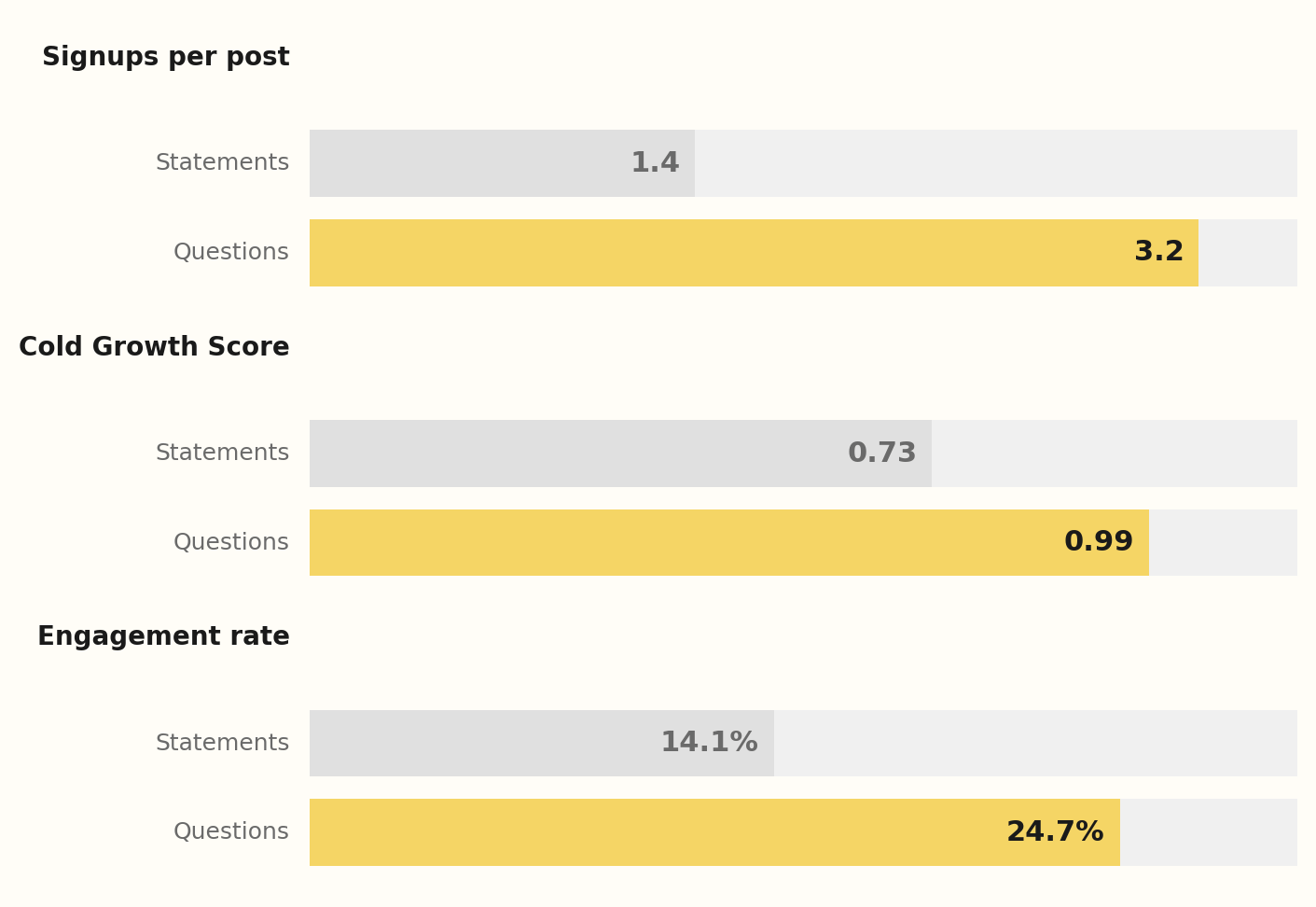
Question titles generate 2.3x more signups and a 75% higher engagement rate. My readers want to be asked a question they haven't considered — not told a conclusion.
I assumed shorter posts would perform better — less time commitment, easier to share. That’s also what we are constantly told. Keep it short, no more than 800 words, easy to scan, lots of “takeaways” etc etc.
The data said the opposite.
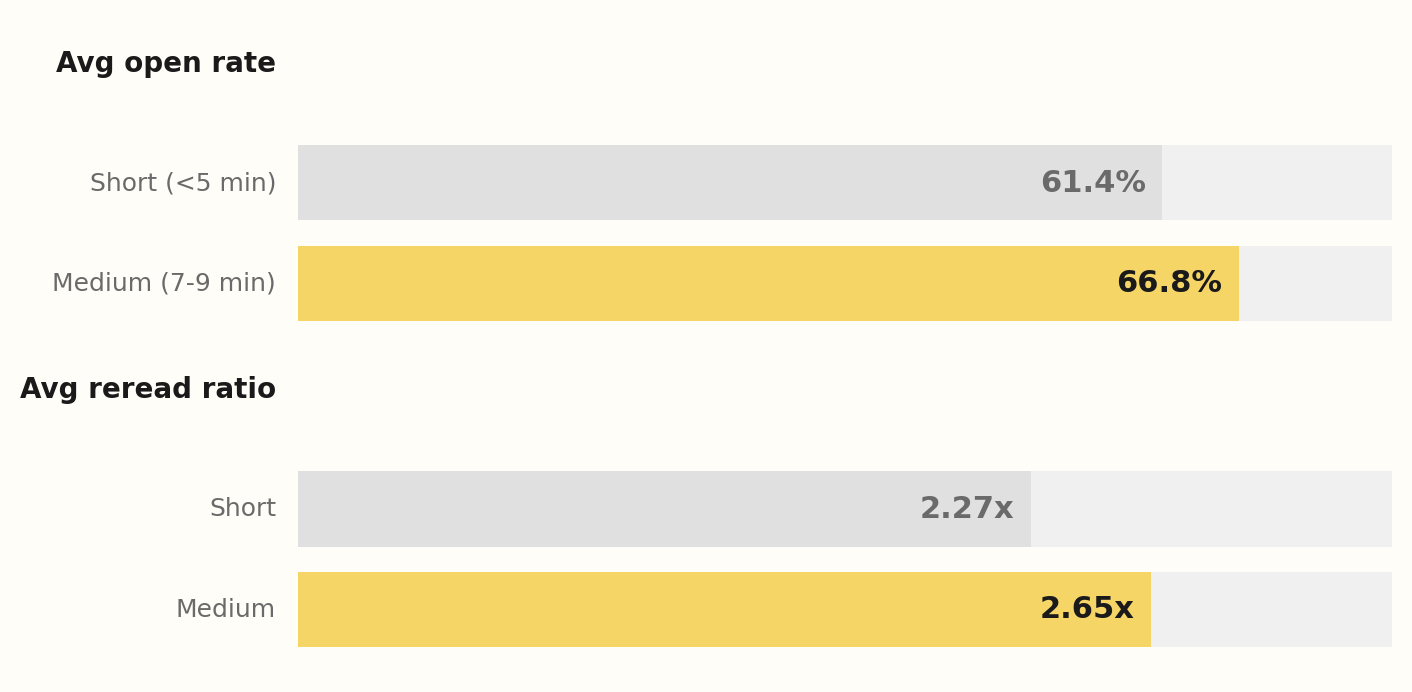
Posts in the 1,500–2,500 word range (a 7-9 minute read) outperformed shorter pieces on every metric: higher open rate (66.8% vs 61.4%), more shares, more signups, and crucially, a higher reread ratio. The one statistically significant finding (p=0.013) is that longer posts get re-read more — people return to them like reference material.
My three most re-read posts?
“We are witnessing the greatest wealth transfer in the history of mankind”. This one is very data rich and involved a lot of number crunching in Excel (written pre-Claude).
“If AI search ignores you, you’re invisible”. This piece went deep!
“Why do so few articles make a lasting impression?”. This piece was more curatorial, but was a carefully catalogued list of my favourite articles of the past decade, which I had stored in a Apple Notes folder and religiously updated, so again, big on effort!
From September 2024 to August 2025, I posted almost every week — 39 posts in 12 months, averaging 8.8 days between essays.
Then fractional + documentary filmmaking life intervened.
From September 2025 onward, I managed just 9 posts in 8 months, with gaps stretching to 29, 35, even 55 days. The data split cleanly into two eras:
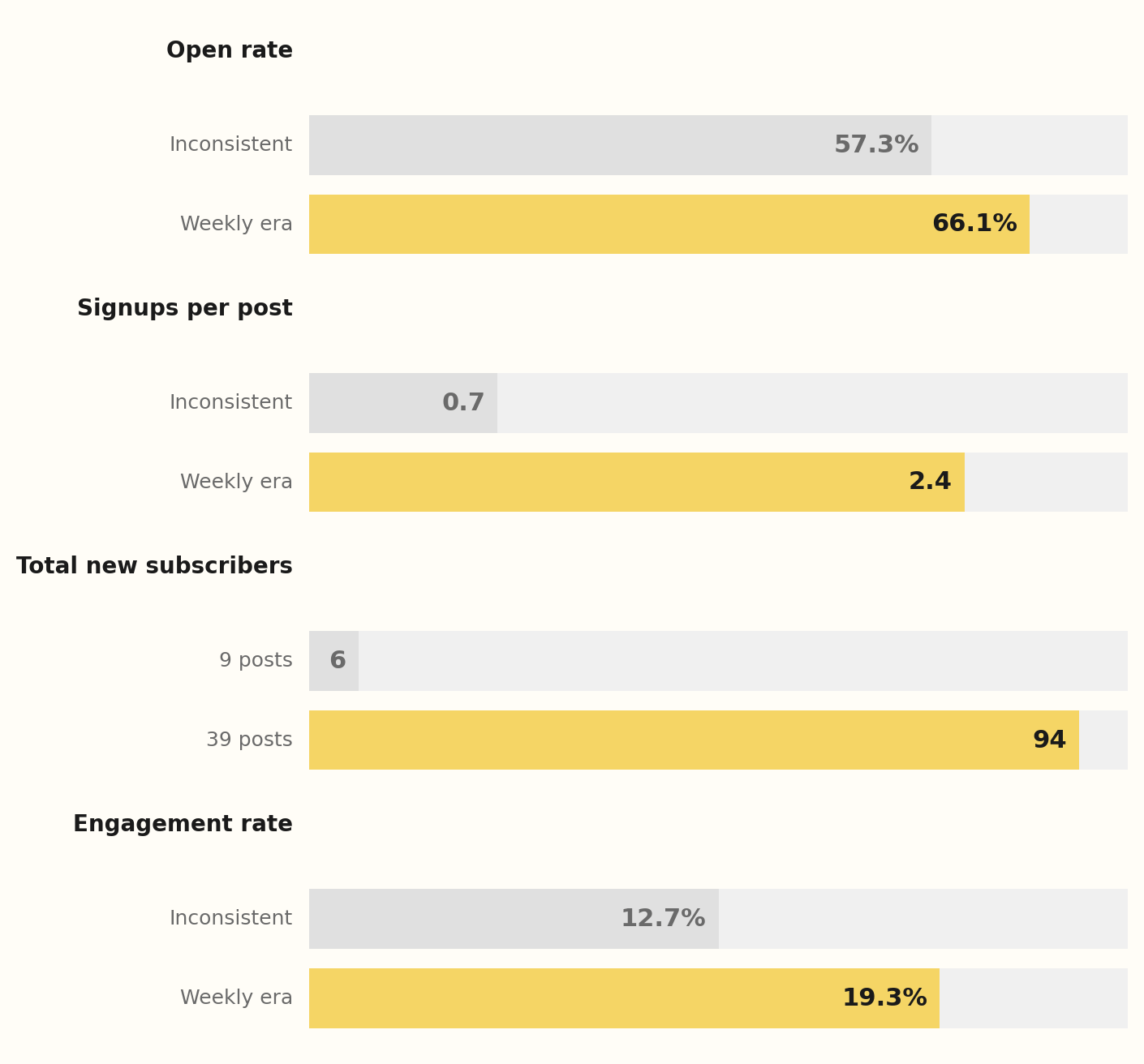
Here’s the twist: views per post actually went up during the inconsistent period — 259 vs 235. The audience was still there when I published. What broke was the habit. When you’re in someone’s inbox weekly, opening becomes automatic. When you vanish for a month, that reflex dies. My most recent post, after a 43-day gap, hit a 50% open rate — my lowest ever.
That's why professional journalists now turned Substackers like Derek Thompson, Helen Lewis and James Marriott publish every week on the same day at the same time. I know this, I just need to manage to find something worthwhile to say with a weekly cadence, which I am currently not managing to do. Hence this post!
FOBO — my piece on the Fear Of Becoming Obsolete — is one of only two posts from the last 8 months to make the overall top 20. It came in at #20 with 336 views, 4 shares, and 8 reactions (my most-liked post ever). But zero signups.
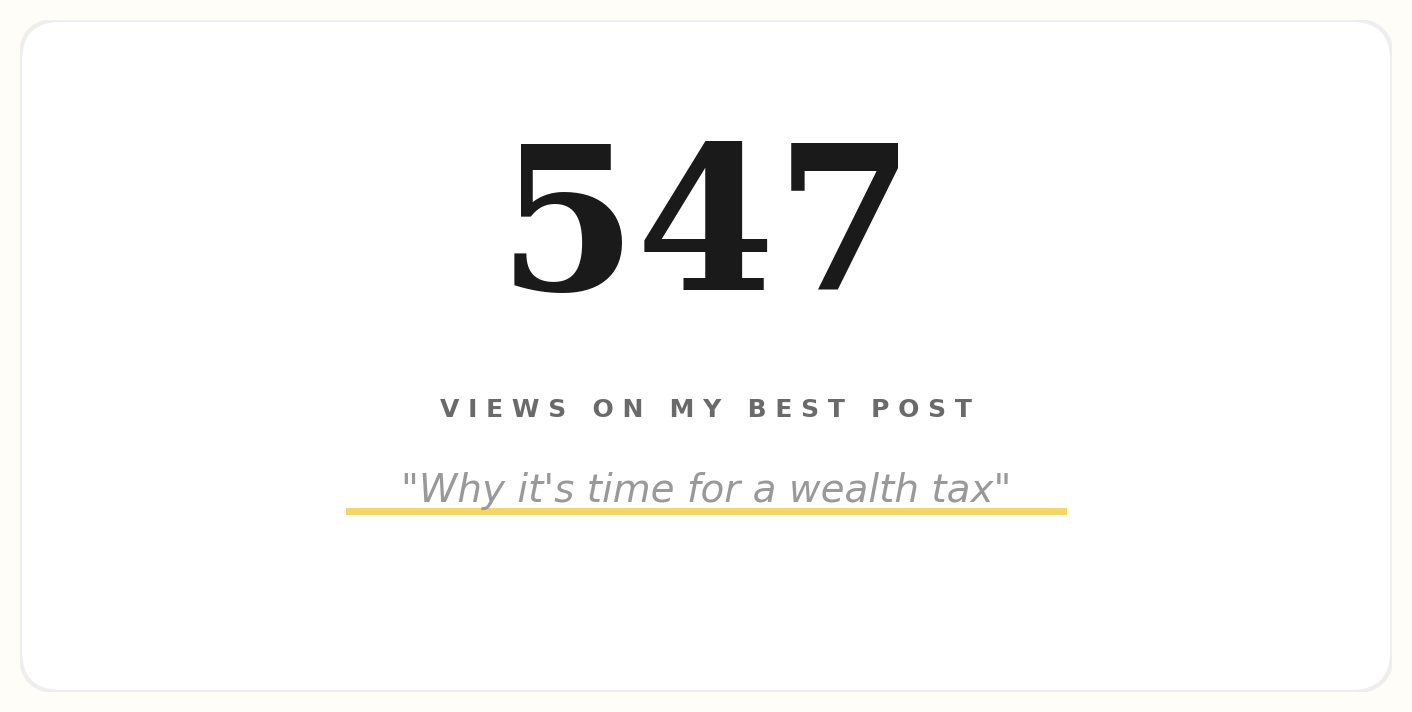
The other? “Why it’s time for a wealth tax” at #15 — a shamelessly left-wing populist post that clamored for attention and rode the news cycle. It got 547 views — my highest ever — which probably says more about the internet than it does about tax policy. Alas, I had to rebuke my own arguments a few weeks later after many very thoughtful and well argued private comments from my subscribers, and spend many late nights reading very dry tax policy papers. That will teach me!
And then there’s “The algorithm of starvation” at #16 — my most controversial post, and the one that generated the most response off platform. LinkedIn DMs. A long, deeply personal email from a Palestinian friend. Messages from two former Israeli colleagues — one warm, one decidedly less so. None of this shows up in Substack’s metrics. No comments, no reactions, no signups. By the data, it underperformed. In reality, it was probably the post that moved people the most.
That’s a blind spot worth remembering: the posts that make someone stop, think, or feel something don’t always leave a trace. Sometimes the impact stays personal and isn’t shared. Not everything that matters gets measured.
So, that’s the consequence of inconsistency: posts that resonated with existing readers struggled to bring in anyone new. The growth flywheel needs both frequency and quality to spin. FOBO had quality, wealth tax had plenty of views, neither had momentum.
Each post ranked 1–48 on 8 metrics. The coloured bars show consistency — more gold means a post ranked in the top 5 on more metrics. A lower average score is better.
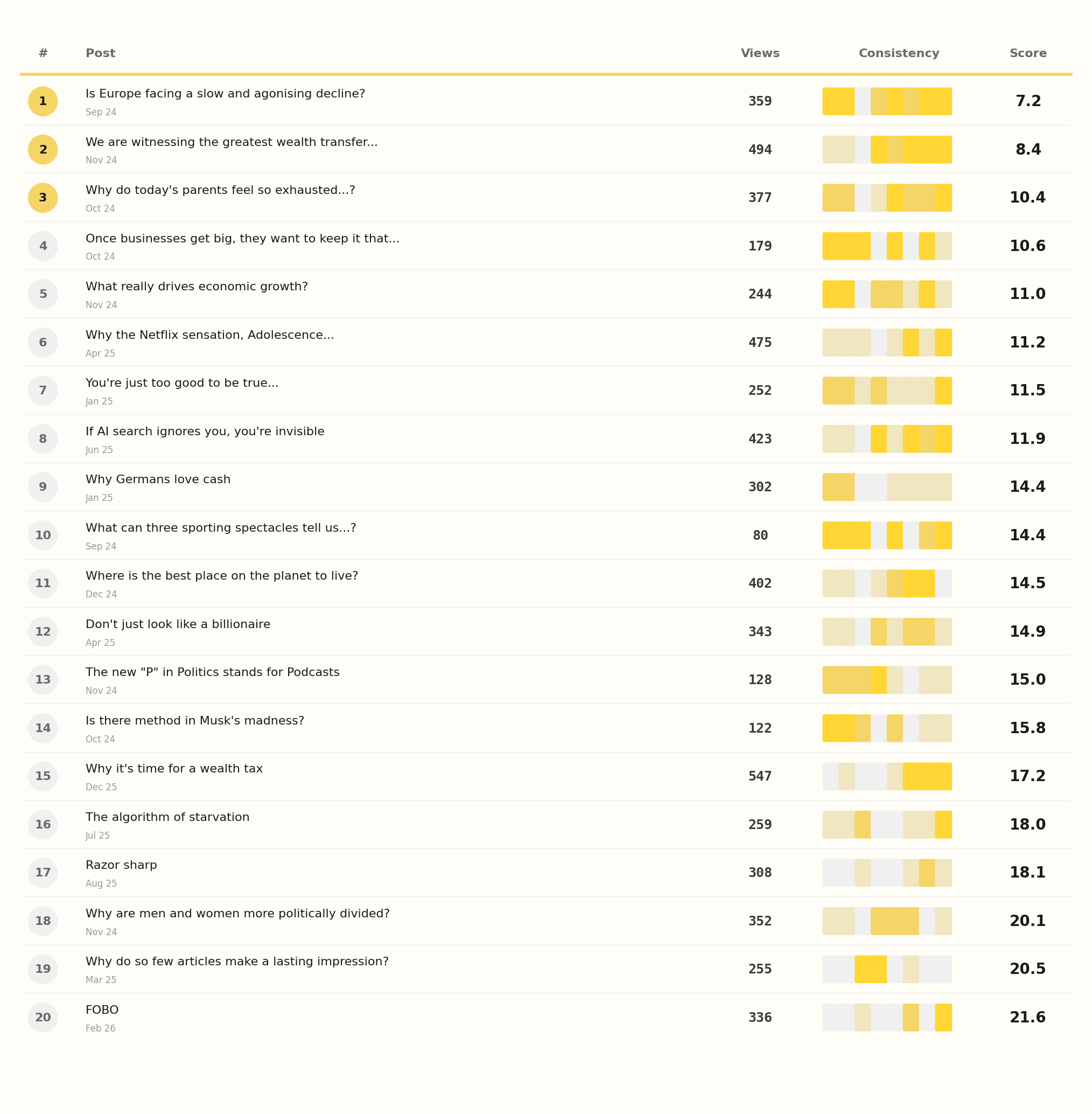
Feel free to re-read the top 5 by cross-ranking which are: Is Europe facing a slow and agonising decline? (7.2), We are witnessing the greatest wealth transfer in history (8.4), Why do today’s parents feel so exhausted? (10.4), Once businesses get big, they want to keep it that way (10.6), and What really drives economic growth? (11.0).
I never tried to fit my writing to the Substack algorithm.
I never (knowingly) optimised a headline for clicks. I just tried to pick the most fitting headline for the content I’d written.
I did it for the pleasure of writing — of taking a half-formed thought and turning it into something worth reading. Some weeks I really struggled to produce anything I was proud of. A few pieces I really am proud of.
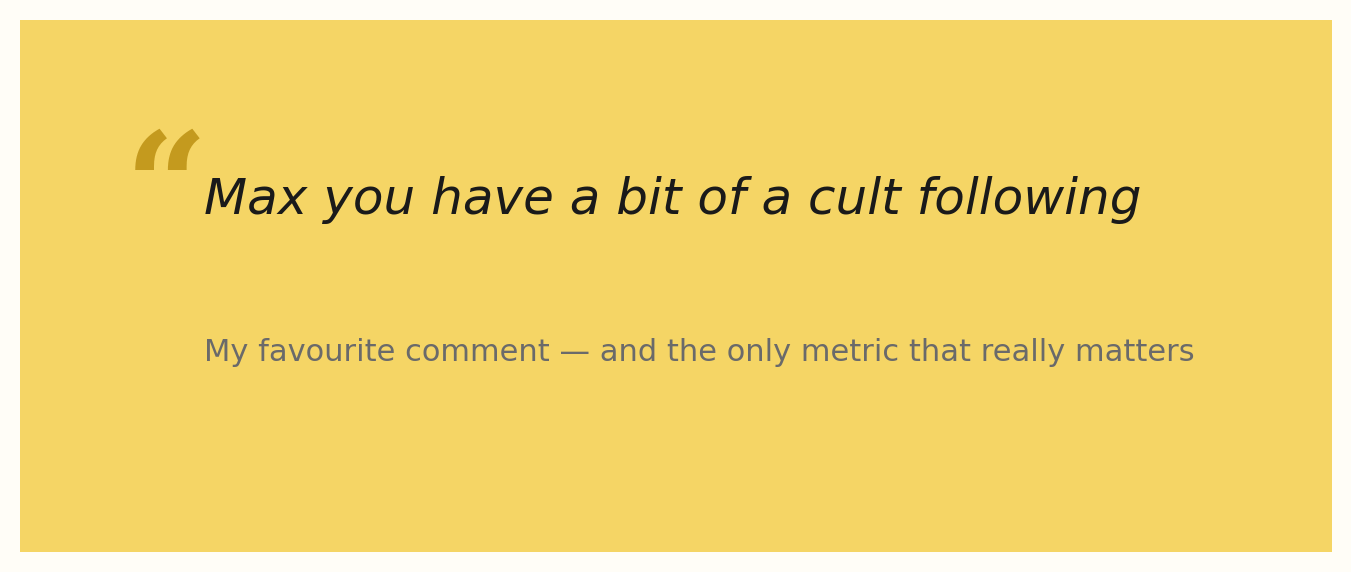
My favourite every comment from a reader (thanks Hannah!). I am well short of 1000 true fans, or any OnlyFans for that matter, but will keep buggering on.
So thank you to every one of you who has subscribed, opened an email, left a comment, or shared a post with someone you thought should read it.
A new post — informed by the data above. A question in the title? Maybe. Politics and geopolitics with a sprinkle of AI? Perhaps. The intersection of a macro trend and what it means for ordinary people? Now that would be shameless.
But before that — which is your favourite should read post? Drop it in the comments, I’d love to hear from you :-)
No posts
Comments
Nothing yet. Say the first thing.
Sign in to join the conversation.