
Delaying gratification is a process of scheduling the pain and pleasure of life in such a way as to enhance the pleasure by meeting and experiencing the pain first and getting it over with. It is the only decent way to live.
– Scott Peck
I waited for two hours straight to get into the exhibition, showcasing paintings from Henri Rousseau. I never queued that long for art in my life. And this is where it gets interesting: the retrospective featured handwritten letters Rousseau sent to various salon organisers, basically begging for consideration.
Recognition was a massive struggle for the self-taught Rousseau. If only he could see that line, longer than for Space Mountain, full of Koreans and Latinos wondering if they would make their way into the Musée de l’Orangerie.
Fun facts about Henri:
He spent most of his working life as a low-ranking employee in Paris's municipal tax service.
He only quit his job at 49 to devote himself fully to painting.
He had no formal artistic training.
He was mocked by critics who wrote about his lack of skills and his ‘faulty perspective’.
This one got me: he never visited a jungle. He never travelled outside France.
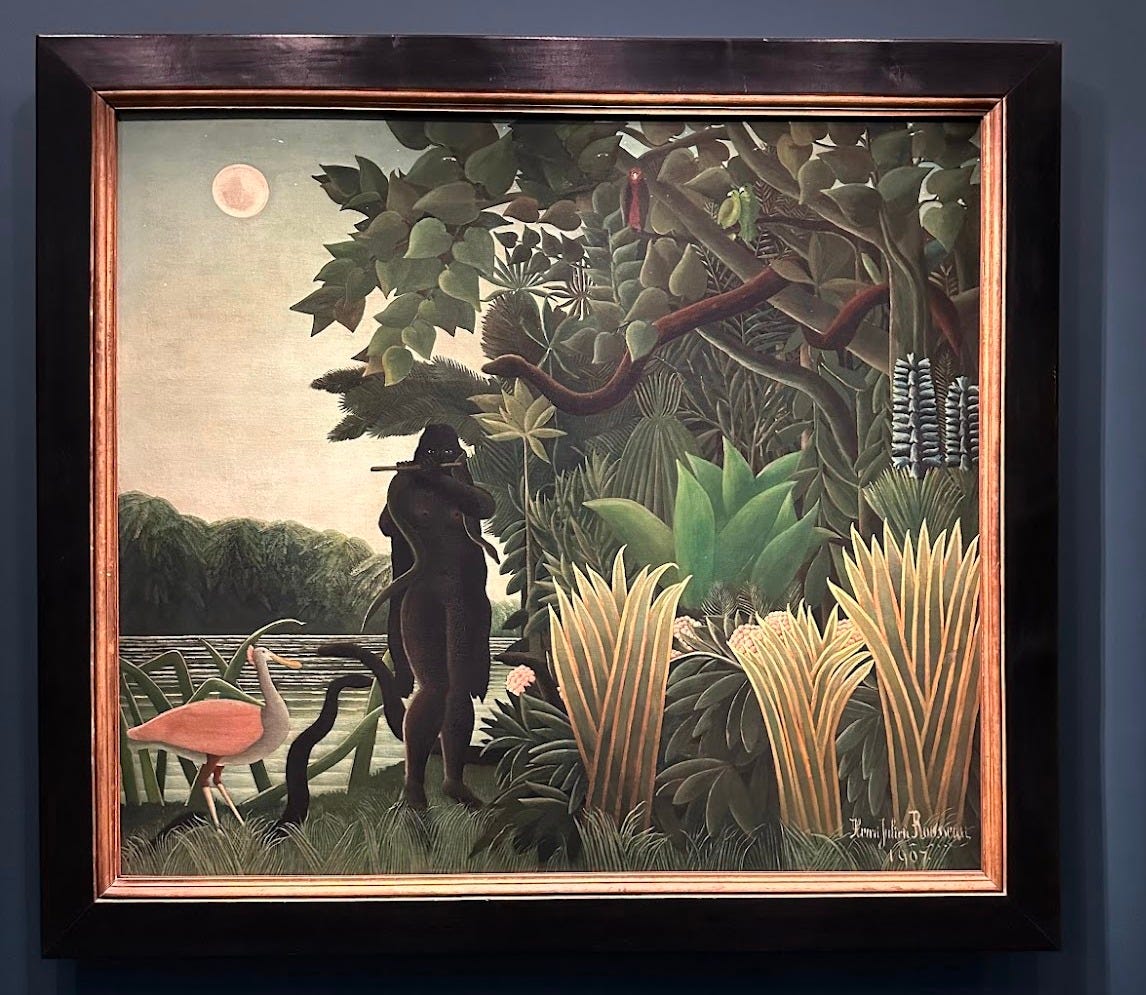
So you can be a visionary traveller without a passport or even a suitcase.
You can produce legendary art as a side hustle while living an incognito 9-to-5.
Critics, well… one day they ridicule you, the next they are queuing.
Recognition has its own timing.
Talking about timing, have you heard of the Long Now? (Co-founded by Brian Eno, if that helps you click that cool rabbit hole of a link.)
The Long Now Foundation is a globally-recognized champion of long-term thinking and responsibility, operating within the context of the next and last 10,000 years — a timespan we call the long now.
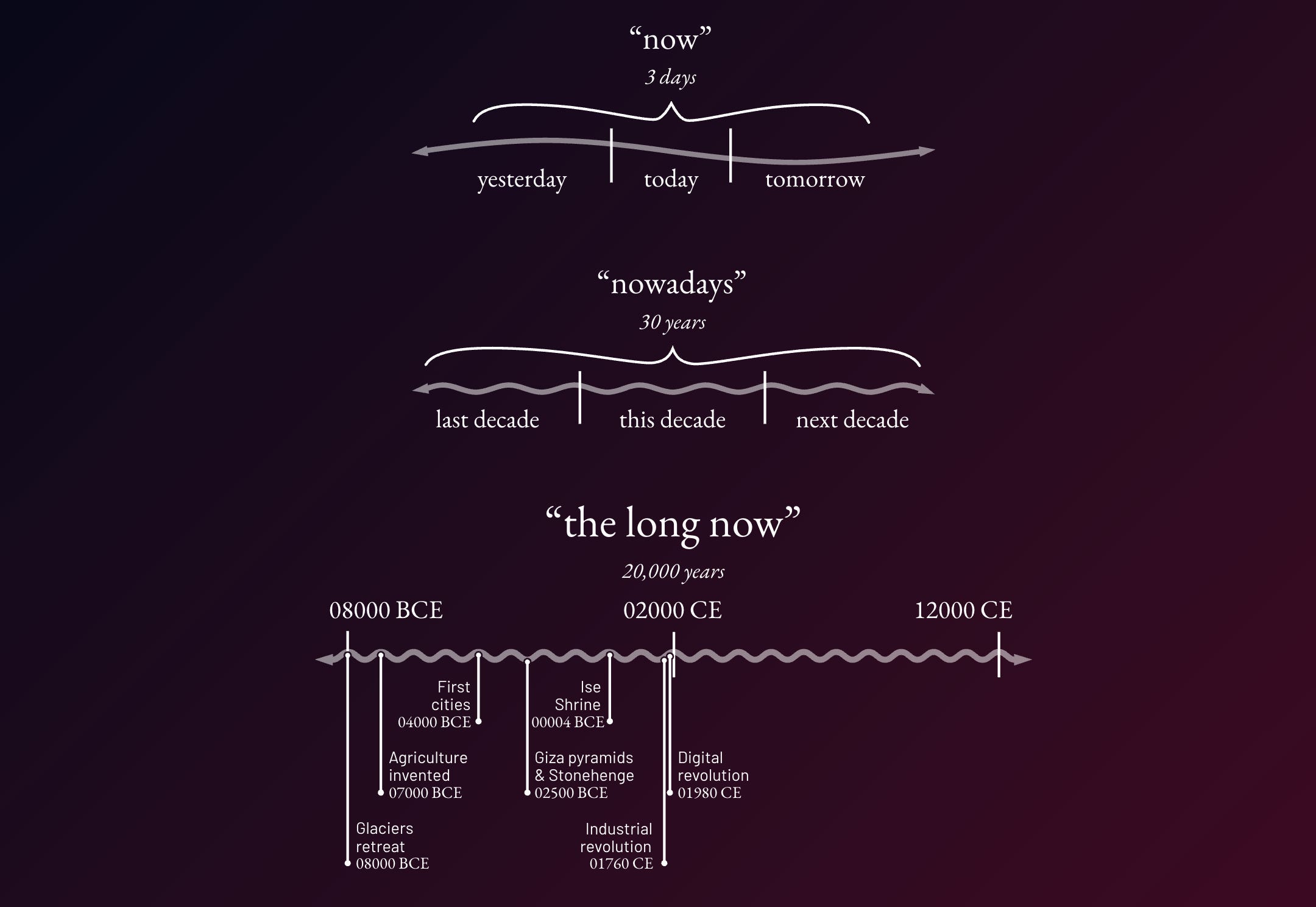
Here’s a sample of what you’ll find there - co-founder Stewart Brand’s idea of pace layers, in the diagram below, you might have already seen.

Each layer must respect the different pace of the others. If commerce, for example, is allowed by governance and culture to push nature at a commercial pace, then all-supporting natural forests, fisheries, and aquifers will be lost. If governance is changed suddenly instead of gradually, you get the catastrophic French and Russian revolutions. In the Soviet Union, governance tried to ignore the constraints of culture and nature while forcing a five-year-plan infrastructure pace on commerce and art. Thus cutting itself off from both support and innovation, it was doomed.
I had a coffee with a friend. If you meet him, he’ll introduce himself as a fashion photographer. That’s who he is.
We barely talked about his work - we talked about his other passion: fishing. Specifically, fly fishing. From his under-the-radar finsta dedicated to this hobby, he showed me his photos - not of campaigns, but of trout and pike. That account has a following, none of whom would imagine the knee-deep-in-the-water author sipping a New Wave latte amid that trendy Partisan Café crowd.
Agent double.
Always remember to ask the crucial ‘What are you excited about at the moment?’ to skip the dull tunnel and get straight to the trout.
wow. The aesthetics, the rawness, the music, the depth.. what a package, what a ride.

I discovered it on the r/nonduality before it got removed by mods (rule 5: no AI-related posts etc..)
The author shared a small book he entirely generated with Claude Fable 5 on ‘Ultracode’ mode, its highest-effort setting.
The pitch:
What if I give AI the assignment to dig through everything humanity has written about the human experience, across all religions and cultures, and get to the core of these timeless teachings?
I clicked out of curiosity and ended up reading the whole thing. I’d qualify this as a good use of AI - it gives you an interesting perspective, always stating the machine POV, never pretending to be human.
Tell me what you think.
While we are on AI, these are great questions to explore, from Neil Postman.
The 7 Questions For Any Technological Idea.
What is the problem that this new technology solves?
Whose problem is it?
What new problems do we create by solving this problem?
Which people and institutions will be most impacted by a technological solution?
What changes in language occur as the result of technological change?
Which shifts in economic and political power might result when this technology is adopted?
What alternative and unintended uses might be made of this technology?
from Maria Popova (s/o to her daunting newsletter, The Marginalian, which I never find the strength to read) on her love of archives:
First, I love the radical reminder that the internet is not all there is. The internet is a surface level of the ocean, a common record of human thought, wisdom, and knowledge. We often believe that if something cannot be found on the internet, it doesn’t exist.
It’s insane to think this, because so much has been thought, felt, written, created, and drawn that still dwells in university basements and libraries. This content has shaped our present more profoundly than the forty-year depth of the internet. Despite some exceptions for public domain materials, so much remains offline.
Consider just one small example, which can be multiplied millions of times across countless institutions worldwide: the 92nd Street Y in New York. It’s one of the most revered literary institutions. They were the first to host many significant events, including Pablo Neruda’s first U.S. appearance and Susan Sontag’s first major lecture. This material exists on reels in their basement, not digitized. Nobody knows it’s there unless they visit and spend time with it. These are real events in the history of the world and the creative universe, yet they are erased from the simulacrum of memory that is the internet.
Join now and get new posts delivered every Monday. The newsletter is always free, with an option to support my work through a paid subscription.
You can also support this newsletter by sharing it with a good friend and giving it a ♡
Thanks for your attention. Take care, and have a great week ☀️
No posts
Comments
Nothing yet. Say the first thing.
Sign in to join the conversation.