
“The only actual service which can be recognized as having been performed by him was that for two months in 1779.”1
On 7 June 1832, Congress passed an act that lowered the pension eligibility to at least six months of service and allowed militia members to qualify. Abel Patrick was suffering from palsy (“loss of energy, loss of the power of performing regular functions”) and was unable to appear before the Court in 1834 to testify to his service. So the Court sent a representative to Abel’s home to take his statement.2
Abel Patrick testified he was born on 15 April 1757 at Norwalk, Fairfield, Connecticut. On 1 March 1776, he enlisted “in Captain Nathan Burrills Company of State Troops, at Norwalk aforesaid in Connecticut for a term of nine months…that after the time of his enlistment had expired he was discharged, verbally, and returned home.” He’d been stationed at Saugatuck and didn’t see any action.3
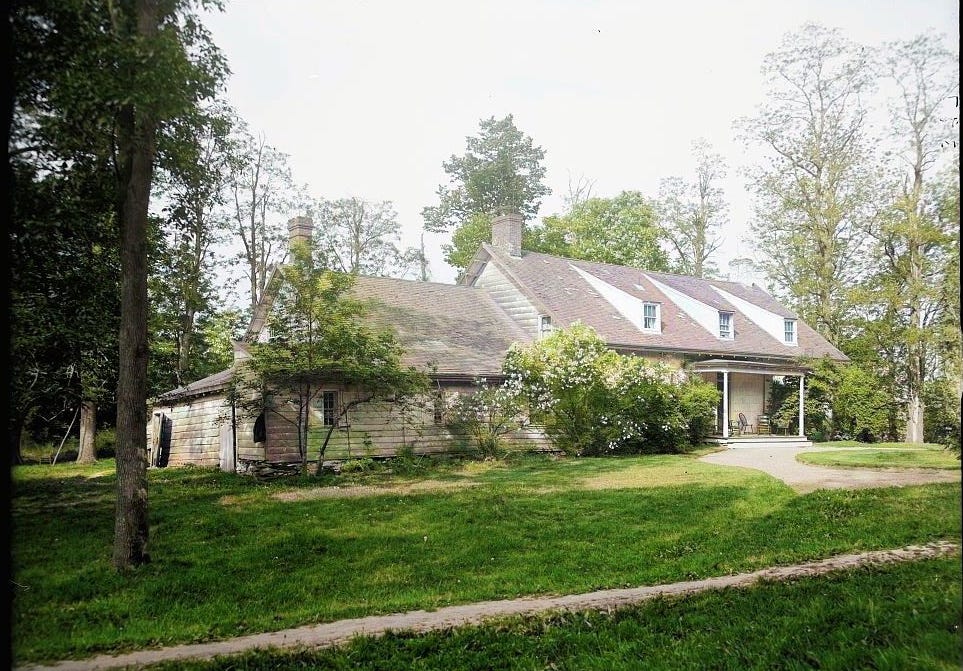
He enlisted again in 1777 and served for six months at Fishkill, New York, guarding the mountain pass to the south and the supplies for the northern division of the Continental Army. He was again verbally discharged at the end of his service and returned home.4
It appears he had had enough of military service, and probably in early 1779, he married Elizabeth Hurlburt. Connecticut, however, felt he needed to serve more, and Abel reported that the state drafted him around 1 August 1779 for a period of nine months. Abel probably didn’t know it at the time, but Elizabeth was pregnant. She gave birth to their first child about eight months later.5
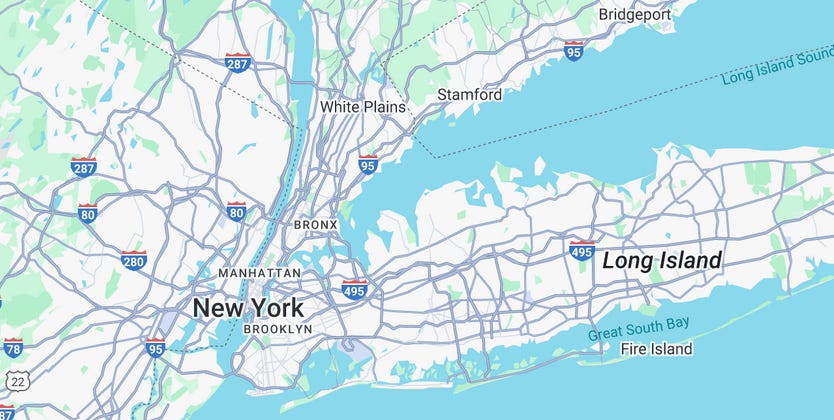
Abel was stationed in Middlesex, performing guard duty—again—on the Connecticut side of Long Island Sound. He testified that sometime in October he was captured by the British while on guard duty and imprisoned on Long Island until he escaped about six months later and returned home.6
Militia records were usually incomplete, and Abel needed a witness to corroborate his story.
The State of Connecticut reported there was no record of an officer named Nathan Burrell and that no state troops had been stationed at Norwalk in 1776. (No mention was made of the 1777 service.) While 4,000 militia were ordered on 2 August 1779 to defend the seacoast and report to their stations on 20 August, the service was for two months. “There are no pay rolls in this office, after 1775, and no record by which it can be ascertained the names of the privates in service, the day they entered or were discharged.”7
Isaac Fillow testified that he and Abel were in the same company at the same time and swore that Abel Patrick had served in the Coast Guards at Norwalk and had been taken prisoner in 1779. It was not enough. Abel Patrick was recognized as having served two months, which did not meet the requirements to qualify for a pension. His request was rejected.8
Abel did not pursue the matter further. However, after his death, his heirs contacted the War Department Pension Office and were told that Abel could not have been taken prisoner and held on Long Island. “There were no prisoners kept on that Island, and although he may have been taken a prisoner, he could not have been detained as such for so long a time as four months.”9
Privacy Policy: Substack shares your name and email address with Your Family Quest. Your Family Quest does not collect any more information and does not share your information.
Revolutionary War Pension and Bounty-Land-Warrant Application Files, Pate, Matthew–Pattee, Richard, file 7995, Abel Patrick, letter from the United States War Department, Pennsylvania Office to H. B. Wright, 4 March 1835; FamilySearch.
“Revolutionary War Veteran and Widow Pensions,” updated 8 August 2023; National Park Service. Also, Revolutionary War Pension and Bounty-Land-Warrant Application Files, Pate, Matthew–Pattee, Richard, file 7995, Abel Patrick, declaration of Abel Patrick in order to obtain a pension under the 1832 act of Congress, 4 June 1834; FamilySearch.
Revolutionary War Pension and Bounty-Land-Warrant Application Files, Pate, Matthew–Pattee, Richard, file 7995, Abel Patrick, declaration of Abel Patrick in order to obtain a pension under the 1832 act of Congress, 4 June 1834; FamilySearch.
Revolutionary War Pension and Bounty-Land-Warrant Application Files, Pate, Matthew–Pattee, Richard, file 7995, Abel Patrick, declaration of Abel Patrick in order to obtain a pension under the 1832 act of Congress, 4 June 1834; FamilySearch. Also, Robert Buccheri, “Town History;” Town of Fishkill, New York.
Revolutionary War Pension and Bounty-Land-Warrant Application Files, Pate, Matthew–Pattee, Richard, file 7995, Abel Patrick, declaration of Abel Patrick in order to obtain a pension under the 1832 act of Congress, 4 June 1834; FamilySearch.
Revolutionary War Pension and Bounty-Land-Warrant Application Files, Pate, Matthew–Pattee, Richard, file 7995, Abel Patrick, declaration of Abel Patrick in order to obtain a pension under the 1832 act of Congress, 4 June 1834; FamilySearch.
Revolutionary War Pension and Bounty-Land-Warrant Application Files, Pate, Matthew–Pattee, Richard, file 7995, Abel Patrick, declaration of Abel Patrick in order to obtain a pension under the 1832 act of Congress, 4 June 1834 & affidavit of Wm J. Ross, Associate Judge that Abel Patrick and his witnesses were credible persons, 4 June 1834 & letter from State of Connecticut Comptroller’s Office to H. B. Wright, Esq., 18 October 1834; FamilySearch.
Revolutionary War Pension and Bounty-Land-Warrant Application Files, Pate, Matthew–Pattee, Richard, file 7995, Abel Patrick, affidavit of Isaac Fillows who served with Abel Patrick in Norwalk, Connecticut, 25 January 1834 & rejection of pension request; FamilySearch.
Revolutionary War Pension and Bounty-Land-Warrant Application Files, Pate, Matthew–Pattee, Richard, file 7995, Abel Patrick, letter from the United States War Department, Pennsylvania Office to H. B. Wright, 4 March 1835; FamilySearch.
Comments
Nothing yet. Say the first thing.
Sign in to join the conversation.