
Dear Young Urbanists Community,
Since our founding in 2013, Young Urbanists (YU) has grown from a small volunteer-led network in Cape Town into a thriving community of urbanists, activists, government officials, civil society leaders, and academics. What started as a platform for students and early-career professionals in architecture, engineering, urban planning, and design has expanded into a dynamic movement dedicated to shaping the future of South African cities.
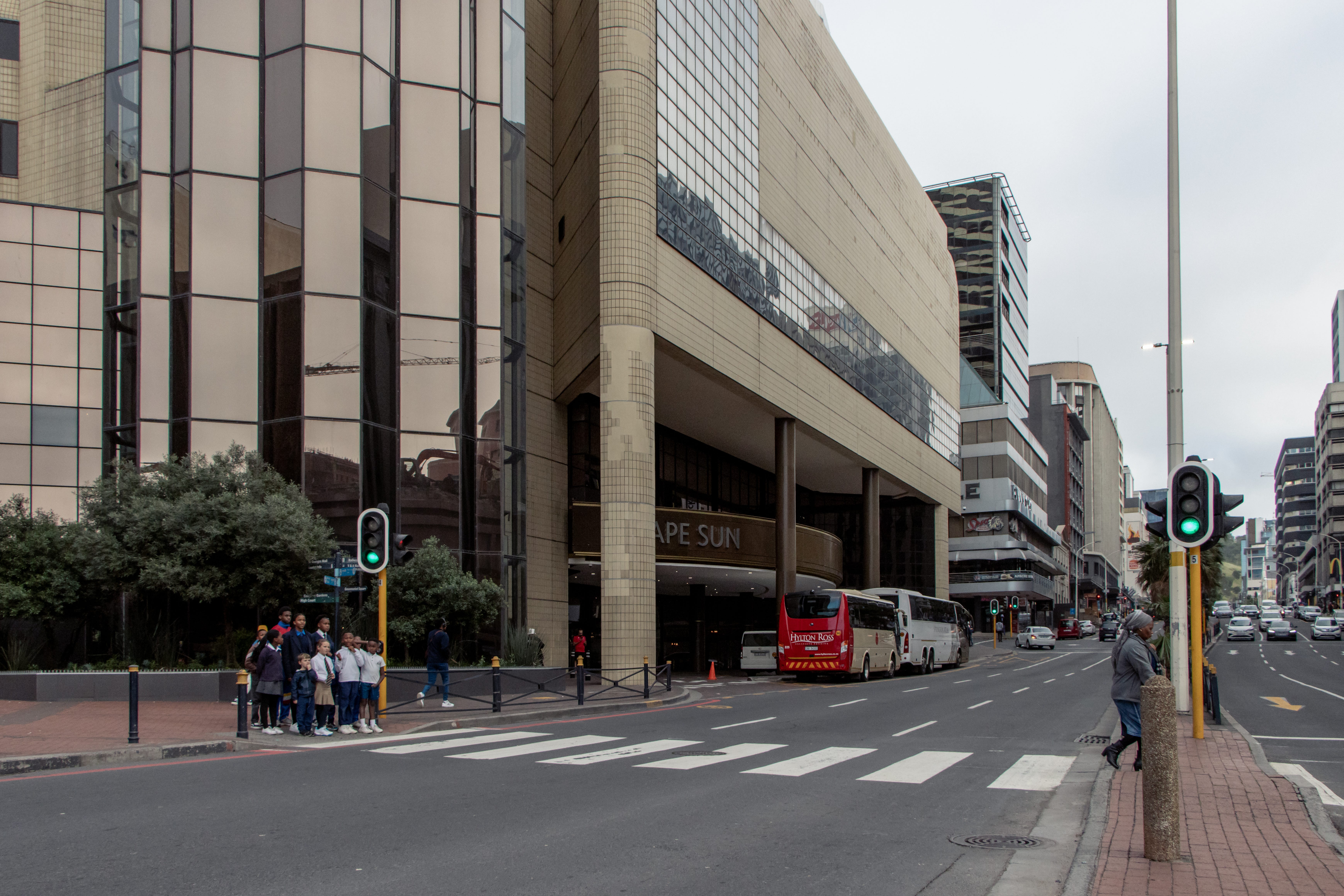
Through collaboration, advocacy, and on-the-ground action, we continue to challenge the persistent spatial legacies of apartheid while empowering the next generation of urban leaders to reimagine and reshape our built environments.
As Chair of the Board of Young Urbanists NPC, I am delighted to update you on our recent achievements, our agenda for 2025, and how you can get involved.
2024: A Year of Impact
2024 marked five years since YU formally incorporated as a non-profit company. It was also one of our most impactful years yet. Despite South Africa’s pressing urban challenges—from housing shortages, transportation and road safety crises to spatial inequality—our members, partners, and collaborators made significant strides in creating more inclusive, accessible, and sustainable South African towns and cities. Here are some of our key initiatives from the 2023/24 period as well as programmes to look forward to in 2025:
1. Advancing Mobility & Safer Streets
Mobility and street safety have been central to our work, particularly given that car crashes remain the second leading cause of death for children aged 5–14 in South Africa and costing the economy south of 2 billion rand per year.
Active Mobility Forum (AMF): Founded in 2023 by YU and Cape Town Bicycle Mayor and YU board member, Sindile Mavundla, AMF is a coalition of engaged citizens and organisations interested in advocating for policy reform and infrastructure investment with the aim of improving street safety and accessibility. Campaigns under the AMF banner include supporting the launch of a Friday ‘bike bus’ for school kids and parents in Cape Town’s Southern Suburbs, work around upgrading cycle lanes as part of the “Safe Passage” programme (more below), advocating for key non-motorised transit (NMT) reforms in Stellenbosch and Cape Town. The AMF website, launched in 2023, will be significantly updated this year with an improved community plan to get more people walking and cycling, in a way that’s safe and enjoyable regardless of age, gender or socio-economic status.
Zero Wait Campaign: This initiative (with special mention, here, of YU member, Robert Ketteringham) highlights flaws in pedestrian signalisation in Cape Town, calling for reform. With funding from the US-based nonprofit, Charge the Streets, YU launched a campaign website featuring an interactive safety map and our first-ever professionally-shot and directed video. Encouragingly, the National Department of Transportation is now reviewing national signalisation guidelines in response to our, and others’, work on this. Our goal this year is the creation of toolkits that simplify, and demystify, the process of applying for pedestrian crossings and reporting dangerous intersections, empowering communities in the process. As one example of the positive work of those lobbying in this space, the City of Cape Town's latest update to the Standards and Guidelines for Roads and Stormwater has introduced the concept of ‘Protected Intersections’, protected cycling lanes (this new cycling barriers will be piloted by our PP, see below), encouraging less reliance on high-speed slip lanes, thereby making it safer and easier for those of us walking and riding bicycles to cross.
E-Bike Legislation Victory & Micro-Mobility Framework: After years of advocacy from us and others, the National Traffic Service Act was amended in 2024 to allow e-bikes on South African roads. In response, we are developing a Micro-Mobility Framework with Kembali Consulting, something which we hope will assist municipalities around accommodating all forms of micro-mobility, such as last-mile e-bike to waste-entrepreneurs.
Traffic Calming Reform: In 2024, YU also responded to the City of Cape Town’s open call to collaborate with the City on ideas and solutions to make Cape Town’s roads safer for all users, through the review of its Traffic Calming Policy and Road Safety Strategy. As part of this process, we produced an index of traffic calming measures that can be implemented in Cape Town and examples of how to address road safety for pedestrians and other non-motorised transportation users. What’s next in this space? We are hoping for feedback from the City regarding ways to approve traffic calming to move away from the use of an outdated, rigid road classification system to one that is based on the use regardless of the class of the road. On a national level, traffic calming featured heavily in our Safer Streets programme (below) through our participation in, and help curating, the 2024 National Road Safety Summit (titled ‘Many Players One Conversation’) held in Brixton, Johannesburg. Included in the summit was a call for speed reduction of 30 km/h around all schools across the country, something aligned with best practice globally. We will be advocating to make this a policy reality in 2025 along with other road design reforms.
Safer Streets Programme: This YU-led programme is a multi-party collaboration with the various AMF members, funded by Uber South Africa and dovetailing with its existing relationship with the Road Traffic Management Corporation. This initiative brings together advocacy, research and the bringing together of different stakeholders to implement selected infrastructure interventions aimed at reducing road deaths (currently 37 every day in South Africa). The programme operates through three key work streams:
Communication & Activations to raise awareness and engage stakeholders and also to highlight the incredible work done by new and existing public private partnerships (such as Discovery’s partnership with the RTMC).
Advocacy for road design guideline reforms (local and national) and policy changes, many of which were tabled at the 2023 and 20024 National Road Safety Summits and discussed through our various public engagements.
Tools & Infrastructure through the co-creation of toolkits around improving connectivity between outer lying areas and economic nodes.
In 2025 we will continue to support the work of other players in this area while building on our work, including the launching of a Safer Streets website to showcase our toolkit and completed projects.
2. Expanding Safe Passage for Cyclists & Pedestrians
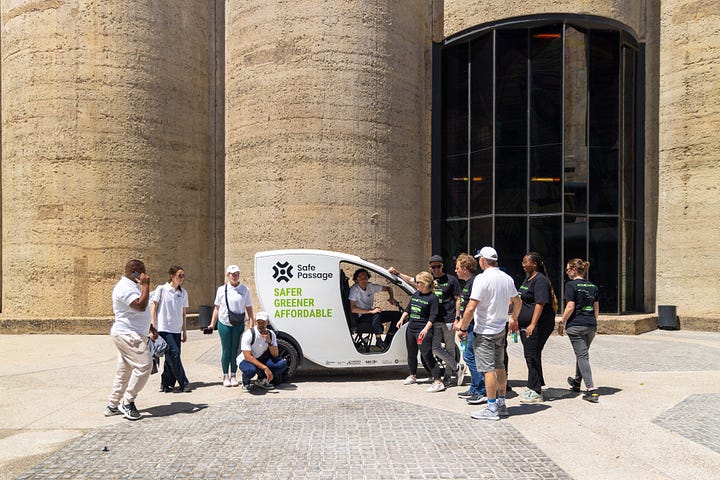
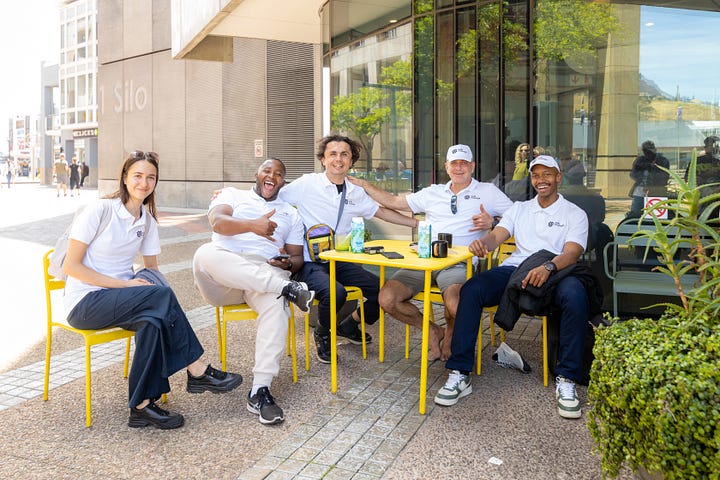
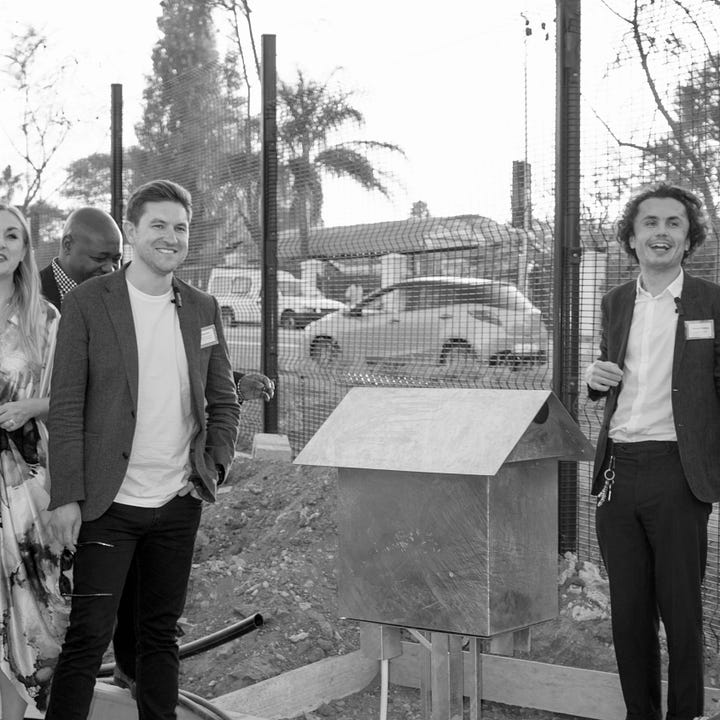
Safe Passage Programme, a flagship initiative developed and funded by the Supplier Development Initiative Trust (SDI) with YU as programme manager, has been featured in the National Government’s Just Energy Transition (JET) Implementation Programme. The goal of the Safe Passage programme is to utilise the tools created through the Safer Streets process (discussed above) to improve connections from outer-lying areas to key urban nodes, making them safer and greener and more affordable. Safe Passage projects currently in planning include:
Langa to Cape Town CBD: Phase 1.1 of the Langa-Cape Town Safe Passage is set to be completed in the first half of this year, and will involve the upgrading of the Bree St cycle lane in Cape Town’s inner city through a complete separation from the vehicle lanes. Phase 1.2 will involve the upgrade the Albert Rd, Woodstock, cycle lane, followed by Phase 2.1, focussed on the connection between Langa and Athlone through the creation of a protected lane between Cornflower St to Klipfontein Rd.
Mamelodi to Gasfontein. Phase 1.1 of this Safe Passage was completed in 2024, involving the upgrading of two intersections between Lynnwood Rd and Solon Mahlangu Dr through the installation of solar panels to make these load-shedding free. The next phase of this Safe Passage involves an investigation into the feasibility of a protected cycling lane from Mamelodi towards Garsfontein as well as the installation of solar powered lights to improve night-time safety for pedestrians and public transportation users.
Masiphumelele to Fish Hoek: Our second Safe Passage for Cape Town is officially back on-track, despite some challenges and delays in 2024. The proposal for this Safe Passage, if successful, will involve the construction of a protected cycle lane of approximately 2-kilometres in length, improving the connection between Masi and the Fish Hoek Train Station. Given its scope, progress is (at time of writing) still dependent on raising the necessary funding, albeit that discussions are ongoing with potential funding partners.
These efforts can only succeed through meaningful collaboration with local communities, government, and private-sector partners to ensure sustainable impact. If you have any ideas for a potential new Safe Passage in your community, please reach out!
3. Street Experiments & Tactical Urbanism
We have continued to champion “everyday urbanism” around the simple idea of empowerment of communities, public representatives, road safety NGOs and for-profit companies to reimagine how streets (as public spaces) should function.
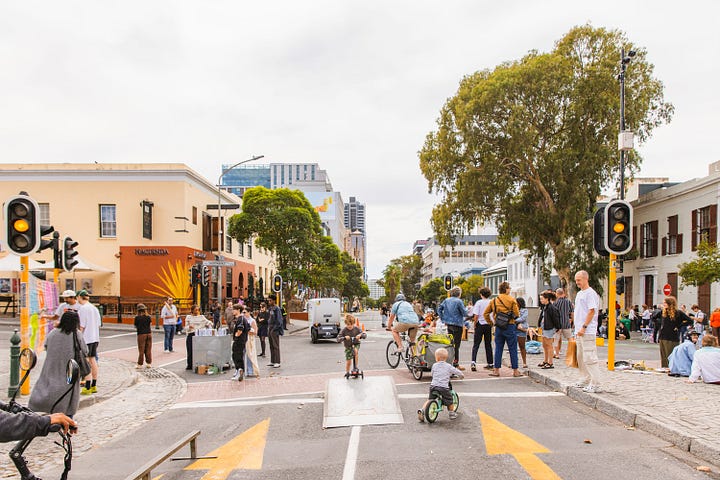
Street Experiments Afrika: Since October 2024, Bree Street has been closed to cars every Sunday as a pilot for pedestrian-first streets, without the need for a formal event application (something which significantly reduced the cost of this intervention). An experiment such as this could never have been possible without the cooperation of the City of Cape Town, the assistance and generosity of our incredible activation teams, including Langa Bicycle Hub, the MAAK and many others, as well as the incredible and professional Green Riders marshalls. Our final Sunday Bree experiment was held this Sunday, the 30th of March and we’ll soon be releasing a toolkit on the process followed and lessons learned aimed at helping others implement similar temporary closures in their communities. We also aim to expand this initiative to other areas this year (with a collaboration around Langa currently in planning) and introduce a new street experiment around the concept of road ‘dieting’.
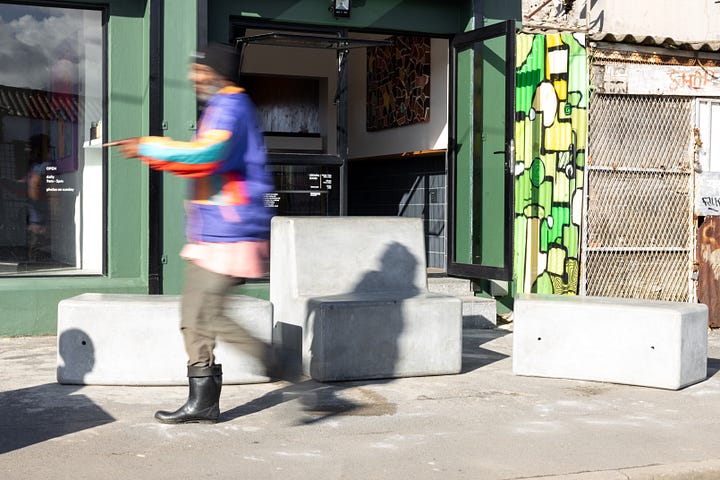
Safer Mobility Hub: In collaboration with the City of Cape Town, the Central City Improvement District, and last-mile delivery companies such as Takealot, we are working to repurpose underutilised parking bays in the City into protected spaces for delivery workers. After completion of a successful pilot in Cape town, our aim is to expand this programme to other cities. The initiative includes implementing various ‘tiers’ of intervention (outdoor shade and greening and eventually indoor spaces for workers to rest, charge phones and access internet), aimed at creating comfortable spaces for last-mile delivery workers between deliveries.
4. Events, Exhibitions & Platforms for Change
2024 was a landmark year for Young Urbanists and our programmes, especially the Active Mobility Forum. We focused on creating strong, relevant platforms to elevate the voices of our members and connect with urban professionals, policymakers, and the public around a shared commitment: addressing the legacies of apartheid spatial planning and building contemporary, inclusive African cities.
Urban Design and Mobility Forum: In partnership with the Office of the Cape Town Mayor and key directorates like Urban Mobility and Spatial Planning & Environment, this quarterly forum has become a vital space for cross-sector dialogue. Held every three months, the Forum has tackled topics such as urban densification, safer street design, and how to make Phase 2A of the MyCiTi network more sustainable. The conversations are intentionally robust and challenging—designed to question the status quo while creating space for new thinking. The next edition will take place at Iyatsiba Lab in Woodstock, offering a chance to pause from the daily grind and reflect on the broader themes of transportation justice and urban humanity. You can RSVP here.
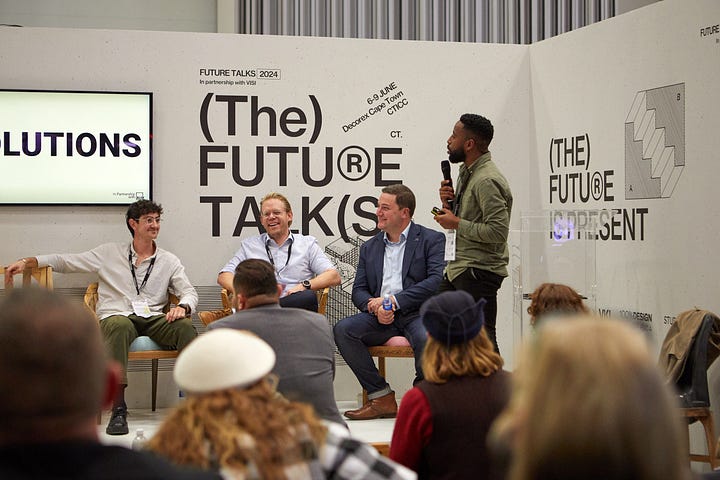
Design Week South Africa. Young Urbanists and Friends had a special opportunity to be part of South Africa’s inaugural Design Week, where we helped curate the urban design aspect of the week, which took place first in Johannesburg and then in Cape Town. This platform seeks to make design inclusive and democratise space around key pillars like space sharing, collaborative growth, future archives, and game-changing ideas. We positioned ourselves not only to assist with the curation through Roland Postma, our Managing Director, but also to give the built environment a voice on a platform that is locally made with international partners like Dezeen. We supported several events hosted by our members and partners in Johannesburg and Cape Town, including:
The Rosebank Street Experiment with Rosebank Precinct;
Guided talks and walks through Oxford Parks featuring the idea of the future South African neighbourhood ‘with no walls and slower streets’ with Guy Briggs from dhk, Andile Skosana from CityCon Africa and Carollyn Mitchel from Intaprop. You can listen to the full recording here.
Jozi my Jozi walk-about about Inner-City Johannesburg and how the private sector aims to revitalise the inner-city.
Our Modular parklet with Flatrock Studio being installed at the Cape Town Train Station;
We even launched the weekly Sunday Bree St experiment on the last-day of Design Week - alas it rained.
We held talks around South Africa’s future Townships: Dunoon, Khayelitsha & Langa:
Site visits and design interventions in Dunoon around housing, waste and mobility with the City of Cape Town.
And much more.
These events reflected our approach of pairing the power of urbanism with deep community engagement, always prioritising equity and public access in a platform shared with other pillars like fashion, furniture design, and more. We encourage all YU members to apply for 2025 here.
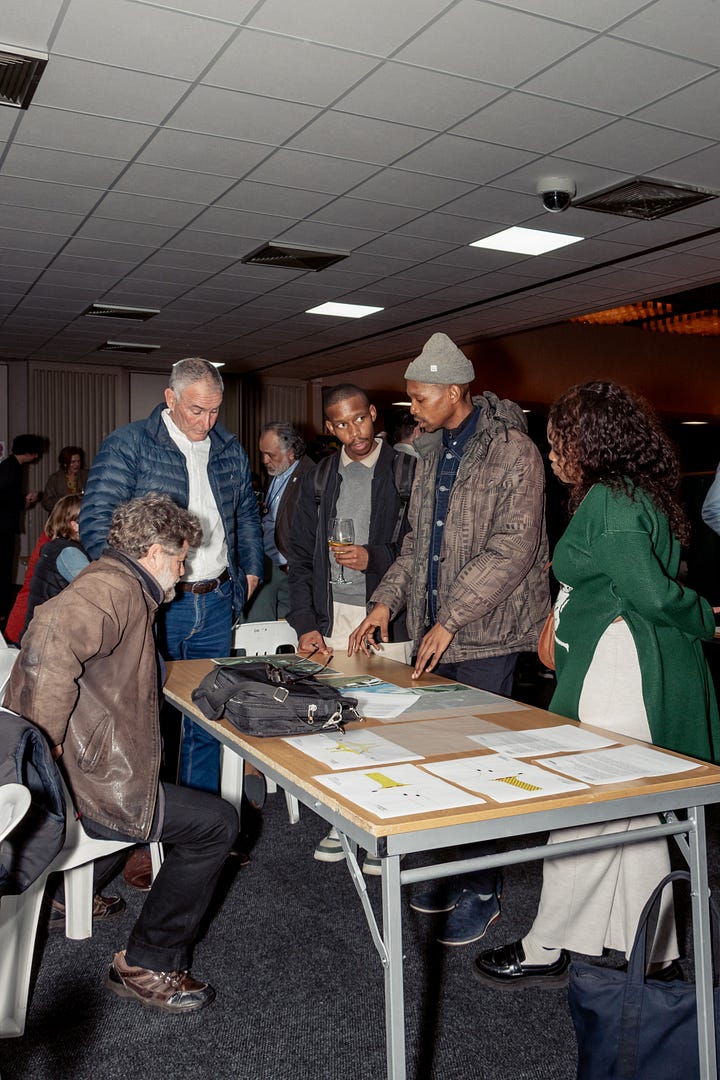
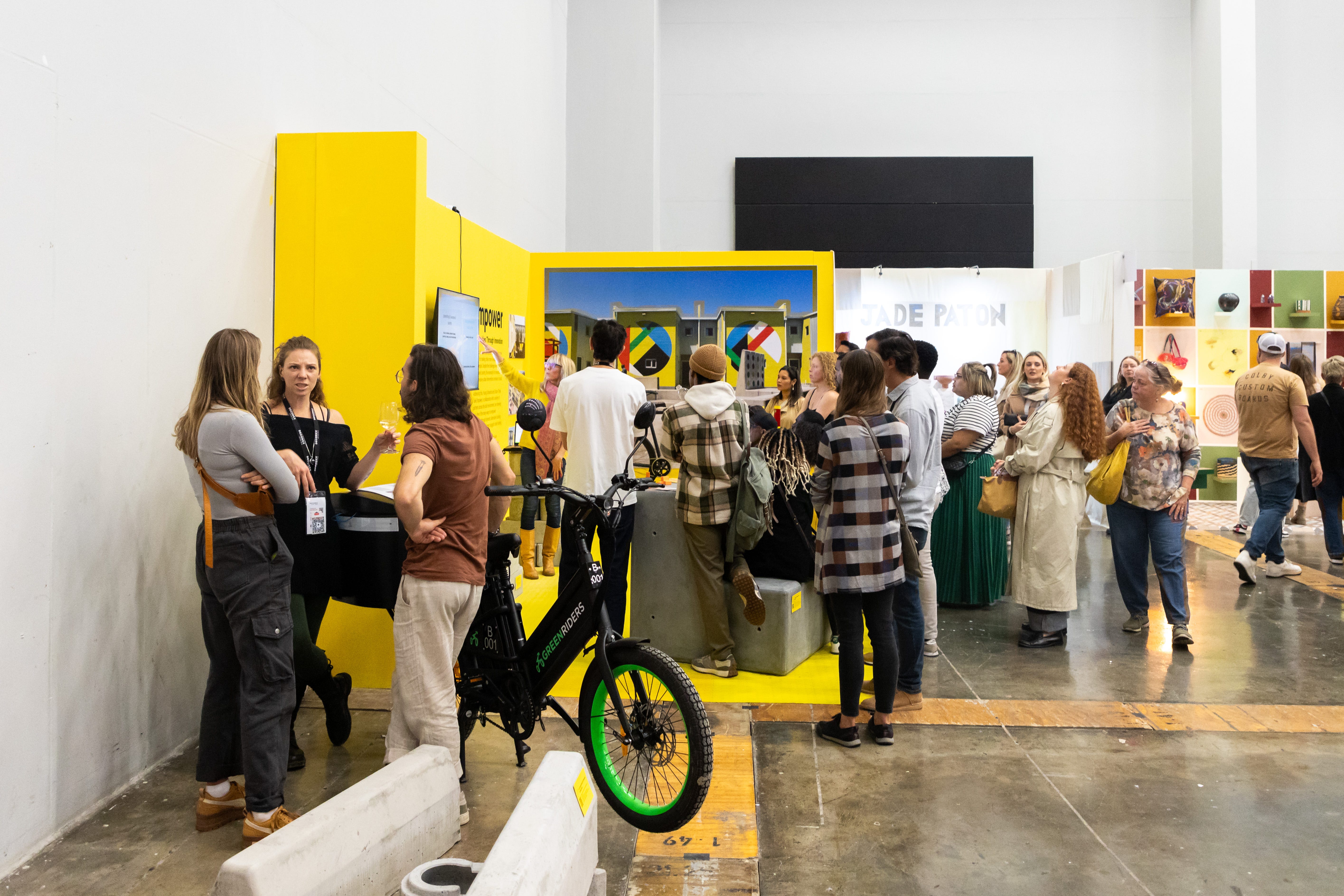
Decorex (Our First Major Exhibition): At Decorex 2024, we partnered with Urban Think Tank Empower to host Young Urbanists' first exhibition. The exhibit showcased innovative public-private partnerships in housing and mobility. Importantly, the modular playground elements used in the exhibition were later installed on Lerotholi Avenue in Langa, where they remain in use today and where they will feature in the planned weekly road closures in Langa, launching later in the year.
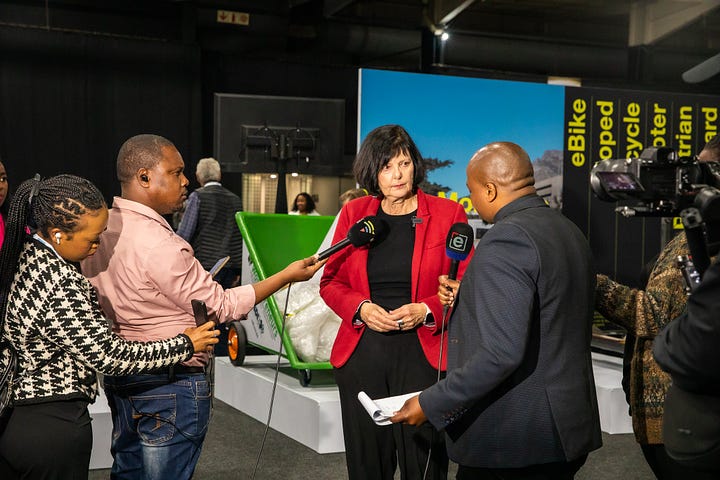
Smarter Mobility Africa: We curated a dedicated Active- and Micro-Mobility exhibition space at the Gallagher Convention Centre in Johannesburg, shifting the spotlight at this traditionally vehicle-centric event toward non-motorised and inclusive transport solutions. Our exhibit featured policies, frameworks, and innovations supporting cycling, scooters, and universal design—and was visited by Transport Minister Barbara Creecy, who spoke in an interview about the need to strengthen South Africa’s rail system. We used the moment to make a key point: rail cannot work without safe, reliable first- and last-mile connections.
4. Green Infrastructure & Urban Resilience
Creating the country we dream of requires clean air, greener cities, and climate-resilient infrastructure. Yet, many South African cities remain unprepared for the impacts of climate change—from flooding to water scarcity—due to over-reliance on ageing grey infrastructure and continued urban sprawl.
Liveable Urban Waterway Programme: Through this programme, Young Urbanists has supported the transformation of canalised concrete waterways into functional, ecologically rich rivers that reconnect communities with nature. Our focus has been on advocating for adequate budget allocations and securing support from both city officials and elected representatives.
Sustainable Urban Drainage Systems (SuDS): We are piloting a SuDS project along the Liesbeek River in partnership with Friends of the Liesbeek and ARLA Consulting Landscape Architects to show that green infrastructure can be used to mitigate known flooding instead of traditional, grey infrastructure. This pilot will serve as the foundation in 2025 for advocating city-wide guidelines that support increased green infrastructure. These guidelines aim to influence key municipal frameworks, including updates to the Standards and Guidelines for Roads and Stormwater. Additionally, the pilot will help ensure that more Land-Use Management Applications (LUMS) actively integrate green infrastructure into both public and private developments, becoming a standard requirement in the city's planning approval processes.
Urban Shade & Greening: While this has been a hot topic in 2024, we are finally in 2025 picking it up by working with researchers from MIT around evidence informed decisions regarding shade and ways to increase our urban canopies. Our research has highlighted the unequal distribution of shade in disadvantaged communities, prompting our advocacy now in 2024 for new policies that allocate sufficient space for greenery and ensure proper maintenance and management of trees and shrubs, particularly during their critical first three years of growth.
5. Housing & Urban Policy Reform
While mobility has been our major theme in recent years, housing has never been far from our focus. In 2024, we allocated more time and resources towards tackling some of the myriad issues underpinning South Africa’s ongoing housing crisis—guided by feedback from YU members, chapter meetings, and the growing urgency of affordability, inclusion, and spatial equity:
Affordable Housing Advocacy: We’ve supported calls for a better understanding, and the regulation, of short-term rentals, with particular focus on platforms like Airbnb. In 2024, we participated in radio interviews and hosted discussions involving civil society, the City of Cape Town, and Airbnb’s Africa and Middle East leadership. These conversations helped surface more nuanced dialogue about the impact of short-term rentals on the city’s housing stock, especially in well-located areas. Encouragingly, the Mayor and City officials have shown willingness to explore regulation and potential taxation of “digital nomads.” We look forward to collaborating with other organisations to document these impacts and support policy reform.
Inclusionary Housing and Densification: We submitted formal comments in support of the City of Cape Town’s inclusionary housing policy, calling for the introduction of incentive overlay zoning that requires developers to include affordable units in new developments.
We also advocated for a system to better allocate affordable housing supply where it's most needed. Our position on densification remains firm: it is a critical tool in reversing apartheid spatial planning, but only if done thoughtfully—with public amenities, safety, and accessible transport in mind. We echoed the insights of Professor Ivan Turok and others who argue that densification must support the creation of vibrant, liveable communities.
We also welcomed reforms to the City’s planning bylaw enabling small-scale rental units (SSRUs) and believe this can unlock significant housing opportunities—if implemented with quality, safety, and location in mind. Without these elements, we risk reinforcing what Professor François Viruly calls the 40–40–40 problem: 40m² houses, located 40 km from work, where transport consumes more than 40% of household income.
Land for Housing: In partnership with Ndifuna Ukwazi, we supported their #Land4PeopleNot4Parking campaign, which highlights underutilised land in Cape Town’s CBD currently allocated to car parking. Their research revealed that over 16.2 hectares of potentially developable land—allocated to more than 8,600 parking bays—is being lost to private vehicles. One of the most powerful case studies is the parking lot near Parliament, which was reimagined with partners as a mixed-use housing development including transitional, public, and private typologies.
In 2025, we plan to deepen this work by investigating the true extent of on- and off-street parking in the CBD and proposing alternative uses that prioritise people, not parked cars.
Expanding our Community Reach
As we move into 2025, we’re taking a moment—albeit a slightly overdue one—to reflect on just how far Young Urbanists has come. The past year saw unprecedented growth in our community, signalling not only a rising interest in urban transformation, but a groundswell of people eager to get involved. Here’s how that growth is taking shape:
YU Membership Growth: Our community grew by 300% in 2024, reaching over 5,000 Instagram followers. Our goal is to reach 10,000 by mid-2025!
YU Beyond Cape Town: We have expanded efforts in Stellenbosch, Gauteng (Johannesburg & Pretoria), and Durban, setting up YU Chapters in those regions.
Revamping Membership: We are updating our membership system and planning to hire a dedicated community builder this year.
Get Involved in 2025
As our movement continues to grow, so does the need for fresh energy, diverse voices, and active citizenship. We believe that meaningful change happens when people step up—street by street, idea by idea. Here’s how you can get involved:
Join your local ward committee by contacting your ward councillor
Plant a tree before the winter rains – Cape Town residents can join the City’s Adopt-a-Tree program.
Follow us on here, subscribe to our Events via Luma or Instagram/Linkedin – stay updated. You can also join any of the following WhatsApp group applicable to our specific area-based Chapters or Programmes:
Apply to the 2025 - 26’ Committee - we will share a link soon - first you need to become a member.
Volunteer in your community – pick up litter, clean up a public space, or advocate for better streets by joining a Friends group, Association or one of our YU Chapters.
Comment on policy documents – engage with municipal and national planning proposals.
Stay tuned for our website launch – coming later in 2025 with more ways to engage.
A Final Note of Thanks
None of this would be possible without the dedication of our team, members, and partners. A special thank you to Roland Postma (Managing Director), Board Member Sindile Mavundla, Phano Liphoto (Research & Policy Officer), and our volunteer interns, Andrew Chou-Belden, Weitao Ke, Maria Eduarda Silva Castro and Emile Chalme for their invaluable contributions.
We are also excited to announce the upcoming appointment of Andrew Ihsaan Gasnolar to our board. As we deepen our mission to support inclusive, innovative and people-centred urban transformation in South Africa, we believe Andrew's unique experience and leadership will significantly enhance our collective efforts.
A special word of thanks to our incredible partners, collaborators, Chapter heads and steering committee members who have shaped our journey—too many to mention individually, but each deeply appreciated.
To all those who have engaged, collaborated, and contributed—thank you. Let’s keep working together to create fair, vibrant, and sustainable cities for all.
With gratitude,
Sean Dayton
Board Chair, Young Urbanists NPC
You can download the full 2024-25’ report here.
No posts
Comments
Nothing yet. Say the first thing.
Sign in to join the conversation.