
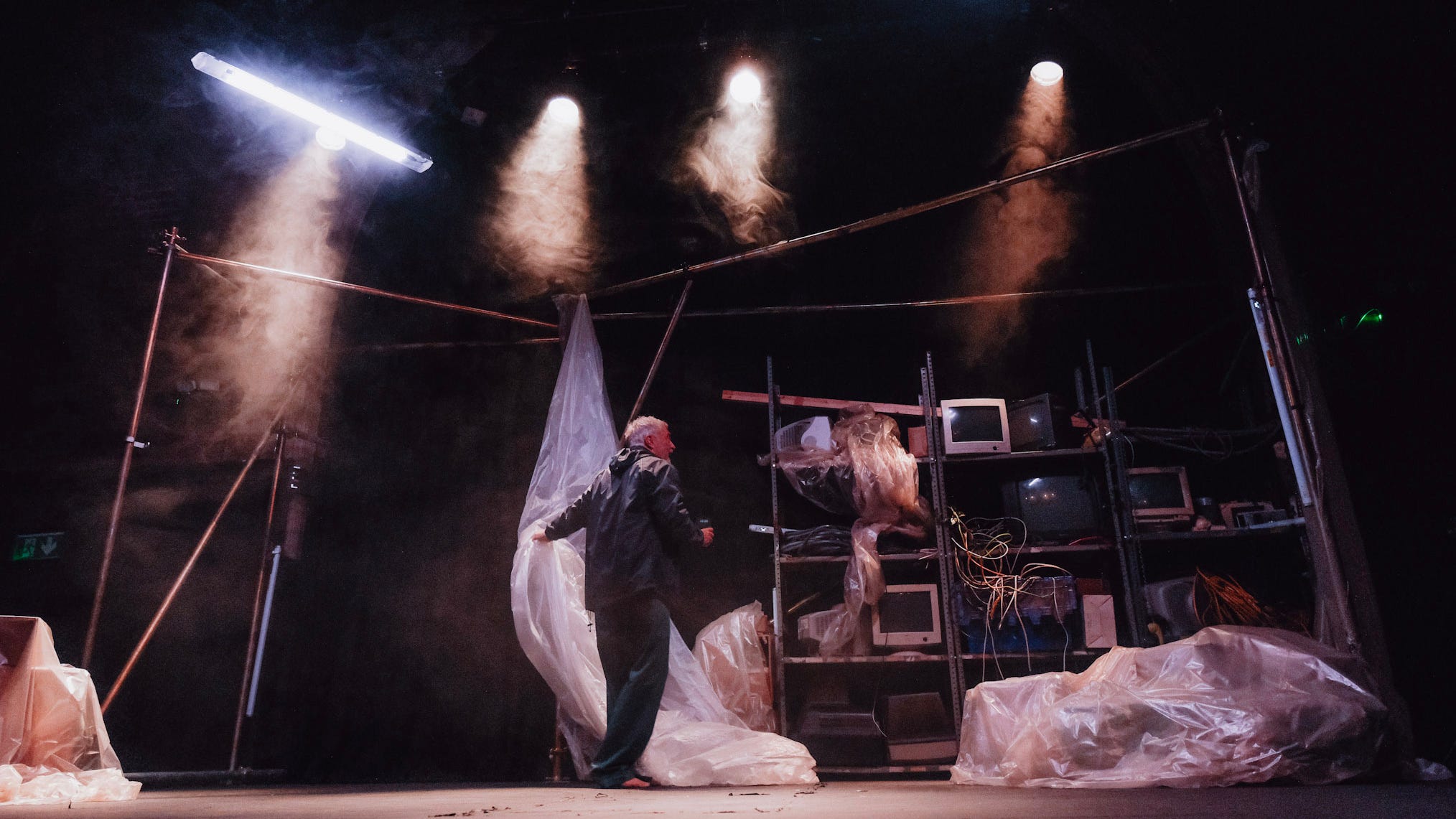
Open script submissions are a rookie move. Very few plays emerge fully formed like the goddess Athena from the head of Zeus. But theatre needs ‘new writing'. Here is the best way to encourage excellence.
But first a note to my regular subscribers:
Last year I discovered I was carrying a dangerous level of hypertension. I never thought high blood pressure was a serious health condition — I dismissed it as a comedy ailment for red-faced colonels reading the Daily Telegraph. But an emergency trip to A&E disabused me. This genuinely life-endangering malady has taken a while to budge — not helped by my stubborn dislike of pill-popping — and in addition I have a genetic susceptibility to heart attack based on the amount of lipoproteins swilling around in my system.
This explains why my paternal grandfather dropped dead in his mid-50s. Cheery thought.
Instinctively, I turned to ‘wellness’ solutions to save me from the burnout that was aggrevating my potentially lethal condition. (Of course, I’m burnt out. I was working in healthcare. It’s frigging normalised there.) And the more I discover about the operation of the sympathetic nervous system, the more I realise there’s hard science starting to emerge that gives some structure to the wellness woo-woo. That’s the theme of my second Substack, Spa Day, and you are welcome to sign up for it.
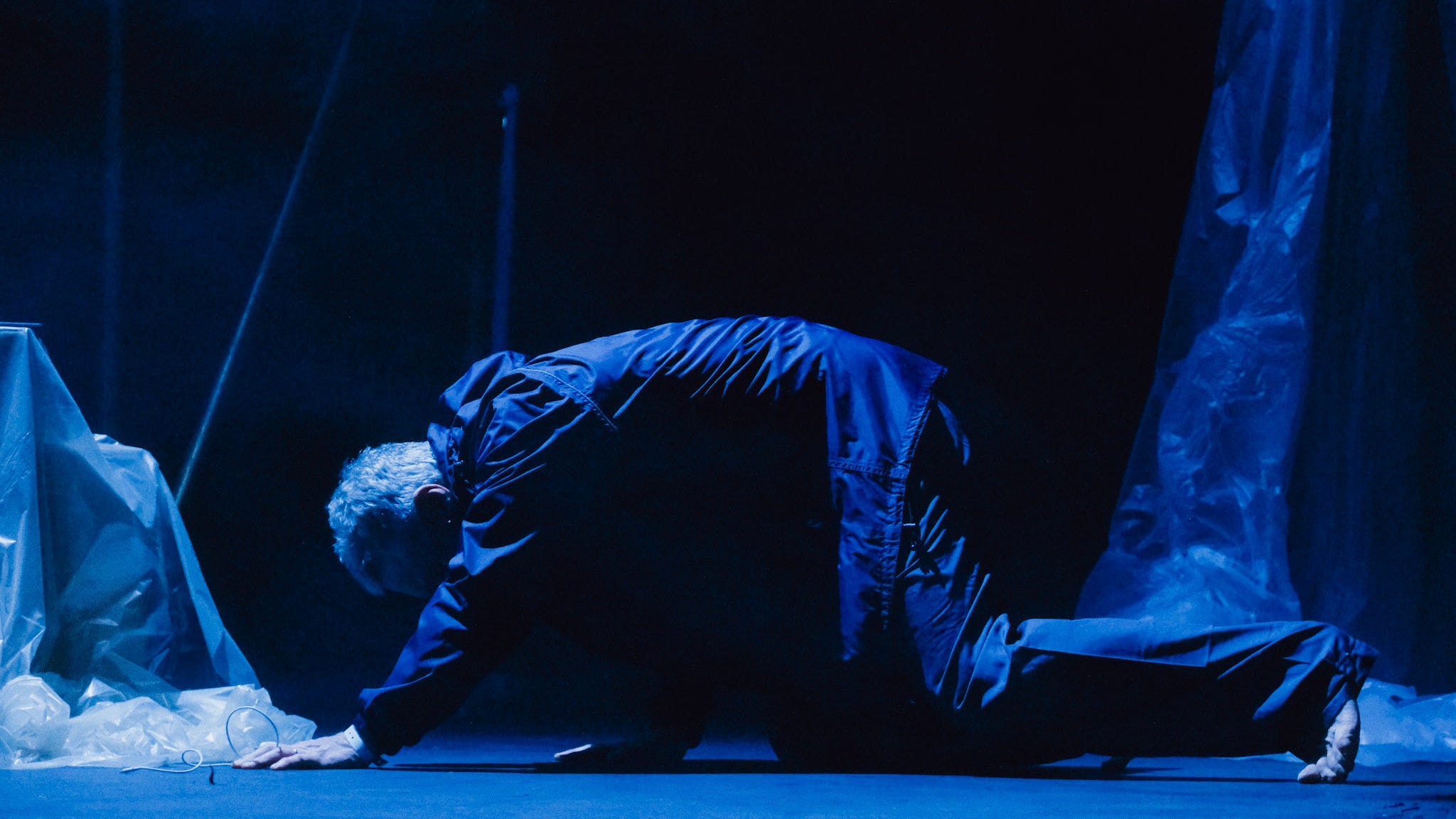
So, all in all, it was a long time ago that I drove to Beverley, in East Yorkshire, to watch Answering Machines by Jordan Noble at the East Riding Theatre (ERT). The show was the culmination of PlayLab, an in-house writing development programme punching above its weight for the size and remoteness of the location.
Because of its position, the Georgian heart of the town escaped the ravages of the Industrial Revolution. This gives Beverley a demographic that’s unusual for the North of England, where town centres are dominated by low-quality workers’ housing thrown up in proximity to factories. In Beverley, the professional classes congregate in elegant terraces within walking distance of cultural amenities — a city formation that’s more often associated with the non-industrial South.
The London smart set discovered Beverley 20 years ago. For a fraction of the cost in the Cotswolds you get an 18th-century townhouse, clean air, walks on the Common, rolling chalk downland and a safe environment for your kids.
All this is to say, Beverley is a perfect location for a forward-looking, and largely volunteer-run, arts and community theatre. And sure enough, it has one — the ERT, founded by successful British film, TV and stage actor Vincent Regan in 2014.
PlayLab was launched with an open script submission scheme in 2024 to showcase new and unproduced plays by both emerging and established UK-resident playwrights. Plays only (no performance poetry or prose) and either the full script or an excerpt with synopsis.
Long ago I wrote the multiply-cited Script Yorkshire Comparative Study Of New Writing Support Agencies In The UK, and in my experience such a generous call-out is a rookie move soon abandoned by those who try it. Both Leeds Playhouse and Sheffield Theatres offer script submission as part of a raft of opportunities available to local artists. But it is noticeable that in each case there is a) a geographical restriction, and b) a tiny annual time window to get your script in.
Behind the scenes there is a third requirement: A phalanx of performance-literate readers in place to assess the potential deluge of:
barely-adapted television drama scripts,
violent pornographic fantasies typed with one hand by very young men suffering from Titus Andronicus syndrome,
284-page epics that would be impossible to produce by anyone with fewer resources than the National Theatre,
hard copies delivered by snail mail and written in faint pencil that might be brilliant if anyone could decipher the handwriting, and — worst of all —
the thing that has done the rounds, almost there but not quite, endlessly re-written to perfect it and stale, stale, stale…
But just occasionally, a shining gem. An authentic new voice from an unexpected quarter. The infinitesimally rare Euro-millions lottery payout that keeps some people buying their ticket week after week in defiance of all the known laws of mathematical probability and sensible home budgeting.
Open script submissions are, in short, an almost but not completely futile exercise. A massive waste of everybody’s time. But big theatres sometimes feel they have to do it as a yearly penance and moral obligation.
Yet, granted the foundational lunacy of a small theatre offering a UK-wide open script submission, PlayLab proceeded professionally to the next stage — workshops, development and a three-day festival featuring script-in-hand performances by trained actors.
Out of this ever-narrowing funnel has emerged two full productions: Joe Bravaco’s The One Good Thing in April-May 2025 and Jordan Noble’s Answering Machines. Both playwrights are American-born males and both have had previous outings (Bravaco has chalked up playwrighting competition wins on both sides of the Atlantic). Beyond this, the final seven-person shortlist was heavy with names instantly recognisable to anyone who has knocked around on the Yorkshire new-writing-for-performance circuit for a while: Richard Vergette, Gill Adams, Alison Shaw…
In other words, it is unlikely that any new writing programme or festival which centres quality as its main criteria will uncover a brilliant writer who was previously wasting their sweetness on the desert air. The script development process IS the desert air. Experienced playwrights waste decades of their lives in this kind of hell.
So what of Answering Machines? The big splash. The object of interest from London’s trendy Arcola Theatre. In the end, a playwrighting development programme overseen by famous actor Vincent Regan, resulted in the selection of a play that was a perfect vehicle for famous actor Vincent Regan. But this is not to sneer: Regan has done sterling work to establish the East Riding Theatre and in a business as tough as his you have to create your own chances.
Do you think global superstar Gary Oldman just stumbled by chance whilst on a family holiday into his old haunt the York Theatre Royal? My guess is that his clever relaunch onto the British stage was the result of years of quiet strategising. And good on him, that’s what it takes.
“Never let the actor choose the play,” muttered a wise director friend many years ago as we sat through an excruciating piece about, as I recall, conflicts between the early Nazis in the presence of an unsuspecting audience of Jewish solicitors. The actors, of course, had a wonderful time jack-booting and saluting.
But that’s unfair to Regan: Answering Machines was a worthy but oddly structured play that deserved an airing and got one under actor Michael “Three Day Millionaire” Kinsey’s direction. And Regan has put his energy and reputation on the line showcasing less-often-heard voices when he could have opted for a tried and tested product.
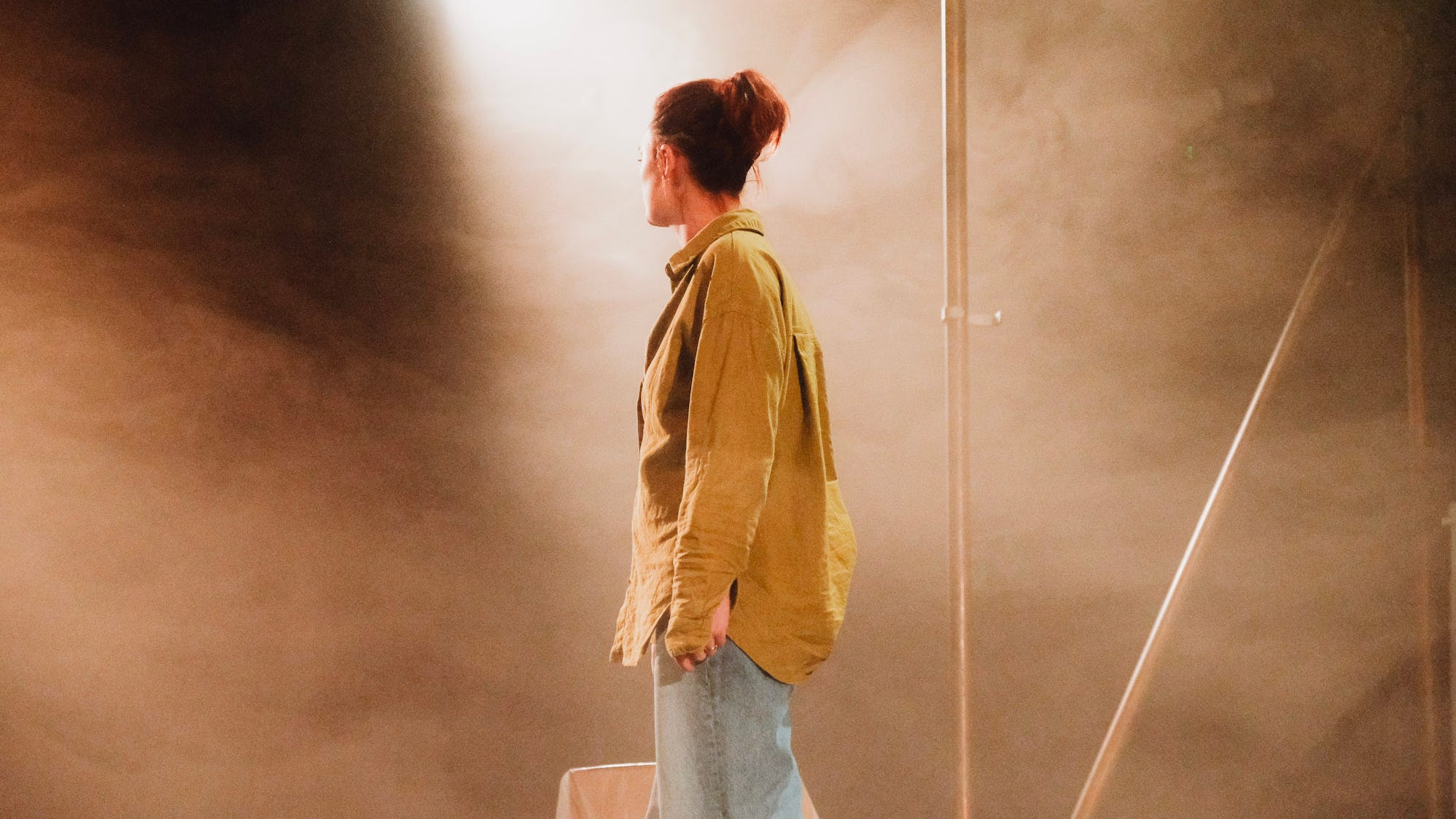
And, unusually for a subsidised theatre sector which mostly avoids the really scary issues, Answering Machines was about something: “It’s the year 2037, Lauriston Moss is facing the end alone. He and his AI assistant take stock of what he will leave behind.”
Even a year ago this might have seemed futuristic; but at Christmas I signed up for Mark Manson’s Purpose app and now I am being mentored by an AI therapist using “evidence-backed psychological frameworks” to help me make sense of my life. It tells me off sometimes. And — I kid you not — it was Purpose App’s mild scolding that got me sitting at my desk every morning, writing again.
Was Answering Machines any good? Well, kind of. Moss is dying and he resists the solicitious advice of his uncomprehending AI minder with a human fatalism that the machine intelligence does its best to overcome. This leads to some witty sparring that nicely juxtaposes the ambivalent richness of human experience with the flatness of AI; it’s a strong start to the play.
And Noble has a good grasp of the sheer potential of large language models: The complexity of the tasks it is able (already) to deal with is shocking and it’s not even 2037 yet. Inviting the assistant to do a deep audit of his legal possessions so that he can leave them to a younger relative, Moss discovers that he owns a lock-up on the site of his former family home.
This journey back to where he came from — the contents of the lock-up are a treat for retrofuturists — is the emotional substance of the drama. Through a pile of abandoned 1970s IBM equipment the ghosts of Moss’s past can speak to him.
So far, so hauntological. Jordan, originally from the Southern United States but now resident in the UK, was strong on the philosophical issues but — like those clever young tech bros who have laid down the digital infrastructure of our lives — oddly lacking when it came to, well, people. His main character, Moss, was articulated with an interesting complexity but the intimate motivations of his nearest and dearest could barely be glimpsed in the script. Admittedly the device of having lost souls speak through machines adds an extra layer of technical difficulty to the task of characterisation. But Moss’s mother’s journey from loving and hopeful 1970s tech pioneer to embittered crone was depicted via telling rather than showing. This was not a character written from the inside — her pain, her loss of agency, was dismissed as hate and judged as bitterness. The result lacked insight into a loving woman for whom the plot/backstory had delivered a devastating blow.
Had it been written from her point of view it would have been an entirely different play.
And when the talented Laura Elsworthy finally appeared as young Jodie, the only human on the planet towards whom Moss retains any affection, she was given very little to do. Call me old-fashioned but the whole point of a two-hander is to set sparks flying, live onstage, between the characters. Her detachment from her uncle — she’s alone, he’s already dead — made a clever literary point but was less than scintillating drama.
If only Jordan had deployed her while Moss was still alive so she could have a go at him about his treatment of his mother…
Well, then. Perhaps I am a sentimentalist. Perhaps the fact that she didn’t and couldn’t is the main point. I’m interfering — demanding the play I would have liked Jordan to have written rather than the one he wanted to write. But all the same — effective theatrical stories have tough fibres that can only be bent and reshaped so far.
Lesley Sharp, as the pre-recorded voice of AI, had the better part. At least she got to interact with the main character. And the technical management deserved a round of its own (which at the curtain Regen generously made sure it received).

“What is new writing?” asked a non-theatre-going acquaintance. “Surely it’s the same as just ‘writing’?”
He had a point. Hamlet was new writing once. So was Death of a Salesman.
There is a sense in which all freshly minted writing qualifies as ‘new writing’. But this misses the mark. In theatreland ‘new writing’ is a jargon term. It is a concept bounded by unspoken assumptions. Adapting The Devil Wears Prada for the stage is honest work and might result in an entertaining evening, but it’s not ‘new writing’. The term implies an original piece, rather than the adaptation of an existing property, which has a strong authorial voice, is replete with literary values, contemporary in style and mood, and has come through some kind of ‘development process’.
Very few plays arrive fully formed and beautiful like the goddess Athena from the head of Zeus. If you’re Alan Ayckburn or John Godber you’re sufficiently seasoned in your craft to get away with it. ‘Emerging’ voices far less so. As a result, theatre has developed a battery of mechanisms to support early-stage writers: workshops, mentoring, ‘associate’ status, script reading, festivals, multitudinous forms of outreach.
All very worthy, no doubt. But potentially exhausting, time-consuming and expensive for a non-guaranteed result. British theatre has bounced back from Covid more strongly than American theatre. In 2024 the West End achieved an 11% increase in bums on seats over 2019 (Society Of London Theatres: The West End Is The Theatre Capital Of The World). And regional theatre, too, had demonstrated an admirable toughness (Society Of London Theatre & UK Theatre, 2025). But these higher audience levels have been achieved via strategic programming — longer runs of popular and safe shows.
Covid was such a calamity that I’d be the last person to condemn venues for their survival-first attitude. When, years ago I was Chair of a new-writing charity, I was hectored by greybeards who had never done the sums on what new writing costs. These older male playwrights remembered the arts playground of the 1970s with fondness. You could pick up a BBC commission after a chat over a pint with a senior producer who’d lost half a buttock at Dieppe and didn’t give a fuck any more. The greybeards — only middle-aged but in those days they seemed older to me — were aghast that their chosen profession could no longer sustain them a living. They perceived me as the thing they most hated: Accountability. To funders. To benchmarks. To outreach and equity, and feedback forms.
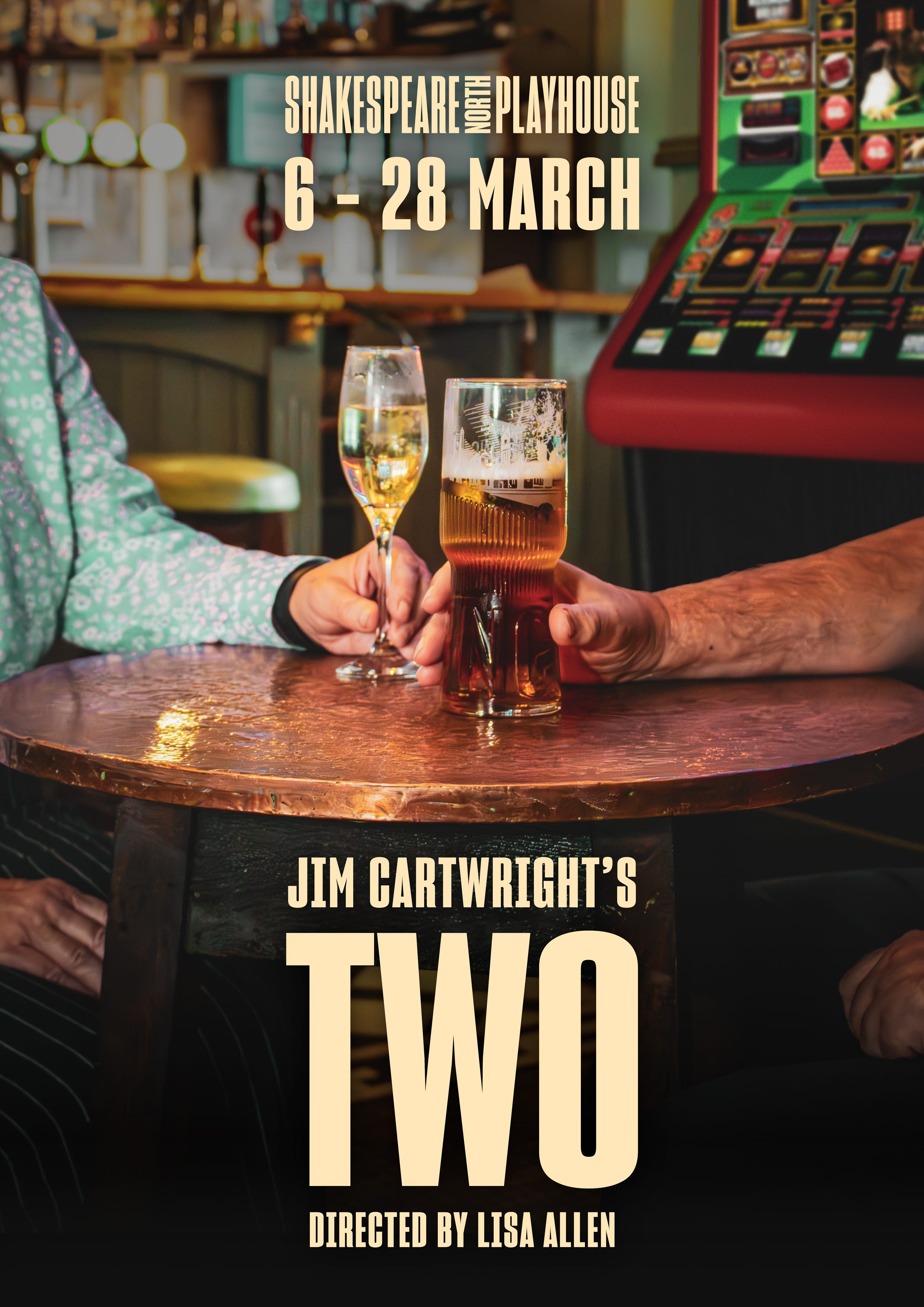
In the early 1990s it was widely understood that a new play had no chance of being staged unless it was for one, two or at most three actors. Jim Cartwright’s Two belongs to this bleak era and sure enough we find it again at Shakespeare North Playhouse starring familiar soap faces Michael Starke and Sarah White in multiple roles (till Mar 28, £7-£25).
In those days it was an act of faith that audiences were suspicious of new writing. The more generous Blair government increased arts funding. (At the time it was said that the uplift deliberately matched the cost of a single new fighter jet but alas I can find no source for this story — it’s likely apocryphal.) But the largesse was real, it found its way into programming, and it turned out British audiences weren’t afraid of novelty - it was just a long time since they’d been allowed to experience it.
But here we are again. Costs at the sharp end stripped to the bone. (There’s plenty for… oh, shut up, Liz. Everybody knows.) And when, in preparation for this Substack, I surveyed the new-writing support available in Yorkshire I was shocked by the dearth. I have already mentioned Leeds Playhouse and Sheffield Theatres in despatches. CAST Doncaster has Scriptworks and a play-reading group. The Stephen Joseph Theatre has an adult playwriting course (fortnightly from Apr 15, £75 & £100). Tom Wells continues to do heroic outreach work with Hull’s Middle Child Theatre. And Mikron commissions new plays every year, mostly by early-to-mid career writers.
This is not an exhaustive list. I have a fatal susceptibility to stroke and heart attack, and I’d like to get this piece finished before I shuffle off this mortal coil. Suffice to say, it’s not enough and perhaps can never be enough.
But should writers despair? I believe not.
But something does work — a hugely important factor in the making of a standout playwright which is entirely — and I believe deliberately — overlooked by the formal writing-development industry.
And it’s this:
A sustained period of closeness to production in a low-stakes environment where you can see your work rapidly staged.
I’m not saying there isn’t a corpus of knowledge — playwriting tradecraft — that can be transmitted via workshops and mentoring schemes. There absolutely is. But what really matters isn’t the formal toolkit, it’s the reps. Hundreds of thousands of playwriting micro-failures in front of a blind man and his dog until the guile is so deep it looks like instinct and you can pass it off as raw talent.
Let’s consider two West End/Broadway hits from recent times which broke the mould: Hamilton The Musical by Lin-Manuel Miranda and Richard Bean’s comedy One Man, Two Guvnors. Lin-Manuel Miranda was the classic theatre kid: He was writing and directing plays in high school — including what was later described by a classmate as "a 20-minute musical that featured a maniacal fetal pig in a nightmare that [Miranda] had cut up in biology class". One assumes it wasn’t very good.
Bean, meanwhile, followed a conventional route as an occupational psychologist for 15 years before spending five years as a stand-up comedian. From there he progressed to writing sketches for the BBC Radio Show Control Group Six. His first big success did not come until 1996, and by then dying on his feet on a rainy Thursday night in a Scunthorpe comedy basement had taught him everything he needed to know about what really makes audiences laugh.
A surprising number of playwrights have come via the stand-up route. (Neil Simon, Woody Allen, Steve Martin, Patrick Marber, John Leguizamo, Ben Elton, Victoria Wood…) But it doesn’t require stand-up specifically. Any means of getting your writing rapidly and repeatedly in front of an audience at an early stage in your career will do. Once you see the pattern you spot it everywhere:
Alan Bennett wrote skits whilst at university for The Oxford Revue,
Alan Ayckbourn wrote his first play as a child but found his mentor in Stephen Joseph when working a temporary job at Scarborough Library Theatre. This led directly to his first script commission and as Artistic Director he has always had the resources to write and stage his own work.
It’s a similar tale with John Godber: An early stint as a drama teacher was the jumping off point for some TV soap writing. Thereafter his role as artistic director of Hull Truck Theatre company gave him the ability to stage his own works.
These are famous names, but I have two friends with little theatrical training who forged reasonably successful playwriting careers because they were English teachers who were burdened with the school drama club. Both, separately, were unable to find suitable plays for their cohort and decided it was easier to write their own. One is now on school English syllabuses round the world and the other jumped from education into community productions. When The Monsterists emerged (a group of young playwrights in rebellion from the anorexically small ambition of the 1990s) she sourly remarked that she could teach them a thing or two about handling large casts.
That’s the secret sauce: Write it, get it rapidly into production, then move on. Move fast and break things. It’s not just about technique, it’s about finding your voice. And it’s the one thing these formalised writer-development schemes can’t provide; not just because they are expensive but because they are exercises in control.
Those spoilt and snarling Boomer greybeards, and those ageing Silent-Generation BBC producers they remembered from their youth (the ones who’d fought a hard War and were grateful to find themselves alive at the end of it), were onto something. Nobody involved in the BBC’s chaotic commissioning process was inclined to waste time on meetings. And the result, for several decades, was an unequalled flowering of British popular culture that stretched far beyond the television studio.
That loucheness has been distorted in woke memory: Jamaican dramatist Barry Reckord, Guyanese writer Michael Abbensetts, and Trinidadian writer Errol John all had opportunities during this period without finding themselves stuck in the permanent and patronising development hell which so frequently is the fate of black writers under more structured systems. Their female equivalents included Fay Weldon, Elaine Morgan and Andrea Newman.
And when I talk about new-writing development as an exercise in control this is both more, and less, sinister than it sounds. Of course, I’m talking about the Overton Window. Of course, I’m talking about the arts world’s progressive grip and the ideological gatekeeping that exists at every turn. But it’s both deeper and less political than that: If you’re a medium-sized producing theatre funded by your local authority, are you really going to commission a grooming-gang play? An issue that will take you deep into the heart of police failure, gangsterism and Town Hall corruption? A production that would threaten influential Councillors, who might be directly and personally exercising control over your funding?
Theatres in areas where this filth isn’t happening feel it’s not their problem. Theatres in areas where it IS happening daren’t touch it.
And the people forced to engage in this cold-blooded calculation are not villains. Suppose you’ve spent decades building up a venue? Suppose your theatre is serving culturally deprived communities? All gone in a blink of an eye.
“The people who cut the funding to my theatre are now in jail,” said writer Ron Rose, who blew the whistle on Donnygate — Doncaster’s ancient corruption scandal. “But I never got it back.”
That’s why I don’t think the British ‘grooming gang play’ will come from inside the house. It’ll be staged bare-bones somewhere in a room above a pub by a production team who daren’t show their faces.1
New-writing development always comes with an agenda. Sometimes this is benign — let’s hear more voices from the local estate, let’s commission a specific play for our learning disabled group. Sometimes it’s a tick-box exercise. But it is always, always, ultimately about the venue’s needs — the literary manager’s needs — the Arts Council’s needs — and not the individual writer’s. How could it be otherwise?
So where does this leave the early-to-mid-career playwright? It leaves you either falling on your feet (Mohammed Zane-Dada’s geographical privilege, Elizabeth Godber growing up in a theatrical family), or it means you must engineer your own chances.
And there are playwrights doing it. Playwrights I’ve written about on this Substack. Think Sam Milnes who formed Northern Edge Theatre Company and has carved out a fanbase for comedies such as Scarbados. Think Abbie Freeston leveraging her Leeds University contacts to stage an ambitious musical in front of friends and family of the cast.
Do it. Learn from it. Move on. Then pretend that maniacal fetal pig thing never happened.
Forming your own company is an extreme measure. But even so, as a complete beginner and outsider, you can look for opportunities to get your work on its feet and in front of an audience as soon as it’s written. A skit or a comic song for your grandparent’s golden wedding anniversary party does just fine. In fact, it’s a far better learning experience than that 284-page epic which will never see light of day.
And if you’re a small venue looking to do more? An amateur dramatics company daunted by the mystique around new writing? As I said before, workshops and mentoring are not a waste of time. But in lieu of a more experienced actor-writer-director (who isn’t an egomaniac) you can still do your bit by offering regular opportunities in an informal environment for members to share experimental snippets. Three minutes’ worth in front of a small audience sympathetic to the project is fine. The aim isn’t to criticise, it’s to discover together what works and what doesn’t. Then take it from there.
There is a time and a place for thoughtful, carefully constructed, deeply felt work. But not at the beginning. When you’re still learning the basic techniques you need that low-stakes environment where you can just write it and get it on.
And what you need then is paid commissions. And if you can’t get them (they’re scarce) you must find a way of paying yourself — perhaps by finding an under-served niche (pre-schoolers, rural touring) and working it.
I appreciate that what I have written is a manifesto. It’s foolish to lay down the law about the ‘correct’ way to do new-writing development. This is just what I, personally, think mostly works even if it doesn’t suit those wanting to write the big state-of-the-nation play. If you have other ideas I would love to hear them.
And in the end I would rather have a dozen fetal-pig moments, a thousand cringeworthy Nazis, if the result is a wild and unruly artform that can encompass multitudes. Better that, than a timid, overly curated product in which many layers of gatekeepers have had a hand.
Finally, a shout-out for Mill Media who recently contacted me with this message:
I’m reaching out from Mill Media as a fellow independent publisher. We’re trying to launch a new reader-funded local newspaper for Leeds and West Yorkshire, and I thought you might understand what we’re trying to do.
Like you, we believe that if you go deep enough on the stories that really matter to people, they’ll pay for it. Our bet is that West Yorkshire– a city changing faster than most – is crying out for serious, in-depth local journalism. The kind that used to exist here.
We’re running a campaign to prove the demand exists. We need 500 pledged members before we can hire a team and get started. We’re already past 240, which is encouraging – but we need to keep the momentum up.
I’d love it if you’d consider sharing our pledge page with your readers. I think the overlap between people who already pay for independent writing and those who’d back a new local paper is pretty significant.
Pledge page:https://leeds.ghost.io/welcome-to-leeds-new-paper/
Mill Media already operate Manchester’s The Mill and the Sheffield Tribune.
Liz x
Or maybe someone could do it in America.
Comments
Nothing yet. Say the first thing.
Sign in to join the conversation.