
“What makes a casino cool these days?” For years, the trusted brand on the High Street, was the brand to play on. But now it seems, that the “trusted and reputable Establishment” is an afterthought when wanting to spin the wheels, or drop a few plinko balls to create a moment or have an experience.
I posed this question to Klen Kaljulaid - Principal at Yolo Investments, to understand what is the current environment for marketing an online casino.
Over the last few years, loyalty and rewards spend as a share of GGR has climbed sharply. In our network, we’ve seen it triple at some operators over recent years.
We tell ourselves this is what it takes to stay competitive. That generosity equals retention. That fairness equals acquisition.
But there are two ways to acquire customers. You can try to be the “fairest” casino in the world, or you can build the best product. And right now the industry leans almost entirely on bonuses because nobody has real IP. Generosity has become the product.
The problem is simple. The younger generation will not be bought with bonuses. Cashback does nothing for them. They want moments. Staying on 5 in blackjack and watching the dealer bust, whilst streaming. Playing a low RTP game and still beating the math. That is real degen rizz. (ed. what bloody language is this!)
Syndicates aside, nobody goes to a casino to make money. They go to be entertained. And few things are more entertaining than giving the middle finger to the math that is supposed to beat you.

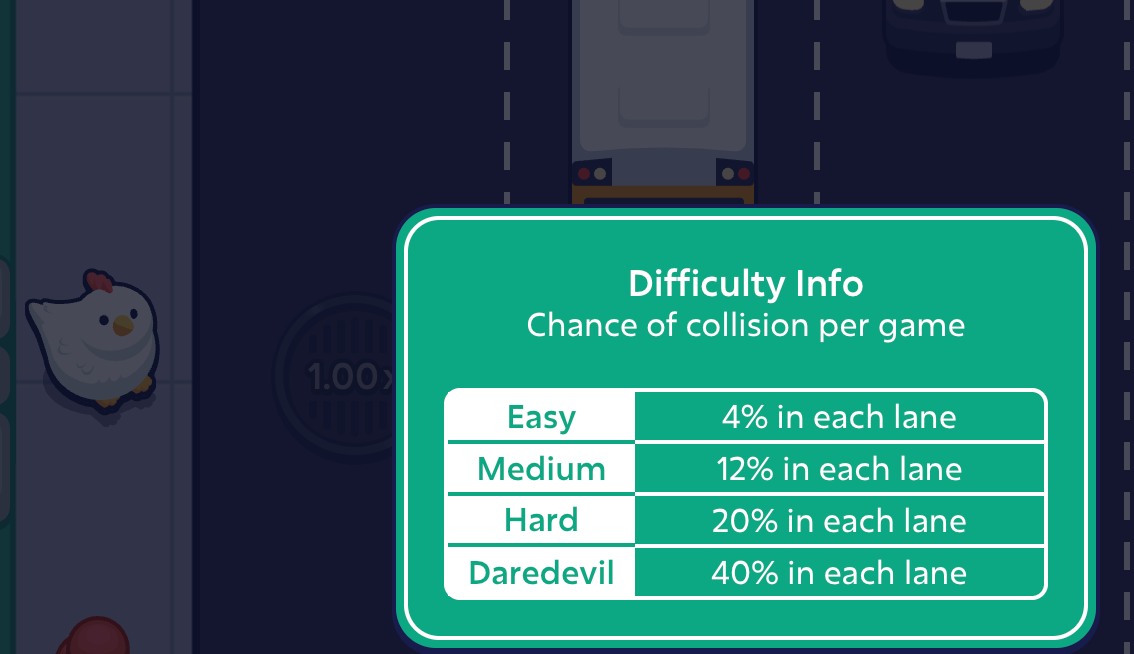
Two chicken games, one from Roobet at 96% RTP, the other from Supercell at 0% RTP (social casino). Hay Day could be copied from a pure gameplay point of view. The mechanics are simple. But the reason it can generate USD 1.4B with 0% RTP is everything around the core loop. The brand IP. The characters. The world. The network effects. The community. The feeling that you are part of something. Players come back for the entire experience, not because the game itself is complex or gives out bonuses.
Mission Uncrossable was a strong innovation by Roobet and now every self respecting crypto operator has their own version. But the lesson is the same. We cannot focus on product in the narrow sense of a single feature or mechanic. Product is the full package. The story. The identity. The world you enter. The social layer. The attitude of the brand and the feeling the player gets the moment they land in it.
We are not Homo Economicus
There are three doors. A, B and C. One of them has USD 1 million behind it. You pick a door. Then I open one of the other doors that does not have the money and I let you choose again. Do you stay or do you switch?
Most people stay. It feels safer. But switching takes your chance from 1/3 to 2/3.
If this still feels wrong, imagine the same setup with 100 doors. You pick one, then I open 98 empty doors. Your original pick now has a one percent chance of being correct. Switching is the best move every time.
This setup, known as the Monty Hall problem, comes from the US show Let’s Make a Deal, where only 13 percent of contestants switched. That is not rational behavior.
Another example. You buy a USD 2 lottery ticket. Someone immediately offers you USD 2.10. Most people say no. Many would not sell even for eight dollars. Experiments show people value that fresh two dollar ticket at about nine dollars. Owning it inflates its perceived value by four-to-five times, even though all tickets have the same chance of winning.
People do not think in expected value terms. Homo economicus is a model of perfectly rational agents who always maximize payoff, but real humans do not behave like that. We are much closer to homo vibicus, acting on vibes, feeling, superstition and whatever seems right in the moment rather than on cold math.
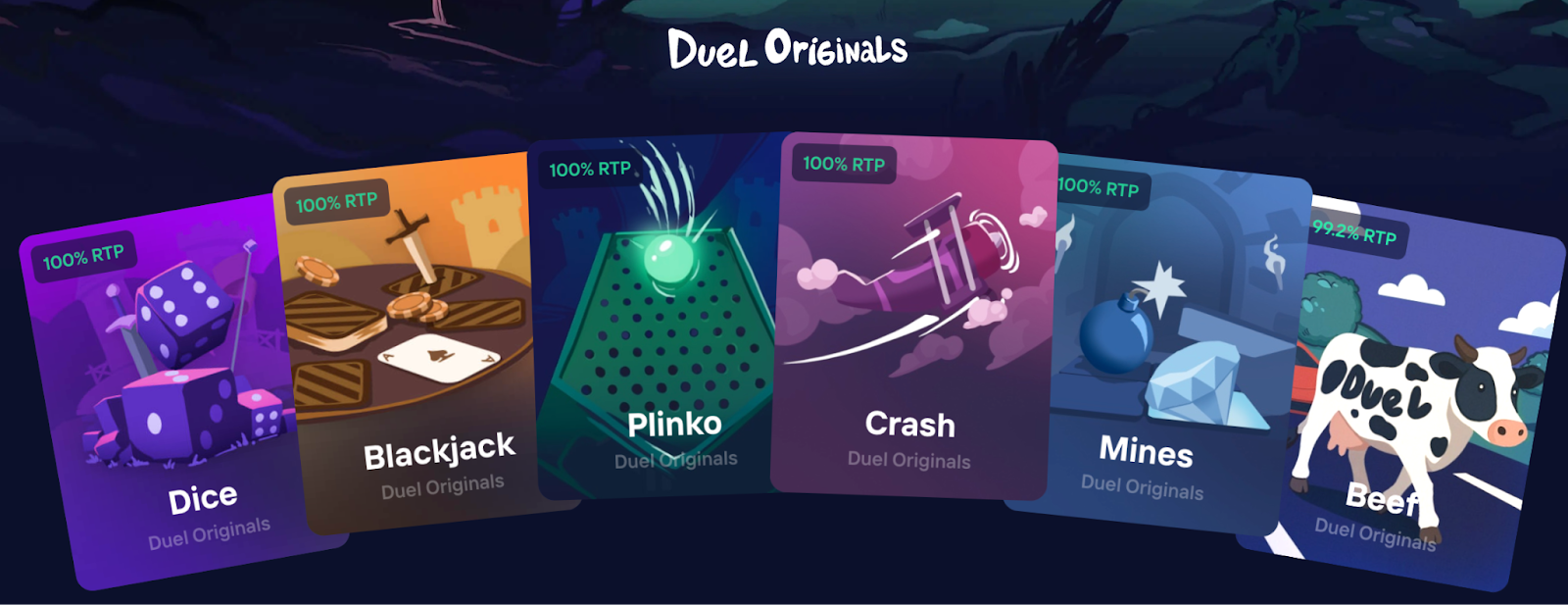
A 100% RTP game can feel like a USP when everyone offers the same games. But it is also the fastest path to 0 margin. I play on Duel myself, but not because of RTP (I’ve also never claimed the cashback as they don’t have a status bar that is what I use to keep track). It is because of Monarch and hype.
And once you accept that, the next part becomes obvious.
Players do not want to feel rational. They want to feel like the main character.
They want moments. They want recognition. They want moves that feel bold, funny, risky, irrational and memorable. Aura is status. Not VIP tiers, but cultural status. The kind you get from doing something that looks insane but feels great. Something that is worth clipping, sharing or laughing about.
Money is a social construct. Status existed long before money. Go back to cave men. The highest status move was bringing home the biggest prey. You earned it through risk and courage.
Casinos are the perfect environment for this. A place where risk is compressed into clear actions and clear outcomes. Look at the US market. Players choose double zero roulette even though it is worse value. Over 60% of GGR comes from parlays with margins around 20%. They choose them because they are fun. They create stories. They create moments. They create cultural status.
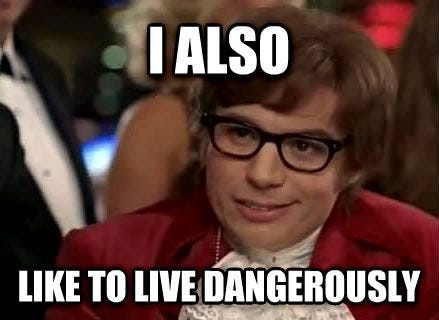
It is Austin Powers staying on a 3 and 2 in blackjack to live dangerously. Irrational on paper. Perfect in the moment. That is where digital hugs are worth more than FIAT. That is where aura becomes a reward. And that reward is a form of status.
Even SVIPs in private rooms want the rest of the casino to feel alive. Full. Buzzing. Nobody wants to be a VIP in a ghost town. Status only matters when it exists inside a world that feels active and culturally relevant. Being a VIP where new age degens place 100-leg multis is a far stronger value proposition than being a VIP in a quiet corner.
Platforms that want to capitalise on this should lean into it. They should make it easy to create moments that are worth sharing and let others take part through likes, reactions or copy betting. And the most powerful moments are not the wins or the losses but the near misses. The almost hit. The one pixel away. The heartbreak that turns into entertainment. A platform that surfaces these near misses and the bold attempts around them will feel more alive than one that only shows clean outcomes.
Players do not sit with spreadsheets.
They act on instinct, attachment and impulse.
The platforms that understand this will win.
Brand is Product
At a16z demo day a founder said something that stuck with me. We over index on differentiation. Unless you are building at the absolute edge of technology, anything you ship can be replicated. Features are not the moat. Attention is. And the real opportunity of our generation is that you can capture attention at a scale that was impossible ten years ago.
But attention is no longer something you can buy. Gen Z sees through paid placements, forced collabs and corporate influencers instantly. They can identify an ad within 0.7 seconds according to a Meta research study, and they scroll past traditional ads at almost double the rate of millennials. If you are not part of the conversation already, you cannot buy your way in.
This is why Polymarket and Kalshi feel like the future. Not because of product parity or regulatory footprint. But because they have cultural relevance. Bet365 is transactional. Polymarket is cultural. You can copy a feature. You cannot copy culture. Product parity is easy. Cultural parity is almost impossible.

This shift is also flipping the roles between creators and founders. Founders are becoming influencers because distribution is part of the product. Influencers are becoming founders because product is part of their distribution. The line is vanishing. Whoever owns the conversation owns the growth. Monarch is a great example of this.

We are entering an era where distribution and creator energy are the real moats. Never before in history could someone pick up a phone, talk for five seconds and reach 100 million people. The companies that understand how to ride that wave will build generational brands.
And gambling is not separate from this. The conversation is moving away from brands paying to appear in the feed to brands actually being part of the feed. Not with a corporate tone. Not with formal, teacher-like messaging. But with the energy of the platforms themselves. Meme driven, playful, self aware, social. You can feel the difference instantly when you compare Dabble’s social presence to Bet365’s emails. One feels like a community. The other feels like a notice board.
Brand is not something you build on top of the product.
Brand is the product.
And if you are not in the conversation, you are not in the market.
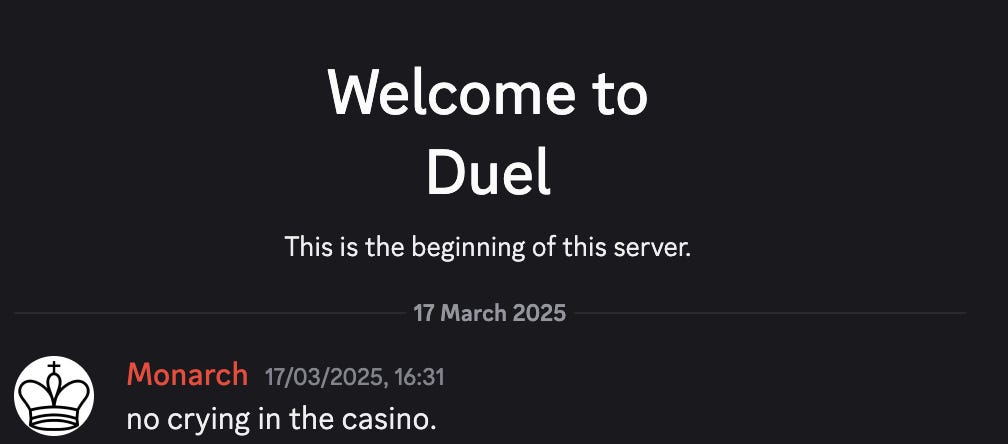
One of these messages feels real
There are qualifiers to this, as well as a few cautionary tales.
Products can become seasonal fast.
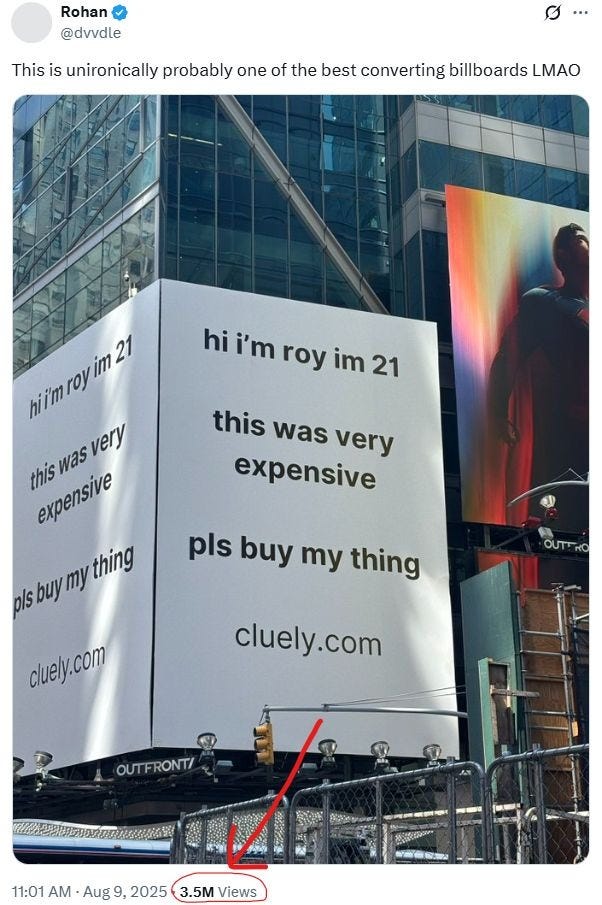
Cluely, an AI assistant, grabbed huge attention via a viral billboard campaign despite being less than a year old. They showed how, in a crowded field, attention becomes the moat.
But while they have been successful at grabbing attention, the real question is whether they have staying power.
Duel and others need to ask themselves the same question. When the spotlight hits, is your underlying product strong enough to capitalise on the attention?
Remember Labubus? Huge attention but very little follow-up. The same story repeats across trends all the time.
The real question is who becomes the next Rolex. Attention is only the opening. What you ship during that window decides whether you become a meme or a category.
Consumption is changing and the future does not need to look like the past
Gen Z consumes entertainment in short, high impact bursts. They skip straight to the hook of a song. They watch a recap of a two hour movie instead of the full film. They dip into content, not commit to it. Microdramas turn full story arcs into two minute experiences.
In gaming, more players skip the base game entirely and buy direct entry into bonus rounds. Turbo play is normal. Tools like Qbot simulate outcomes with no gameplay at all. It is not hard to imagine our version of microdramas. They would be clips of the exact moment tied to your bet, the red card that ruined your multi or the goal in the ninety fifth minute that killed your seven leg parlay.
We have all said it by now that all operators look identical. But this is not unique to gambling. It is the same pattern you see between Instagram and TikTok. The mechanics are almost identical, yet the experience could not be more different. The separation comes from culture, the creator ecosystem and how people consume content.
TikTok has a native culture built on raw, fast, unpolished energy. It is a cultural engine. Instagram is curated and aesthetic. It distributes culture. That difference shapes everything. The creator ecosystem on TikTok is built around people who thrive in that chaos, and the people who watch it want exactly that energy. TikTok is full send discovery. You open the app and it throws you into the firehose. Instagram is a friend graph. Familiar faces, familiar content, familiar rhythm.
The same contrast exists in iGaming. Every operator has the same mechanics, but not every operator has the same culture. Who plays there, who streams there, who posts clips from there, who calls it home. That is the creator ecosystem. That is your tribe. The consumption pattern matters too. A platform that feels like full send discovery, where any spin or parlay can surface into a moment, will always outperform a platform that feels like a curated feed where you know exactly what you will get.
Even the algorithm parallel holds. TikTok is a cultural firehose because its algorithm pushes new content to the world in seconds. Instagram protects the social graph and keeps things tidy. In iGaming we do not even have an algorithm. We have the equivalent of a curated feed stuck on Sweet Bonanza. Nothing is surfaced. Nothing is recommended. Nothing is pushed into culture. It is a static browsing experience.
TikTok creates culture. Instagram distributes it.
Right now no operator in iGaming is creating culture. They are all distributing the same catalogue.
That gap is the opportunity.
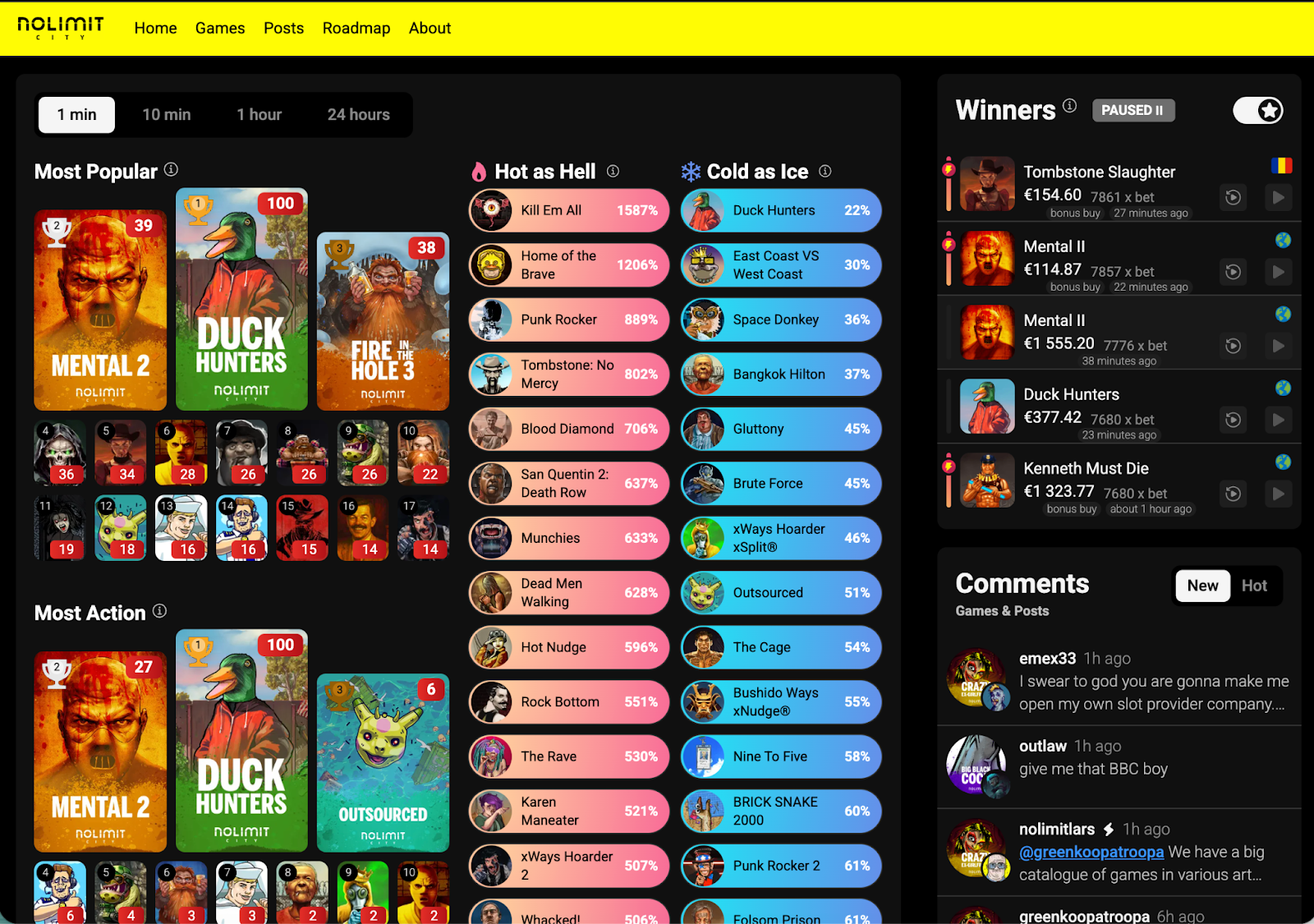
Ironically, the most feed-like experience in our space comes from Nolimit City, and they are a supplier, not an operator.
And yet…
I catch myself on Duel.com, hammering 100 percent RTP blackjack and 50 percent theoretical cashback Sweet Bonanza. Not because it is rational. Not because I ran the numbers. I do not even claim the cashback. I treat it like a status bar until they add a real one.
In a world of perfectly interchangeable products, you want to play where the attention is. But the second someone builds actual IP or real culture, that logic evaporates.
I would love to say I choose Duel for a deeper strategic reason, but I just like Monarch’s hype.
Klen Kaljulaid, a principal at Yolo Investments, brings a fresh perspective to the gambling industry, having immersed himself in the sector over the past two years. Despite being relatively new, he has developed a deep passion for the gambling industry. In addition to managing Yolo Investments’ gambling assets, Klen has also represented his country on the world stage as a competitor in Judo at the Paris Olympics — an achievement that underscores his ability to work hard.
Yolo Investments is a venture capital fund focused on investment opportunities across gaming and fintech, and has funded brands mentioned in this post. We have recently launched our Fund 3, which is a $250m fund domiciled in Abu Dhabi, focused on later stage fintech, crypto and gaming opportunities.
No posts
Comments
Nothing yet. Say the first thing.
Sign in to join the conversation.