
I’ve calculated an initial Independence Dividend based on all of the revenues from Scotland, staying in Scotland. This comes to a minimum of £17.6bn/yr based on current figures. This ignores the money that the new sovereign Scottish state could create for investment.
Most of that dividend results from Scotland keeping all its wealth in areas like revenues from food and drink, oil and gas – and energy. At present all that heads South and Westminster only returns a small portion.
What might this Independence Dividend be spent on? What would it cost to build the Wellbeing Economy that directs growth at people and the planet – rather than their exploitation. Here are some ideas. Even with all these investments and their transformative outcomes, barely half of the dividend gets spent. What would you spend the rest on?
A Wellbeing Economy is the SNP Scottish Government’s vision for Scotland. It prioritises using growth to invest in people, and protecting the planet. This is in contrast with successive British Governments who have instead prioritised growing the economy by exploiting people and the planet – whilst presiding over ever increasing inequality.
In the latest figures from the World Inequality Database someone in the UK in the bottom 50% of income receives, on average, a ninth of the income of someone in the top 10%. This contrasts with The Netherlands at a sixth. This means someone in the bottom 50% of incomes in The Netherlands is getting, on average, a third higher income than their equivalent in the UK.
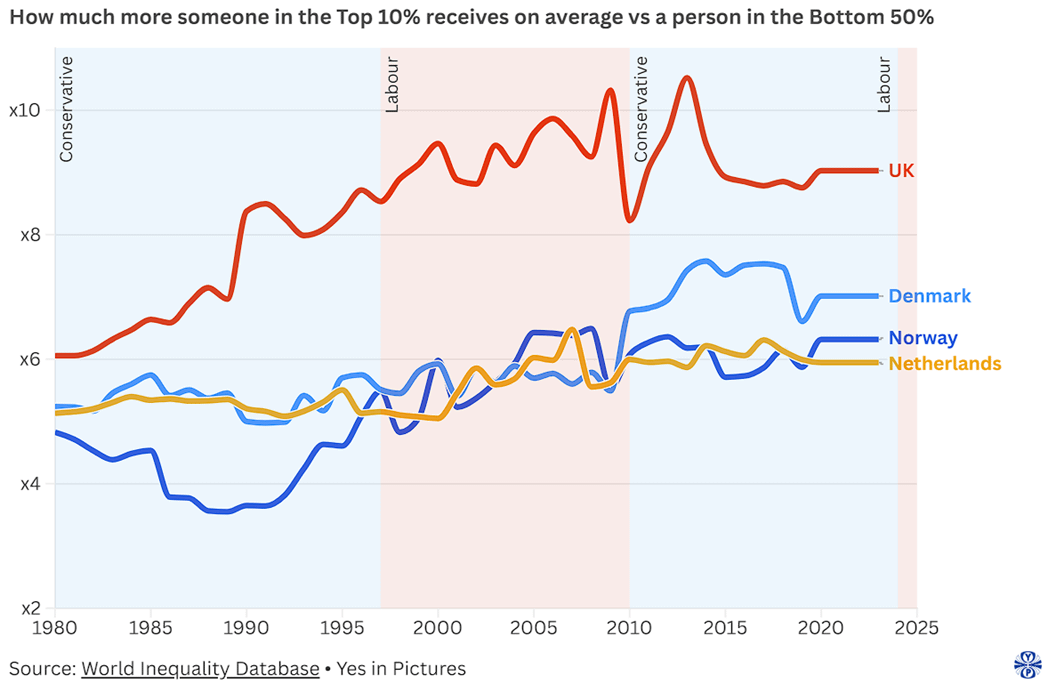
Investing in people means prioritising areas such as improved health outcomes and reducing inequality. Protecting the planet means priorities such as renewable energy, public and active transport.
Let’s pick some big impact areas and see what they’d cost. I’ve identified three areas for immediate potential investment in a newly independent Scotland:
Inequality
Health
Transport.
Currently the Scottish Government must spend to mitigate British Government policies that fight against a Wellbeing Economy. After independence, with this restraint removed, the choices will be bigger – as will be the benefits.
Let’s look at the costs I’ve estimated for some headline initiatives in these areas.
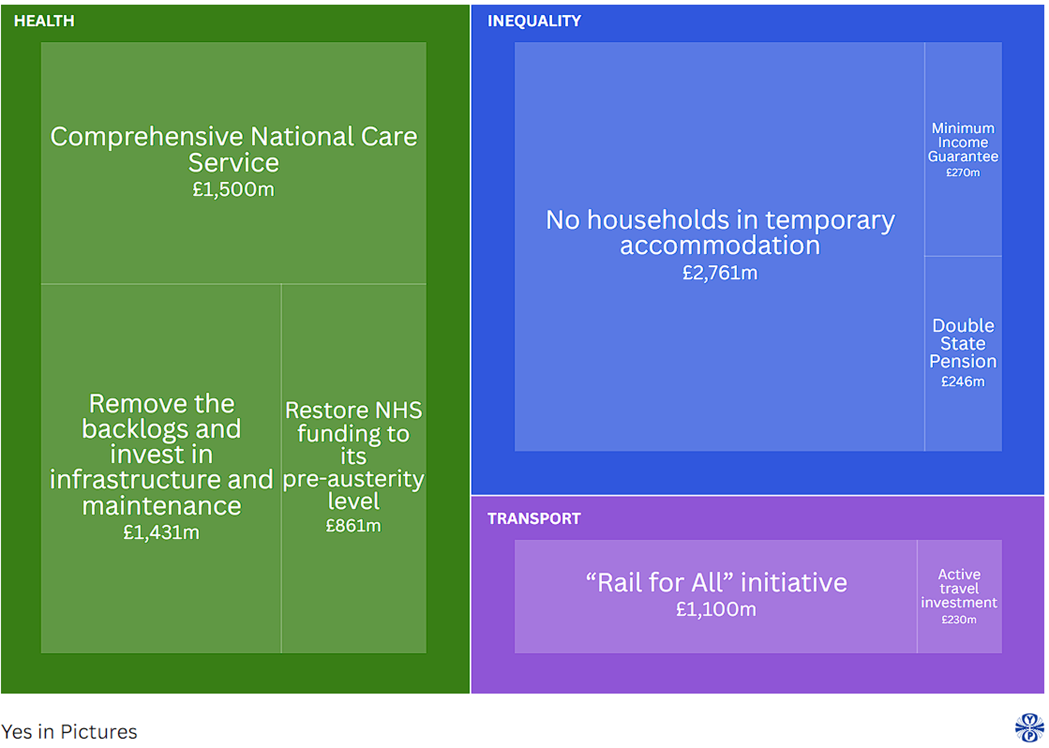
Even having addressed all the areas discussed below, only about half the dividend will have been spent. What else should be a priority?
Scotland’s UK legacy has led to one of the highest levels of inequality in Western Europe. Despite the SNP Scottish Government’s work to mitigate the effects of this – for example by reducing Child Poverty well below the level in England – there is still much that can’t be afforded in the current UK.
Let’s look at some of the improvements that could be made:
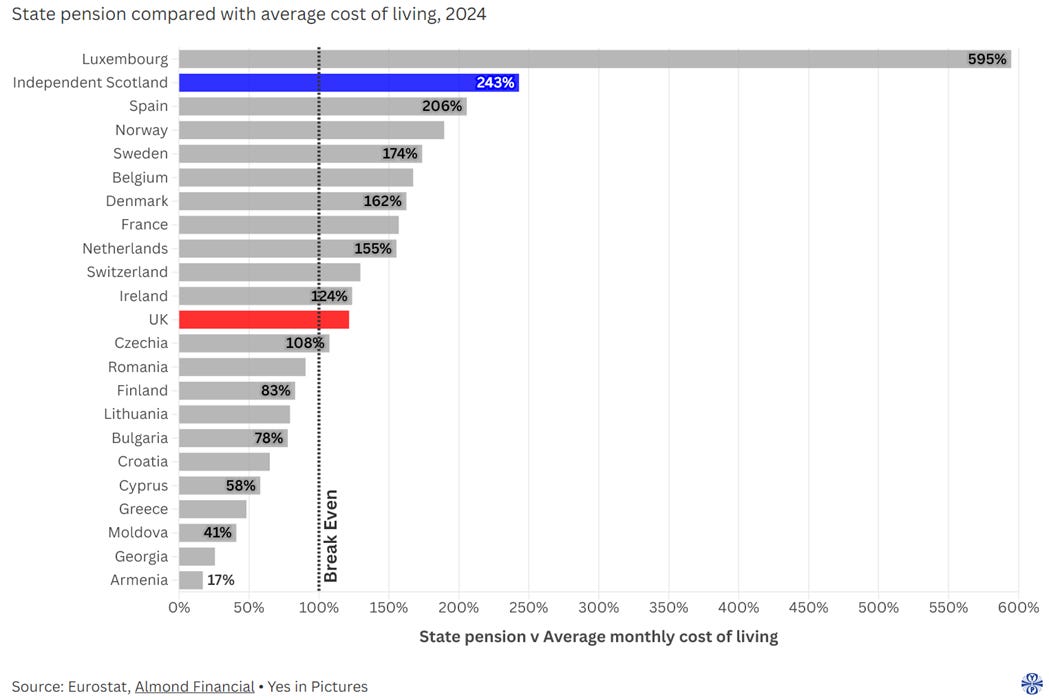
Despite the UK’s wealth, the UK State Pension is much lower than many other countries. In fact it has one of the highest per-capita GDPs in Europe, but a State Pension that barely covers the average cost of living. Whilst Luxembourg stands out at the top, Spain and Norway both sit at about twice the level of UK State Pension (as compared to the average cost of living in those countries).
Let’s double State Pension. Scotland would then sit just above Spain and Norway, in 2nd place. What would this cost? According to the UK DWP spending on pensions for people in Scotland in 2024/25 cost £246m. Doubling it would cost a further £246m.
Child poverty in Scotland is well below that in England, thanks to the SNP Scottish Government’s decisions to mitigate some of the worse policies of British governments. But compared to Scandinavian countries, The Netherlands, Belgium – and even Slovenia – it is still high.
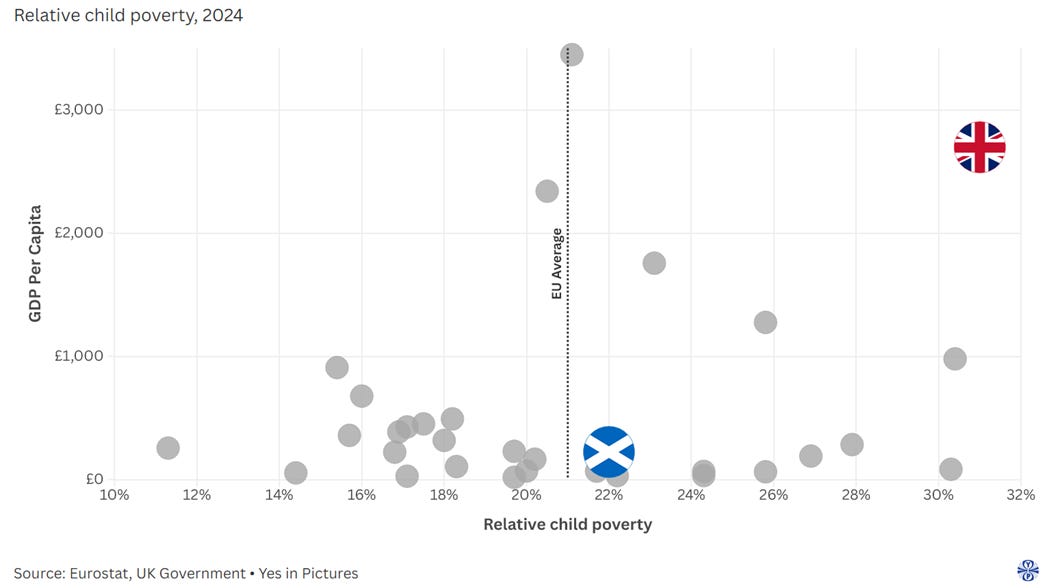
Let’s reduce Child Poverty to Scandinavian levels – 15% instead of 22%. This compares with the worst level in Europe (31% - achieved in England).
We’ll do this by following the priorities set out by the Child Poverty Action Group, where the SNP Scottish Government hasn’t already adopted its strategy. This means:
Building enough new social housing to remove all households from temporary accommodation. According to Shelter this is currently some 17,000 housing units. This will cost £2.8bn – although whether they could all be built in one year is debateable!
Introducing a Minimum Income Guarantee. Similar in concept to a universal basic income, this would ensure that no one falls below an agreed income level set to allow everyone to live a dignified quality of life, offering financial security and unlocking opportunities for all.
Whilst a minimum income guarantee requires a large investment – estimated at about £270m/yr – in reality its impact on child poverty is likely to save a lot of money too.
Undoubtedly the largest impact of the austerity forced on Scotland by successive British governments has been on our NHS and care services. The level of satisfaction has fallen significantly during this austerity period – particularly in other parts of UK.
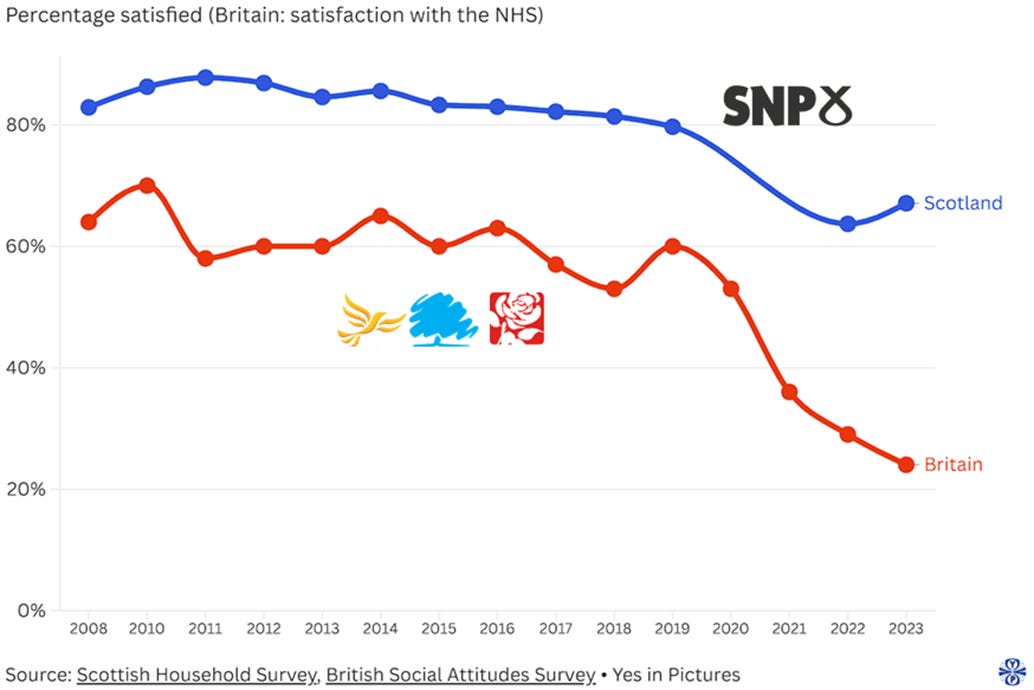
This declining satisfaction can be matched to British Government cuts to NHS funding. And as that spend is set to barely increase in future years, the situation isn’t going to improve. The Nuffield Trust has looked at party manifesto commitments from the Westminster 2024 election and compared these with the actual funding required to implement the NHS’ workforce plan. The outlook is grim.
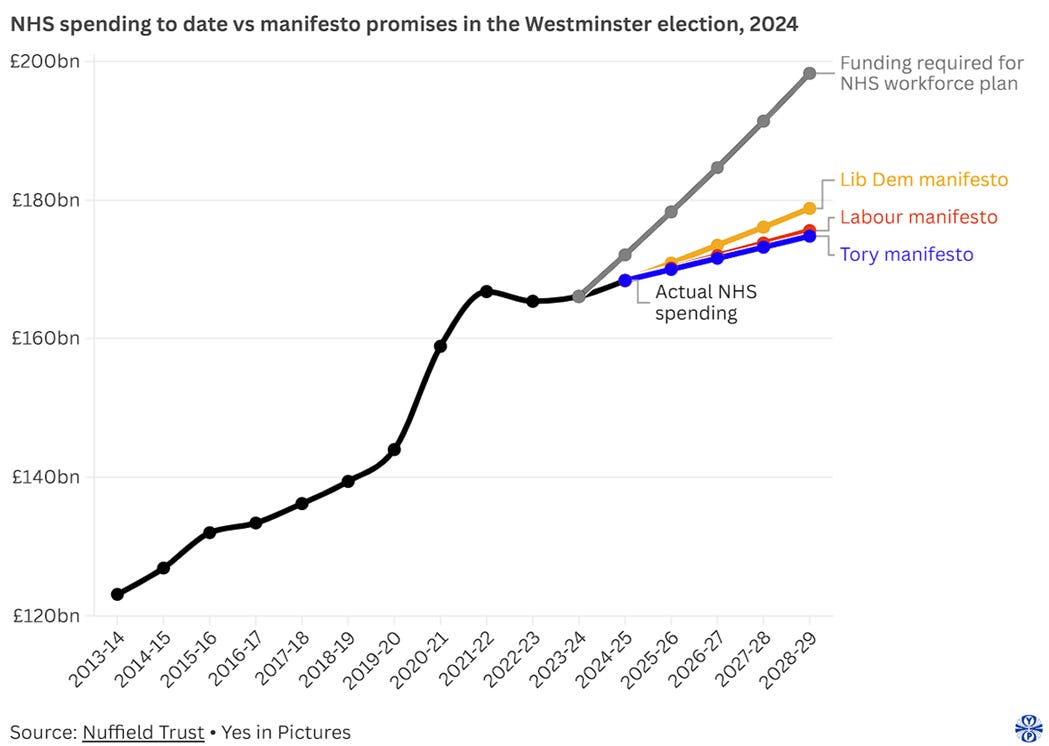
The British Medical Association (the BMA) has looked at other aspects of NHS funding as well – like the cost of maintaining health infrastructure and removing the backlog of elective care and outpatient appointments. Together I estimate that Scotland’s NHS needs some £861m/yr increase, as well as some £1.4bn of one-off investment. Let’s put it all in the first year and get the benefits of independence as quickly as possible.
Now let’s consider that other major area of health that isn’t the NHS – care services in the community. The SNP Scottish Government have developed a National Care Service strategy to address this. First introduced to the Scottish Parliament in 2022, it has the intention of reforming how social care, social work and community health services are delivered in Scotland. It has been described as the most significant reform to public services since the creation of the NHS.
COSLA – the organisation that represents Scotland’s local authorities (most of which are controlled by unionist parties) has been very critical of the Scottish Government’s plan. This is primarily because of the cost. Let’s go with COSLA’s worst case estimate of £1.5bn/year. No one else supports this worst case, but let’s use it anyway.
The Scottish Greens have developed a comprehensive (and costly) transport strategy. Whilst its primary aim is to reduce emissions, it is designed to build safer communities by prioritising public transport, cycling, walking, and supporting the rapid replacement of fossil fuel vehicles.
At the centre of this strategy is a “Rail for All” investment programme designed to upgrade Scotland’s railways to build a modern, zero carbon network that is affordable and accessible to all. This is a 20yr investment of £22bn.
It will see all communities of more than 5,000 people connected to the national rail network – restoring and extending lines throughout Scotland that were probably last used in the 1950’s.
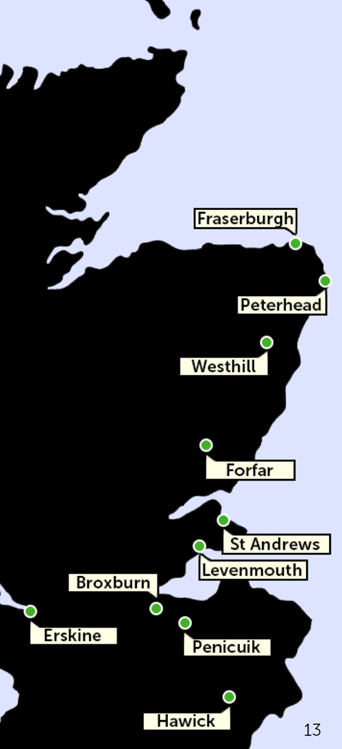
Other highlights include:
Re-integrating ScotRail and Network Rail (Scotland) into one publicly-owned company
A Firth of Forth Tunnel to transform east coast transport
Increasing capacity on the Highland Main Line
Reducing journey times on the Aberdeen-Inverness and West Highland lines
Introducing “TramTrains” in Glasgow, Edinburgh, Aberdeen and Dundee to quickly improve public transport provision.
I discuss here how an independent Scotland could reasonably expect to join the EU within seven years. Even during the application process this would open up Scotland’s access to many EU social funding programmes. These could well complement or replace elements of government investment outlined above. But what’s very clear is that the independence dividend will benefit everyone.
Comments
Nothing yet. Say the first thing.
Sign in to join the conversation.