
I’ve been struggling to write an essay here for a few weeks. Every time I tried, I’d start out in my lane—writing advice, personal essays, that kind of thing—and then I’d inevitably veer away from my selected topic and into the oncoming traffic of my thoughts on what is happening in the world.
This is because lately I’ve been able to think about little else other than what is happening in the world. You might even say I’m ruminating, but there’s a value to rumination sometimes. Sometimes, you ruminate because your gut knows that something isn’t adding up quite right, and your brain needs to figure out what that thing is.
But like many women, I tend to self-censor before I say anything about anything.
Nobody wants to hear what I think about this shit. They don’t come to me for that.
I always forget that if a reader doesn’t want to hear something from me, I’m not forcing them to. Y’all are autonomous; you can make your own decisions, and if you need to nope out on this kind of thing right now, I get it and don’t blame you a bit.
In that spirit, here we fucking go.
My problem with writing about anything other than the state of the world recently has been this; the state of the world is reflecting back at me something that I know isn’t aligned with actual reality, and that cognitive dissonance is like an itchy sweater that I keep wearing because for some stupid reason I think I should keep wearing it. I think the sweater is Right, and therefore I must be Wrong, so I keep wearing it and creating a situation where all I can now think about is the stupid sweater.
The thing is, people I tend to agree with have largely taken a very Chicken Little stance on things; the sky is falling, the world is ending, we’re cooked, it’s over. That’s not what I see, but who the hell am I? I’m a writer, a novelist, a spinner of fiction, a nurturer of other such writers. This shit is decidedly Not My Lane.
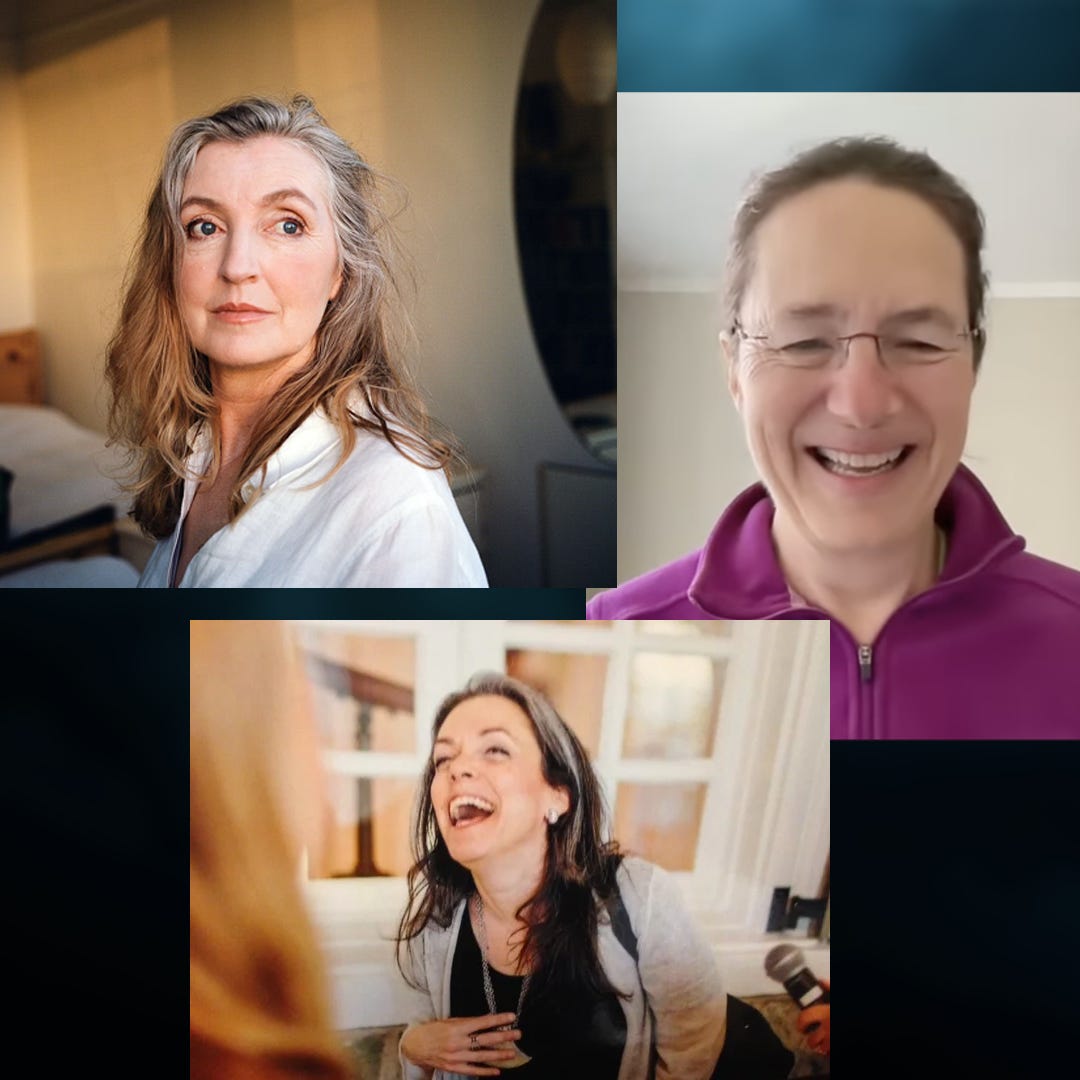
Recently, though, I found Drs. Heather Cox Richardson and Joanne Freeman, both historians, who provide calm, reasoned commentary that never dismisses the amount of work we have to do, but their attitude is one of general optimism, because as historians, they already know how this shit ends.
It’s the same way this shit always ends.
Then I read a book, The Beginning Comes After The End, by writer and activist Rebecca Solnit, also exuding a general tone of calm, reasonable, realistic optimism. Solnit argues that we’ve actually won quite a lot; civil rights, women’s rights, LGBTQ rights. All those things are under threat now because our systems are failing, and yes, that’s a frightening, destabilizing experience. Although it will be challenging, once these systems fail, we can and likely will rehabilitate them or build new systems designed to serve us better… but we have to live through the failure first.
In reading this book, I realized that Solnit is right, for many of the same reasons that Richardson and Freeman are right; because she took what she knows to be true, applied that knowledge to the situation we’re in, and came to a thoughtful, reasoned conclusion that yeah, a lot of harm has been done, and there’s a lot of work to do, but the future is actually promising.
I know this dance from a different angle to these women, but I know it intimately and personally, and I know how it ends.
Because it’s exactly how this shit always ends.
We’re not cooked.
We’ve already won.
This is what winning feels like.
It feels like hell.
There is a point in every abusive relationship when the abuser starts to lose control. This is the most dangerous part of the relationship. This is when they tighten their grip on their victims, by any means necessary.
People who have lived under abuse know what it looks like when an abuser is losing control, and we know how dangerous it is. It’s why I spent a month in bed after the election, and why I can’t remember much of anything that happened during that month. It was because my mind thought we had simply lost an election, but my body knew that wasn’t what had happened. What happened was the abuser—the misogynistic, racist, homophobic abuser—had escalated to extreme and increasingly desperate measures to snatch control at all costs.
This only happens when the abuser knows they’ve lost.
This only happens when they’ve known it for a while.
I was in an abusive relationship for six years. Like many relationships of this type, it started off as a dream and became increasingly nightmarish as time went on. I had been programmed not to trust my instincts while growing up in an abusive household that existed inside an abusive culture. For my abuser, I was the ideal victim; deeply conditioned to doubt myself, and trust anyone who showed no respect for me. I allowed his abuse toward me—I had been trained to understand that I had no value from birth, to me abuse felt like love—but I was only able to recognize this behavior as wrong when he aimed it at my kids. Finally, after all those years, I found the will to push back.
That was the moment he lost, and I won, and he knew it.
I, on the other hand, had no idea.
Thus began the worst year of my life, and if you’ve been reading me for any amount of time, you know there’s some stiff competition. This man became increasingly cruel, and did everything he could to make me think that my misery was the result of my essential shortcomings, not his abuse.
I’ve never seen the man work so hard. He must have been exhausted.
It took me three years of deep trauma work to understand what had actually happened to me, what this man truly was versus what I had believed him to be. The work was brutal and I barely made it through, but my life on the other side of that scorched earth is so amazing, I would never have believed you if you had told me how all of this hell was going to shake out in the end.
I won. I won big.
It just didn’t feel like it.
Sometimes, my body knows things that my mind has not yet come to accept, but I’m a woman in America; I’ve been trained to ignore my body, to starve it, to abuse it, to mock it, to be ashamed of it, to insist it should be something other than what it is.
But what it has been, so far, is always right.
What I knew somatically, but not consciously, was that this is what winning feels like. It’s not the ebullience of victory; that’s different. Victory is just temporarily standing on the neck of your foe. Victory feels great for a night. Winning is exhausting, and it is long-term. It means that those who are losing their power over you will become more violent, more erratic, and more desperate, because they know they have already lost. The game at this point, for the abusers, is solely about making sure you suffer for daring to challenge their entitlement.
This is where we are now, the scary part. But it’s not the worst part. The worst part is everything that has lead up to this part.
I have known this for a while. I knew this, in my body, the night the election was called. But it wasn’t until I read Solnit’s book that I accepted this knowledge as real, and allowed it to settle into my conscious reality, where it sits now, finally aligned with everything my body has known all along.
So… we’ve won.
We know we’ve won, because the abusers are burning everything to the ground to make us suffer for winning… which means they know we’ve won.
All that’s left now is to weather the storm, and then figure out how we each throw our individual strengths into building something better on the ashes of what they left behind.
Now I can finally take off this stupid fucking sweater, and maybe write about something else next week.
Stay tuned.
Links:
The Beginning Comes After The End, by Rebecca Solnit.
Comments
Nothing yet. Say the first thing.
Sign in to join the conversation.