
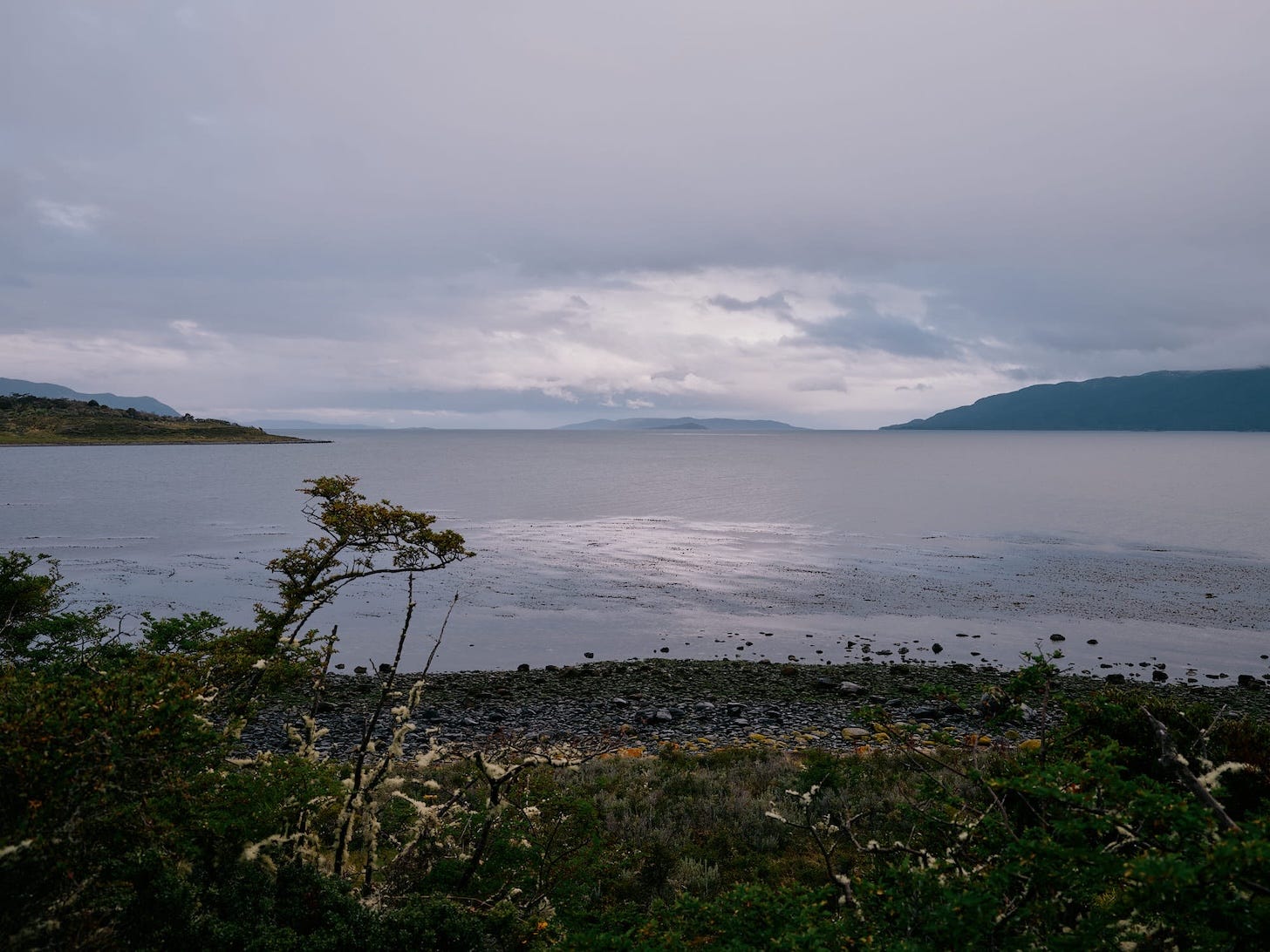
Travel into the unknown: On a journey you’ve never made before, to a place you’ve never stayed before, where you’ll be alone with your thoughts for a specific number of days. The anticipation of a solo writing retreat exerts a stomach-tingling fear and goose-bump dread as you prepare for the unfamiliar. How will it affect your physical and mental well-being? Will you write with more clarity? Be more productive? Will you achieve an inner contentment?
There’s one guarantee—you’ll experience a particular kind of heightened sensitivity to your surroundings.
I believe all writers should seek time out with their notebook and pen, be it for a day, a week, or longer. Nevertheless, I’m conscious that to be on ‘retreat’ is a privilege. For many, it’s a far-off dream; getting away may be nigh impossible for a variety of reasons, from caring responsibilities to economic difficulty and accessibility concerns.
I have a wish.
If I were financially able I would make opportunities for safe spaces and time ‘alone’ for throngs of writers interested in Place Writing. I’ve experienced solo retreats myself and found them to be extremely beneficial.
A Substacker who actively pursues this type of experience is Nicholas Holt. Nick has enjoyed several residencies and writes about them on his Substack, ‘Far From’.
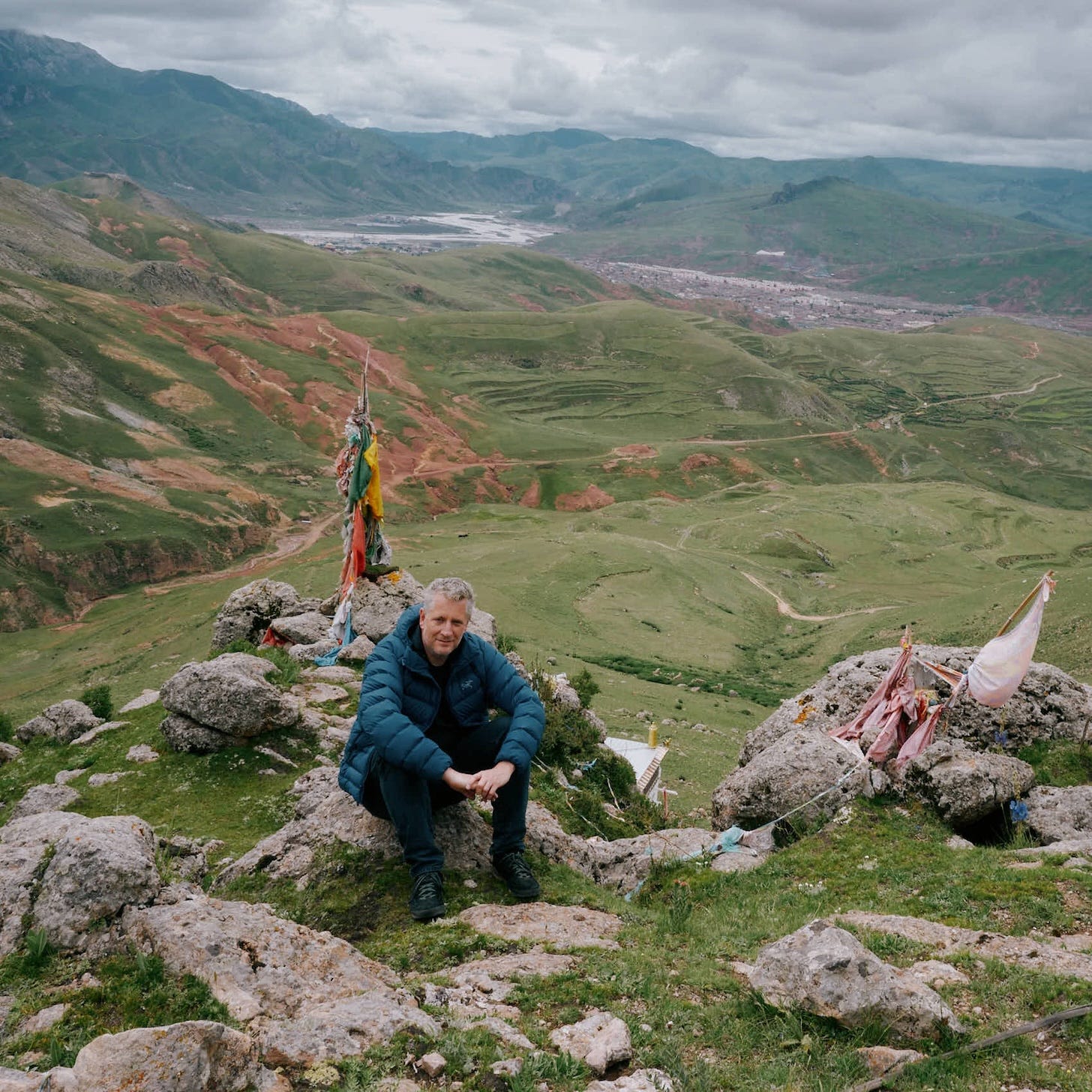
When he’s not travelling around the world, Nick’s home base is in the UK, in the Dark Peak, an area of natural beauty famous for its wild moorland, heather plateaus, and peat bogs.
It felt like a gift to correspond with Nick, whose photography and writing I find totally absorbing, and although he has already achieved significant success he still pushes himself, and his ambitions for his creative practice gave me much to ponder.
Nick said that some residencies enable access to areas where local tourism is difficult or non-existent and they have completely shifted his relationship to place:
[Residencies] give me permission to embed myself in a region’s geography, routines and culture. I get uninterrupted time to think, explore, exchange ideas with local creatives and develop new ideas away from the distractions of everyday life.
A solo retreat at the Montello Foundation Cabin in the Nevada Desert for two weeks was a ‘powerful experience’, Nick said. Then he participated in another residency—this time a communal one—to La Wayaka Current in the Atacama Desert which gave him access to Indigenous ceremonies. He said, ‘we lived in the same compound as a Lickanantay healer and a llama breeder.’
I asked, ‘What does a place need to give you before you feel you can write about it?’ Nick said, ‘I’m drawn to regions that have a distinctive geography and a strong backdrop of history, culture, art or literature. Often there is something that has been flickering in my imagination for years. Like the absolute silence of the Sahara Desert, Greenland’s glittering icecap or the end-of-the-world feeling of Tierra del Fuego,’ and ‘I’m attracted to places that have remained out of step with the modern world, such as Tibet, or Lewis and Harris [the largest island] in Scotland.’
‘I need to stay long enough so that a place stops being a destination and the clichés have faded. Then there will be a moment—a conversation, a feeling during a walk, a detail, the weather—that offers me a ‘way in’ and makes me want to reach for my physical notebook.’
Learning that Nick gives himself time to acclimatise and that he waits for a signal to start writing reminded me of my sense of frustration while on retreat. I found myself mindfully present yet not inspired to produce words that reflected the experience. At the time I could journal in my notebook, laying down a stream of consciousness, but there was no light-bulb moment for deeper writing. Not until later. Until afterwards.
So it was pleasing to note that Nick also allows the experience to mature. He said, ‘The photographs usually come first. Then, after a few days, I begin writing in my notebook. It’s only when I get home that I begin to make sense of what I’ve got and a story emerges.’
Like myself, Nick studied for a Masters Degree during lockdown; he has an MA in Photojournalism and Documentary Photography from LCC in London. ‘I started the course during lockdown in 2020,’ he said, ‘which was made possible by remote video tutorials and lectures. I had just returned from crossing the Bayuda Desert in The Sudan, and was creating pure travel stories at the time.’
Needing to evolve as a creative, Nick developed his photography practice alongside his writing and although he hasn’t outwardly framed his work as Place Writing, his approach is very much along the lines of a place writer.
Giving each new adventure his total commitment, he said, ‘Many of my projects strive to balance an intuitive, personal vision within a conceptual framework.’
‘I use journeys as a way into stories about place, wonder, culture, and history. I explore the benefits of paying attention in an increasingly distracted world. If readers finish an essay wanting to look more closely at the world rather than simply book another destination, that gives me satisfaction.’
By his own account, Nick started his Substack because magazine publishing gave him almost no feedback and he ‘wanted to publish longer written pieces’. He said:
I’d had a few stories published in magazines but didn’t get much in the way of feedback beyond contact with an editor. Before I started my Substack I was primarily known as a visual person through my photography and work as an art director.
I was surprised when people reacted so positively to a story called ‘Tibet’s Forgotten Kingdom’, which I had struggled to place in any magazine. These kinds of reactions encouraged me to recalibrate my writing alongside my visual work.
Substack has been a great place to be able to grow as a writer, without ‘gatekeepers’, to see other people’s work, and to have conversations. I try to keep in mind that writing is thinking, and Substack to me is a kind of sandbox where I can experiment and learn.
For his next project Nick is processing his experiences from the residency in the Atacama Desert and intends to produce ‘a limited-run print publication—an analogue issue containing stories and photographs that will not be available online.’
Sounds intriguing, doesn’t it?
Have you spent a stretch of time somewhere that changed how you saw it? Share your retreat or residency story with us.
Photos are provided by Nick Holt.
Nicholas Holt appears in my Author Library.
For those interested in residencies and retreats Nick has written a short guide on his Substack here.
For more on Nick’s work see his website here.
Take a look at my post recounting time spent below ground in a church crypt.
Comments
Nothing yet. Say the first thing.
Sign in to join the conversation.