

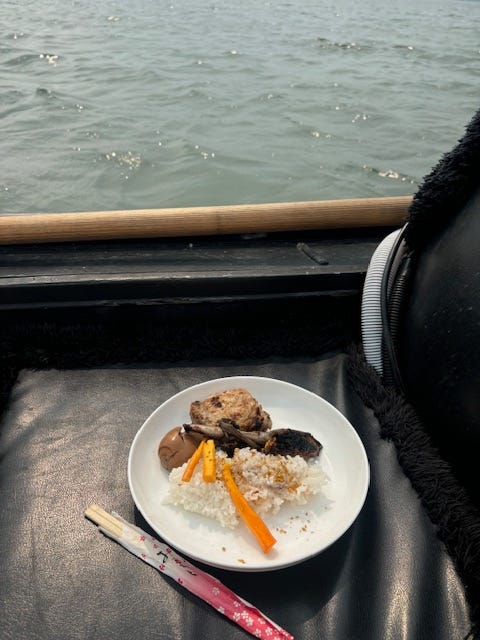
When asked what I wanted to do for my birthday out on the North Fork, the answer was easy: make Japanese breakfast for friends. (And eat it on a gondola? Long story.) That’s because nothing feels more special — or gets your day off to a lovelier start — than miso soup and tea followed by fish, rice and pickles. And always an egg.
For the last few years, my social content has been filled with heart-stopping images of Japanese breakfast in actual Japan. This is not that. Rather, it’s a lot of mismatched bowls and a bit more cooking — however simple — than one’s used to before noon. But once you’ve got your pantry in place and served the meal a few times, it will become as much of a ritual as Sunday pancakes. It always makes memories. (Though rarely leftovers.)
There are a lot of components, but make what you’d like. This is the base.
At the end of the recipes, you’ll find checklists for meal timing and pantry staples, followed by where to shop. Finally: My favorite places in the world for enjoying this meal. Besides a gondola.
Serves 2
As much as I enjoy making dashi, there’s enough going on with this meal. Besides, this instant dashi is so good, even my Japanophile friends complimented my bday miso soup. If you insist on DIY dashi, this is a solid starter recipe.
2 cups water
1 tsp. instant dashi, such as Ajinomoto HonDashi
2 Tbsp. miso paste (your choice; I like shiro/white for this)
½ cup cubed tofu (firmness of your choice)
Sliced scallions (optional)
Wakame (optional)
Bring the water to a simmer in a medium saucepan set over medium heat. Reduce the heat to low and stir in the instant dashi until dissolved. If you have a small mesh strainer (a tea strainer works well), add the miso and submerge it in the liquid, using a small spoon to stir and press it through the strainer until it’s dissolved. (So much easier than trying to incorporate a blob of paste.) Taste and add more miso if you’d like. Add the tofu, stir, and heat through for 1 minute. Divide between bowls and top with scallions and wakame, if using.
Serves 2
Do you have a rice cooker? Then you know what to do. If not, try this recipe, adapted from Harris Salat and Tadashi Ono, who just published an essential cookbook on Japanese comfort food.
1 cup short-grain Japanese rice
1 cup water
In a large bowl, wash the rice, gently swishing your fingers through it until the water runs clear. Strain and repeat twice more. (Experts suggest then soaking the rice for 30 minutes. Who has time?) Add the drained rice and water to a medium saucepan and set over medium-high heat. Bring to a boil, uncovered, then cover and lower the heat to medium. Cook for 5 minutes, then turn down the heat as low as you can go and gently simmer for 10 minutes without lifting the lid. Turn off the heat and let the rice sit, covered, for 10 minutes to finish steaming. Serve immediately, especially if making TKG (see below).
Serves 2
Known as tamago kake gohan, this isn’t a dense omelet, like the name might imply. Rather, it’s a fluffy rice-and-egg dream that couldn’t be simpler, or more comforting. It’s so beloved that it has UNESCO Intangible Cultural Heritage designation. The key? Make sure your rice is hot and your eggs are farmer’s-market fresh. Let each guest make their own magic at the table.
2 cups hot, just-made short-grain Japanese rice
2 really good eggs
1 Tbsp. plus 1 tsp. tamari
Rice topping and nori, optional
Add a cup of rice to each serving bowl. (Make sure there’s room for active stirring.) At the table, crack an egg on top, divide the soy sauce evenly, and use chopsticks to mix briskly until the egg is fully incorporated and gets soufflé-y, about 1 minute. Top with rice topping and shredded nori, if you’d like, or serve a sheet of nori alongside for wrapping.
Serves 2
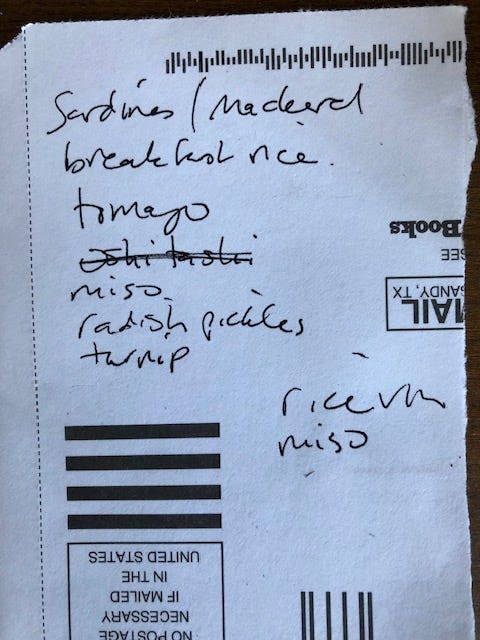
This easy recipe is based on the shioyaki style. If you’re lucky to have access to a good fish market, please make this with mackerel, bluefish or sardines. If not, try yellowtail, salmon or tuna.
2 6-oz. fish fillets (mackerel, yellowtail, salmon or tuna), skin on
1 Tbsp. sake
1 tsp. kosher salt
Pat the fish dry with a paper towel and place on a plate. Pour the mirin over and rub in until the fish is evenly coated. Refrigerate for 30 minutes.
Place your oven rack on the top setting and preheat the broiler. Line a small baking sheet with aluminum foil. Remove the fish from the fridge and pat dry again with another paper towel, making sure there’s no remaining moisture so the skin crisps evenly. Make shallow cuts in the skin about 1” apart, being careful not to cut too deep. Sprinkle the salt over both sides of the fish, patting it in to evenly distribute. Place the fish skin side down and cook for 4 minutes, checking after 2 minutes. (The thickness of the fish will determine the cooking time; you’ll need a few minutes more for salmon or tuna.) Flip and cook for 3 minutes, until the fish is cooked through and the skin is brown and nicely crisped. (It will be bubbly and uneven. Don’t worry.)
Serves 2
This is your gateway fish-for-breakfast recipe. Also delicious for dinner! Or try it with extra-firm tofu. The sauce’s simple ratio makes it easy to scale.
½ cup sake
¼ cup soy sauce or tamari
¼ cup mirin
1 Tbsp. vegetable oil
2 (6-oz.) salmon fillets, skin on
In a small bowl, mix together the sake, soy and mirin and set aside.
In a large skillet set over medium-high heat, heat the oil until it shimmers. Add the salmon, skin side down, until the skin is crisped and coppery, 4-5 minutes. Flip and cook until the second side is just starting to brown, about 2 minutes for 1”-thick fillets. Transfer to a plate.
Pour off the fat in the skillet and return the skillet to the burner. Lower the heat to medium and pour in the teriyaki sauce. Cook, stirring, until the sauce is reduced by about two-thirds, 4-6 minutes. Return the salmon to the skillet skin side up and cook, spooning the sauce over it, for another 1-2 minutes. The sauce should be nice and syrupy and the salmon just cooked through.
Fred Ribeiro at New York’s Té Company used to make these heavenly tea eggs before the pandemic. I loved them so much, I ran the recipe on my site*. Happily, he just started serving them again. I batch 6 (6-minute) eggs for the week, reusing the brine 3 times. And while Fred has access to lovely oolongs, you can totally use PG Tips.
*While you’re there, check out these great interviews with Samin Nosrat, Rachel Comey, Alice Waters and Stella Bugbee.
Serves 2
Throwing this one in because it’s always nice to have greens, but you can skip in favor of pickles…and serve it for dinner instead.
½ pound spinach, watercress or Swiss chard
1 cup dashi (1 cup water + ½ tsp. HonDashi)
1 Tbsp. mirin
1½ Tbsp. soy sauce or tamari
Toasted white sesame seeds
While you bring a medium pot of salted water to a boil, prepare an ice bath and place next to the stove. Combine the dashi, mirin and soy sauce in a medium bowl. Taste and adjust seasoning (you might need more soy) and set aside.
Blanch the greens until emerald green and soft, 30-45 seconds, then immediately shock in the ice water, swirling until cool. Squeeze as much water out of the greens as you can and shape into a torpedo. Cut into 2” pieces and, holding the pieces together, add to the bowl, making sure they’re submerged. Let sit for 15-30 minutes.
To serve, squeeze excess dashi from the greens, keeping the pieces together, and arrange on a small serving dish or shallow bowl. Spoon a teaspoon or two of dashi over the greens, sprinkle with sesame seeds and serve.
Serves 2
If you find great tsukemono in NYC, please let me know! Until then…try this with thinly sliced cucumber, carrot, Napa cabbage, watermelon radish and daikon. (If you’re a digital scale person, the amount of salt is 2% of the weight of the veg.)
1 cucumber (8 oz.), peeled and thinly sliced
1 tsp. kosher salt
Pinch of sugar
In a medium bowl, gently massage the salt and sugar into the cucumber until well combined. Weight down the cucumber (try a clean bowl or a Ziploc filled with water) and let sit for 1 hour or overnight.
Comments
Nothing yet. Say the first thing.
Sign in to join the conversation.