
When you are introduced to calculus, you encounter a concept called the antiderivative. It is a rule that, for any given function, produces a family of possible solutions, all differing by a single, arbitrary value known as the “constant of integration” (usually denoted as +C). This constant represents ambiguity; it is the unknown starting point, the baggage of history.
However, a magical thing happens when you perform a definite integral—the calculation used to measure actual change between two bounded points in the real world. In this process, you calculate the value at the end and subtract the value at the start. Because the constant exists in both, it cancels itself out. It is discarded.
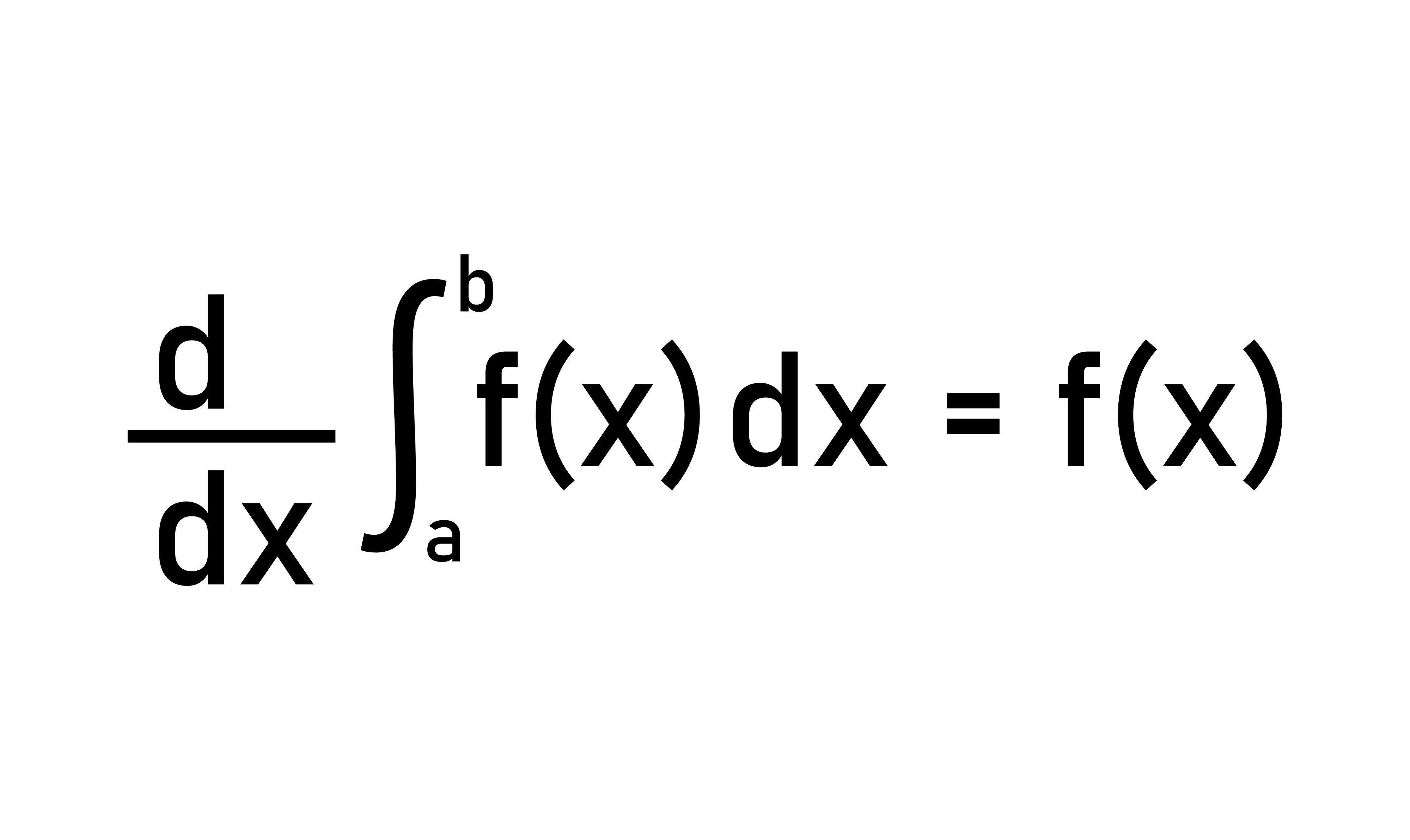
This mathematical mechanic is a profound metaphor for human epistemology. We have managed to make sense of the universe not simply by adding new information to our existing bank of knowledge, but by rigorously discarding the constants that no longer serve a function. To calculate the reality of now, the ambiguous baggage of the past must often cancel out.
The scientific method is the ultimate optimization of this process. It assumes that there is a “true representation” of reality—a pattern independent of our personal constants—that we can uncover if we investigate correctly. We make an assumption (a hypothesis), and we perform a series of steps (experiments) to see if that assumption holds up in the physical world. The proof of the pattern lies in its reproducibility: anyone, anywhere, can derive the same behavior if they follow the same steps. The “constant”—who you are, where you were born, what spirits you believe in—is irrelevant to the experiment. It is discarded so that the universal truth can remain.
While the scientific method was a triumph of discarding irrelevant information, the culture that surrounded it—specifically following Sir Isaac Newton—introduced a new, sticky “constant” that we have been unable to shake: Linear Time.
Newton’s formalization of natural laws was popularized into a rigid framework of induction. Central to this view was the assumption that time is an arrow moving in a single direction. Because of this, Newton modeled light as particles traveling in straight lines into the future—a discovery that birthed the science of optics and eventually gave us the photographic camera. But this scientific model leaked into philosophy and culture. We began to take for granted that reality is a sequence of dominoes: an effect now must be the direct result of a specific cause then.
This language of linear causality was adopted by the emerging field of psychology, most notably by the Austrian neurologist Sigmund Freud. Freud replaced spiritual frameworks with secular ones, yet he kept the same linear structure. He argued that current behaviors have clearly findable triggers in the past. Psychoanalysis became a hunt for the “original cause”—a distinct event in childhood that explains the adult neurosis.
Surprisingly, this European “scientific” approach was not so different from the frameworks it sought to replace, including those in Africa. Consider the spirituality of the Baganda people. The Baganda traditionally believed that a person’s current suffering or bad luck was the result of an unpaid debt to or by the family ancestors. The rituals of dressing the Lubaales or making animal sacrifices were attempts to “correct” a past cause to fix a present effect.
When you look closely, Freudian psychoanalysis and Baganda ancestor worship are functionally identical. Both are systems of debt collection. Both assume that the present moment is held hostage by the past. Both demand that we look backward to solve the problem of now.
However, insights from modern neuroscience and Eastern philosophies, particularly Buddhist mindfulness, suggest that this entire mode of thinking is a layer of superstition. Whether you are blaming a repressed childhood memory or an angry ancestor, you are fixating on a narrative that no longer exists physically. We now know that the body constantly reconstructs the past in the present. Therefore, the “debt” is often imaginary. As mindfulness teaches, reality only happens in the present. The “constant” of the past is something we keep manually adding back into the equation, when we should be letting it cancel out.
The legacy of Newtonian physics did more than just linearize time; it fractured the very nature of inquiry. Before this era, “Natural Philosophy” encompassed everything. But Newton inadvertently initiated a great divorce: the separation of “answerable questions” (Science) from “big questions” (Philosophy).
Science took the tangible world, leaving Philosophy with the leftovers—the metaphysical. Confined by this separation, European philosophy retreated into the abstract. It became less about observing the universe and more about analyzing the structure of thought itself. Following Immanuel Kant, philosophy largely turned inward, obsessing over logic, categories, and the limitations of human reason. With the notable exception of thinkers like Alfred North Whitehead—who tried to return to a model of the universe as a living process—academic philosophy gave up on describing reality. Instead, it focused on creating descriptions that merely sounded scientific.
This intellectual sterility triggered the “Modernist Error.” Because we believed the world functioned like a machine, we assumed we could engineer society like one. We invented grand, rationalistic frameworks—Capitalism, Socialism, Democracy—and attempted to carve the messy, organic social world to fit these rigid models.
This is where the divergence from truth became fatal. The scientific method was designed to describe the universe as it behaves. Modernism, however, attempted to prescribe how the universe should behave based on ideas imagined by people.
Intellectualism turned into a competition. Science and philosophy ceased to be about collective discovery and became an arena of persuasion. It became a sport of rhetoric: who could construct the most convincing argument? Who could bend the data to fit their “ism”? We replaced the search for truth with the coercive agreement of the debate hall. We spent centuries arguing over which rigid model was superior, forgetting to ask if the universe—or the human spirit—can be modeled by a rigid framework at all.
For centuries, academia has operated on the premise that if you can construct a logical argument for an idea, it must hold value. We have spent our time trying to bend the universe to fit into our intellectual boxes. But the arrival of Large Language Models (LLMs) and Artificial Intelligence (AI) has shattered this illusion.
With AI, we can now generate any idea, any justification, and any “logical” argument instantly. We have mechanized persuasion. Because an AI can hallucinate a fact or construct a flawless argument for a lie, we now know for certain that truth is not inducible from generalizations. Truth cannot be found just by arranging words in a convincing order.
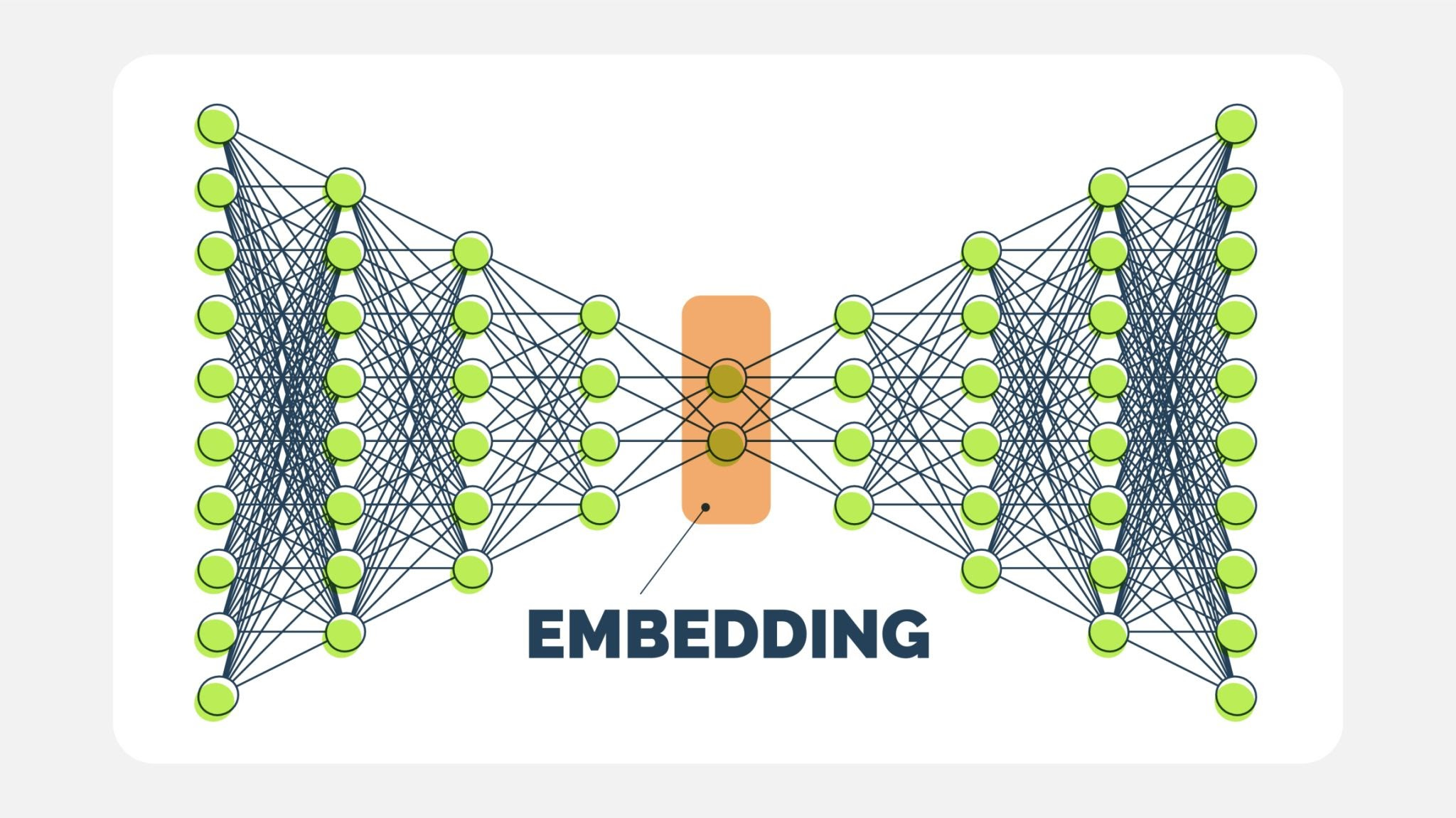
While many fear that truth will not survive the era of AI, the reality is more nuanced: Argumentation will not survive. The Modernist project of “persuading others” has been revealed for what it effectively is: a diversion. It is a lighter form of coercive agreement, a sophisticated superstition that confuses “winning a debate” with “finding the truth.”
If reasoning is no longer the gold standard, where do we look? Perhaps it is time to revisit the ways and cultures we previously discarded—those that wrote less. Those that confined less in their conclusions and focused more on their methods of attunement.
We ridiculed the idea that spirits caused rain, yet we replaced it with the equally superstitious belief that arguing about rain is the same as understanding it. We need to move from the accumulation of facts to the accumulation of instincts.
Consider the hunter in the forest. He does not catch a rabbit by debating its taxonomy or theorizing about its biology. He catches the rabbit by becoming sensitive to the environment. He learns the optimum way to move, to smell, to look.
Consider the elder who predicts the weather for a wedding. She does not need a meteorological model; she listens to the wind.
These are valid epistemologies—ways of knowing—that complement the scientific method. Most rely on direct observation rather than abstract mediation. We do not need to adopt their conclusions (that the Lubaale Kabaka Mukasa brings the rain), but we desperately need their frameworks (how to listen to the world so closely that you know when the rain is coming).
We return, finally, to the calculus of wisdom.
In the age of information abundance, facts have become the “constant of integration” (+C). They are everywhere, they are cheap, and ultimately, they are the lowest power in the equation. In the “derivative” of our new reality, facts are the static noise that must be discarded to solve for the truth.
Think back to the camera. It exists only because Newton formalized a specific way of understanding light—as particles moving in a straight line. But for too long, we have been obsessed with manufacturing better cameras—iterating on the same old arguments—assuming that a snapshot in linear time is the only way to capture the world.
We need not consider the different models of cameras we can make, but rather the different ways we can freeze light. If we understood time or light or truth differently, what technology—what entirely new methodology—could we build that does what the camera does, but through a completely different mechanism?
We no longer need to accumulate more things known. We need to accumulate more ways of knowing.
The future belongs to those who understand that truth is not a static object to be found and defended. It is a dynamic integral. We must learn to perform the calculation: to observe the bounded points of our reality, apply the correct framework (whether it be the scientific method, the hunter’s instinct, or the meditator’s presence, among the many others), and bravely discard the constants—the biases, the past debts, and the clever arguments—that no longer serve the equation.
No posts
Comments
Nothing yet. Say the first thing.
Sign in to join the conversation.