
The gap between what happens and what is caught
The largest form of money laundering conducted anywhere on this earth does not pass through a bank and it requires no shell corporation domiciled in the Caymans, no cryptographic mixer scrambling a digital trail, and no courier bearing a suitcase across a frontier as we are used to hear and see…
What it does require though , in its essence, is nothing more than two invoices describing the same shipment, priced differently from one another, and a customs apparatus too inundated by sheer volume to interrogate either figure closely. Easy right? Let me explain..
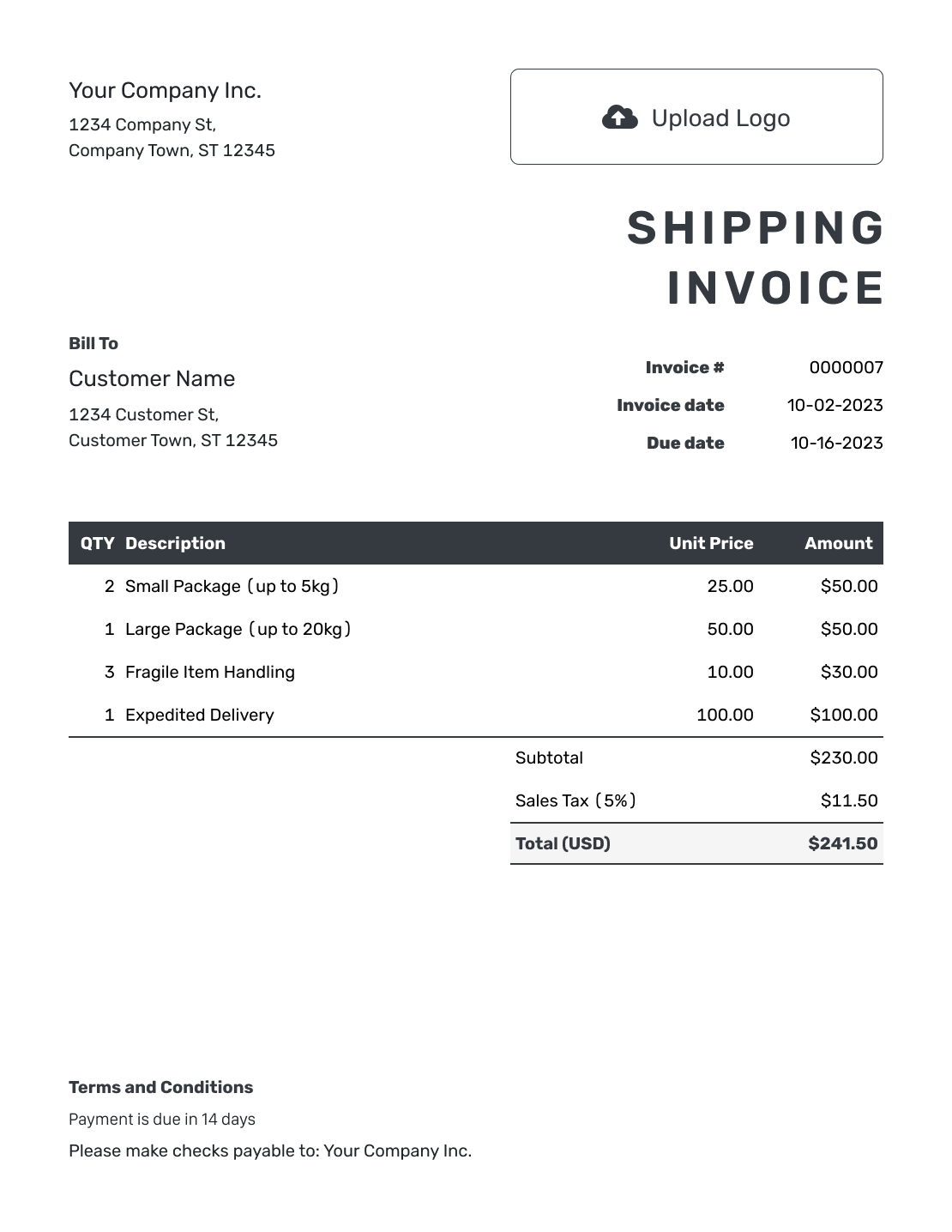
This is called trade-based money laundering, and what ought to arrest our attention immediately is not merely its existence but its massive scale..
by the more expansive estimates, it now constitutes the overwhelming majority of illicit financial flows worldwide, something in the neighborhood of eight hundred billion to two trillion dollars annually, according to those who have studied the phenomenon most closely. That is roughly what the average of 5-10 countries move in their “refusal” economy!!
Even the more conservative reckonings, confined strictly to the mechanics of trade misinvoicing, place the annual figure between seven hundred billion and a trillion dollars.
Against this staggering sum, one might set a rather more modest number , the total value of cases actually identified and prosecuted by courts across an entire decade, from 2011 to 2021, comes to some sixty billion dollars. The distance between what is occurring and what has been apprehended is the entire substance of the story and will reveal you something very important that no media outlet will ever tell you !
A mechanism too simple to believe
Consider how unassuming the mechanism actually is.
Global trade moves something on the order of thirty trillion dollars annually through a customs infrastructure conceived to intercept contraband and levy tariffs, not to adjudicate whether a shipment of machine components, declared at two million dollars, might in fact be worth a fraction of that sum, or several multiples of it.
The most prevalent technique, appearing in something like two-thirds of documented cases, is misinvoicing in its various guises:
the export invoiced below its true value, so as to leave capital resident abroad ,
the export invoiced above its true value, so that funds may return home wearing the costume of legitimate revenue,
the import undervalued, to evade the tariff collector
and the import overvalued, so that money might depart a jurisdiction under the perfectly respectable pretense of a commercial purchase.
Layered atop these simplest variations, one finds the practice of issuing multiple invoices for a single shipment, the conjuring of phantom cargo that exists nowhere but on paper, the deliberate mischaracterization of goods to evade one duty regime or another.
What results is not so much a loophole as an entire ecosystem of ambiguity , financial hide-and-seek conducted on a planetary scale, as one compliance professional memorably described it, a condition in which even seasoned regulators concede that searching for the illicit transaction feels rather like searching for a needle secreted among an indistinguishable multitude of other needles.
The peso exchange: laundering without moving a dollar
It would be a mistake to imagine this as a phenomenon confined to abstraction, for the historical record furnishes cases of remarkable, almost novelistic specificity.
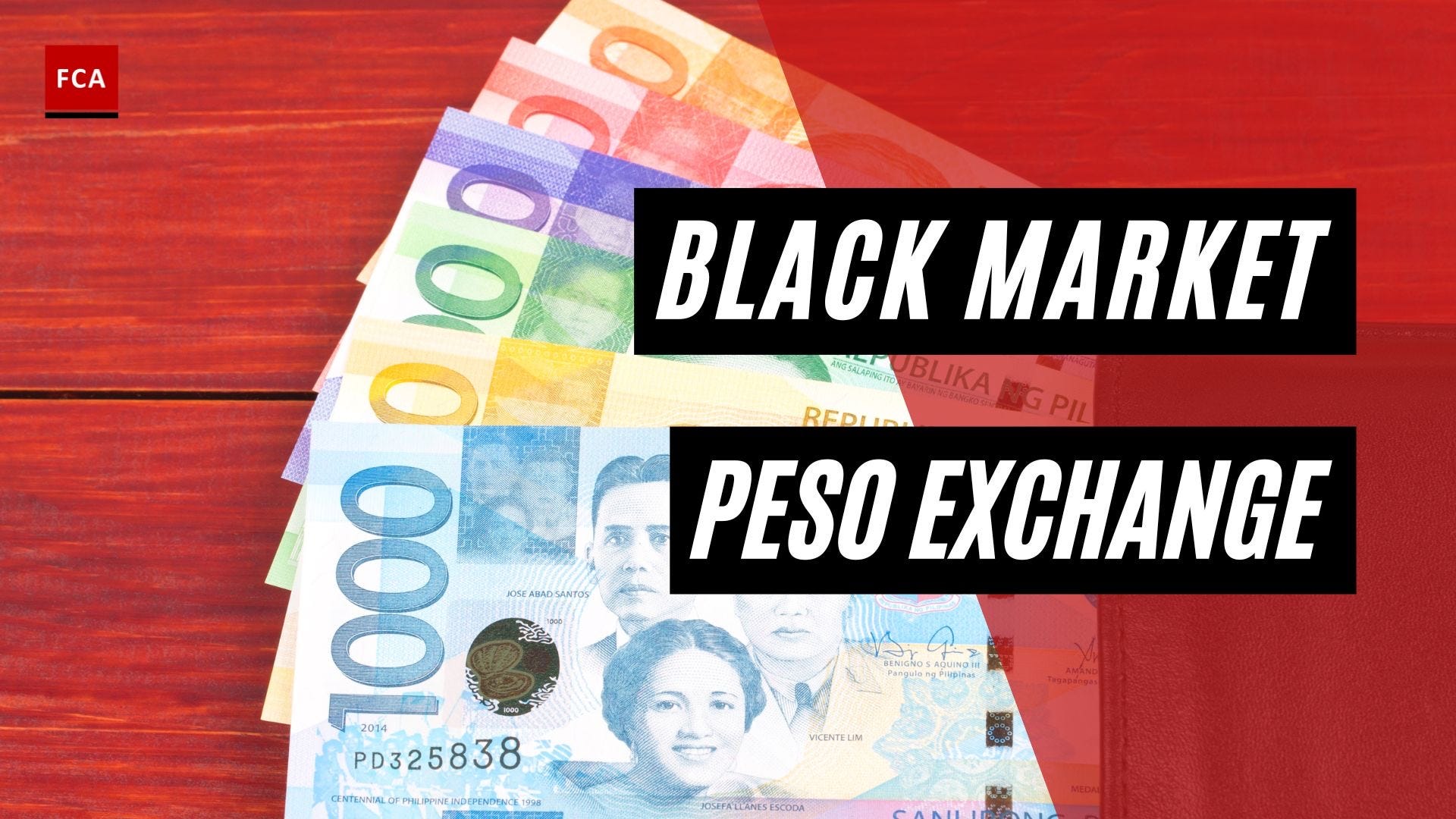
Consider the Black Market Peso Exchange, a mechanism first devised in Colombia during the 1960s to circumvent that country's currency controls, and subsequently repurposed, with grim efficiency, by the narcotics cartels of Colombia and Mexico into what many regard as the single most successful laundering methodology the Western Hemisphere has ever produced.
Its elegance lies precisely in its refusal of the obvious , the dollars earned from narcotics sold on American streets are never smuggled across any border at all.
The business works like this..
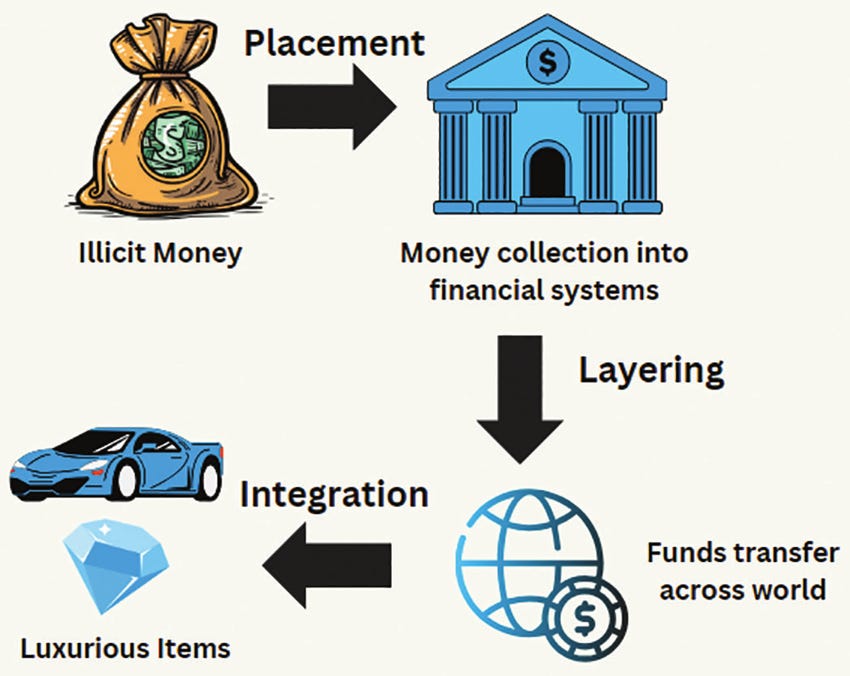
A cartel, having accumulated substantial American cash from domestic sales, transfers this sum, at a discount, to a peso broker
Then the broker deploys those dollars to purchase, on behalf of unsuspecting South American importers, entirely legitimate American merchandise.
These goods travel south, are sold at retail through perfectly conventional channels, and the pesos thereby generated are remitted to the broker, who forwards them, minus a commission, to the cartel.
What one observes is not money laundering in the conventional imagination, but an entire, self-sustaining trade economy erected atop the movement of goods that were never, at any point, illegitimate in themselves.
The merchants who sold the original merchandise remain, in the overwhelming majority of cases, entirely innocent of the scheme in which they have unwittingly participated and this is not a flaw in the system's design but its very foundation, for a laundering apparatus requiring no willing accomplice at its point of sale is, almost by definition, invisible to the institutions charged with detecting it. Pretty “cool” huh?
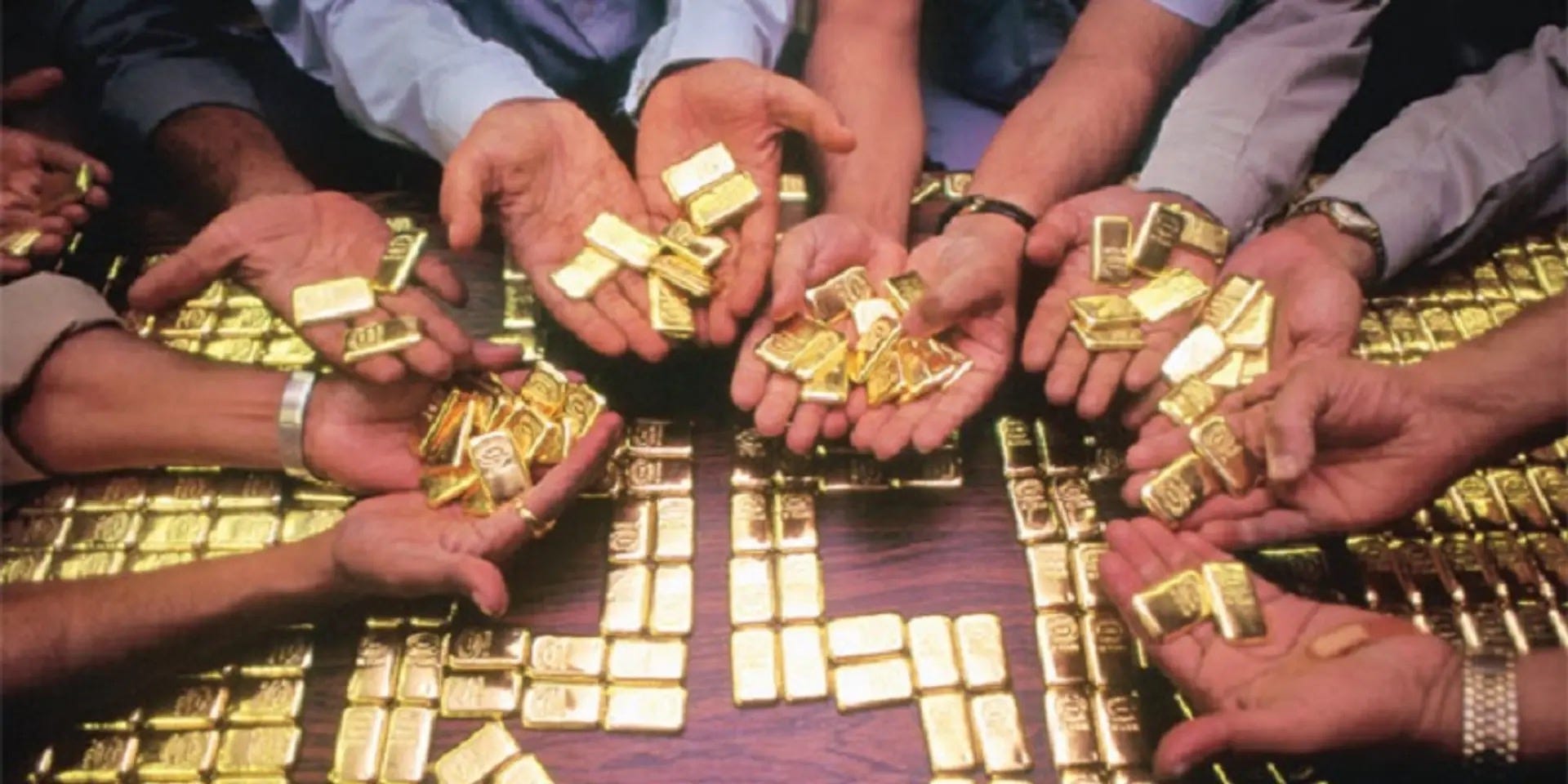
Gold, and the man who called himself the Pablo Escobar of smuggling
Consider also the singular case of gold, a commodity whose value is, in the words of federal prosecutors who pursued one such scheme, both universally recognized and notoriously difficult to trace , qualities that render it almost providentially suited to the launderer's purpose.
Between 2013 and 2016, a Miami-based refining operation received in excess of a billion dollars in illegally mined gold, extracted from Peruvian deposits under the control of narcotics traffickers, smuggled through Bolivia, Ecuador, and Colombia before arriving, laundered by geography alone, at American refineries prepared to receive it.
The scheme's principal architect, a man who by his own reported estimation styled himself the Pablo Escobar of gold smuggling ( a self proclaimed criminal with attitude ) , was in the end undone not by any triumph of regulatory vigilance but by the far more prosaic mechanism of a confiscated cellphone.
Nor should such episodes be imagined as recent innovations.
The collapse of the Bank of Credit and Commerce International, decades ago now, revealed an institution that had employed false documentation, fabricated invoices, deliberately overvalued goods, and a lattice of shell companies to move billions on behalf of narcotics traffickers, terrorists, and organized crime alike , evidence that the mechanism here described is not a contemporary aberration but a persistent structural feature of international commerce, one that merely finds new commodities and new geographies through which to express itself in each successive decade.
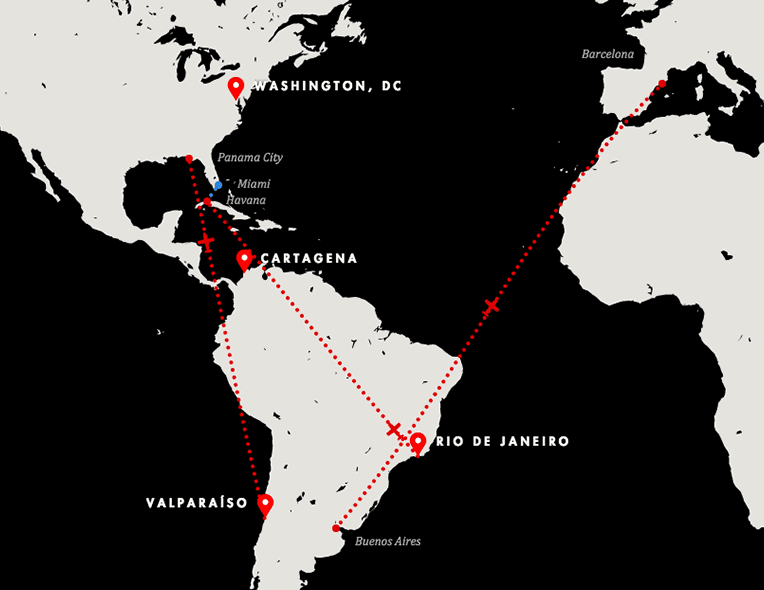
The used car as a currency
Consider, as a further instance of the same underlying principle, a scheme investigated by American authorities in which Lebanese trafficking proceeds, earned from the sale of narcotics across Europe, found their way home not through any bank but through the humble medium of the used automobile.
Vehicles purchased in the United States were shipped to Benin and sold throughout West Africa, their true purpose concealed entirely within a transaction that, examined from the outside, resembled nothing more sinister than ordinary export commerce, the proceeds of these sales were then combined with narcotics revenue and physically smuggled, in bulk cash, into the Lebanese financial system.
What recommends this case to our attention is not its scale, which is modest beside the sums considered elsewhere in this essay, but its illustrative purity:
a used car requires no assay, no gemological certificate, no chemical analysis to establish its worth, its value being instead a matter of ordinary, defensible opinion, and it is precisely this elasticity of legitimate valuation that renders the automobile … along with clothing, textiles, and electronics, the four categories which, according to federal investigators, together account for some seventy percent of all documented trade-laundering casework … so persistently useful to those seeking to move value across a border while appearing to do nothing more than what every ordinary exporter does each day.
The stone that no regulator can price
If the automobile illustrates how ordinary a laundering vehicle may be, the diamond illustrates the opposite extreme, and in doing so exposes the same vulnerability from a different angle entirely. Unlike an automobile, whose rough value any reasonably informed observer might estimate, a diamond's worth depends upon a constellation of variables — cut, clarity, color, carat, and the subtler question of provenance — that only a small guild of specially trained experts can properly assess, and this narrowness of expertise has made the trade a recurring subject of extraordinary fraud.
In one case centered on the Belgian firm Omega Diamonds, an estimated three and a half billion dollars in profit is alleged to have vanished between the mines of Africa and the diamond exchange at Antwerp, the discrepancy between declared and actual value distributed among corrupt officials, complicit bankers, and the company itself, before being reintroduced into the legitimate financial system through Dubai, Panama, and Switzerland.
A more recent case, uncovered by Indian customs authorities in December 2023, found synthetic diamonds imported from Hong Kong deliberately misdeclared as natural stones and overpriced by more than a hundred times their genuine worth, the resulting invoices serving as the mechanism by which foreign currency was smuggled out of the country through entirely conventional banking channels.
What both cases share is the same essential vulnerability, a commodity whose legitimate valuation is itself so specialized, so resistant to independent verification by any compliance officer or customs agent, that the line separating a defensible appraisal from an outright fabrication becomes, in practice, almost impossible for an outsider to locate.
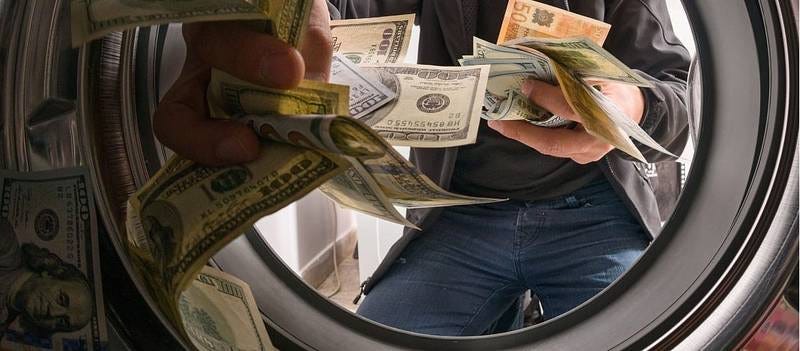
The statistics and the pattern
One might reasonably ask whether the cases assembled here, however striking individually, amount to anything more than a collection of colorful anecdotes.
The systematic data suggests otherwise. A 2024 study by the financial intelligence unit of the United Arab Emirates, examining several hundred credible reports of trade-based laundering filed across a single two-year period, found document manipulation present in fully forty-one percent of cases, with falsified bills of lading and invoices — altered shipment dates, substituted container numbers, duplicate invoices bearing altered buyer and seller names — serving as the single most common technique employed.
The commodities most frequently implicated were not, as popular imagination might suppose, exotic or unusual goods, but the most ordinary staples of global commerce: foodstuffs such as rice, nuts, and dried fruit accounted for fourteen percent of flagged cases, construction materials for ten percent, automotive parts for nine, precious metals and stones for a further seven.
The lesson embedded in this distribution is not that criminals have discovered some rarefied or exotic commodity uniquely suited to concealment
Think the vulnerability like this … present, in some measure, in almost any category of goods substantial enough to be traded internationally and mundane enough to escape the presumption of suspicion that a stranger and more conspicuous commodity might invite.
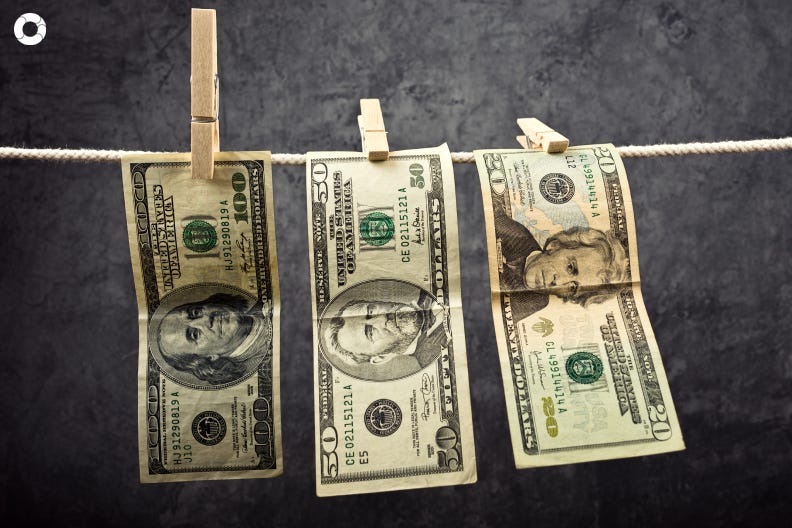
Capital follows wherever scrutiny isn’t
None of this is a story of criminal ingenuity outpacing regulatory capacity through some singular technical brilliance. It is, far more precisely, a story of capital behaving exactly as capital behaves whenever a differential in scrutiny presents itself.
As banking institutions spent two decades constructing ever more elaborate defenses around the wire transfer and the cash deposit, illicit capital did not diminish but it migrated toward the adjacent channel that scrutiny had not yet reached.
One should not be surprised to learn that enforcement activity in this domain has intensified markedly in recent years, a development testifying less to any sudden proliferation of the underlying crime than to regulators belatedly recognizing where the volume had already relocated.
A decade-long mapping of documented cases found this practice touching some seventy-seven nations, and the injury falls with particular severity upon those economies least equipped to absorb it
the developing nations from which capital departs, disguised as the ordinary residue of legitimate trade, taking with it tax revenue that might otherwise have funded the very institutions capable of arresting the practice.
The law of institutional physics
Here, then, is the lesson this essay has been building toward, and it extends considerably beyond the question of laundered money.
Every system humanity constructs to be large enough, fast enough, and essential enough to serve its stated purpose acquires, as an unavoidable by-product of that very scale, a second and unintended purpose: it becomes a place to hide.
Seeing closer to a law of institutional physics I can argue that this is not a defect that better design might eventually eliminate …
The customs regime cannot slow itself down enough to verify every invoice without ceasing to function as a customs regime at all since the moment it achieves the throughput that legitimate commerce requires, it has simultaneously manufactured the exact quantity of inattention that illegitimate commerce requires to pass through it undetected.
Trade is only the clearest instance of a pattern that recurs wherever a society builds something too indispensable to interrupt , a banking system too central to freeze for inspection, a bureaucracy too vast to audit in full, an internet too fundamental to monitor at the level of the individual packet.
Concealment, in each of these domains, is achieved by hiding inside the exact volume and complexity that make the system worth having in the first place.
where to actually look
The deeper lesson is not about invoices, or gold, or pesos. It is that anyone seeking to understand where power, money, or wrongdoing actually resides in a modern society should stop looking for the exception hiding in the shadows, and start examining the system too essential, too continuous, and too profitable to ever be fully seen because that, and not the shadow, is where concealment has always done its most effective work.
Comments
Nothing yet. Say the first thing.
Sign in to join the conversation.