

In July 2026, a woman in Meerut, India, sedated her husband with sleeping pills, had two hired snake charmers release a krait into his bed while he slept, and filed a claim on his ₹20 lakh life insurance policy. It wasn't the first time this had happened in India that year. and it wasn't even close to the first time in the past decade. At the same moment, a few hundred miles away, hospitals across rural India were rationing a different form of the exact same biological substance .. antivenom , because the legitimate market for it has been shrinking for decades. Same input and same country, often the same season. Two completely different economies, running on it in opposite directions though.
So what is the story here ? Venom is simultaneously undersupplied where it saves lives and, in its rawest form, cheaply and effectively weaponized where it takes them. Both failures come from the same root cause, a substance that never got properly priced, regulated, or tracked, sitting at the intersection of a healthcare system and an informal economy that neither one fully accounts for.
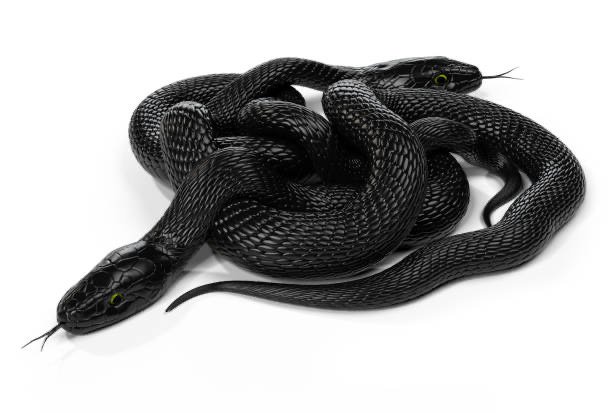
THE MARKET THAT'S TOO SMALL FOR THE PROBLEM IT SOLVES
The global antivenom market sits somewhere around $1.3-2.5 billion depending on which research firm you ask, growing at a modest 5-8% annually. That's small by pharmaceutical standards and even smaller than many single blockbuster drugs. The underlying need is not small at all though since the WHO estimates roughly 5.4 million snakebites occur globally each year, causing somewhere between 81,000 and 138,000 deaths and leaving hundreds of thousands more permanently disabled through amputation or tissue damage. In India alone, the WHO recorded roughly 1.2 million snakebite deaths between 2000 and 2019. Very cool.
That gap meaning a small, slow-growing market sitting on top of a massive, urgent global health need is actually a textbook market failure. The people most likely to die from snakebite live in rural Sub-Saharan Africa, South Asia, and parts of Latin America, regions with the least ability to pay pharmaceutical prices. Meanwhile, snakebite mortality in wealthy countries has fallen so low that Western pharmaceutical companies have systematically exited antivenom production over the past few decades, because there's no commercial case for maintaining manufacturing capacity for a product with thin margins and a customer base concentrated among the world's poorest patients. Production has consolidated into a handful of manufacturers, mostly in India, Latin America, and a few specialist European and Australian firms, while WHO-tracked shortages recur regularly in the regions that need antivenom most.
The production process hasn't meaningfully modernized either. Antivenom is still made almost the way it was a century ago: a snake gets milked for venom by a handler, one snake at a time; the venom is injected in small doses into a horse or sheep to trigger an antibody response; blood is drawn, and the antibodies are extracted and purified into a serum that has to be species-matched to work. This is why raw, unrefined snake venom is genuinely one of the most expensive liquids on earth by weight , for example some species' venom has been cited north of $10,000-$20,000 per gram. But that eye-catching figure is a production-cost artifact, not a demand signal since you need vanishingly small quantities, and the real value sits in the antibody-processing step downstream, not the raw venom itself. High per-unit price does not mean large or investable market because it's easy to conflate scarcity-driven unit economics with market size, and they are not the same variable.

THE INFORMAL ECONOMY SITTING RIGHT NEXT TO IT
Snake charmers occupy a genuine legal gray zone in India. Their trade is technically restricted under wildlife protection law, and yet it persists openly, everywhere, because enforcement is minimal and the service they provide such as access to a live, venomous animal, cheaply and on demand has real informal-economy value. That gray zone is exactly where this gets dark.
Over the past several years, Indian courts and investigators have documented a genuine pattern and also really interesting to observe. A Kerala bank employee starved a cobra for eleven days before using it to kill his wife in 2020, later confessing on record. A Rajasthan woman was killed by a snake left in a bag near her bed, procured through a snake charmer, by her daughter-in-law's lover. Two brothers in Tamil Nadu hired accomplices to stage a snakebite death for their father, targeting a ₹3 crore insurance payout, unraveling only because the family's policies were disproportionate to their income.
And in July 2026, the Meerut case including sedatives, a krait, two hired snake charmers, and a ₹20 lakh claim. A judge presiding over one of these cases said it plainly, on the record: "This is a new trend that people bring poisonous snakes from snake charmers and kill a person through snakebite... This is now becoming common in Rajasthan."
This is a functioning criminal supply chain, not just a series of coincidences. The going rate reported in one case was roughly 10,000 rupees — about $122 — for the snake, the setup, and the disguise. That's the entire cost of the "weapon" in a plot targeting a payout worth 100 to 1,000 times more. It's cheap precisely because the underlying substance — snake venom, delivered by an actual snake — sits completely outside any market that prices, tracks, or regulates it. Nobody licenses this transaction and nobody records it. It's a black market for a lethal substance that happens to require no chemistry, no smuggling route, and no controlled precursor — just a snake charmer willing to make an introduction. Psssthh…

WHY BOTH FAILURES SHARE THE SAME MECHANISM
Both halves of this story trace back to the same structural gap… nobody built durable institutions around venom as an economic input.
On the legitimate side, that gap shows up as underinvestment — no market incentive exists to modernize antivenom production or guarantee supply to the people who need it most, so the WHO and a handful of public health bodies have had to step in as a substitute for a functioning market.
On the illicit side, the exact same lack of institutional infrastructure shows up as underregulation — nobody tracks snake charmers, nobody licenses the sale of a live venomous animal, and nobody flags the transaction, so the same gray-zone economy that produces antivenom's supply shortages also produces a near-untraceable murder weapon.
It's worth widening the lens one more notch: this isn't unique to venom.
Illegal wildlife trafficking for traditional medicine, exotic pets, and biomedical research runs through the same kind of unregulated, cash-based, hard-to-track economy — and it's a well-documented pattern that legitimate biomedical demand for animal-derived compounds (venom included) can create cover and incentive for illegal collection and trafficking, because the legal and illegal supply chains are often indistinguishable at the point of origin. A snake charmer selling venom to a legitimate antivenom lab and a snake charmer selling a live snake for a staged murder are, from a regulatory standpoint, doing something almost identical on paper. The only difference is who's buying and why — and that's a distinction no formal system is currently built to catch.

WHY THE INSURANCE INDUSTRY SPECIFICALLY CAN'T CATCH THIS
Snakebite is common and forensically unremarkable in rural India, which is exactly what makes it a good murder weapon and a bad thing to underwrite against. A staged snakebite doesn't look anomalous to a claims adjuster the way a gunshot or a poisoning does but it looks like an ordinary Tuesday in a country where over a million people have died this way in two decades. The crime hides inside a large, boring, statistically unremarkable category of death, which is precisely the condition under which fraud is hardest to catch through medical or forensic pattern-matching alone.
Every one of these cases that actually got solved was cracked the same way: not by examining the bite, but by examining the money. Even when snakes are around we follow the money (hehe)…
Okay back to the story.
The Tamil Nadu case only surfaced because the family held multiple high-value policies disproportionate to their income , what can be seen as a financial red flag, and not a medical one. So it took an insurance company itself filing a complaint to trigger the investigation that eventually unraveled the plot.
Insurance pricing assumes cause-of-death categories are exogenous ,that snakebite deaths happen to people independent of whether those people are insured. Once a cause of death becomes cheap, accessible, and hard to distinguish from its natural version, that assumption collapses, and you get adverse selection in its most literal form: someone is now choosing exactly which "natural" cause of death happens to a spouse or parent, informed directly by which one is hardest to prosecute.
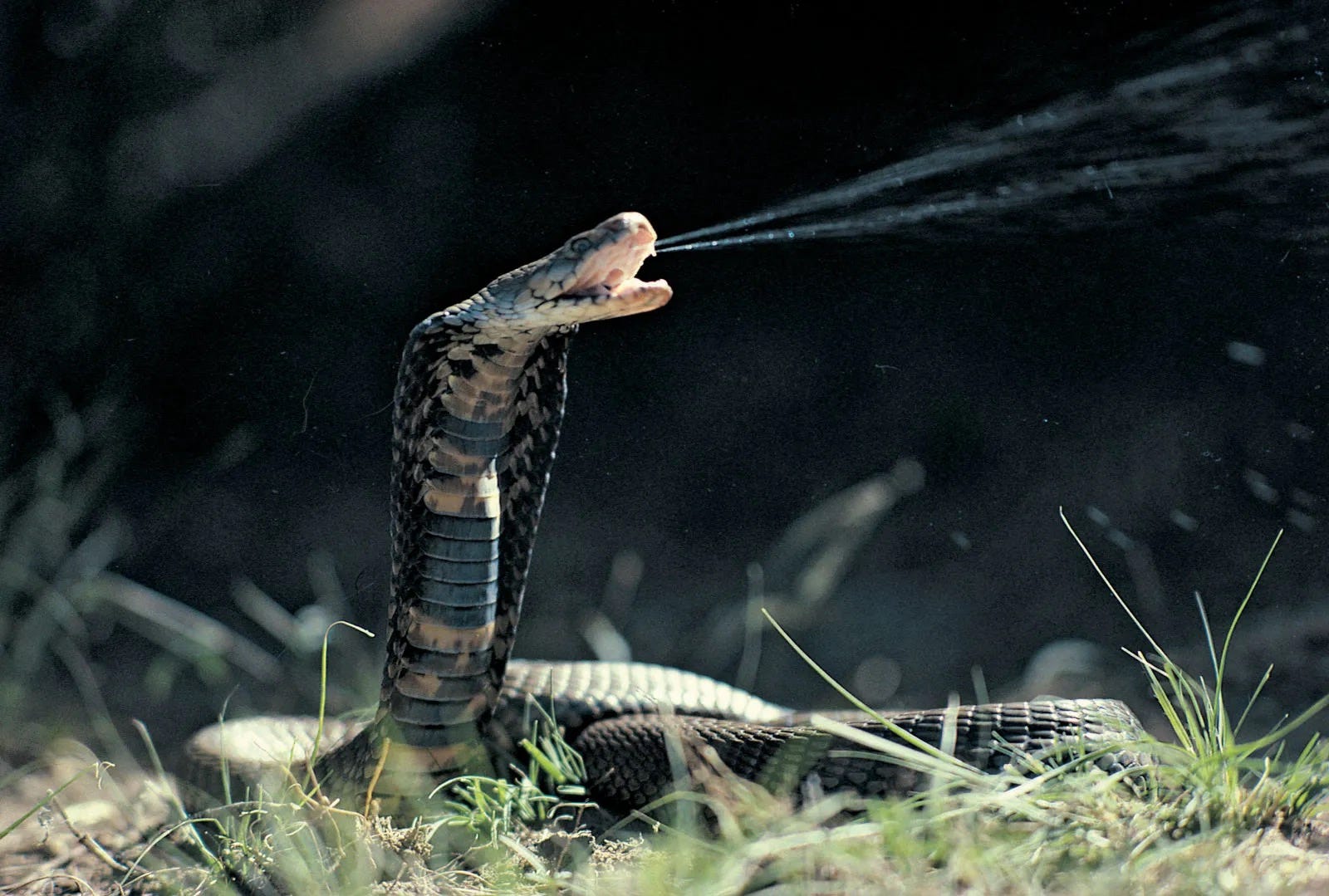
WHAT THIS ACTUALLY TEACHES ABOUT INVESTING
Five transferable lessons, spanning both halves of this story.
1) A high per-unit price doesn't mean a large or investable market. Venom's eye-popping per-gram cost reflects tiny yield per animal and dangerous manual extraction, not demand. Investors chasing "most expensive substance on earth" headlines routinely mistake scarcity-driven unit economics for market size and of course they are not the same variable.
2) Neglected disease markets are a real, recurring investment category, not a one-off. Antivenom sits in the same structural bucket as many neglected tropical disease treatments: real clinical need, concentrated among populations without purchasing power, and predictable underinvestment as a result. This is precisely where public-private partnerships, government stockpile guarantees, and philanthropic capital end up doing the investing that pure private capital won't — and where recombinant, monoclonal-antibody antivenom platforms in development now represent a real disruption opportunity for whoever scales one first, the same way biosimilars consolidated other legacy biologics markets.
3) Underwriting models price the average case, not the adversarial one. Actuarial tables are built from historical base rates, which is exactly why they fail against a deliberate actor gaming the base rate itself. Any insurer operating on cause-of-death or cause-of-loss categories that are common, forensically hard to distinguish, and accessible to the beneficiary carries this exposure globally, fire deaths, drowning, certain accidental poisonings, and staged workplace accidents all sit in the same structural bucket, not just Indian snakebite fraud.
4) Fraud detection increasingly has to run on the money and not the method. Every one of these cases got solved through financial anomaly detection — policies disproportionate to income, suspicious loan patterns — not forensic examination of the crime itself. That's a genuinely useful signal for evaluating insurtech and claims-analytics investments: companies building financial-behavior-pattern fraud detection are targeting the actual point of failure, while companies still selling purely medical or forensic verification tools are solving yesterday's problem.
5) Unregulated gray-zone economies are where formal financial systems get exploited first, and that seam is investable risk. India's snake charmers exist in an unregulated legal gap — technically restricted, practically tolerated — and that same gap that fails to guarantee antivenom supply chains is what makes the murder weapon accessible for $122. Wherever an informal, cash-based, hard-to-regulate service economy sits adjacent to a formal financial system with large payouts — insurance, micro-lending, gig-work injury claims, remittances — that seam is where fraud innovation happens first, and where underwriting models built on formal-economy assumptions get exploited fastest.

THE LESSON
Venom is a useful extreme case precisely because both of its market failures are unusually visible, running in parallel, off the same substance, in the same country, often in the same year. Most commodity and insurance markets hide structural mismatches like this behind more complicated pricing and better-obscured fraud. Venom doesn't because the people who need antivenom most can least afford it, the people who could weaponize raw venom can access it for the cost of a bad dinner, and the actuarial models sitting between both markets were built for a world where nobody had thought to exploit either gap. Any investment thesis resting on "this is a well-understood, common category" — whether that's a disease burden or a cause of loss — should ask a harder question: understood and priced correctly by whom, and who benefits from the gap that's left over.
Comments
Nothing yet. Say the first thing.
Sign in to join the conversation.