
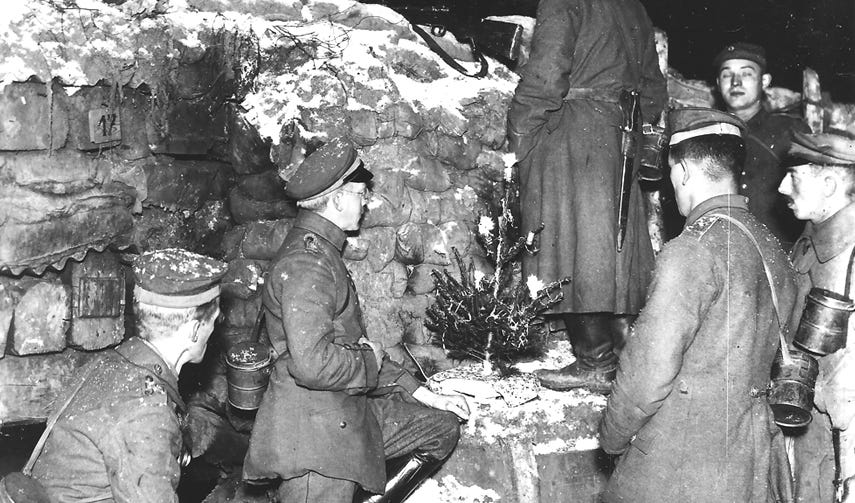
Christmas has long been a time when memories are relived and past events are brought to the dinner table. One of the most famous stories associated with this period is that of the Christmas Truces of 1914. Although the unofficial ceasefire was widespread, fighting still occurred in some areas. The following are three lesser-known instances, divided by perspective (German, French, and British) as well as sector, in which the hopes for a peaceful day were torn and combat took place.
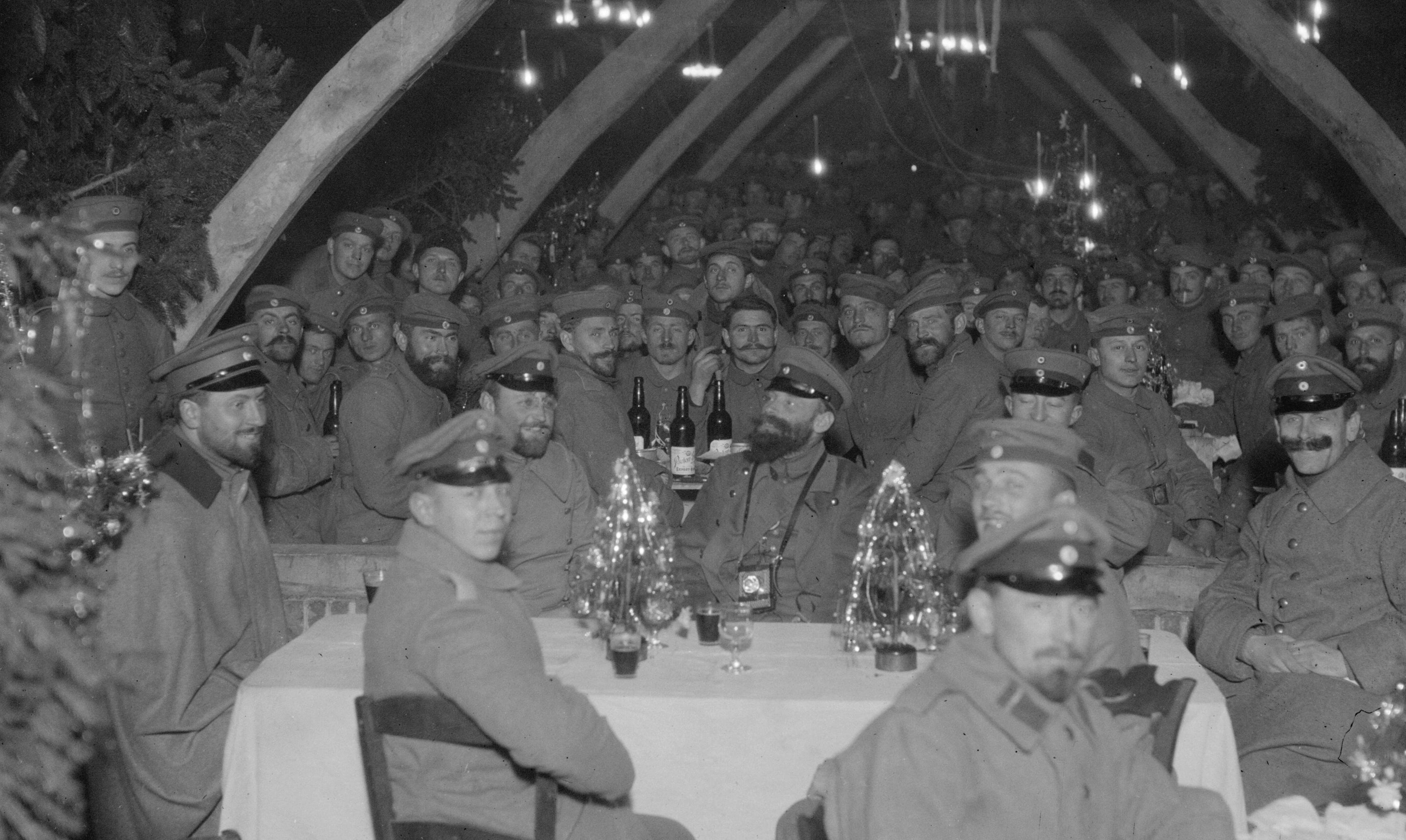
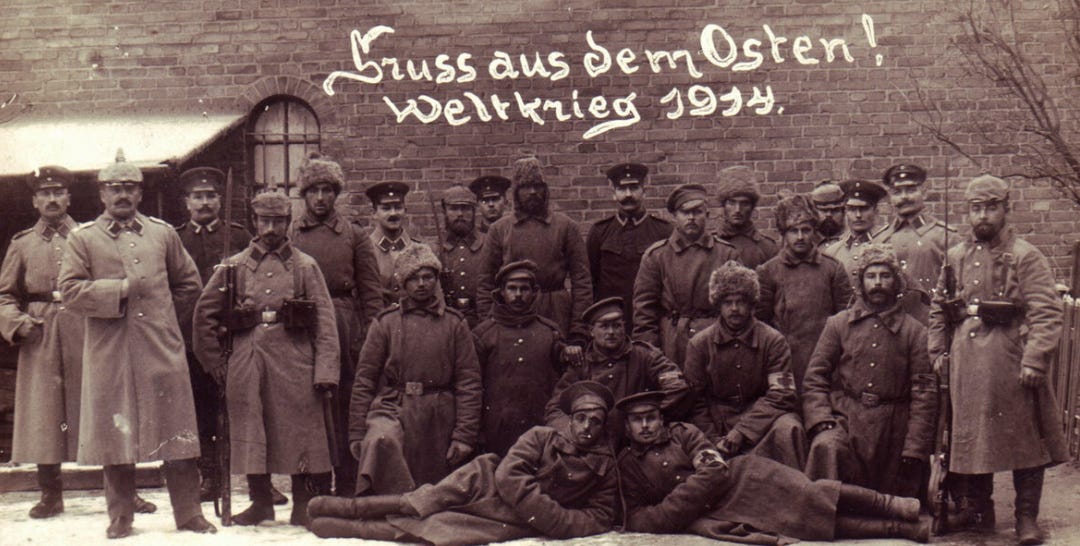
In December of 1914, the war of attrition had set in. The French tried to break the stalemate by launching offensives, mainly in Artois and Champagne, on the 17th and 20th of December respectively, but by Christmas the attacks had begun to die down. Captain von Düring of the 89th Grand Ducal Mecklenburg Grenadier Regiment, positioned along the Oise River, wrote to his wife on the 23rd:
Tomorrow is Christmas Eve. If the French wanted to ruin our Christmas, they certainly succeeded.
The 24th brought an unprecedented quietness to the front, according to a war diary of the 2nd Battalion of the Grenadiers:
The night is crystal-clear, and a solemn, soothing silence lies over everything after the unrest and the tumult of battle of the past few days. Far off, one can hear the German Christmas carols echoing through the night. The mood among the men is one of joy and optimism, since everyone has received Christmas greetings from home. As we smoke a Christmas cigar or pipe, many images of peace come to mind on this Christmas Eve.
But after heavy artillery bombardment on the morning of Christmas Day, the Frenchmen, mainly of the 24th Infantry Regiment, opposing the Mecklenburgers would eventually launch their largest assault yet. The one-year volunteer Hoffschildt’s words on the action are written in the regiment’s war diary:
When the order was given, in the event of an attack, to fire over the parapet, I had already lost three comrades to shots to the head. A bullet struck the top of the cockade on my field cap, taking only a few strands of hair with it. Suddenly NCO Schulz, who had been lying in wait in a foxhole by the communication trench that had been filled in on Christmas Eve, shouted: “They’re coming!”. Up with the rifle and fire everything one can. Staedt, beside me, collapsed, shot in the head. Our ranks were thinning.
NCO Schulz shot down one Frenchman after another, as he sat in a well-concealed foxhole without presenting much of a target, and at the same time had an excellent view of the area. We prepared for close combat; bayonets were fixed. Schulz reported as soon as the French had reached our trench. A powerful hurrah caused our opponents to waver. They turned back and were cut down by well-aimed fire. A few bold ones jumped into our trench but were rendered combat-ineffective with bayonets. The main attack had failed. Only in the main position had the French taken about 100 meters.
The casualties were such, including upwards of 200 dead on both sides, that by night the Mecklenburg regiment was reinforced and eventually substituted by another regiment. Some 130 French soldiers were captured and distributed among dugouts. German NCO Schacht later recalled that Christmas night with the prisoners:
After the attack was repelled and everything had calmed down, we returned to the underground shelter. There, we were met with a poignant scene. The large Christmas tree, adorned with burning lights, still stood before the chamber where the prisoners were housed. A few grenadiers stood guard with their bayonets fixed. Christmas carols rang out once more, and it was clear what impression this made on our enemies. One of them went up to the Christmas tree, took off his helmet, spoke a few words, and made the sign of the cross. You could see many moist eyes among them. They too were surely thinking of wife and child back home, and were grateful that they had escaped with their lives.
Thus passed our first Christmas of the war in 1914, right in the midst of the hard fighting. Everyone who returned from the field and lived through that Christmas will always remember these days whenever Christmas comes around again.
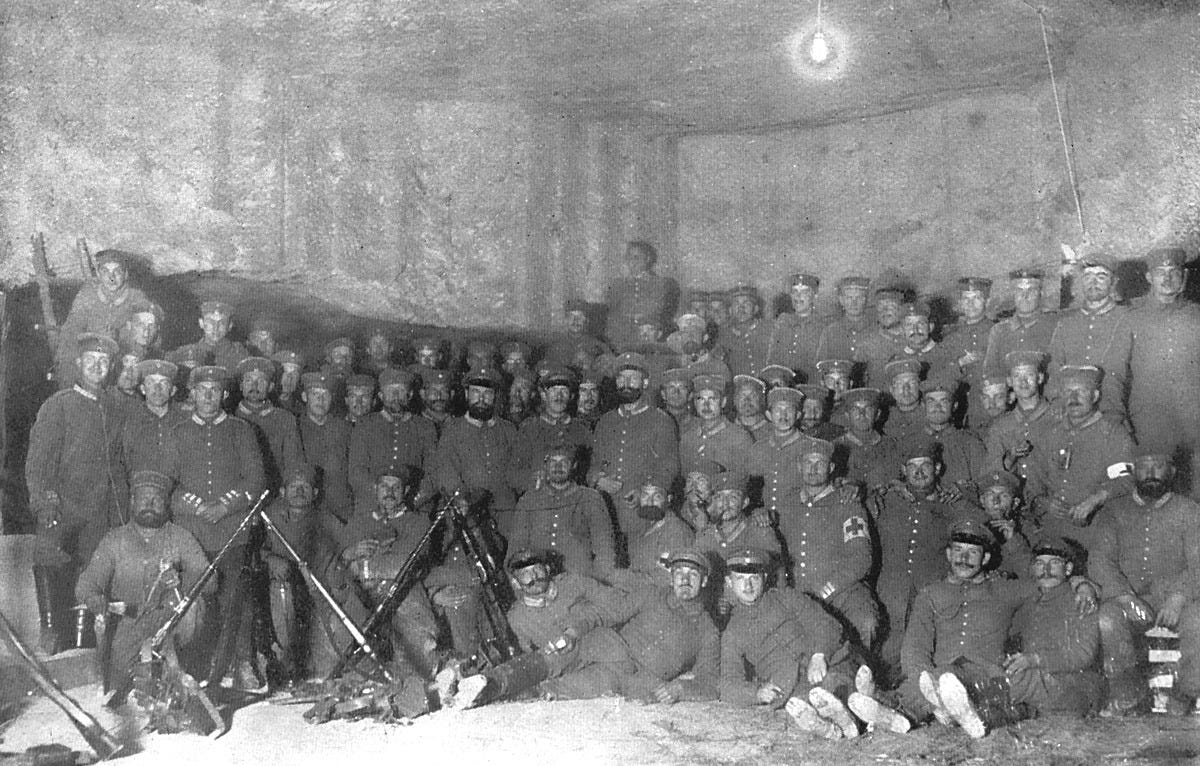
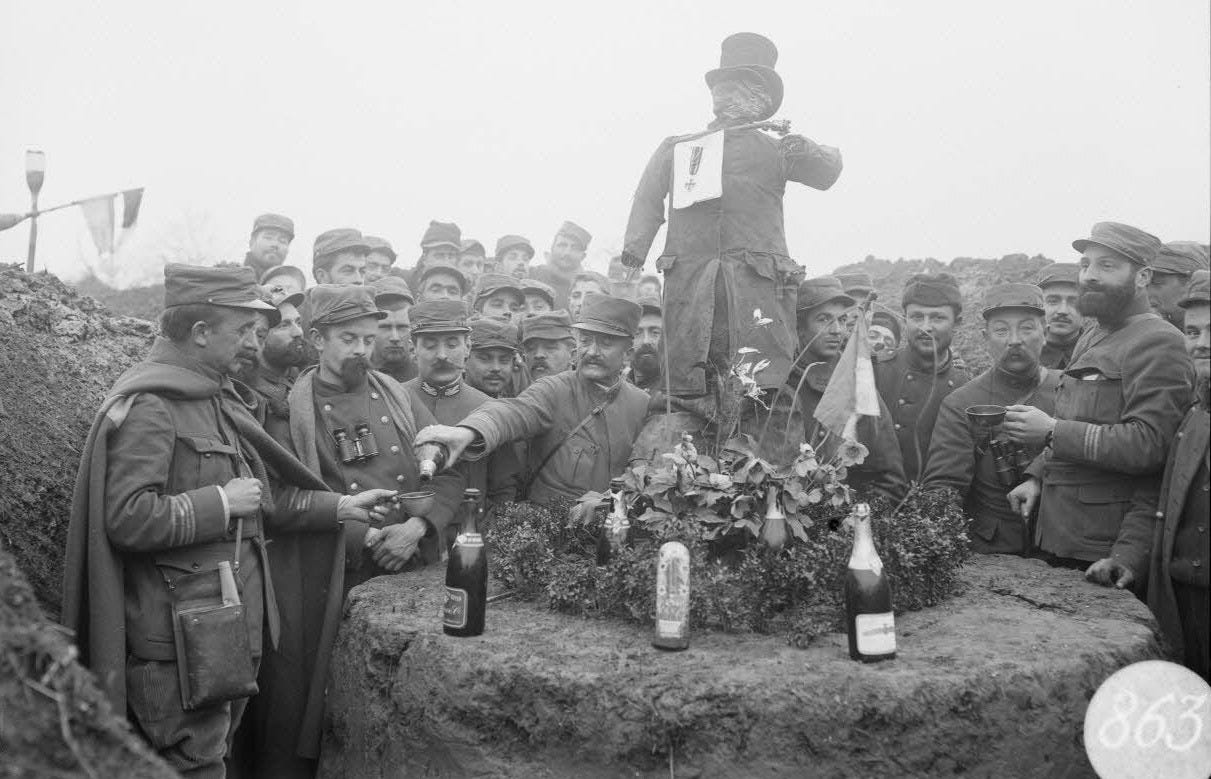
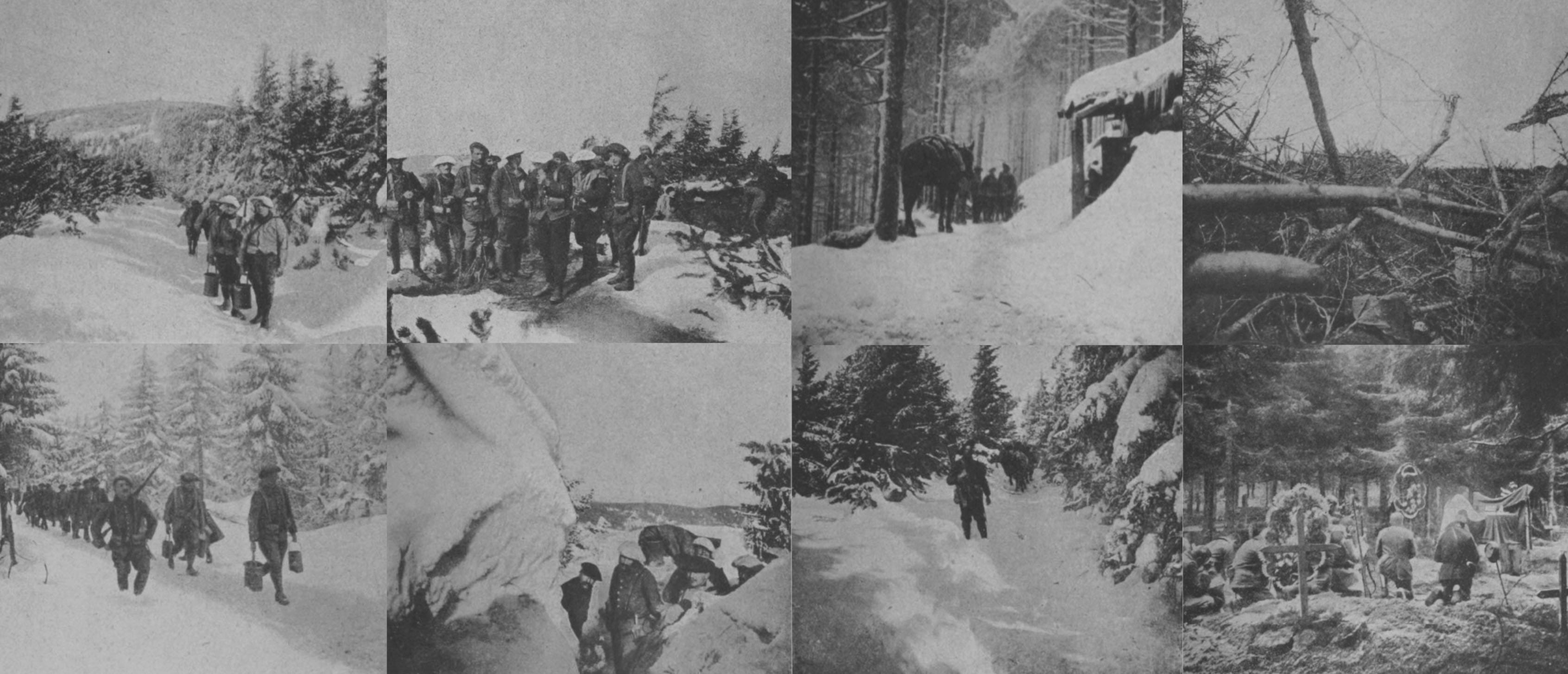
On the southernmost point of the Western Front, soldiers were stationed on granite boulders amidst mountainous, snow-covered pine forests. One of the high grounds at 1,219m was Tête des Faux, or Buchenkopf as it was known by the Germans. The position first saw major action on the 2nd of December, when it was captured by the French, with German counterattacks having failed.
The morning of December 24th saw heavy mortar fire, but it ceased in the afternoon. At 10:30 p.m., in extreme winter conditions, the Germans launched their major assault to retake Tête des Faux, penetrating the center of the French positions, passing through a 50m gap without barbed wire, and capturing most of the first line. By 4 a.m., they launched another thrust but failed to break through the second line. At daybreak, Corporal Crampe leaped out with a few Chasseurs and drove the Germans down the slope. There, he found some of the wounded still alive, buried under piles of corpses.
The Chasseurs earned the nickname “Blue Devils” from their adversaries for their tenacious resistance, with the 30th Battalion of Chasseurs, who were in the heat of the fighting, suffering some 48 deaths (some sources claim 137 total deaths). A captured German officer estimated their own casualties at 500 men. Chasseur François Tisserand stationed near Tête des Faux reccounted the action on his memoir book “Le Linge – Tombeau des Chasseurs”:
On Christmas Eve, the Germans bombarded us all morning with heavy artillery and torpedoes; nothing happened in the afternoon, but around midnight, what a fight! The Germans arrived in close formation against the soldiers of the 6th Company, and some even managed to get into the trenches. Apparently, it was a mixture of French and Germans killing each other with grenades. At 4 a.m., the Germans started again, shouting, with fifes and drums, they took a good beating again, and our men managed to take some prisoners. They were riflemen from the 14th Mecklenburg Regiment, really tough guys, it seems. In total, we had about fifty dead and many wounded. On Christmas Day, Can you Imagine!
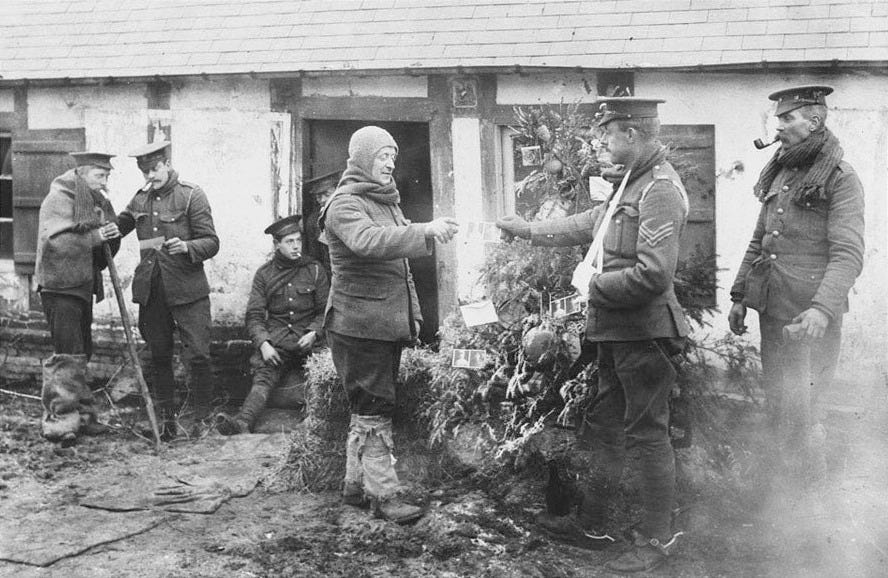
The Yser and Flanders sectors were for the most part quiet during Christmas. But in Artois, on the morning of the 24th, soldiers of the 2nd Grenadier Guards, who had arrived the day before in their new position to relieve the 2nd Royal Sussex Regiment, found themselves in an unfortunate situation, according to the regimental diary:
The early morning began with considerable sniping and bombardment with trench mortars. It was bitterly cold, and the water in the trenches made communication almost impossible. It seemed madness to attempt to hold such a line of trenches, and yet there was no alternative.
The Germans, having the upper hand, launched an attack that reached the first line of trenches. This forced the soaked and stiff British soldiers to spend the entire night constructing a new trench line as the temperature began to drop and the sounds of war subsided. Major Jeffreys wrote on his diary about it:
Hard frost and ground as hard as bricks. Dykes frozen over. At daybreak a few Germans put their heads up and shouted, ‘Merry Xmas’. Our men, after yesterday, were not feeling that way and shot at them. They at once replied and a sniping match went on all day.
The Guards were relieved by the end of the day. All told, the Christmas fighting costed the battalion 81 casualties, including 20 killed. Another soldier wrote home, seemingly frustrated:
Perhaps you read of the conversation on Christmas Day. It is all lies. The sniping went on just the same; in fact, our Captain was wounded, so don’t believe what you see in the papers.
This will be the last article of the year. If possible share and comment below what you think of the post or even the whole project so far. Still, WW1 content and updates will continue in Notes as usual. I wish, in advance, all who are reading this a memorable Christimas and a Happy New Year!
Sources:
-Historien om Grossherzoglich Mecklenburgischen Grenadier-Regiments Nr. 89 by Dr. Ernst Zipfel;
-“Stille Nacht, heilige Nacht“? – der Traum vom „Weihnachtsfrieden. by the Volksbund;
-La Tete Des Faux by Paysages et sites de mémoire de la Grande Guerre;
-Le 30e bataillon de chasseurs alpins pendant la Grande guerre;
-Le Linge. Tombeau des Chasseurs by François Tisserand;
-The Grenadier Guards in the Great War of 1914-1918 by Lieut. Colonel Sir Frederick Posnby;
-No Christmas Truce for 2/Grenadier Guards by SteveMerc on the Globe wat War;
-Legends, myths and realities – the Christmas Truce, 1914. The Long, Long Trail;
-Christmas Day 1914, Goodwill to all men? by Jill Stewart on the Western Front Association.
No posts
Comments
Nothing yet. Say the first thing.
Sign in to join the conversation.